Blog Editor Vacancy: Work on the Methods.blog

The Methods.blog has been run by the journal’s Assistant Editor since it was launched way back in 2009, but that’s about to change… We’re looking for a researcher passionate about communicating new methods in ecology and evolution to join the team and help take the blog to the next level. If you’re looking to gain experience in commissioning, writing, editing and science communication, then this … Continue reading Blog Editor Vacancy: Work on the Methods.blog

Issue 10.9: Phenotypes, Species Interactions, Biodiversity and More

The September issue of Methods is now online!

We’ve got another brilliant issue of Methods in Ecology and Evolution out today. In another bumper 250 page offering, you’ll find articles on identifying waterbird hotspots, identity metrics, capture-recapture methods (and the alternative close-kin mark-recpature) and way more.

Don’t have a subscription to the journal? No need to worry – this month’s issue has TEN articles that are free to access for absolutely anyone. You can find out about all 10 below.

Keep reading for a little more information on the September issue of Methods in Ecology and Evolution. Continue reading “Issue 10.9: Phenotypes, Species Interactions, Biodiversity and More”

Finding the Links between Prey and Microplastics

Below is a press release about the Methods in Ecology and Evolution article ‘What goes in, must come out: Combining scat‐based molecular diet analysis and quantification of ingested microplastics in a marine top predator‘ taken from Plymouth Marine Laboratory.

Wild grey seals. By Philip Newman, Natural Resources Wales

A brand new method has been developed by scientists at Plymouth Marine Laboratory (PML) and the University of Exeter, in collaboration with Abertay University and Greenpeace Research Laboratories, to investigate links between top predator diets and the amount of microplastic they consume through their prey. It offers potential insights into the exposure of animals in the ocean and on land to microplastics.

An estimated 9.6-25.4 million tonnes of plastic will enter the sea annually by 2025.  Microplastics in particular have been found on the highest mountains and in the deepest seas. New techniques are needed to trace, investigate and analyse this growing concern. Continue reading “Finding the Links between Prey and Microplastics”

Atlantis: A Model for Biophysical, Economic and Social Elements of Marine Ecosystems

Post provided by ASTA AUDZIJONYTE, Heidi Pethybridge, Javier Porobic, Rebecca Gorton, Isaac Kaplan, and Elizabeth A. Fulton

Increased Demands on a Crowded Ocean

Multiple demands on, and uses of, the ocean. ©Frank Shepherd

The ocean was once a limitless frontier, primed for exploitation of fish and other marine life. Today, a scan of the coastline (in our case off Australia and the US) shows an ocean landscape dotted with aquaculture pens, wind farms, eco-tours, and oil rigs, as well as commercial and recreational fishing boats. This presents marine and maritime managers with the huge challenge of balancing competing social, conservation, and economic objectives. Trade-offs arise even from success stories. For example, seal and sea lion populations are recovering from centuries of hunting, which is great. But now they’re preying heavily on economically valuable species like salmon and cod, creating potential tensions between fisheries and conservation communities. Ecosystem-based management is one way that we can start to address these trade-offs. Continue reading “Atlantis: A Model for Biophysical, Economic and Social Elements of Marine Ecosystems”

Thermal Images in R

Post provided by REBECCA SENIOR (@REBECCAASENIOR)

Why use Thermal Images?

Temperature is important in ecology. Rising global temperatures have pushed ecologists and conservationists to better understand how temperature influences species’ risk of extinction under climate change. There’s been an increasing drive to measure temperature at the scale that individual organisms actually experience it. This is made possible by advances in technology.

Enter: the thermal camera. Unlike the tiny dataloggers that revolutionised thermal ecology in the past decade or so, thermal images capture surface temperature, not atmospheric temperature. Surface temperature may be as (if not more) relevant for organisms that are very small or flat, or thermoregulate via direct contact with the surface. Invertebrates and herps are two great examples of these types of organisms – and together make up a huge proportion of terrestrial biodiversity. Also, while dataloggers can achieve impressive temporal extent and resolution, they can’t easily capture temperature variation in space.

Like dataloggers, thermal cameras are becoming increasingly affordable and practical. The FLIR One smartphone attachment, for example, weighs in at 34.5 g and costs around ~US$300. For that, you get 4,800 spatially explicit temperature measurements at the click of a button. But without guidelines and tools, the eager thermal photographer runs the risk of accumulating thousands of images with no idea of what to do with them. So we created the R package ThermStats. This package simplifies the processing of data from FLIR thermal images and facilitates analyses of other gridded temperature data too. Continue reading “Thermal Images in R”

Speeding Up Systematic Reviews: This New Method for Automated Keyword Selection Will Save You Time

Post provided by ELIZA GRAMES

The number of studies published every year in ecology and evolutionary biology has increased rapidly over the past few decades. Each new study contributes more to what we know about a topic, adding nuance and complexity that helps improve our understanding of the natural world. To make sense of this wealth of evidence and get closer to a complete picture of the world, researchers are increasingly turning to systematic review methods as a way to synthesise this information.

What is a Systematic Review?

Systematic reviews, first developed in public health fields, take an experimental design approach to reviewing the literature. They treat the search for primary studies as a transparent and reproducible data gathering process. The rigorous methods used in systematic reviews make them a trusted form of evidence synthesis. Researchers use them to summarise the state of knowledge on a topic and make policy and practice recommendations. Continue reading “Speeding Up Systematic Reviews: This New Method for Automated Keyword Selection Will Save You Time”

Stuck between Zero and One: Modelling Non-Count Proportions with Beta and Dirichlet Regression

Post provided by JAMES WEEDON & BOB DOUMA

Chinese translation provided by Zishen Wang

這篇博客文章也有中文版

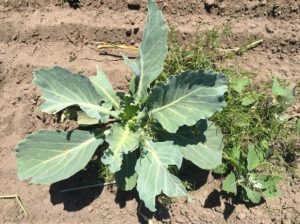
Proportion of leaf damage is a type of measurement that can lead to proportional data.

Imagine the scene: you’re presenting your exciting research results at an important international conference. Being conscientious and aware of statistical best-practice and so you’ve included test statistics and confidence intervals on all your result figures. Not just P values! Some of the data you are presenting involves the proportion of leaf surface damaged by an insect herbivore under different treatments. You finish your presentation (on time!) and there’s time for questions. From the audience a polite but insistent colleague asks: “Your confidence interval for that estimate goes from -0.3 to 0.5… how should we interpret a negative proportion of a leaf?”.

Someone chuckles. As you nervously flick back to the slide in question, you mutter something about the difference between confidence intervals and point estimates. You start to feel dizzy. A murmur of confused voices slowly builds amongst the audience members. In the distance, a dog barks.

How can you avoid this?

Proportional Data in Ecology and Evolution

Many kinds of quantities that ecologists and evolutionary biologists routinely measure are most conveniently expressed as proportions. In many cases these proportions are derived from counts. The data are based on discrete entities that can be assigned to two or more classes: success or failure, male or female, invasive or non-invasive. In other cases the proportions are derived from continuous measurements: the proportion of time an animal spends on different activities;  percent cover of a plant functional type in a vegetation survey quadrat; allocation of total plant biomass to different organs and tissues. What these data types have in common is that they can only take values between zero and one. Negative values, or values greater than one, don’t make any sense. Continue reading “Stuck between Zero and One: Modelling Non-Count Proportions with Beta and Dirichlet Regression”

0与1的游戏:使用Beta和Dirichlet回归方法模拟非计数比例

海报作者:JAMES WEEDON & BOB DOUMA

中文翻译:Zishen Wang (王子申)

This post is also available in English

请设想一下这个场景:你正在一个重要的国际会议上汇报一个激动人心的成果。秉承一向对统计学理论和方法的严谨态度,你对所有的数据都做了统计学检验并给出了置信区间。这些统计分析结果并不只包含P值!你提供的一些数据涉及在不同处理下食草昆虫破坏的叶面积比例。当你准时完成报告时,一位同行问道:你对破坏比例估计的置信区间是-0.30.5,该怎么解释叶面积出现的负值呢?

观众席里有人笑了。你满脸通红地翻到被提问到的这张幻灯片,嘟囔着给大家解释置信区间和点估计之间的区别。观众们开始小声嘀咕,你好像听到不远处有一只狗在叫。

你该怎么避免这种尴尬又让大家疑惑的情况呢?

生态学和进化学中的比例数据

生态学家和进化生物学家会经常测定许多定量数据,为了方便展示,他们通常会把这些数据表示为比例。许多情况下,这些比例是由计数得来的。在一种情况下,这些比例数据是基于可划分为两个或者更多类别的离散实体的:成功或失败,男性或女性,侵入性或非侵入性。比例数据也可以针对连续型变量:动物进行不同活动的比例;植被调查样本中一种植物功能类型的百分比覆盖率植物生物量在各个器官和组织上的分配比例。这些比例数据的共同点是只能在0到1之间取值。小于0或大于1的值没有意义。

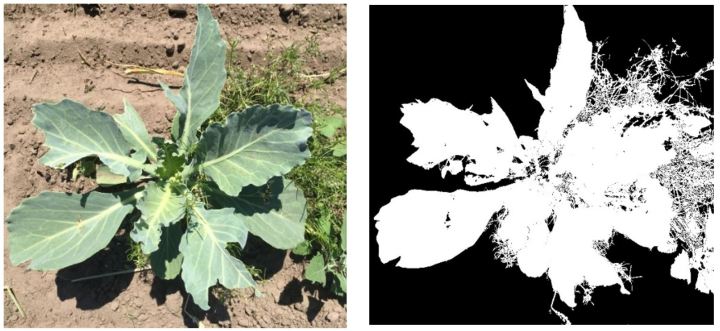
两种可以得到比例数据的测量:叶片损坏的比例和植被覆盖百分比。

如果您使用常规统计工具来分析此类数据,可能会导致一些问题。线性回归,方差分析等方法假设因变量可以用正态分布建模。正态分布包含从负无穷大到正无穷大的值,因此不太适合模拟比例数据。用正态分布得出的预测值和置信区间很可能包含比例数据定义区间外的值。此外,残差与预测值有很强的相关性。这些现象都表明,选择错误的模型,会导致不准确的统计推断。 Continue reading “0与1的游戏:使用Beta和Dirichlet回归方法模拟非计数比例”

New eDNA Programme Makes Conservation Research Faster and More Efficient

Below is a press release about the Methods in Ecology and Evolution article ‘Anacapa Toolkit: An environmental DNA toolkit for processing multilocus metabarcode datasets‘ taken from UCLA.

It’s estimated that a person sheds between 30,000 to 40,000 skin cells per day. These cells and their associated DNA leave genetic traces of ourselves in showers, dust — pretty much everywhere we go.

Other organisms shed cells, too, leaving traces throughout their habitats. This leftover genetic material is known as environmental DNA, or eDNA. Research using eDNA began about a decade ago, but was largely limited to a small cadre of biologists who were also experts in computers and big data. However, a new tool from UCLA could be about to make the field accessible and useful to many more scientists.

A team of UCLA researchers recently launched the Anacapa Toolkit — open-source software that makes eDNA research easier, allowing researchers to detect a broad range of species quickly and producing sortable results that are simple to understand. Continue reading “New eDNA Programme Makes Conservation Research Faster and More Efficient”