Bats, Acoustic Methods and Conservation 4.0: An Interview with Kate Jones

At this year’s International Statistical Ecology Conference (ISEC 2018) David Warton interviewed Kate Jones, Chair in Ecology and Biodiversity at University College, London. Their conversation mainly focused on how to classify bats from acoustic data, with particular reference to ‘Acoustic identification of Mexican bats based on taxonomic and ecological constraints on call design‘ by Veronica Zamora‐Gutierrez et al. They also discuss Conservation 4.0! We’ll have more … Continue reading Bats, Acoustic Methods and Conservation 4.0: An Interview with Kate Jones

Integrating Evolution and Ecology

©H. Zell
©H. Zell

The latest Methods in Ecology and Evolution Virtual Issue – ‘Integrating Evolution and Ecology‘ – is in honour of the late Isabelle Olivieri (1957-2016): an international, interdisciplinary and ground-breaking biologist. It was edited by Louise Johnson and James Bullock and features papers on topics she researched, and in many cases pioneered. But it might perhaps have been more difficult to find 15 Methods papers on areas outside of Isabelle’s research interests!

Isabelle was the first Professor of Population Genetics at Montpellier, a past President of the European Society for Evolutionary Biology (2007-2009), and a member of the European Molecular Biology Organization. She spanned subject boundaries as easily as she collaborated across geographical borders. Her publications range through metapopulation and dispersal ecology, host-parasite coevolution, life history, invasive species and conservation ecology. In keeping with this breadth of interests, she also combined theory easily with experiment, and worked with a wide range of study systems from mites to Medicago. Continue reading “Integrating Evolution and Ecology”

The Manager’s Dilemma: Which Species to Monitor?

Post provided by Payal Bal and Jonathan Rhodes

The greater bilby (M.Lagotis). ©Save the Bilby Fund

Imagine you’re the manager of a national park. One that’s rich in endemic biodiversity found nowhere else on the planet. It’s under the influence of multiple human pressures causing irreversible declines in the biodiversity, possibly even leading to the extinction of some of the species. You’re working with a complex system of multiple species and threats, limited knowledge of which threats are causing the biggest declines and limited resources. How do you decide what course of action to take to conserve the biodiversity of the park? This is the dilemma faced by biodiversity managers across the globe.

In our recent paper, ‘Quantifying the value of monitoring species in multi‐species, multi‐threat systems’, we address this problem and propose a method using value of information (VOI) analysis. VOI estimates the benefit of monitoring for management decision-making. Specifically, it’s a valuation tool that can be used to disentangle the trade-offs in competing monitoring actions. It helps managers decide how to invest (or whether to invest) their money in monitoring actions when faced with imminent biodiversity declines and the urgency of efficient conservation action. Continue reading “The Manager’s Dilemma: Which Species to Monitor?”

Poles Apart Yet Poles Together

Post provided by Matt Davey

Earlier this summer, I attended a rather unique conference – Polar2018 in Davos, Switzerland. This conference brought together the two major committees that help govern and coordinate Arctic, Alpine and Antarctic research around the globe – the Scientific Committee for Antarctic Research (SCAR) – who also celebrates their 60th Anniversary this year – and the International Arctic Science Committee (IASC).

With nearly 2500 delegates over one week it was impressive how talks and sessions kept to time, posters went up and came down, and coffee (good coffee, served with correctly cooked croissants!) was served. The level of organisation you’d hope to see at all conferences, big or small. The venue for Polar2018 was also home to the G7 world economic forum summits and staff seemed at ease with only having 2500 delegates to deal with…

From day one, there was persistent message throughout the conference. Not only does the rest of the human populated world affect the polar environments, but in response, any change in polar ecosystem and environment functioning (biological and non-biological) has a large knock-on effect on the rest of the world. Continue reading “Poles Apart Yet Poles Together”

The Future of Research and Publishing in Evolutionary Biology

Are you coming to the Evolution 2018 in Montpellier? Want to share your views on the future of evolution research? Fancy some beer, wine and snacks on us?

We know the history of research and publications in evolution, but what will the future hold?

We would like to invite you to participate in an exciting focus session centred around what the future research landscape might look like through the eyes of up-and-coming researchers.

When: Tuesday 21 August between 14:00 and 16:00

Where:  Bar Les Loges, Grand Hotel du Midi, Montpellier

We’re looking for active researchers (based in universities, research institutes, government agencies, NGOs or the private sector) within about 10 years of having been awarded a PhD. Experienced PhD students who have published in peer reviewed academic journals are also welcome to join. Continue reading “The Future of Research and Publishing in Evolutionary Biology”

BES Macroecology 2018: Macroecology and Data

Post provided by Faith Jones

© Matthew Leonard
© Matthew Leonard

The annual BES Macroecology Special Interest Group conference took place on the 10th and 11th of July. This year the meeting was in St Andrews, Scotland. Over 100 delegates came together in this old University town to discuss the latest research and concepts in macroecology and macroevolution.

Remote Sensing, Funky Koalas and a Science Ceilidh

The conference opened with a plenary by Journal of Applied Ecology Senior Editor Nathalie Pettorelli from ZSL. She talked about how remote sensing can be used in ecological and conservation studies. In the other plenary talks, we heard from:

  • Methods in Ecology and Evolution Senior Editor Bob O’Hara from NTNU on, among other things, how useful occupancy models are when “occupancy” is such a broad term
  • Anne Magurran from the University of St Andrews discussing turnover and biodiversity change
  • Brian McGill from the University of Maine talking about the data-driven approach to the “biodiversity orthodoxy” and challenging the conventional wisdom about macroecological change

We also hosted a student plenary speaker, Alex Skeels, who gave a lively talk about diversification and geographical modelling using some pretty funky disco koalas. In addition to these talks, there were 60 short 5 minutes talks and 20 posters. Continue reading “BES Macroecology 2018: Macroecology and Data”

Improving Biodiversity Monitoring using Satellite Remote Sensing

Increased access to satellite imagery and new developments in remote sensing data analyses can support biodiversity conservation targets by stepping up monitoring processes at various spatial and temporal scales. More satellite imagery is becoming available as open data. Remote sensing based techniques to capitalise on the information contained in spatially-explicit species data, such as Global Biodiversity Information Facility (GBIF), are developing constantly. Current free and open data policy will have a dramatic impact on our ability to understand how biodiversity is being affected by anthropogenic pressures, while improving our ability to predict the consequences of changes at different scales.

In our latest Special Feature, ‘Improving Biodiversity Monitoring using Satellite Remote Sensing‘, Sandra Luque, Nathalie Pettorelli, Petteri Vihervaara and Martin Wegmann explain why tackling this challenge is worth doing. The articles demonstrate how combining satellite remote sensing data with ground observations and adequate modelling can help to give us a better understanding of natural systems, leading to improved management practices. They focus on three key conservation challenges:

  1. Monitoring of biodiversity
  2. Developing an improved understanding of biodiversity patterns
  3. Assessing biodiversity’s vulnerability to climate change

Continue reading “Improving Biodiversity Monitoring using Satellite Remote Sensing”

Also of Interest… Journal of Applied Ecology

Post provided by Aaron M. Ellison

The Struggle is Real: Finding Interesting and Relevant Articles

Where to start? We are awash in data, information, papers, and books. There are hundreds of ecological and environmental journals published regularly around the world; the British Ecological Society alone publishes five journals and is now accepting submissions for a sixth (more information on People and Nature here).

None of us has time even to click on the various articles flagged by alerts, feeds, or keywords, and few even browse tables of contents (which are becoming irrelevant as we move to DOIs and immediate-online publication). Increasingly, we rely on our friends, colleagues, students, and mentors to point us towards papers we might find interesting – further evidence, I suppose, of the importance of good networks for knowledge creation and scientific understanding.

Regular readers of Methods in Ecology and Evolution or this Methods blog may not realise how many methodological papers are published routinely in our BES sister journals. In this inaugural posting of Also of interest…, I highlight three papers recently published in Journal of Applied Ecology that introduce and apply new, model-based methodology to interesting ecological questions. The specific methods are like many seen in the pages of Methods in Ecology and Evolution and suggest general approaches for modelling and studying complex ecological and environmental phenomena. Continue reading “Also of Interest… Journal of Applied Ecology”

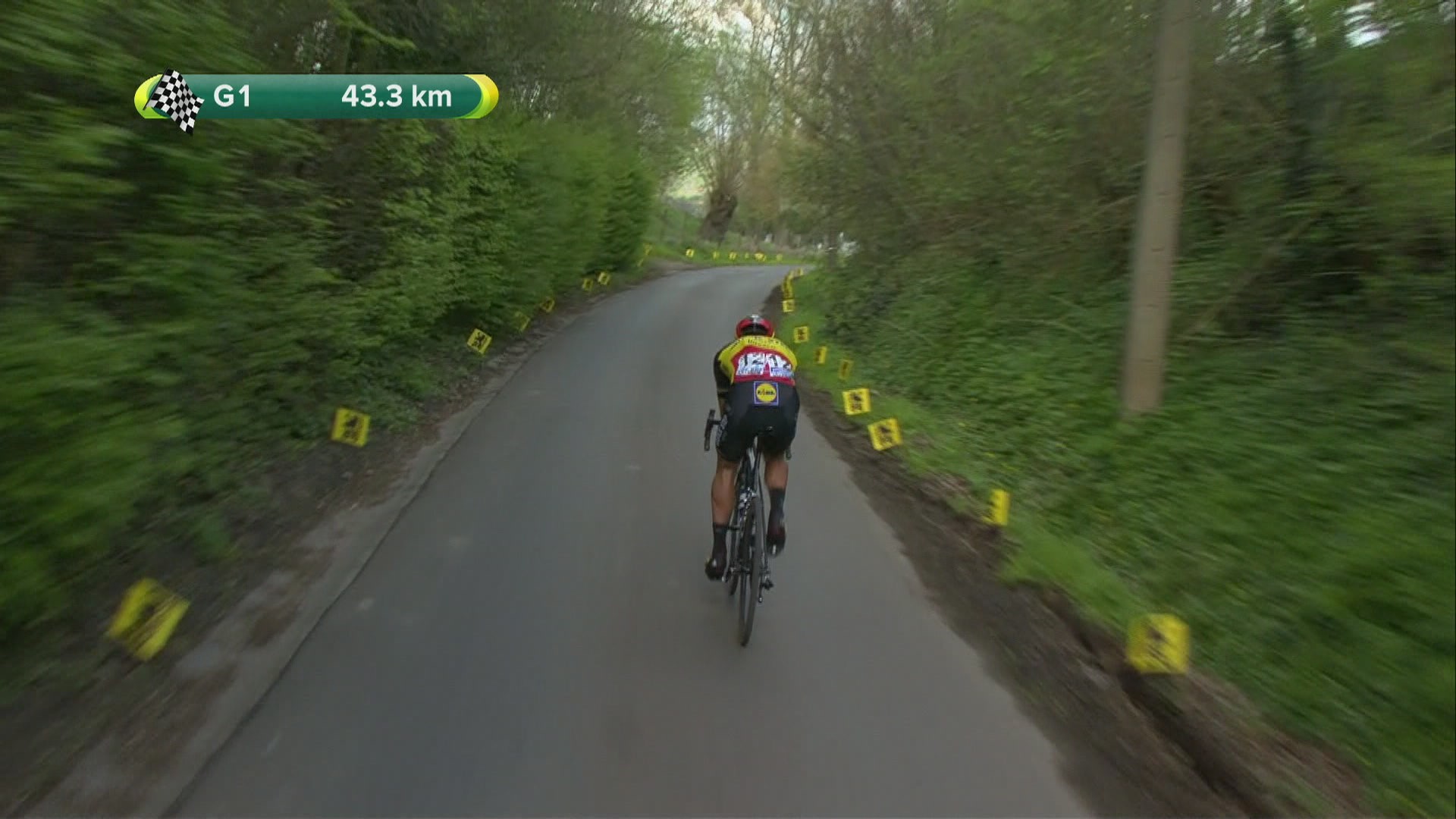
TV Coverage of Cycling Races Can Help Document the Effects of Climate Change

Archive footage of the Tour of Flanders obtained by Flemish broadcaster VRT - Flanders Classics
Archive footage of the Tour of Flanders obtained by Flemish broadcaster VRT – Flanders Classics

Analysing nearly four decades of archive footage from the Tour of Flanders, researchers from Ghent University have been able to detect climate change impacts on trees. Their findings were published today in the journal Methods in Ecology and Evolution.

Focusing on trees and shrubs growing around recognisable climbs and other ‘landmarks’ along the route of this major annual road cycling race in Belgium, the team looked at video footage from 1981 to 2016 obtained by Flemish broadcaster VRT. They visually estimated how many leaves and flowers were present on the day of the course (usually in early April) and linked their scores to climate data. Continue reading “TV Coverage of Cycling Races Can Help Document the Effects of Climate Change”

Editor Recommendation: Accounting for Genetic Differences among Unknown Parents in Microevolutionary Studies

Post provided by Laura Graham

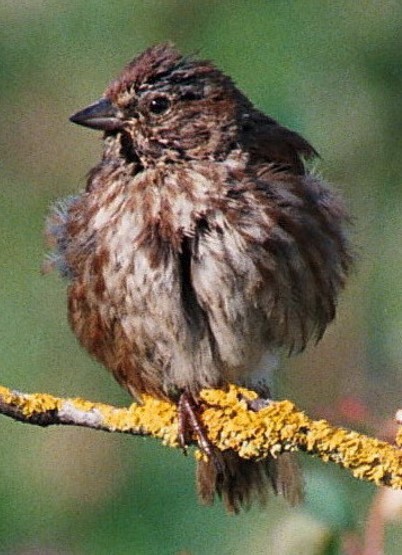
Song sparrows show substantial genetic variation in multiple life-history traits. Application of ‘genetic group animal models’ show that this is partly due to genetic effects of immigrants © Jane Reid
Song sparrows show genetic variation in multiple life-history traits. Application of ‘genetic group animal models’ show this is partly due to genetic effects of immigrants ©Jane Reid

Understanding how wild populations respond and adapt to environmental change is a key question in evolutionary biology. To understand this, we need to be able to separate genetic and environmental effects on phenotypic variation. Statistical ‘animal models’, which can do just this, have revolutionised the field of quantitative genetics. A lack of full knowledge of individual pedigrees can lead to severe bias in quantitative genetic parameter estimates though – particularly when genetic values for focal traits vary non-randomly in unknown parents.

In the Journal of Animal Ecology ‘How To…’ paper “Accounting for genetic differences among unknown parents in microevolutionary studies: how to include genetic groups in quantitative genetic animal models”, the extent of this bias is highlighted. Matthew Wolak and Quantitative Ecology 2018 keynote speaker Jane Reid show how genetic group methods – a technique developed in agricultural science – can be employed to minimise it. Continue reading “Editor Recommendation: Accounting for Genetic Differences among Unknown Parents in Microevolutionary Studies”