Biggest Library of Bat Sounds Compiled

Below is a press release about the Methods paper ‘Acoustic identification of Mexican bats based on taxonomic and ecological constraints on call design‘ taken from the University College London.

The Funnel-eared bat (Natalus stramineus)

The biggest library of bat sounds has been compiled to detect bats in Mexico – a country which harbours many of the Earth’s species and has one of the highest rates of species extinction and habitat loss.

An international team led by scientists from UCL, University of Cambridge and the Zoological Society of London, developed the reference call library and a new way of classifying calls to accurately and quickly identify and differentiate between bat species.

It is the first time automatic classification for bat calls has been attempted for a large variety of species, most of them previously noted as hard to identify acoustically. Continue reading “Biggest Library of Bat Sounds Compiled”

Space-time continuum and conservation planning: Helping Species Adapt to Climate Change

Post provided by Diogo André Alagador

The world’s most threatened felid (Iberian lynx) is endemic in a region predicted to be severely impacted by climate change: the Iberian Peninsula. ©lynxexsitu.es
The world’s most threatened felid (Iberian lynx) is from a region predicted to be severely impacted by climate change: the Iberian Peninsula. ©lynxexsitu.es

Climate change is driving many species to alter their geographic distributions. The ranges of some species contract, expand or shift as individuals track favorable climate conditions. In some cases, threatened species are moving out of protected areas. These trends are expected to intensify in the coming years.

To increase conservation effectiveness within protected areas in the future, researchers at the Research Center on Biodiversity and Genetic Resources at the University of Évora and the Department of Mathematics of the Faculty of Sciences and Technology from the NOVA University in Lisbon, Portugal, have come up with a set of modelling tools to optimize the scheduling of conservation area allocation as the climate changes. These take into account restrictions of conservation area expansion derived from the prevailing socio-economic activities. “The objective is to select the best dispersal corridors for each species considering a budget restriction or competition with other socioeconomic activities” said Diogo Alagador. “These selections are complex and non-trivial as they incorporate decisions on the spatial and temporal trends of large sets of species.”

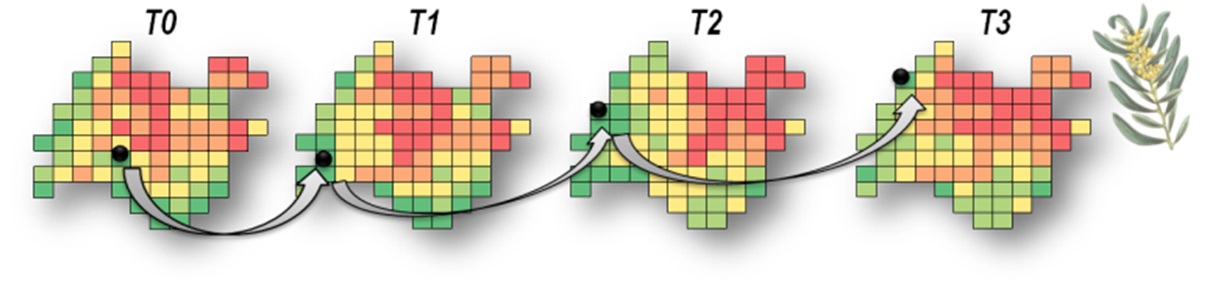
The concept of a spatio-temporal corridor for a species in an environmental heterogeneous region.

Continue reading “Space-time continuum and conservation planning: Helping Species Adapt to Climate Change”

Stage-dependent Demographic Modelling at Your Finger Tips

Post provided by EELKE JONGEJANS and ROB SALGUERO- GÓMEZ

Soay sheep: an organism that can be modelled with two-sex dynamics. ©Julian Paren

Typically, ecology courses contain at least a day of matrix population models. So most ecologists are somewhat familiar with how simple life cycles (and complex ones) can be depicted and analysed using matrix models. Briefly, these models represent what happens to individuals over a certain time interval (do they die? do they reproduce? if so, how much?). What individuals do in the context of these models can then be used to study the dynamics of a population.

Often, individuals are classified by size in matrix models, as small individuals tend to have different survival, growth and reproduction rates than large ones. But how many classes do you need to model the dynamics of a size-structured population properly? Instead of choosing arbitrary size class boundaries, Easterling, Ellner and Dixon (2000) came up with the idea of using continuous size variables and integrals to define a population model… and that’s how the first Integral Projection Model (‘IPM’ for us friends) came to be.

Naturally, for the development of a new demographic tool to prove useful to the scientific community, it must be flexible enough to be ‘one-size-fits-all’… and the needs of ecologists, evolutionary biologists and conservation biologists – who have to date used extensively size-based matrix models – are rather variable in size, colour and shape. Continue reading “Stage-dependent Demographic Modelling at Your Finger Tips”

A Model Approach to Weed Management

Post provided by VANESSA ADAMS

Vanessa Adams in the field with gamba grass in the Batchelor region, NT. ©Amy Kimber (NERP Northern Australia Hub)
Vanessa Adams in the field with gamba grass in the Batchelor region, NT.
©Amy Kimber (NERP Northern Australia Hub)

Invasive weeds cause environmental and economic harm around the world. Land managers bear a heavy responsibility for the control of infestations in what is often a time-consuming and costly battle.

Fortunately, an increasing number of research-based solutions are giving land managers an advantage. This includes tools to determine the distribution of weeds and also the development of modelling approaches to predict their spread.

Understanding the current and future distribution of an invasive species allows managers to better direct their limited resources. However, the direct and strategic management of weeds is tricky and that’s why population models (in particular spatial dispersal models that can be applied without much data) are needed to inform and facilitate action on the ground. Continue reading “A Model Approach to Weed Management”

New Associate Editor: Sarah Goslee

Today, we are pleased to be welcoming a new member of the Methods in Ecology and Evolution Associate Editor Board. Sarah Goslee joins us from the USDA Agricultural Research Service in the USA and you can find out a little more about her below.

Sarah Goslee

“‘Why is this plant growing here?’ Tackling this question has led me through wetlands, forests, deserts and grasslands. I’ve poked at this question from the scale of plant traits all the way up to satellite imagery. I employ tools that include multivariate analysis, community and landscape diversity metrics, simulation modelling, and spatial classification. My current focus is on agricultural decision support tools for pasture and rangeland.”

Sarah will be handling Applications articles for the journal. Applications papers describe new software, equipment or other practical tools, with the intention of promoting and maximising the uptake of these new approaches. All of our published Applications articles are freely available to everyone.
Continue reading “New Associate Editor: Sarah Goslee”

Issue 7.3

Issue 7.3 is now online!

The March issue of Methods is now online!

This month’s issue contains two Applications articles and two Open Access articles, all of which are freely available.

METAGEAR: A comprehensive, multifunctional toolbox with capabilities aimed to cover much of the research synthesis taxonomy: from applying a systematic review approach to objectively assemble and screen the literature, to extracting data from studies, and to finally summarize and analyse these data with the statistics of meta-analysis.

Universal FQA Calculator: A free, open-source web-based Floristic Quality Assessment (FQA) Calculator. The calculator offers 30 FQA data bases (with more being added regularly) from across the United States and Canada and has been used to calculate thousands of assessments. Its growing repository for site inventory and transect data is accessible via a REST API and represents a valuable resource for data on the occurrence and abundance of plant species. Continue reading “Issue 7.3”

2015 Robert May Prize Winner: Kim Calders

The Robert May Prize is awarded annually for the best paper published in Methods in Ecology and Evolution by an Early Career Researcher. We’re delighted to announce that the 2015 winner is Kim Calders, for his article ‘Nondestructive estimates of above-ground biomass using terrestrial laser scanning.

Kim led the work on this article and had an international team of co-authors. They have developed a way to harness laser technology for use in measurements of vegetation structure of forests. The study is an important development in the monitoring of carbon stocks for worldwide climate policy-making. Continue reading “2015 Robert May Prize Winner: Kim Calders”

Being Certain about Uncertainty: Can We Trust Data from Citizen Science Programs?

Post provided by VIVIANA RUIZ GUTIERREZ

Citizen Science: A Growing Field

Thousands of volunteers around the world work on Citizen Science projects. ©GlacierNPS

As you read this, thousands of volunteers of all ages and backgrounds are collecting information for over 1,100 citizen science projects worldwide. These projects cover a broad range of topics: from volunteers collecting samples of the microbes in their digestive tracts, to tourists providing images of endangered species (such as tigers) that are often costly to survey.

The popularity of citizen science initiatives has been increasing exponentially in the past decade, and the wealth of knowledge being contributed is overwhelming. For example, almost 300,000 participants have submitted around 300 million bird observations from 252 countries worldwide to the eBird program since 2002. Amazingly, rates of submissions have exceeded 9.5 million observations in a single month! Continue reading “Being Certain about Uncertainty: Can We Trust Data from Citizen Science Programs?”

Writing Manuscripts: The Alternative ‘Guide to Authors’

Post provided by EMMA SAYER

If the reviewer doesn't get it, you haven't explained it clearly enough! © Chelm261
If the reviewer doesn’t get it, you haven’t explained it clearly enough! ©Chelm261

“If the reviewer doesn’t get it, you haven’t explained it clearly enough!” This is one quote from my PhD supervisor that I haven’t forgotten. Getting research funded and published depends to a very large extent on our ability to get the point across. Although scientific texts appear to differ wildly from other forms of writing, a good research paper actually follows the same basic principles of effective communication as a newspaper article or advertising text.

There are some fairly simple guidelines on presenting and structuring written information to get the point across and highlight the key messages that are very useful for manuscripts, thesis chapters, proposals, basically any kind of academic writing. At Functional Ecology, we’ve collected tips and tricks from various sources to help authors effectively communicate their research and ideas. Here are our key points:

1) Know Your Audience

A research paper is about communicating your research in a way that makes sense to others. © Vinch

The central principle for any type of communication is: know your audience. A research paper isn’t just about presenting information – it’s about communicating your research to others. When you start preparing a manuscript, you need to think about who will read it. In the first instance, this is probably a busy editor or reviewer, so you should make sure that you get your key messages across without making your readers work too hard. Good science writing isn’t about using clever-sounding words and sentences, it’s about getting the point across in such a way that readers can understand the research and reach the right conclusion (i.e. the one you want them to reach). Continue reading “Writing Manuscripts: The Alternative ‘Guide to Authors’”

Dealing with Variation in Hormone Metabolite Measurements: A Tale of Poop

Post provided by EVE DAVIDIAN and SARAH BENHAIEM (DEPARTMENT OF EVOLUTIONARY ECOLOGY, IZW, BERLIN)

On the Art of Collecting Faeces

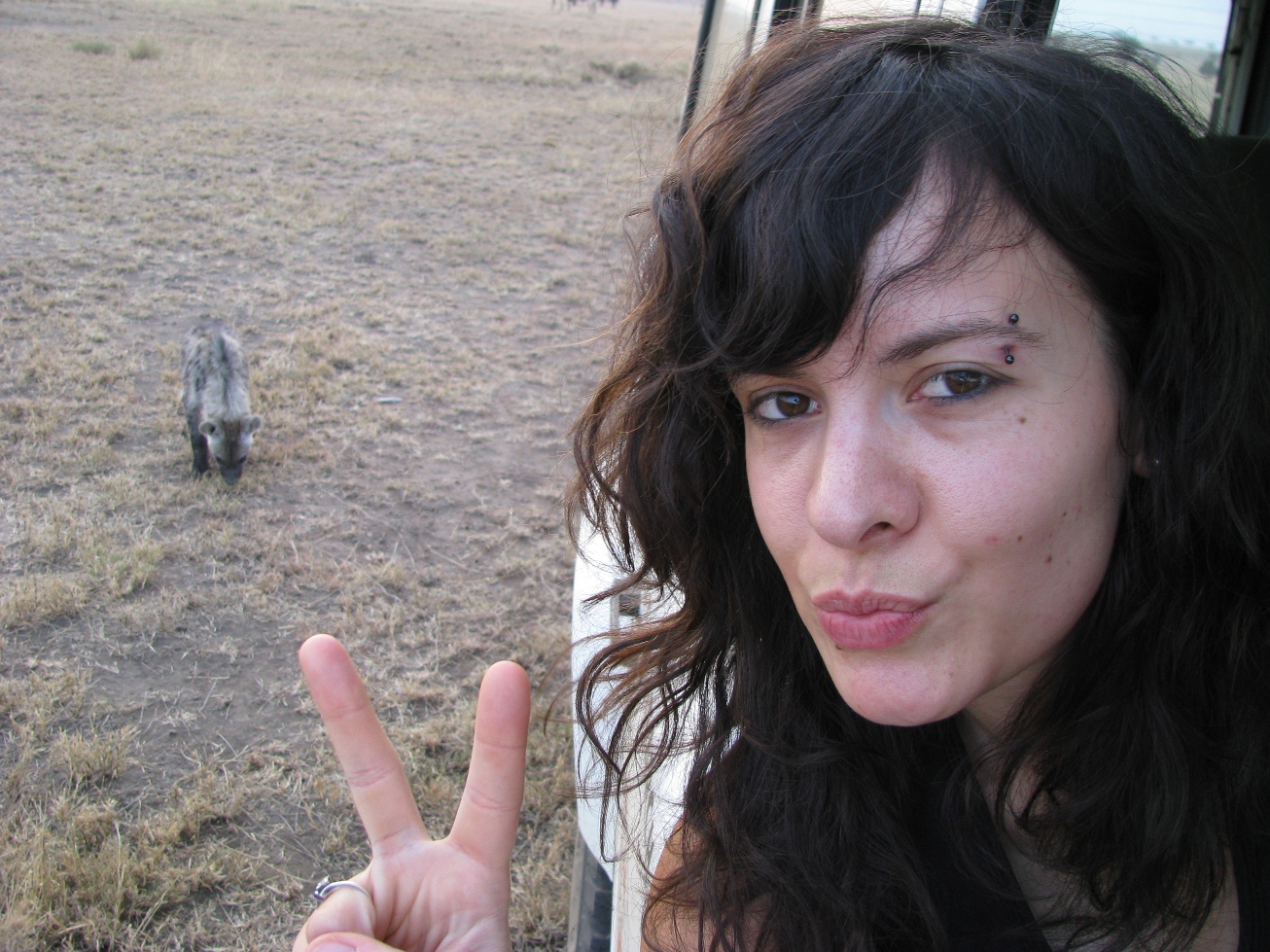
Sarah Benhaiem waiting for a faecal sample from a spotted hyena in the Serengeti National Park.©Sarah Benhaiem

Whether you are a laboratory or a field scientist, you have to be willing to get your hands dirty from time to time for the good of science. Sarah and I took that literally and spent a large part of our respective PhD projects handling faeces of free-ranging spotted hyenas from the Serengeti National Park and the Ngorongoro Crater, Tanzania.

Though faeces often are underrated, they are highly valuable material to work with because they conceal the most secret details about an animal’s social and sexual life. But having the privilege of holding a still-steaming poop is something you have to earn! Continue reading “Dealing with Variation in Hormone Metabolite Measurements: A Tale of Poop”