To celebrate the 10th Anniversary of the launch of Methods in Ecology and Evolution, we are highlighting an article from each volume to feature in the Methods.blog.
The Team Shrub research group in 2017 on Qikiqtaruk – Herschel Island in the Canadian Arctic. Not only do Team Shrub work with other people’s data, we collect our own to share publicly following open science best practice. (Photo credit: Sandra Angers-Blondin, www.teamshrub.com).
Team Shrub (www.teamshrub.com), are ecologists working to understand how global change alters plant communities and ecosystem processes. In May 2020, Team Shrub held a lab meeting to discuss working with other people’s data. Inspired by the conversation, they decided to put a blog post together to explore the importance of careful data cleaning in open science, provide 10 best practice suggestions for working with other people’s data, and discuss ways forward towards more reproducible science.
Daniela Scaccabarozzi, Tristan Campbell and Kenneth Dods tell us about the logistical challenges of sampling flowers at height and their new ground-based method for overcoming these problems.
Operational maneuvers while using the practical ground-based tool for nectar collection, prior to placing the organza bag over the inflorescence. Picture credit: Tristan Campbell.
Sampling flower nectar from forest canopies is logistically challenging, as it requires physical access to the canopy at a height greater than can be achieved by hand. The most common solutions comprise the use of cherry pickers, cranes or tree climbers, however these techniques are generally expensive, complex to organise, and often involve additional safety risk assessment and specialised technicians.
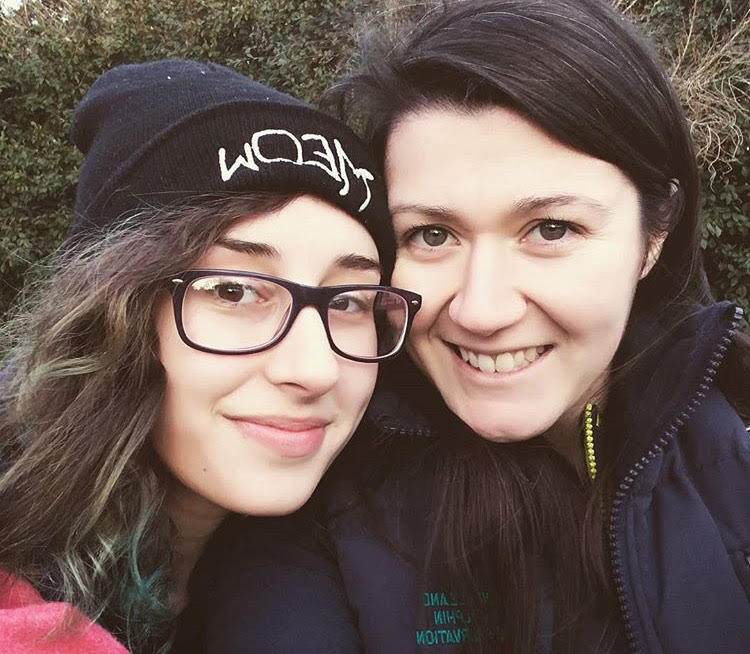
For LGBTQ+ Pride month, we are inviting LGBTQ+-identifying ecologists and evolutionary biologists to share their experiences of being LGBTQ+ in their field and present their thoughts on how the STEM can improve lives for LGBTQ+ individuals. For this post, wife-wife team Chloe and Jessica Robinson from Centre for Biodiversity Genomics at the University of Guelph, share their experiences of being married ecologists in STEM.
Jessica (left) and Chloe Robinson (right) met whilst studying at Swansea University.
C: “Find a job you love, and you’ll never have to work a day in your life” is a quote many of us are familiar with and it is something I have always strived to achieve. In my experience, by adding “Find a job you love & someone who shares your passion and you’ll never have to work a day in your life” to this quote gives the recipe for a happy marriage also. That ‘someone’ for me is my wife, Jessica.
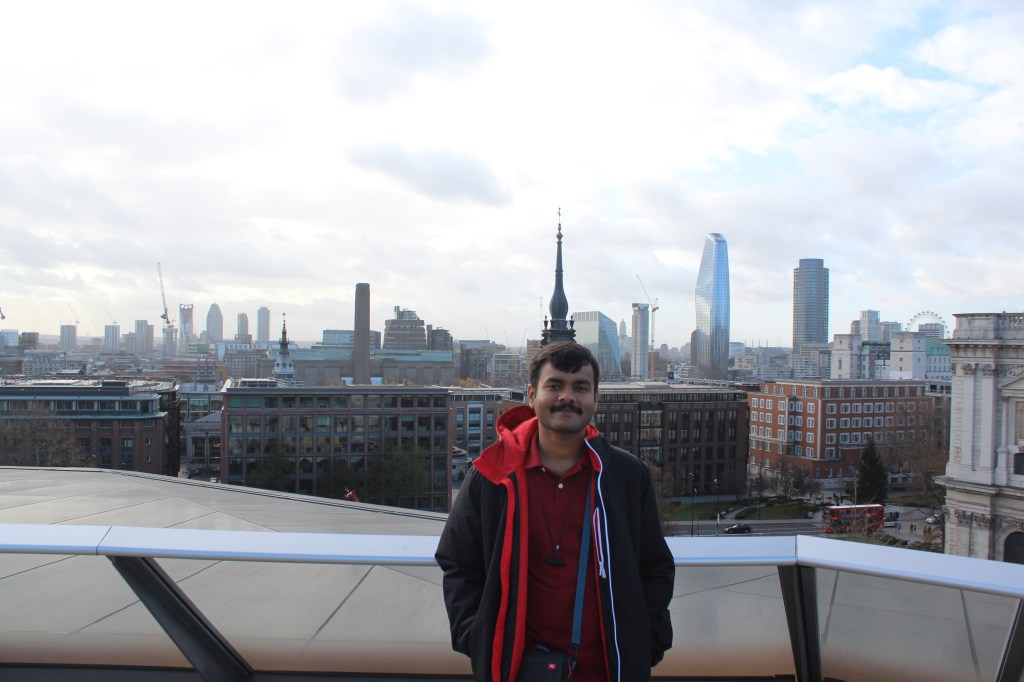
For Pride Month, we are inviting LGBTQ+-identifying ecologists and evolutionary biologists to share their experiences of being LGBTQ+ in their field and present their thoughts on how the STEM can improve lives for LGBTQ+ individuals. First up we have Vishwadeep Mane, a first-year microbiology PhD student at the Indian Institute of Science (IISc), Bengaluru.
Vishwadeep Mane shares his experience of being LGBTQ+ in microbiology.
Hello Everyone! Namaste! The world today is on the brink of a whole new era, an era of rethinking better. The Pandemic portrayed the necessity of sustainable reforms that are imperative for adapting to newer situations. Nevertheless, it brought the whole world together, gave us a reason to fight, love and respect. This month marks the ‘rebellion’ that gave voices to many unheard stories and changed the course of life of many individuals. To a greater extent, it helped in making this world a place for all with equality and respect. This ‘rebellion’ gave the moment of ‘Pride’ to possibly everyone unique in their own way. Happy Pride Month to all of you!
Accelerometers, Ground Truthing, and Supervised Learning
Accelerometers are sensitive to movement and the lack of it. They are not sentient and must recognise animal behaviour based on a human observer’s cognition. Therefore, remote recognition of behaviour using accelerometers requires ground truth data which is based on human observation or knowledge. The need for validated behavioural information and for automating the analysis of the vast amounts of data collected today, have resulted in many studies opting for supervised machine learning approaches.
Ground-truthing. The acceleration data stream (recorded using the animal-borne data logger, bottom-left) is synchronised with simultaneously recorded video (near top right). Picture credit: Kamiar Aminian
In such approaches, the process of ground truthing involves time-synchronising acceleration signals with simultaneously recorded video, having an animal behaviour expert create an ethogram, and then annotate the video according to this ethogram. This links the recorded acceleration signal to the stream of observed animal behaviours that produced it. After this, acceleration signals are chopped up into finite sections of pre-set size (e.g. two seconds), called windows. From acceleration data within windows, quantities called ‘features’ are engineered with the aim of summarising characteristics of the acceleration signal. Typically, ~15-20 features are computed. Good features will have similar values for the same behaviour, and different values for different behaviours.
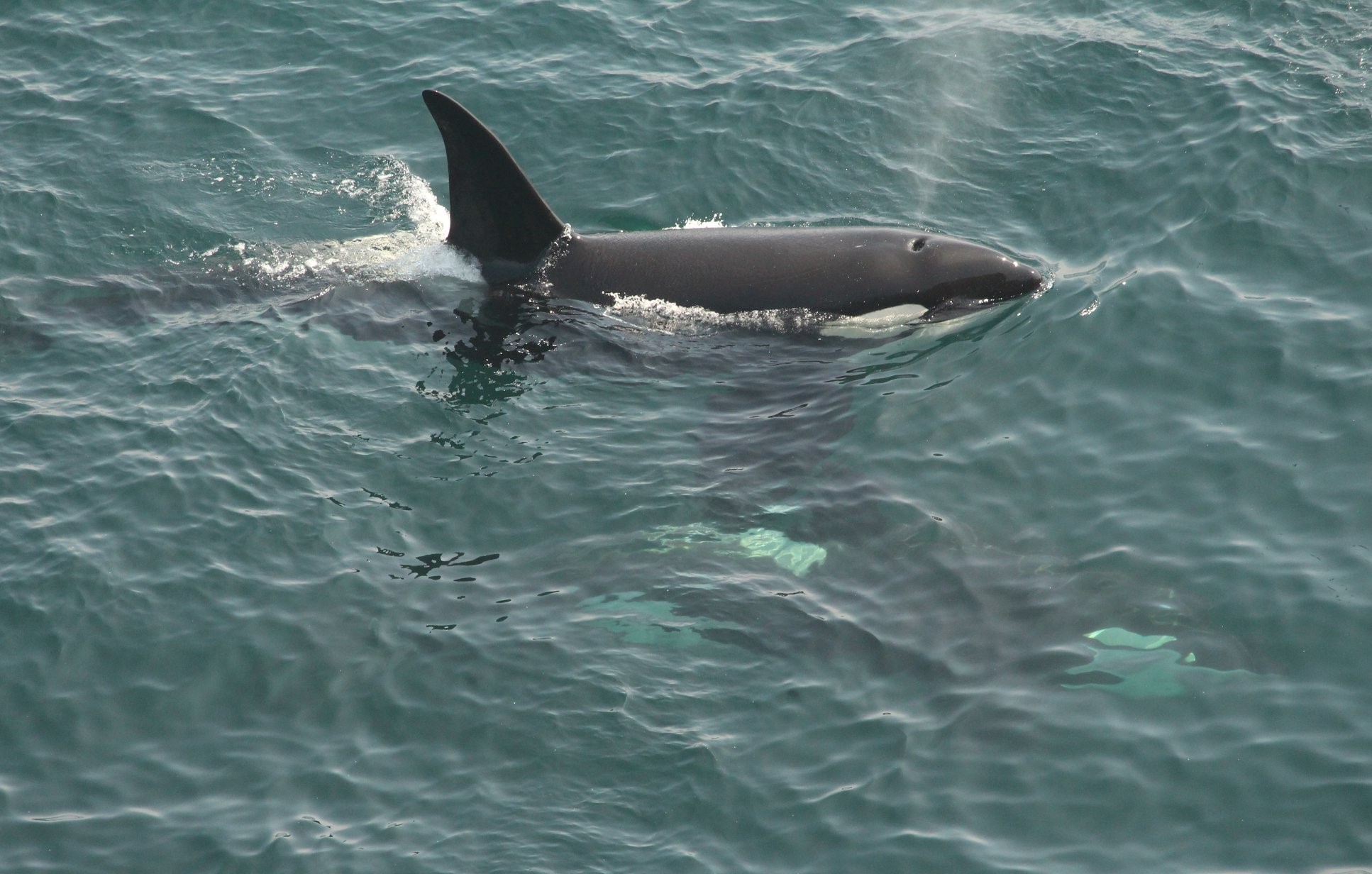
As with every other ecosystem on earth, the world’s oceans and the marine life they provide a home to, are under increasing pressure from human-related activities. At the 1992 Earth Summit, Canada proposed the concept of a World Ocean Day as a day to celebrate our oceans and to raise awareness about the crucial role the ocean plays in our lives and the important ways people can help protect it. Since 2002, the Ocean Project has been coordinating and promoting of World Ocean Day.
To celebrate the 10th Anniversary of the launch of Methods in Ecology and Evolution, we are highlighting an article from each volume to feature in the Methods.blog. For Volume 2, we have selected ‘Methods for Collaboratively Identifying Research Priorities and Emerging Issues in Science and Policy’ by Sutherland et al. (2011). In this post, the authors discuss the background and key concepts of the article, and changes in the relation between science and policy since the paper was published.
The Knowledge Cycle: an idealistic conceptual model of Science-Policy Interaction. Picture credit: Job Dronkers (2019): Science-Policy Interaction.
Between the late 1990s and early 2000s, recognition of the value of scientific evidence to government decision-making grew. As interest in projecting future issues to inform policy decisions increased, we recognised that ecologists did not have the methods to conduct this type of work effectively. In the United Kingdom, the Government Office for Science established the Foresight programme to support policy making; scientific advisory committees became common, and every Ministry appointed a Chief Scientist. Given this context, we explored the use of horizon scans to assess the future and better understand uncertainties.
Post provided by Jane Elith, Mike Kearney and Steven Phillips
To celebrate the 10th Anniversary of the launch of Methods in Ecology and Evolution, we are highlighting an article from each volume to feature in the Methods.blog. For Volume 1, we have selected ‘The art of modelling range-shifting species’ by Elith et al. (2010). In this post, first author, Professor Jane Elith, discusses the background and key concepts of the article, and how things have changed since the paper was published.
Illustration of the idea that model settings affect prediction.
We started work on this manuscript around 2008, prompted by increasing use of species distribution models for climate change and invasive species problems. At that stage there was growing recognition of the problems in these applications (e.g. see a recent MEE review on transferability) but relatively few tools for dealing with them. In our view, if correlative models are to be used for such purposes, the data and models require special attention.
How organisms adapt to the environment they live in is a key question in evolutionary biology. Genetic variation, i.e. how individuals within populations differ from each other in terms of their DNA, is an essential element in the process of adaptation. It can arise through different mechanisms, including DNA mutations, genetic drift, and recombination.
Example of how genetic drift can occur over generations via random sampling (i.e. random mating) in a population. (Picture credit: Gringer).
Differences in DNA sequences between individuals can results in differences in the expression of genes. This can therefore determine the organism’s capacity to grow, develop, and react to environmental stimuli. However, a growing body of literature reveals that there are other ways organisms can change the way they interact with the world without mutations in the DNA sequence.






 Methods Blog