The sending of letters under the pen name ‘St. Valentine’ began back in the middle ages as a way of communicating affection during the practice of courting. Fast forward to 2020 and Valentine’s Day is a day for celebrating romance, but now it typically features the exchange of gifts and cards between lovers.
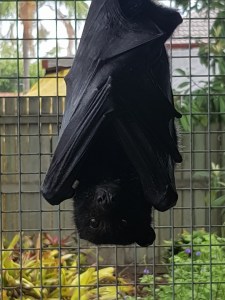
An Australian black flying fox – missing an ear, but fit for release.
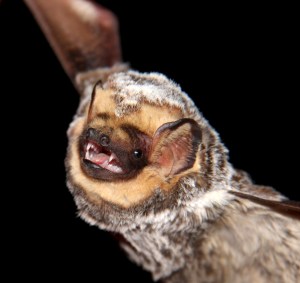
Bats. They’re amazing creatures. Long-lived (with relevance to their body size), echolocating (for microbats and some megabats), metabolically-resilient (apparently resilient to most virus infections) flying mammals (with heart beats up to 1200 bpm for hours during flight). There are 1,411 species of this incredible creature. But very little is known about their physiology and unique biological traits. And detailed evolutionary analysis has only just begun.
The problem is, they’re an ‘exotic’ animal (wildlife that most people do not come into contact with). Being a long-lived animal producing minimal offspring (most only have one baby per year), they’re not suited to the kind of experimental studies we do with other animals like mice. Unavoidably, some aspects of biology require the use of tissues and cells. These samples can be used for sequencing, genomics, molecular evolution studies, detailed transcriptomic analysis, functional experiments with specific cell types and much more. Some methodology is beginning to be published – such as capture techniques and wing punch/genomic isolation – but there’s been an absence of protocols for the processing of bats. This is essential for the field to maximise the potential application of each individual and for minimising non-essential specimen collection.
Aurora Borealis in the polar north. Photo: Noel Bauza, Pixabay
For those of us in the Northern Hemisphere, the coldest months of the year are upon us. A combination of post-holiday ‘blues’ and the cold, dark mornings make the daily trudge to work all that less inspiring. Recent snow storms in locations such as Newfoundland (Canada), have made it nearly impossible for many people to leave their homes, let alone commute to work. Now cast your mind to a little over 2,000 km north of Newfoundland and imagine the challenges faced with carrying out a job during the coldest, darkest months of the year.
As with every other biome on the planet, polar biomes contain a variety of different species, from bugs to baleen whales. To better understand the different species at our poles, scientists need to collect ecological data, but this is far from a walk in the park.
Iceberg in the Gerlache Strait, Antarctica. Photo: Liam Quinn, flikr.
How much do you think about the world beneath your feet? Soil is essential for life on earth and provides many ecosystem services, including carbon storage and providing habitats for billions of organisms. But one third of our global soils are already degraded and are at risk of further degradation from human activities, such as unsustainable farming practices, industrial activities, mining and other non-environmentally friendly practices. In 2002, the International Union of Soil Sciences (IUSS) marked the 5th December as World Soil Day, to celebrate the importance of soil as a critical component of the natural system and as a vital contributor to human well-being.
Michael Phelps yw un o’r athletwyr Olympaidd mwyaf clodfawr erioed, ynghyd â’r nofiwr cyflymaf yn y byd. Ac eto, gallai nofio’n gyflymach. Gan wisgo siwt arbennig LZR Racer Speedo, gallai Michael Phelps leihau’i lusgiad hydrodynamig, neu’i wrthiant dŵr, 40% neu fwy. O ganlyniad gallai ei gyflymdra nofio gynyddu dros 4%! Mewn cystadleuaeth, dyna’r gwahaniaeth rhwng gwobrau arian ac aur. Ond, petai Phelps yn anghofio tynnu’i “hosanau llusgo” – sef hosanau rhwystrus a ddyluniwyd i gynyddu gwrthiant dŵr er mwyn cynyddu cryfder y nofiwr – caiff ei gyflymder ei leihau’n sylweddol. Byddai’n ffodus i ennill gwobr efydd!
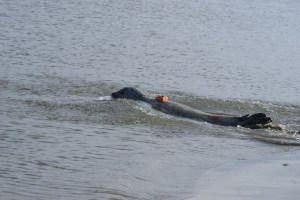
Mae nofwyr proffesiynol yn gyfarwydd â defnyddio technolegau i wella eu perfformiad drwy leihau eu llusgiad ond ni all hynny gymharu â’r addasiadau a wnaed gan anifeiliaid gwyllt. Mae creaduriaid yn y môr wedi esblygu addasiadau anghredadwy i leihau llusgiad, megis lliflinio eithafol mewn mamaliaid ac adar y môr. Mae hyn yn eu galluogi i symud dan y dŵr mor gyflym ac effeithlon â phosib. Mae morloi, er enghraifft, yn eithaf afrosgo ar y tir ond maent yn osgeiddig ac yn gyflym o dan y dŵr. Mae siâp eu cyrff wedi’i ddylunio er mwyn iddynt symud yn gyflymaf pan fyddant yn nofio.
Hello! This is my first post as Blog Editor for Methods in Ecology and Evolution and I’m thrilled to be starting with an exciting, thought-provoking topic in the wake of Halloween. But first, let me introduce myself. I currently work as a Postdoctoral Fellow and Project Manager in the Hajibabaei Lab at the Centre for Biodiversity Genomics (University of Guelph, ON, Canada) and my undergraduate and postgraduate degrees are both from Swansea University (UK). My research background is largely focused around the application of environmental DNA (i.e. free DNA found in natural environments) to detect and monitor aquatic species and answer ecological questions through both single-species detection and DNA metabarcoding.
Minimising the effects the ongoing Anthropocene mass extinction has become one of the main challenges of our era. The data suggest that the current rate of species loss is 100–1,000 greater than the background rates seen in the geological record. “But does it really matter if species are lost?” This question has permeated social and political debates. It’s usually used to demean conservation efforts. But it has also intrigued conservation scientists.
We know that species don’t occur alone in their environment. They’re entangled by their interactions, forming complex networks. In these networks the loss of one species may result in the loss of other species that depend on it. This process is known as co-extinction. Estimates of the magnitude of past and future extinction rates have often failed to account for the interdependence among species and the consequences of primary species loss on other species though. Continue reading “Reconnecting the Web of Life: Rewiring and Network Robustness”
Minimizar os efeitos do atual processo de extinção em massa do Antropoceno se tornou um dos principais desafios da nossa era. Os dados sugerem que a taxa atual de perda de espécies é 100-1.000 vezes maior do que as taxas de fundo observadas no registro geológico. “Mas realmente importa se uma espécie é perdida?” Essa questão que permeia os debates sociais e políticos, geralmente para desqualificar os esforços de conservação, também tem intrigado os cientistas da conservação.
Sabemos que as espécies não ocorrem sozinhas em seu ambiente. Elas estão interligadas por suas interações ecológicas, formando redes complexas. Nessas redes, a perda de uma espécie pode resultar em um efeito dominó, culminando na perda secundária de outras espécies. Esse processo é conhecido como co-extinção. As estimativas da magnitude das taxas de extinção passadas e futuras muitas vezes falharam em explicar a interdependência entre as espécies e as conseqüências da perda primaria de espécies. Continue reading “Religando a rede da vida: Reconexões de interações e a robustez de redes ecológicas”
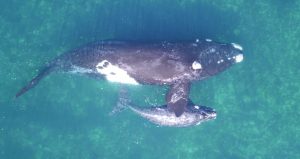
Researchers have devised a way to accurately estimate the weight of free-living whales using only aerial images taken by drones. By measuring the body length, width and height of free-living southern right whales photographed by drones, researchers were able to develop a model that accurately calculated the body volume and mass of the whales.
Because of their large size and aquatic life, previously the only way to obtain data on the body mass of whales was to weigh dead or stranded individuals.
The innovative method can be used to learn more about the physiology and ecology of whales. “Knowing the body mass of free-living whales opens up new avenues of research. We will now be able to look at the growth of known aged individuals to calculate their body mass increase over time and the energy requirements for growth. We will also be able to look at the daily energy requirements of whales and calculate how much prey they need to consume.” said Assistant Professor Fredrik Christiansen from Aarhus Institute of Advanced Studies in Denmark and lead author of the study. Continue reading “Researchers Use Drones to Weigh Whales”
As environmental managers, we’re frequently asked to make judgements about the relative health of the environment. This is often difficult because, by its nature, the environment is highly variable in space and time. Ideally, such judgements should be informed by robust scientific investigation, or more precisely, the reliable interpretation of the resulting data.
Type I and Type II Errors
Even with robust investigations and good data, our interpretations can sometimes be wrong. In general, this happens when:
the investigation concludes that an impact has occurred, when in fact it hasn’t (Type I error)
fails to detect an impact, when an impact has actually occurred (Type II error).




 Methods Blog