Unraveling the identity of fish sounds to support marine conservation

Post provided by Xavier Mouy Fish sounds and marine conservation Many fish species produce sounds to attract mates, scare away predators or defend their territory. These sounds are very useful to us, scientists! Just by listening to the ocean, we can detect the presence of different fish species, infer their behaviour and potentially find out how many fish there are in an environment. This has … Continue reading Unraveling the identity of fish sounds to support marine conservation

Visualising the flow of matter within ecosystems

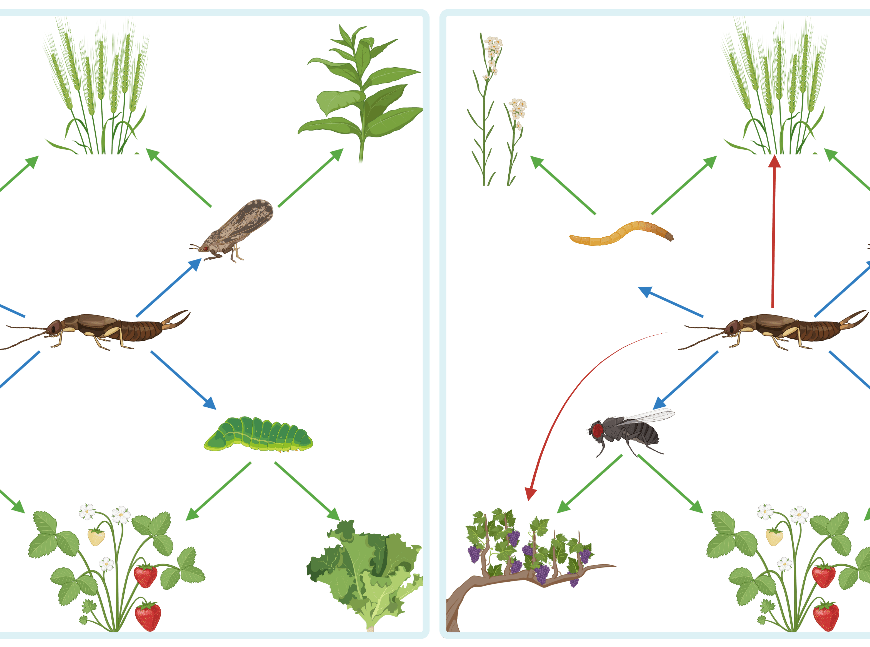
Post provided by Mateusz Iskrzyński Would you like to quickly get a clear picture of the food web you are modelling or analysing? Have you thought about including its visualisation in your paper? Or maybe you wanted to show your students or general audience how interconnected food webs are in real ecosystems? Or just wondered how matter flows through an ecosystem? To help you with … Continue reading Visualising the flow of matter within ecosystems

Merging dietary metabarcoding into networks: turning “don’ts” into “dos”

Post provided by Jordan Cuff, Fredric Windsor, Maximillian Tercel, James Kitson and Darren Evans.

Do you spend your days incapacitated by the agony of not knowing how to combine your field-based observational data with your dietary metabarcoding results? Perhaps every time you go to merge them, the horror of conflicting data types and biases causes you to run and hide from the mere thought of analysis. Or maybe the thought of such problems hadn’t even crossed your mind! In this post, Jordan Cuff and co-authors share insight from their recent publication on using dietary metabarcoding in network ecology and how to merge metabarcoding with traditional data types.

Continue reading “Merging dietary metabarcoding into networks: turning “don’ts” into “dos””

Insect tracking using retroreflective tags

Post provided by Michael Smith Tracking bee movement is anything but an easy task. Electronic tags are often too cumbersome and extensive electronic systems such as radars are costly to deploy. There is a need for a low-cost, low-impact tool, with high spatial resolution for tracking bees, to investigate how far they forage. In this blog post, Michael Smith discusses the development of retroreflective tags … Continue reading Insect tracking using retroreflective tags

Large drones make a big splash: Using smaller drones to conduct less disruptive wildlife surveys

Post provided by Kayla Kuhlmann

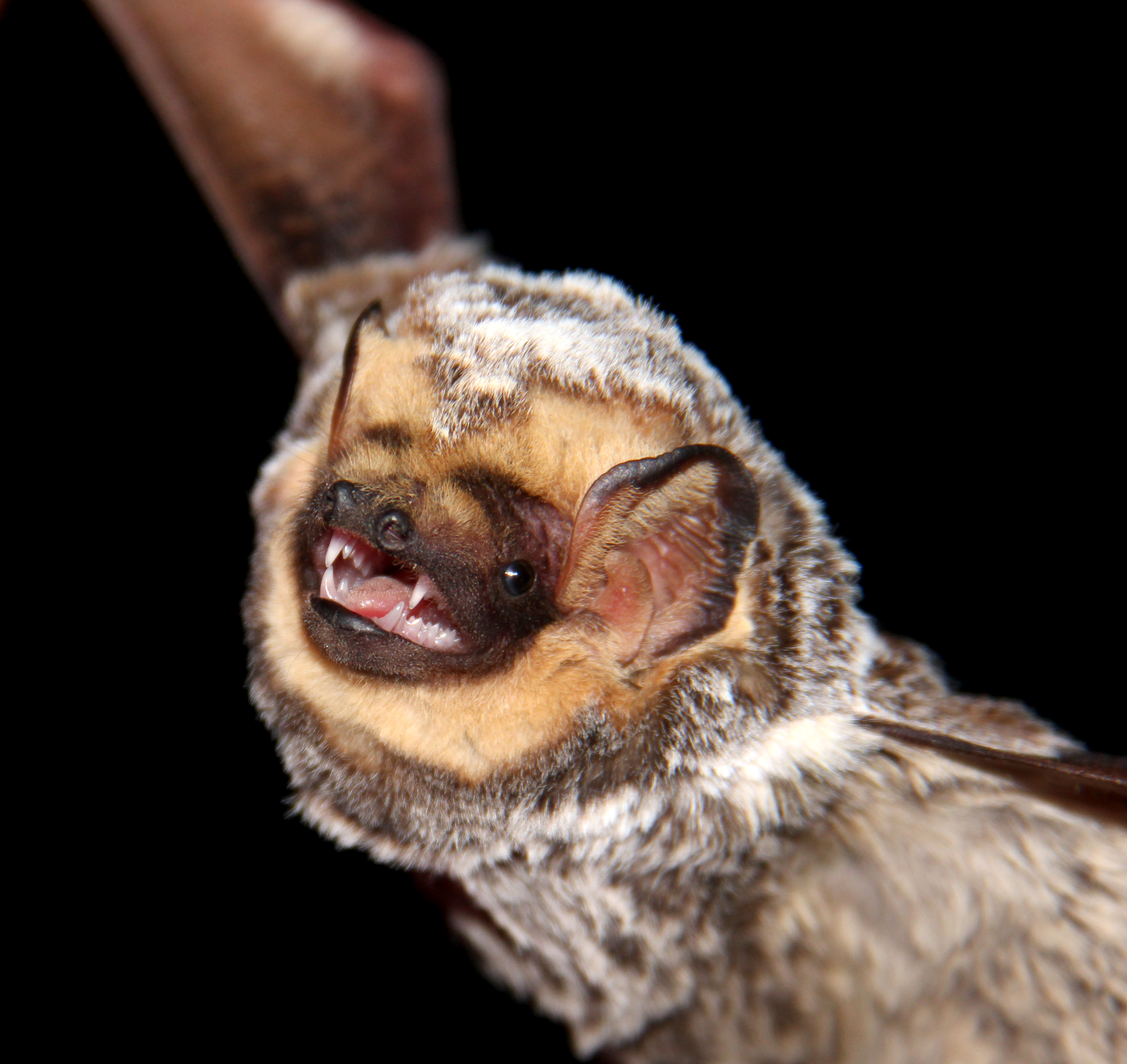
Hoary bat (Lasiurus cinereus). Credit: Veronica Zamora-Gutierrez.

Ecologists have started looking into drones as new tools for wildlife surveys, but how can drone disturbance be minimized in order to produce accurate wildlife counts? In this post, Kayla Kuhlmann describes a drone practice to reduce disruption during acoustic bat surveys as featured in the paper “Miniaturization eliminates detectable impacts of drones on bat activity”, recently published in Methods in Ecology and Evolution.

Continue reading “Large drones make a big splash: Using smaller drones to conduct less disruptive wildlife surveys”

On foot snares and felids

By Methods in Ecology and Evolution Executive Editor Aaron M. Ellison A recent Practical Tools article published in Methods in Ecology & Evolution described a foot snare used to capture jaguars and cougars in Brazil (Ribeiro de Araujo et al. 2021a). Within hours of the posting of the proofed version of the article on the Early View section of the journal’s website, comments on Twitter … Continue reading On foot snares and felids

A framework for unifying disturbance ecology

Post provided by: Brian Buma

In this post, Brian Buma discusses a unifying framework for studying disturbance ecology, from largescale wildfires to bacterial colonies, as proposed in the new paper “Disturbance ecology and the problem of n = 1: A proposed framework for unifying disturbance ecology studies to address theory across multiple ecological systems” recently published in Methods in Ecology and Evolution.

Continue reading “A framework for unifying disturbance ecology”

Flora Incognita – more than just a plant identification app

Post provided by Michael Rzanny & Jana Wäldchen

Species identification is an essential tool for recording biodiversity, especially in an era of habitat loss and climate change. Developing skills to correctly identify plants to a species or even a genus level can take many years of training, but a new app called Flora Incognita aims to empower citizens with botanical expertise while also collecting data for scientific analysis.

In this blog post, Michael Rzanny and Jana Wäldchen reveal the inspiration behind this new app and discuss highlights from their new paper “The Flora Incognita app – interactive plant species identification” recently published in Methods in Ecology & Evolution

Continue reading “Flora Incognita – more than just a plant identification app”

Cover Stories: The journey from designing to employing an automated radio telemetry system to track monarch butterflies

Post provided by Kelsey E. Fisher

Kelsey Fisher describes the motivations and challenges in the development of a novel automated radio telemetry method to track the movement of butterflies at the landscape scale published in their new Methods article ‘Locating large insects using automated VHF radio telemetry with a multi‐antennae array’.

LB-2X transmitter attached to a monarch butterfly.

Understanding animal movement across varying spatial and temporal scales is an active area of fundamental ecological research, with practical applications in the fields of conservation biology and natural resource management. Advancements in tracking technologies, such as GPS and satellite systems, allow researchers to obtain more location information for a variety of species than ever before. It’s an exciting time for movement ecologists! However, entomologists studying insect movement are still limited because of the large size of tracking devices relative to the small size of insects.

Continue reading “Cover Stories: The journey from designing to employing an automated radio telemetry system to track monarch butterflies”

10th Anniversary Volume 11: Climate Change

To celebrate our anniversary, we are highlighting a key article from each of our volumes. For Volume 11 we selected The handbook for standardized field and laboratory measurements in terrestrial climate change experiments and observational studies (ClimEx)’ by Halbritter et al. (2019).

In this post, Jessica Royles, one of our Associate Editors with expertise in climate change, selects her favourite MEE papers in this field.

Continue reading “10th Anniversary Volume 11: Climate Change”