Insect tracking using retroreflective tags

Post provided by Michael Smith Tracking bee movement is anything but an easy task. Electronic tags are often too cumbersome and extensive electronic systems such as radars are costly to deploy. There is a need for a low-cost, low-impact tool, with high spatial resolution for tracking bees, to investigate how far they forage. In this blog post, Michael Smith discusses the development of retroreflective tags … Continue reading Insect tracking using retroreflective tags

Large drones make a big splash: Using smaller drones to conduct less disruptive wildlife surveys

Post provided by Kayla Kuhlmann

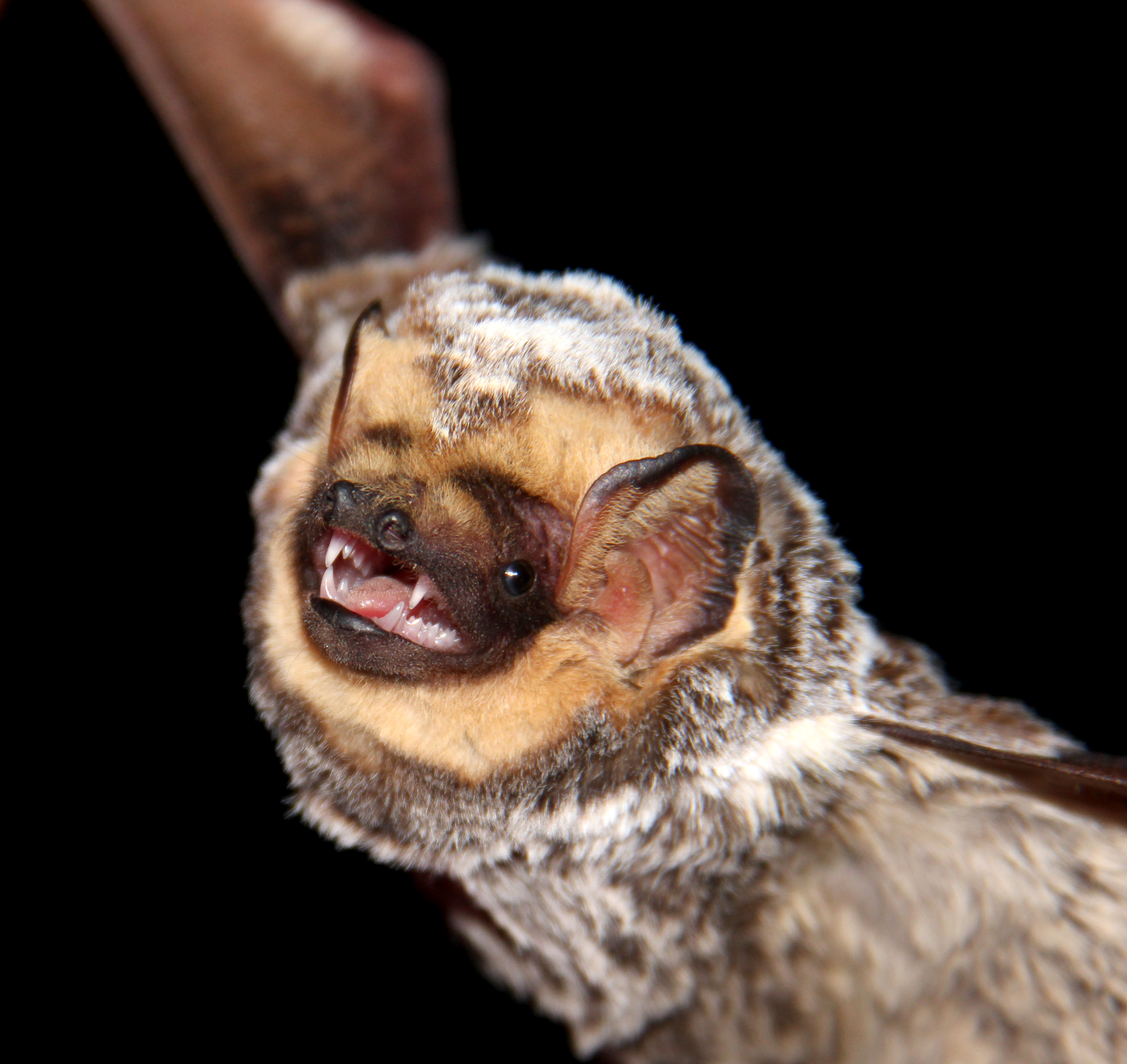
Hoary bat (Lasiurus cinereus). Credit: Veronica Zamora-Gutierrez.

Ecologists have started looking into drones as new tools for wildlife surveys, but how can drone disturbance be minimized in order to produce accurate wildlife counts? In this post, Kayla Kuhlmann describes a drone practice to reduce disruption during acoustic bat surveys as featured in the paper “Miniaturization eliminates detectable impacts of drones on bat activity”, recently published in Methods in Ecology and Evolution.

Continue reading “Large drones make a big splash: Using smaller drones to conduct less disruptive wildlife surveys”

Non-invasive playback experiments allow for rigorous studies of wildlife interactions

Post provided by Meredith Palmer, Chris “Akiba” Wang, Jacinta Plucinski & Robert M. Pringle

The BoomBox ABR deployed with a Bushnell TrophyCam camera trap in Gorongosa National Park, Mozambique

Camera traps are a valuable tool in ecological research, especially for capturing large quantities of information on the behaviour of an array of wildlife within an ecological community. Camera traps are seldom used to experimentally testing key animal behaviour hypotheses, despite the potential offered by the non-invasive technology. In this blog post, Dr. Meredith Palmer and co-authors discuss the application of the ‘BoomBox’ camera trap module that allows researchers to conduct a unique suite of manipulative experiments on free-living species in complex environments, as published in their Methods in Ecology and Evolution article ‘BoomBox: An Automated Behavioral Response (ABR) Camera Trap Module for Wildlife Playback Experiments’.

Continue reading “Non-invasive playback experiments allow for rigorous studies of wildlife interactions”

MEEin3: Adapting a turkey fryer to manipulate water temperature

Got just five minutes to spare? Listen to our brand new podcast! In this episode, we interview Cassandra Konecny and Graham Brownlee about their recent publication “Adapting a propane turkey fryer to manipulate temperature in aquatic environments”. As the likelihood of extreme temperatures increases due to climate change, there is a growing need to better understand the potential impacts of altered thermal regimes on biodiversity … Continue reading MEEin3: Adapting a turkey fryer to manipulate water temperature

Flora Incognita – more than just a plant identification app

Post provided by Michael Rzanny & Jana Wäldchen

Species identification is an essential tool for recording biodiversity, especially in an era of habitat loss and climate change. Developing skills to correctly identify plants to a species or even a genus level can take many years of training, but a new app called Flora Incognita aims to empower citizens with botanical expertise while also collecting data for scientific analysis.

In this blog post, Michael Rzanny and Jana Wäldchen reveal the inspiration behind this new app and discuss highlights from their new paper “The Flora Incognita app – interactive plant species identification” recently published in Methods in Ecology & Evolution

Continue reading “Flora Incognita – more than just a plant identification app”

International Day of Forests: Generation Restoration

Post provided by Chloe Robinson

Credit: Food and Agriculture Organization of the United Nations.

Forests, across all ecozones and in all shapes and sizes, are essential for life on earth. Around 80% of the world’s land-based biodiversity call forests home and over 1 billion people, including more than 2,000 Indigenous cultures, rely on forests for food, shelter, energy and income. As with many other ecosystems, forests worldwide are under increasing threat from human activities, with the current rate of deforestation estimated at 13 million hectares per year.

Continue reading “International Day of Forests: Generation Restoration”

The worldwide use of wildlife detection dogs – and how they became part of our life

Post provided by Annegret Grimm-Seyfarth

Border Collie Zammy is trained to search for Eurasian otter scat and pond, alpine and great crested newts. Photo: André Künzelmann.

For those not directly working with them, using wildlife detection dogs always sound like a new fancy idea that should be tested somehow. However, this method is neither new nor rare, and people working with wildlife detection dogs often call them their best method in finding their target species. In this post, Annegret Grimm-Seyfarth discusses her paper ‘Detection dogs in nature conservation: A database on their worldwide deployment with a review on breeds used and their performance compared to other methods’, which shows the broad and worldwide applications of wildlife detection dogs.

Continue reading “The worldwide use of wildlife detection dogs – and how they became part of our life”

Searching for snow leopards

Post provided by Ian Durbach and Koustubh Sharma

Snow leopard captured via camera trap in Mongolia. Picture credit: Snow Leopard Conservation Foundation/Snow Leopard Trust/Panthera (OR SLCF/SLT/PF).

Snow leopards are notoriously elusive creatures and monitoring their population status within the remote, inhospitable habitats they call home, can be challenging.  In this post, co-authors Ian Durbach and Koustubh Sharma discuss the applications of their Methods in Ecology and Evolution article, ‘Fast, flexible alternatives to regular grid designs for spatial capture–recapture’, for monitoring snow leopard populations.

Continue reading “Searching for snow leopards”

Cover Stories: The journey from designing to employing an automated radio telemetry system to track monarch butterflies

Post provided by Kelsey E. Fisher

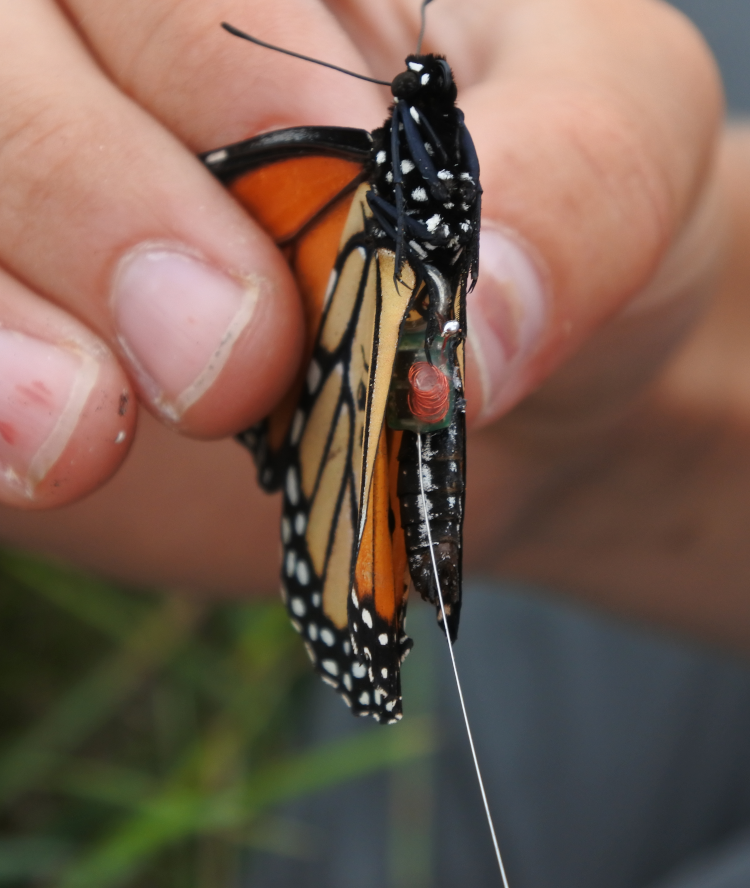
Kelsey Fisher describes the motivations and challenges in the development of a novel automated radio telemetry method to track the movement of butterflies at the landscape scale published in their new Methods article ‘Locating large insects using automated VHF radio telemetry with a multi‐antennae array’.

LB-2X transmitter attached to a monarch butterfly.

Understanding animal movement across varying spatial and temporal scales is an active area of fundamental ecological research, with practical applications in the fields of conservation biology and natural resource management. Advancements in tracking technologies, such as GPS and satellite systems, allow researchers to obtain more location information for a variety of species than ever before. It’s an exciting time for movement ecologists! However, entomologists studying insect movement are still limited because of the large size of tracking devices relative to the small size of insects.

Continue reading “Cover Stories: The journey from designing to employing an automated radio telemetry system to track monarch butterflies”

Detecting Diatoms through Kick-net DNA Metabarcoding

Post provided by Dr. Chloe Robinson

Diatoms may be the only organisms to live in houses made of glass, but some species of diatom are far from fragile. Certain groups of diatoms are highly tolerant of poorer water quality and therefore their presence can be diagnostic for freshwater health estimates. A recent study, featuring MEE Associate Editor, Chloe Robinson, investigated whether communities of freshwater diatoms can be collected via kick-net methodology, which is an approach currently used for collecting benthic macroinvertebrates. In this post, Chloe highlights how applying previously optimised freshwater methods can result in a more holistic understanding of freshwater health.

Continue reading “Detecting Diatoms through Kick-net DNA Metabarcoding”