Britain’s Smallest Bird Affected by Cold Winters: New Analysis Methods Relate Wildlife Abundance to Weather

Below is a press release about the Methods paper ‘Attributing changes in the distribution of species abundance to weather variables using the example of British breeding birds‘ taken from the University of St Andrews.

©CJ Hughson
The goldcrest is being hit hard by cold winters. ©CJ Hughson

Britain’s smallest bird species, the goldcrest, is being hit hard by cold winters, new analysis methods developed by researchers at the University of St Andrews have revealed.

The data analysis techniques, published today in Methods in Ecology and Evolution, take a longer term view over multiple locations and for a period of several years, compared to previous studies.

They showed that the cold temperatures strongly affected breeding numbers of the goldcrest, while in contrast, the song thrush was not affected by the cold, but benefited from wet and mild summers. Continue reading “Britain’s Smallest Bird Affected by Cold Winters: New Analysis Methods Relate Wildlife Abundance to Weather”

Issue 8.6: How to Measure Natural Selection

Issue 8.6 is now online!

The April issue of Methods, which includes our latest Special Feature – ‘How to Measure Natural Selection – is now online!

Understanding how and why some individuals survive and reproduce better than others, the traits that allow them to do so, the genetic basis of those traits, and the signatures of past and present selection in patterns of variation in the genome remain at the top of the research agenda for evolutionary biology. This Special Feature – Guest Edited by Jeff Conner, John Stinchcombe and Joanna Kelley – draws together a collection of seven papers that highlight new methodological and conceptual approaches to meeting this agenda.

Three of the ‘How to Measure Natural Selection’ papers – Franklin and Morrissey, Thomson and Hadfield, and Hadfield and Thomson – clarify unresolved aspects of the literature in meaningful and important ways. Following on from this Hermisson and Pennings; Lotterhos et al.; and Villanueva‐Cañas et al. tackle the genomic results of evolution by natural selection: namely, how we can detect natural selection from genomic data? Finally, Wadgymar et al. address the issue of how much we know about the underlying loci or agents of selection.

To use the Editors’ own words, the articles in this issue “deal with how we can detect selection in a way that can be used to predict evolutionary responses, how selection affects the genome, and how selection and genetics underlie adaptive differentiation.”

All of the articles in the ‘How to Measure Natural Selection‘ Special Feature will be freely available for a limited time.
Continue reading “Issue 8.6: How to Measure Natural Selection”

Bottom-up Citizen Science and Biodiversity Statistics

Post provided by Ditch Townsend and Robert Colwell

Different Paths to Science

Ditch Townsend on Exmoor in Devon, UK

DITCH: Amateur naturalists from the UK have a distinguished pedigree, from Henry Walter Bates and Marianne North, to Alfred Russel Wallace and Mary Anning. But arguably, the rise of post-war academia in the fifties displaced them from mainstream scientific discourse and discovery. Recently, there has been a resurgence of the ‘citizen scientist’, like me, in the UK and elsewhere – although the term may refer to more than one kind of beast.

To me, the ‘citizen scientist’ label feels a little patronising – conveying an image of people co-opted en masse for top-down, scientist-led, large-scale biological surveys. That said, scientist-led surveys can offer valid contributions to conservation and the documentation of the effects of climate change (among other objectives). They also engage the public (not least children) in science, although volunteers usually have an interest in natural history and science already. For me though, the real excitement comes in following a bottom-up path: making my own discoveries and approaching scientists for assistance with my projects.

Robert Colwell at the Boreas Pass in Colorado, USA

ROB: I grew up on a working ranch in the Colorado mountains, surrounded on three sides by National Forest and a National Wilderness Area. My mother, an ardent amateur naturalist, taught me and my sister the local native flora and fauna and our father instilled a respect for the land in us. For my doctoral research at the University of Michigan, I studied insect biodiversity in Colorado and Costa Rica at several elevations. The challenges of estimating the number of species (species richness) and understanding why some places are species-rich and others species-poor has fascinated me ever since. Continue reading “Bottom-up Citizen Science and Biodiversity Statistics”

‘Size’ and ‘Shape’ in the Measurement of Multivariate Proximity

Ordination and clustering methods are widely applied to ecological data that are non-negative (like species abundances or biomasses). These methods rely on a measure of multivariate proximity that quantifies differences between the sampling units (e.g. individuals, stations, time points), leading to results such as: Ordinations of the units, where interpoint distances optimally display the measured differences Clustering the units into homogeneous clusters Assessing differences between … Continue reading ‘Size’ and ‘Shape’ in the Measurement of Multivariate Proximity

The Right Tool for the Job: Using Zeta Diversity to Communicate Uncertainty in Ecological Modelling

Post provided by Mariona Roigé

The Need for Modelling

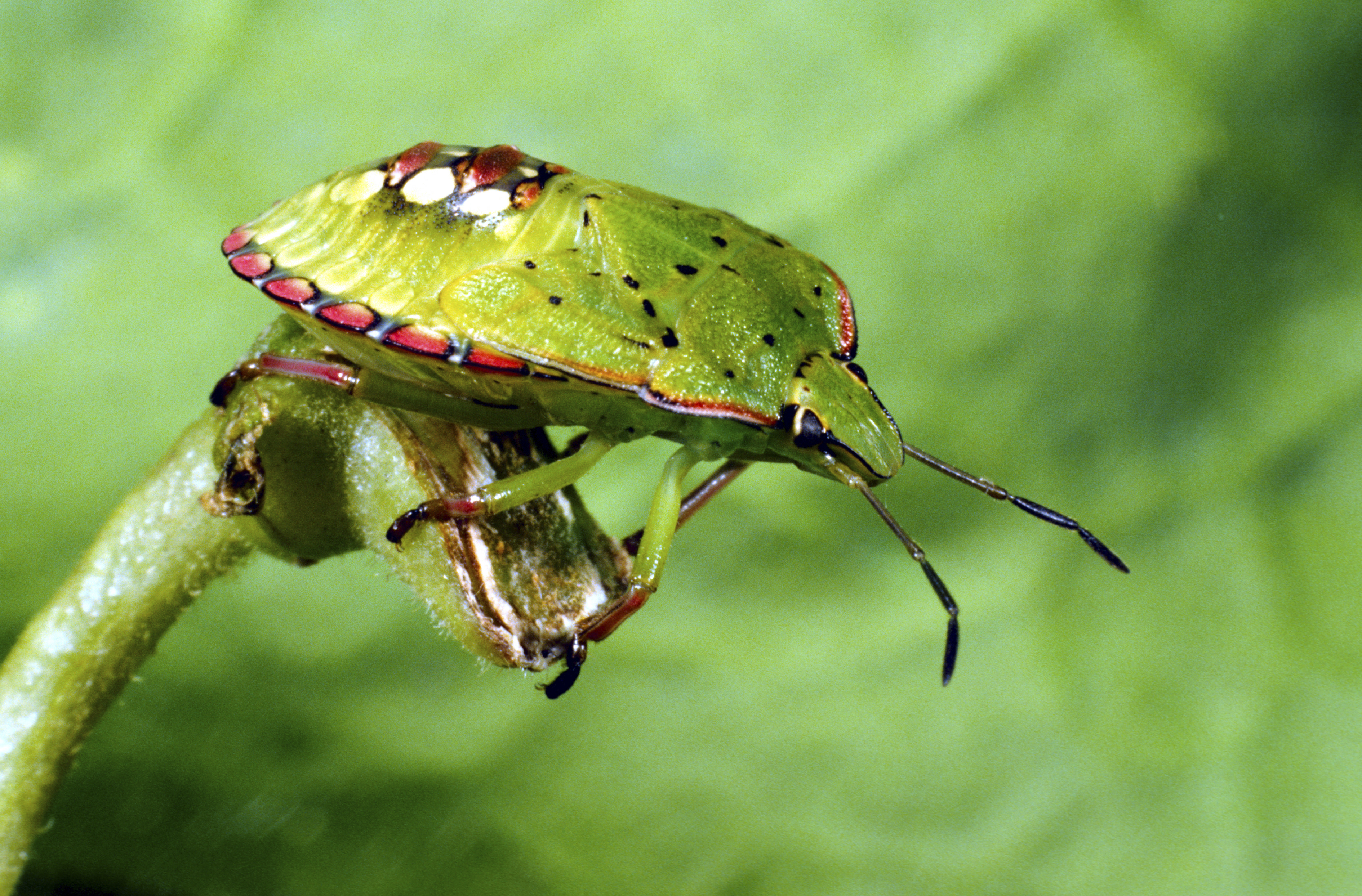
Green vegetable bug nymph (Nezara viridula). ©John Marris. Lincoln University.

Despite how far modelling has taken us in science, the use of models remains controversial. Modelling covers a huge range of common practices, from scaled models of ships to determine the shape that will have the least resistance to water to complex, comprehensive ‘models of everything’. A great example of the latter is the Earth System Model. This model aims to understand the changes in global climate by taking into account the interaction between physical climate, biosphere, the atmosphere and the oceans. Basically, a model of how the Earth works.

The controversy in the use of modelling resides in how accurately the model describes reality and the level of confidence we have in its outputs. The first argument can be a bit counter-intuitive: sometimes, a very simple model can be a great predictor. Actually, the conventional view in ecology is that simple models are more generalisable than complex models, although this view is being challenged. However, the level of confidence, or the level of uncertainty, that we have in the outputs of the model is a crucial point. We need to be able to accurately determine our levels of uncertainty if we want people to trust our models. Continue reading “The Right Tool for the Job: Using Zeta Diversity to Communicate Uncertainty in Ecological Modelling”

Assessment of Stream Health with DNA Metabarcoding

Following on from last week’s press release ‘How Clean are Finnish Rivers?’, Vasco Elbrecht et al. have produced a video to explain the methods in ‘Assessing strengths and weaknesses of DNA metabarcoding-based macroinvertebrate identification for routine stream monitoring‘. In this video, the authors explore the potential of DNA metabarcoding to access stream health using macroinvertebrates. They compared DNA and morphology-based identification of bulk monitoring samples from … Continue reading Assessment of Stream Health with DNA Metabarcoding

Fast-Moving Biodiversity Assessment: Are We Already in the Future?

Post provided by Carola Gómez-Rodríguez & Alfried P. Vogler

Time flies… in the blink of an eye! And even more so in science. The molecular lab work we were used to two decades ago seems like ancient history to today’s PhD students. The speed of change in sequencing technology is so overwhelming that imagination usually fails to foresee how our daily work will be in 10 years’ time. But in the field of biodiversity assessment, we have very good clues. Next Generation Sequencing is quickly becoming our workhorse for ambitious projects of species and genetic inventories.

One by One Approach to Studying Biodiversity

For decades, most initiatives measured biodiversity in the same way: collect a sample of many individuals in the field, sort the specimens, identify them to a Linnaean species one at a time (if there was a good taxonomist in the group which, unfortunately, it is kind of lucky these days!), and count them. Or, if identification was based on molecular data, the specimen was subject to DNA extraction, to sequence one (or several) short DNA markers. This involved countless hours of work that could be saved if, instead of inventorying biodiversity specimen-by-specimen, we followed a sample-by-sample approach. To do this now, we just have to make a “biodiversity soup”.

Biodiversity assessment based on morphological identification and/or Sanger sequencing (“The one-by-one approach”)

Continue reading “Fast-Moving Biodiversity Assessment: Are We Already in the Future?”

How Clean are Finnish Rivers?

Below is a press release about the Methods paper ‘Assessing strengths and weaknesses of DNA metabarcoding-based macroinvertebrate identification for routine stream monitoring‘ taken from the University of Duisburg-Essen.

©Shanthanu Bhardwaj
©Shanthanu Bhardwaj

Dragonflies, mayflies and water beetles have one thing in common: They indicate how clean the streams are in which they live. Scientists from the University of Duisburg-Essen and the Finnish Environment Institute (SYKE) have developed a DNA-based method, which allows to assess the stream water quality with unprecedented speed and accuracy. The article – ‘Assessing strengths and weaknesses of DNA metabarcoding-based macroinvertebrate identification for routine stream monitoring‘ – was just released in the esteemed peer-reviewed journal Methods in Ecology and Evolution.

Traditional stream assessment using visual identification of indicator species is time-consuming, expensive and procedures are seldom standardised. Especially small organisms may look similar and misidentifications happen frequently. Using a genetic method to identify the species these concerns are not an issue, as even small organisms can be securely identified using a DNA marker. Continue reading “How Clean are Finnish Rivers?”

Editor Recommendation – HistMapR: Rapid Digitization of Historical Land-Use Maps in R

Post provided by Sarah Goslee For an ecologist interested in long-term dynamics, one of the most thrilling experiences is discovering a legacy dataset stashed away somewhere. For an ecologist interested in long-term dynamics, one of the most daunting experiences is figuring how to turn that box full of paper into usable data. The new tool HistMapR, described in ’HistMapR: Rapid digitization of historical land-use maps in … Continue reading Editor Recommendation – HistMapR: Rapid Digitization of Historical Land-Use Maps in R

Estimating the Size of Animal Populations from Camera Trap Surveys

Below is a press release about the Methods paper ‘Distance sampling with camera traps‘ taken from the Max Planck Society.

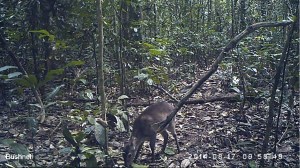
A Maxwell's duiker photographed using a camera trap. Marie-Lyne Després-Einspenner
A Maxwell’s duiker photographed using a camera trap. ©Marie-Lyne Després-Einspenner

Camera traps are a useful means for researchers to observe the behaviour of animal populations in the wild or to assess biodiversity levels of remote locations like the tropical rain forest. Researchers from the University of St Andrews, the Max Planck Institute for Evolutionary Anthropology (MPI-EVA) and the German Centre for Integrative Biodiversity Research (iDiv) recently extended distance sampling analytical methods to accommodate data from camera traps. This new development allows abundances of multiple species to be estimated from camera trapping data collected over relatively short time intervals – information critical to effective wildlife management and conservation.

Remote motion-sensitive photography, or camera trapping, is revolutionising surveys of wild animal populations. Camera traps are an efficient means of detecting rare species, conducting species inventories and biodiversity assessments, estimating site occupancy, and observing behaviour. If individual animals can be identified from the images obtained, camera trapping data can also be used to estimate animal density and population size – information critical to effective wildlife management and conservation. Continue reading “Estimating the Size of Animal Populations from Camera Trap Surveys”