Seeds ‘exposed’! A method to automatically reveal seed morphological traits from images.

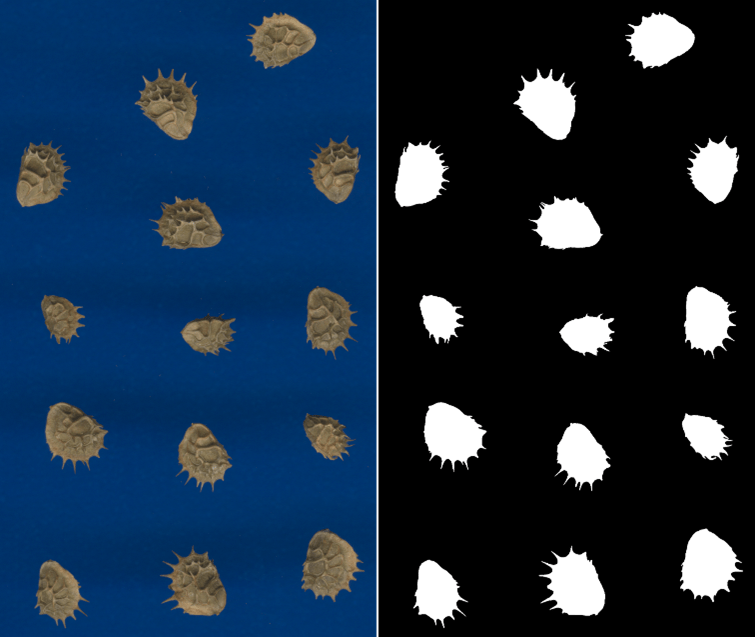
Post provided by Roberta L. C. Dayrell The knowledge of seed morphology is an essential resource for practitioners and scientists across diverse disciplines such as botany, agriculture, restoration, conservation, and archaeology. Morphological attributes can inform studies on topics such as seed dispersal, predation, longevity, and germination. This knowledge also has practical applications, including seed identification and assessments of quality and ripeness. But extracting meaningful information … Continue reading Seeds ‘exposed’! A method to automatically reveal seed morphological traits from images.

How do you measure the movement of tiny insects?

Post provided by Yash Sondhi, Hailey Dansby, Angela Nicoletti, Elina Barredo, and Samuel T. Fabian.

Studying animal behaviour or ecology can involve measuring movement patterns of small animals. Observing behaviours like foraging, pollination, circadian activity or predation is laborious because it involves long periods of waiting for the behaviour and triggering a camera or poring over hours of video footage to find the behaviour. Existing automated motion tracking tools for small animals are expensive and unsuitable for field use, or need specific conditions like bright light to work. In this blog post, Yash Sondhi and co-authors discuss their tool “Portable Locomotion Activity Monitor (pLAM)” which enables automated monitoring small animal motion tracking in a cost-effective manner, suitable for lab or field use and can track motion under any light environment.

Continue reading “How do you measure the movement of tiny insects?”

Large drones make a big splash: Using smaller drones to conduct less disruptive wildlife surveys

Post provided by Kayla Kuhlmann

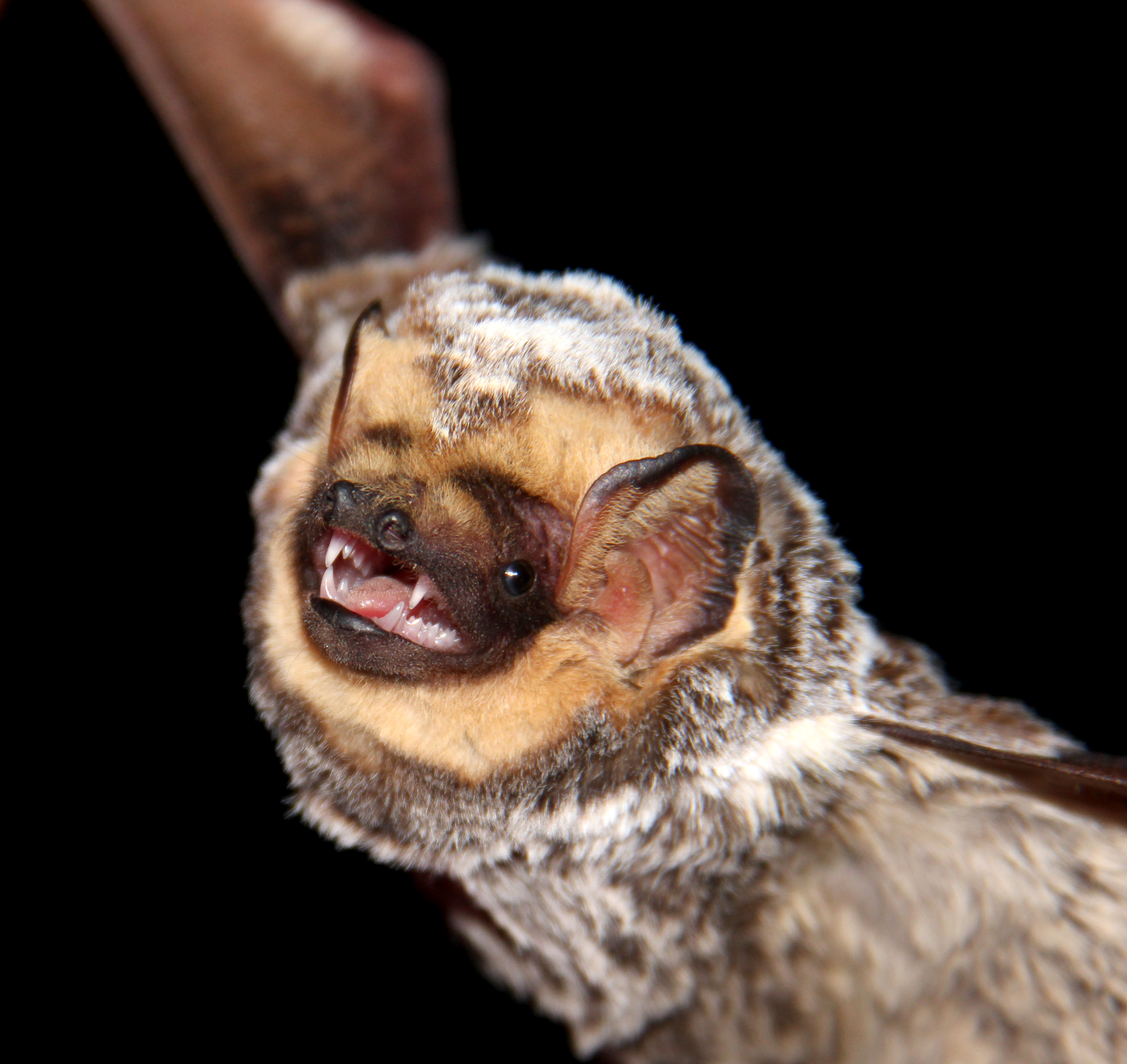
Hoary bat (Lasiurus cinereus). Credit: Veronica Zamora-Gutierrez.

Ecologists have started looking into drones as new tools for wildlife surveys, but how can drone disturbance be minimized in order to produce accurate wildlife counts? In this post, Kayla Kuhlmann describes a drone practice to reduce disruption during acoustic bat surveys as featured in the paper “Miniaturization eliminates detectable impacts of drones on bat activity”, recently published in Methods in Ecology and Evolution.

Continue reading “Large drones make a big splash: Using smaller drones to conduct less disruptive wildlife surveys”

Non-invasive playback experiments allow for rigorous studies of wildlife interactions

Post provided by Meredith Palmer, Chris “Akiba” Wang, Jacinta Plucinski & Robert M. Pringle

The BoomBox ABR deployed with a Bushnell TrophyCam camera trap in Gorongosa National Park, Mozambique

Camera traps are a valuable tool in ecological research, especially for capturing large quantities of information on the behaviour of an array of wildlife within an ecological community. Camera traps are seldom used to experimentally testing key animal behaviour hypotheses, despite the potential offered by the non-invasive technology. In this blog post, Dr. Meredith Palmer and co-authors discuss the application of the ‘BoomBox’ camera trap module that allows researchers to conduct a unique suite of manipulative experiments on free-living species in complex environments, as published in their Methods in Ecology and Evolution article ‘BoomBox: An Automated Behavioral Response (ABR) Camera Trap Module for Wildlife Playback Experiments’.

Continue reading “Non-invasive playback experiments allow for rigorous studies of wildlife interactions”

Measuring canopy fuel loads in boreal forests accurately and efficiently using a smartphone

Our Associate Editor Ryan Chisholm of the National University of Singapore tells us about the recent Practical Tools article he handled for MEE which presents a method for estimating canopy fuel load from hemispherical photographs. Fire is a natural process in many ecosystems, but large-scale intense fires can threaten biodiversity, as well as human life and property. Although the annual global area burnt has decreased … Continue reading Measuring canopy fuel loads in boreal forests accurately and efficiently using a smartphone

MEEin3: Adapting a turkey fryer to manipulate water temperature

Got just five minutes to spare? Listen to our brand new podcast! In this episode, we interview Cassandra Konecny and Graham Brownlee about their recent publication “Adapting a propane turkey fryer to manipulate temperature in aquatic environments”. As the likelihood of extreme temperatures increases due to climate change, there is a growing need to better understand the potential impacts of altered thermal regimes on biodiversity … Continue reading MEEin3: Adapting a turkey fryer to manipulate water temperature

Flora Incognita – more than just a plant identification app

Post provided by Michael Rzanny & Jana Wäldchen

Species identification is an essential tool for recording biodiversity, especially in an era of habitat loss and climate change. Developing skills to correctly identify plants to a species or even a genus level can take many years of training, but a new app called Flora Incognita aims to empower citizens with botanical expertise while also collecting data for scientific analysis.

In this blog post, Michael Rzanny and Jana Wäldchen reveal the inspiration behind this new app and discuss highlights from their new paper “The Flora Incognita app – interactive plant species identification” recently published in Methods in Ecology & Evolution

Continue reading “Flora Incognita – more than just a plant identification app”

The worldwide use of wildlife detection dogs – and how they became part of our life

Post provided by Annegret Grimm-Seyfarth

Border Collie Zammy is trained to search for Eurasian otter scat and pond, alpine and great crested newts. Photo: André Künzelmann.

For those not directly working with them, using wildlife detection dogs always sound like a new fancy idea that should be tested somehow. However, this method is neither new nor rare, and people working with wildlife detection dogs often call them their best method in finding their target species. In this post, Annegret Grimm-Seyfarth discusses her paper ‘Detection dogs in nature conservation: A database on their worldwide deployment with a review on breeds used and their performance compared to other methods’, which shows the broad and worldwide applications of wildlife detection dogs.

Continue reading “The worldwide use of wildlife detection dogs – and how they became part of our life”

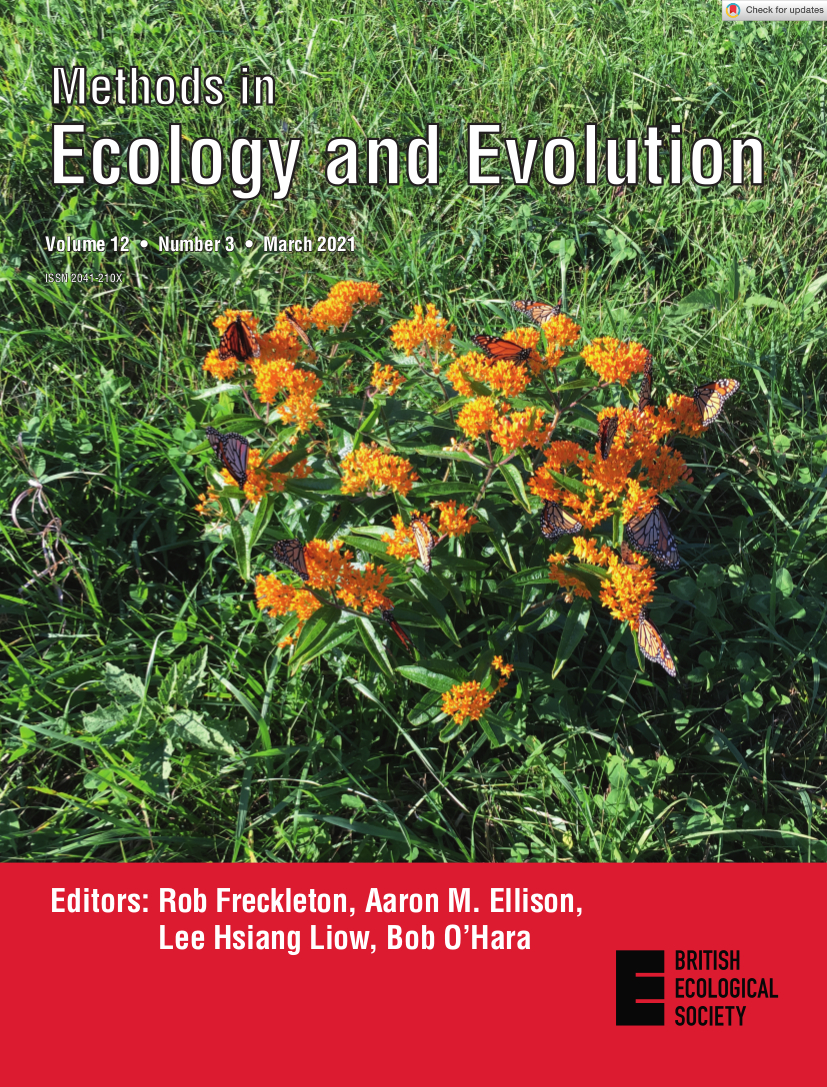
Cover Stories: The journey from designing to employing an automated radio telemetry system to track monarch butterflies

Post provided by Kelsey E. Fisher

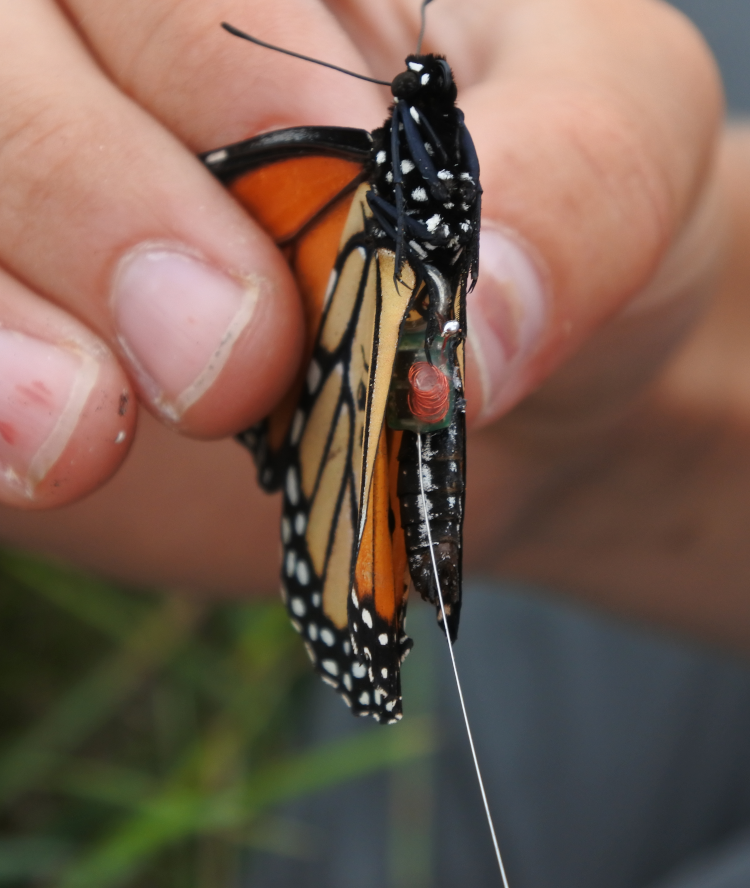
Kelsey Fisher describes the motivations and challenges in the development of a novel automated radio telemetry method to track the movement of butterflies at the landscape scale published in their new Methods article ‘Locating large insects using automated VHF radio telemetry with a multi‐antennae array’.

LB-2X transmitter attached to a monarch butterfly.

Understanding animal movement across varying spatial and temporal scales is an active area of fundamental ecological research, with practical applications in the fields of conservation biology and natural resource management. Advancements in tracking technologies, such as GPS and satellite systems, allow researchers to obtain more location information for a variety of species than ever before. It’s an exciting time for movement ecologists! However, entomologists studying insect movement are still limited because of the large size of tracking devices relative to the small size of insects.

Continue reading “Cover Stories: The journey from designing to employing an automated radio telemetry system to track monarch butterflies”

10th Anniversary Volume 11: Updates on the ClimEx Handbook

Post provided by Aud H. Halbritter

To celebrate the 10th Anniversary of the launch of Methods in Ecology and Evolution, we are highlighting an article from each volume to feature in the Methods.blog. For Volume 11, we have selected ‘The handbook for standardized field and laboratory measurements in terrestrial climate change experiments and observational studies (ClimEx)’ by Halbritter et al. (2019).

Continue reading “10th Anniversary Volume 11: Updates on the ClimEx Handbook”