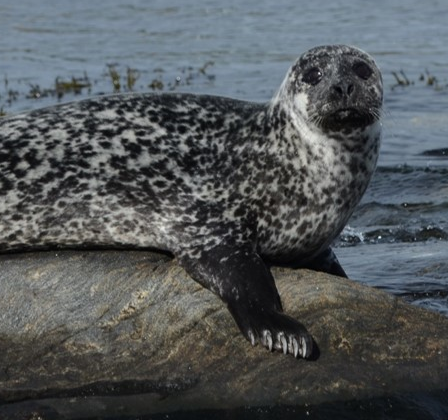
Aquatic animal telemetry has revolutionized our understanding of the behaviour of aquatic animals. One of the important advantages of telemetry methods, including acoustic telemetry, is that they provide information at the individual level. This is very relevant because it enables investigating the natural variability in behaviour within populations (like here or here), but also because one can investigate what happens to each individual animal and relate it to its natural behaviour. Knowing “what happens to each individual” is normally referred to as “fate” and it can take many forms: some fish may end-up eaten by predators, other may be fished, some of them may disperse, etc. Knowing the fate of each individual fish is crucial as it links ecological processes at the individual level to evolutionary outcomes at the population level.
In this post, the authors discuss the background and key concepts of the article, and changes in the field that have happened since the paper was published.
Terrestrial laser scanning (TLS) calculates 3D locations by measuring the speed of light between a transmitted laser pulse and its return. Firing hundreds of thousands of pulses per second, these instruments can represent the surroundings in detailed 3D, displaying them as virtual environments made up of high density points. The main applications of commercial instruments in the early 2000s were engineering or mining, but their application in natural forested environments was in its infancy. Forest ecosystems are structurally complex; clear reference points used to register multiple scans are rare and trees move due to wind creating artefacts in the data.
In this post, three of our Associate Editors with expertise in phylogenetics Simone Blomberg, Will Pearse and Michael Matschiner share their favourite MEE papers in the field of phylogenetics and beyond.
Daniela Scaccabarozzi, Tristan Campbell and Kenneth Dods tell us about the logistical challenges of sampling flowers at height and their new ground-based method for overcoming these problems.
Operational maneuvers while using the practical ground-based tool for nectar collection, prior to placing the organza bag over the inflorescence. Picture credit: Tristan Campbell.
Sampling flower nectar from forest canopies is logistically challenging, as it requires physical access to the canopy at a height greater than can be achieved by hand. The most common solutions comprise the use of cherry pickers, cranes or tree climbers, however these techniques are generally expensive, complex to organise, and often involve additional safety risk assessment and specialised technicians.
Jolien Goossens tells us about the challenges of installing acoustic receivers on the seabed and the tripod they designed to overcome them.
Installing scientific instruments in the marine environment comes with many challenges. Equipment has to withstand the physical forces of tides, currents and storms. Researchers have to take into account the effects of biofouling, corrosion and human activities. Even access to the study site can pose its difficulties, as diving is limited by depth and weather conditions. Practical deployment mechanisms are therefore needed to sustain consistent data flows.
Acoustic telemetry enables the observation of animal movements in aquatic environments. Individual animals are fitted with a transmitter, relaying a signal that can be picked up by acoustic receivers. To facilitate a convenient installation of these instruments, we developed and tested a new design, mounting a receiver with an acoustic release on a tripod frame. This frame enables the recovery of all equipment and better yet, improves the quality of the data.
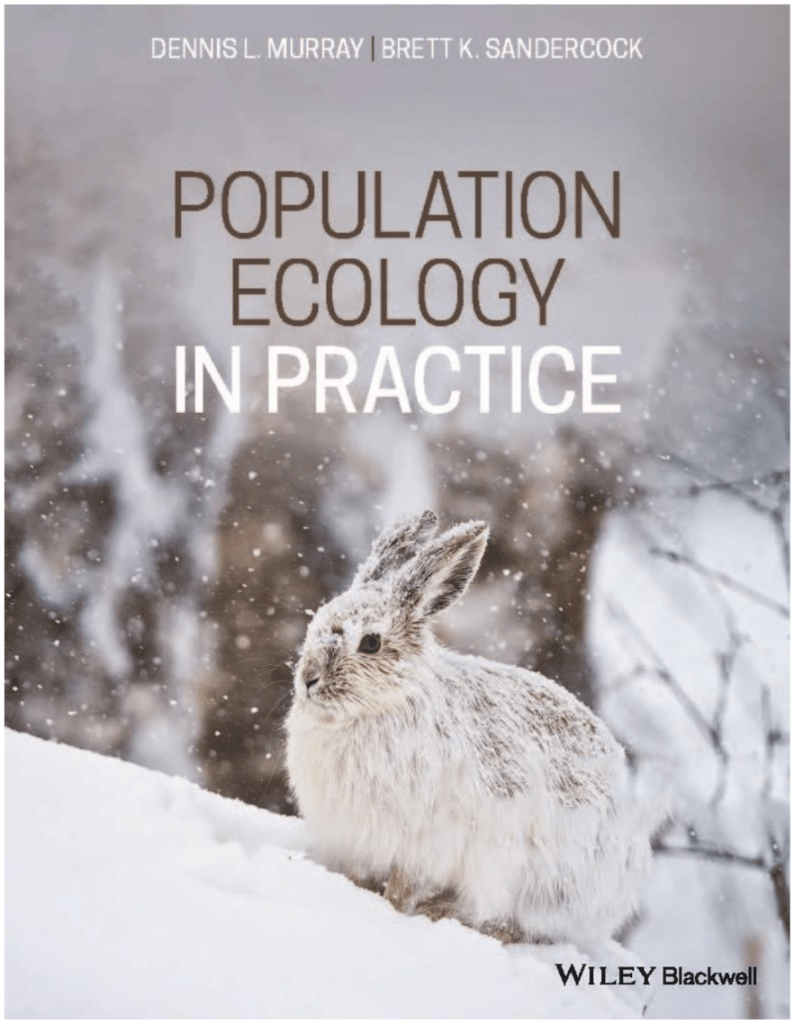
Today we bring the second part of an interview with Dennis Murray and Brett Sandercock about their brand new book in population ecology methods: “Population Ecology in Practice.” This time we talked about their experience as editors, including some useful advice for new editors.
If you missed the first part of the interview, check it out here.
Population Ecology in Practice introduces a synthesis of analytical and modelling approaches currently used in demographic, genetic, and spatial analyses. Chapters provide examples based on real datasets together with a companion website with study cases and exercises implemented in the R statistical programming language.
Today we bring the first part of an interview with Dennis Murray and Brett Sandercock about their brand new book in population ecology methods: “Population Ecology in Practice.” The editors were kind enough to share some interesting backstage information with us.
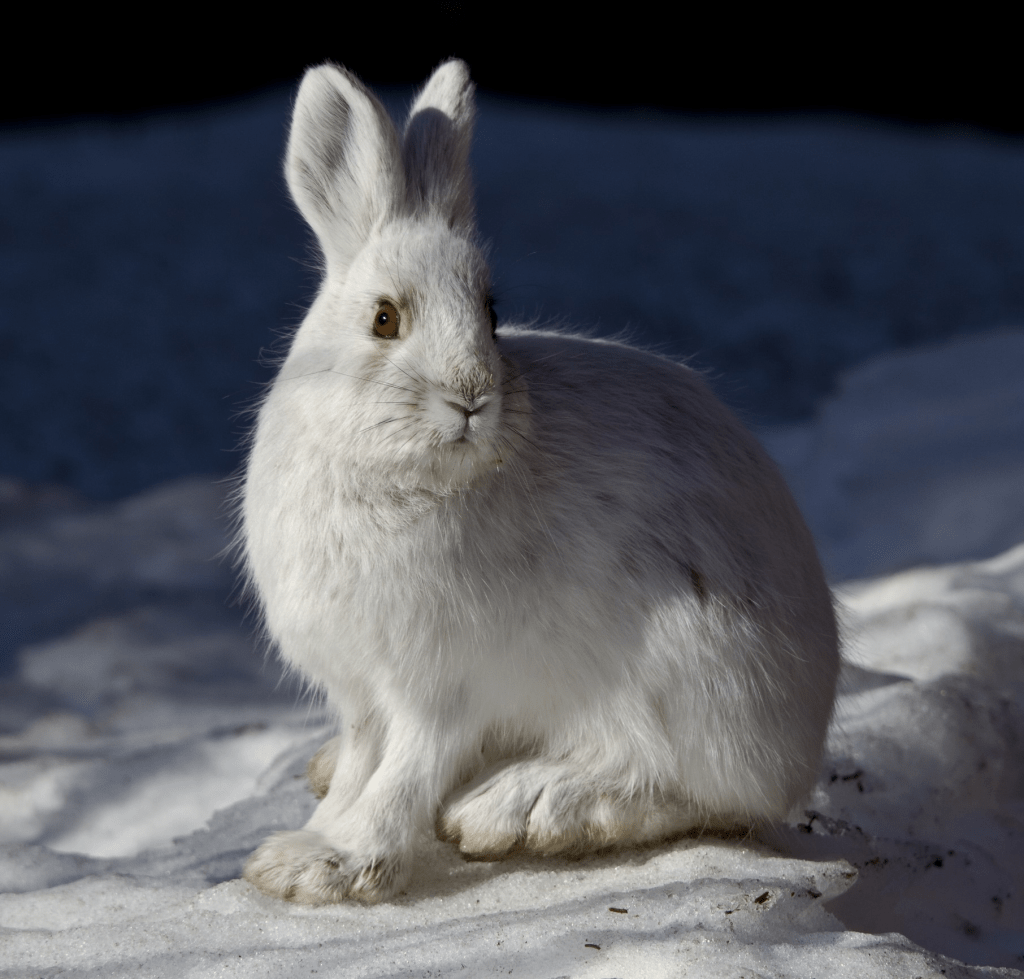
Snowshoe hare in winter
Population Ecology in Practice introduces a synthesis of analytical and modelling approaches currently used in demographic, genetic, and spatial analyses. Chapters provide examples based on real datasets together with a companion website with study cases and exercises implemented in the R statistical programming language.
Stay tuned for the second part of this interview, where we talk about some of the challenges of editing a large book and the editors share essential advice for anyone looking into leading such a project!
Aurora Borealis in the polar north. Photo: Noel Bauza, Pixabay
For those of us in the Northern Hemisphere, the coldest months of the year are upon us. A combination of post-holiday ‘blues’ and the cold, dark mornings make the daily trudge to work all that less inspiring. Recent snow storms in locations such as Newfoundland (Canada), have made it nearly impossible for many people to leave their homes, let alone commute to work. Now cast your mind to a little over 2,000 km north of Newfoundland and imagine the challenges faced with carrying out a job during the coldest, darkest months of the year.
As with every other biome on the planet, polar biomes contain a variety of different species, from bugs to baleen whales. To better understand the different species at our poles, scientists need to collect ecological data, but this is far from a walk in the park.
Iceberg in the Gerlache Strait, Antarctica. Photo: Liam Quinn, flikr.
The recent focus on the study of animal social networks has led to some fundamental new insights. These have spanned across fields in ecology and evolution, ranging from epidemiology and learning through to evolution and conservation. Whilst network analysis has been used to address questions about sociality, food webs, bipartite networks and more over the past decade it is now extending into a wider variety … Continue reading Animal Social Networks: Joint Special Feature Open Call