The recent focus on the study of animal social networks has led to some fundamental new insights. These have spanned across fields in ecology and evolution, ranging from epidemiology and learning through to evolution and conservation. Whilst network analysis has been used to address questions about sociality, food webs, bipartite networks and more over the past decade it is now extending into a wider variety … Continue reading Animal Social Networks: Joint Special Feature Open Call
Post provided by Damien Farine, Sebastian Sosa, David Jacoby, Mathieu Lihoreau and Cédric Sueur
Social network visualization. Photo by Martin Grandjean CC-SA.
Here at Methods in Ecology & Evolution and the Journal of Animal Ecology we are excited by the new directions that the next decade of research into animal social networks will bring. We hope to encourage new advances in the study of animal social networks by calling for high-quality papers for a cross-journal Special Feature on animal social networks. Below, Damien Farine and the Special Feature Guest Editors have reviewed some areas of animal social network research that deserve particular attention.
Methodological Gaps
Network Metrics
There are a wide variety of network metrics (node-based, dyadic, and global) and the application and development of new metrics continue to evolve. It is crucial to consider how the values generated by a network metrics (new and old) are interpreted biologically and recognize their limitations. It would be useful to have manuscripts that address questions about:
How mathematical definitions of different network metrics translate to biological processes;
Which metrics provide similar, redundant, or unique information relative to other metrics.
Lead author Jarrod Hodgson, University of Adelaide, standing in one of the replica colonies of seabirds constructed for the #EpicDuckChallenge.
A few thousand rubber ducks, a group of experienced wildlife spotters and a drone have proven the usefulness and accuracy of drones for wildlife monitoring.
A study from the University of Adelaide showed that monitoring wildlife using drones is more accurate than traditional counting approaches. This was published recently in the British Ecological Society journal Methods in Ecology and Evolution.
Understanding how animals perceive, learn and remember stimuli is critical for understanding both how cognition is shaped by natural selection, and how ecological factors impact behaviour.Unfortunately, the limited number of protocols currently available for studying insect cognition has restricted research to a few commercially available bee species, in almost exclusively laboratory settings. In a new video Felicity Muth describes a simple method she developed with Trenton Cooper, Rene … Continue reading A New Way to Study Bee Cognition in the Wild
Detecting the movements and interactions of elusive, nocturnal wildlife is a perpetual challenge for wildlife biologists. But, with security tracking technology, more commonly used to protect museum artwork, new Oxford University research has revealed fresh insights into the social behaviour of badgers, with implications for disease transmission.
Previous studies have assumed that badgers are territorial and, at times, anti-social, living in tight-knit and exclusive family groups in dens termed ‘setts’. This led to the perception that badgers actively defend territorial borders and consequently rarely travel beyond their social-group boundaries.
This picture of the badger social system is so widely accepted that some badger culling and vaccination programmes rely on it – considering badger society as being divided up into discrete units, with badgers rarely venturing beyond their exclusive social-groups. But, the findings, newly published in Methods in Ecology and Evolution, have revealed that badgers travel more frequently beyond these notional boundaries than first thought, and appear to at least tolerate their neighbours. Continue reading “Oxford Research Sheds Light on the Secret Life of Badgers”
Online Images: A Treasure Trove of Ecological Data
In the proclaimed ‘information age’, where answers are available at the click of a button or a swipe of a finger, we have become accustomed to the ability to get an almost instant grasp of any topic. Other fields are already making use of this wealth of easily accessible online data, but biologists and ecologists tend to let it slip by. However, this attitude is slowly beginning to change. Some ecological and evolutionary studies are emerging that have used the internet to gather data – through online citizen science projects (e.g. Evolution MegaLab) or databases (e.g. using Google Trends) – but few have used existing data, particularly publicly available data from image repositories.
We were curious to apply the concept of using existing images on the internet to a fascinating visual biological phenomenon: colour polymorphism (or the occurrence of multiple discrete colour phenotypes). To do this, we planned to exploit an existing penchant people have for uploading photographs of animals to the Internet.
Our search phrases included the common and scientific name of the species, as well as a location-specific term
Movement ecology is a cross-disciplinary field. Its main aim is to quantitatively describe and understand how movement relates to individual and population-level processes for resource acquisition and, ultimately, survival. Today the study of movement ecology hinges on two 21st century advances:
Animal-borne devices/tags (biologging science, Hooker et al., 2007) and/or remote sensing technology to quantify movement and collect data from remote or otherwise challenging environments
Computational power sufficient to manipulate, process and analyse substantial volumes of data
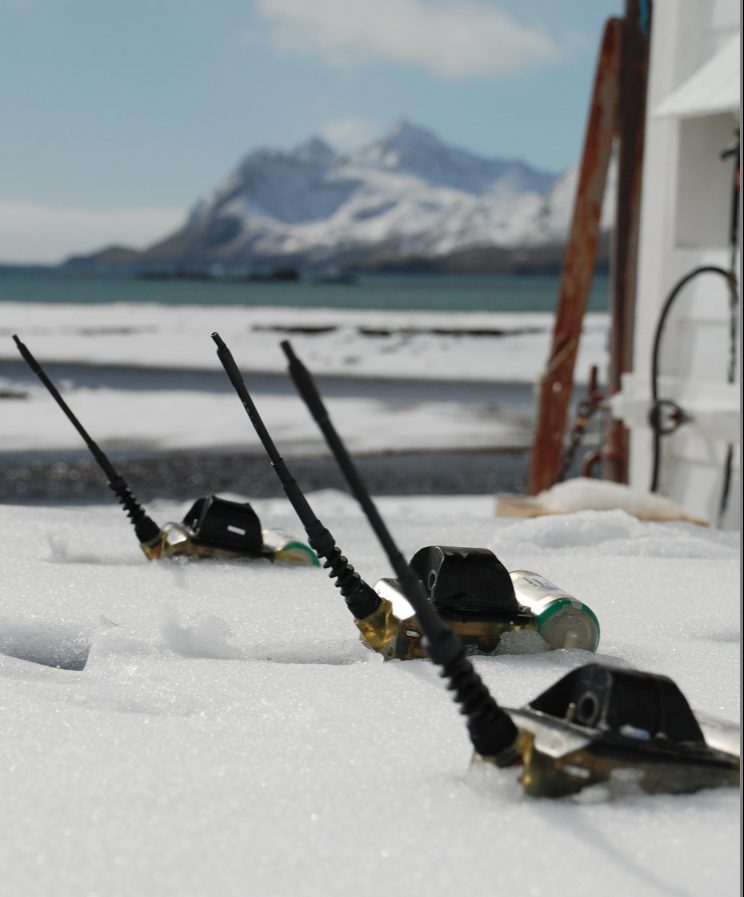
Although datasets often involve small numbers of individuals, each individual can have thousands – sometimes even millions – of data points associated with it. Study species have tended to be large birds and mammals, due to the ease of tag attachment. However, the trend for miniaturisation of tags and the development of remote detection technologies (such as radar, e.g. Capaldi et al., 2000), have allowed researchers to track and study ever smaller animals. Continue reading “Movement Ecology: Stepping into the Mainstream”
Digital photography has revolutionised the way we view ourselves, each other and our environment. The use of automated cameras (including camera traps) in particular has provided remarkable opportunities for biological research. Although mostly used for recreational purposes, the development of user-friendly, versatile auto-focus digital single lens reflex (DSLR) cameras allows researchers to collect large numbers of high quality images at relatively little cost.
DNA dietary analysis is a non-invasive tool used to identify the food consumed by vertebrates. The method relies on identifying prey DNA in the target animals’ scats. It’s especially useful for marine animals such as seals and seabirds as it is difficult to watch their feeding events.
In the video below, Julie McInnes describes scat collection protocols that she (along with Rachael Alderman, Bruce Deagle, Mary-Anne Lea, Ben Raymond and Simon Jarman) developed to optimise the detection of food DNA in vertebrate scat samples. The authors use the shy albatross to demonstrate their new methods.
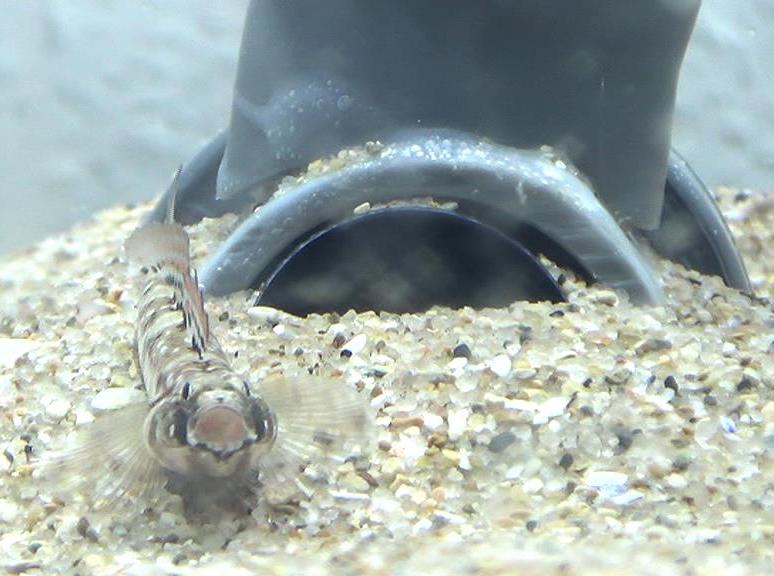
Most people assume that research equipment is expensive and complicated. But, it doesn’t need to be and the noise egg is a perfect example of this. It consists of a watertight container (as used by scuba divers) and the buzzer from a cellphone and does exactly what it says: it produces low frequency noise. This allows researchers to test the effect of noise on underwater life. It is a small, simple and cheap device that anyone can build.
Underwater noise is rapidly increasing due to, for example, boat traffic and offshore wind farms. This can lead to stress for animals and difficulties in communication. Just as people have a hard time communicating in a noisy pub, animals may struggle to get their messages across when background noise is high. A nice description of how animals use sound and how noise may affect this can be found at www.dosits.org
While there is some knowledge on the effect of noise on large aquatic animals, we still know very little about how fish and other small aquatic animals are affected. Such knowledge is vital for management of protected areas. It’s also important to know whether wind farms and boat traffic can affect reproduction in populations of underwater resources such as fish and mussels. The answers to these questions are likely to be species specific, so we’ll need data on a large number of species in different habitats. Continue reading “Testing the Effects of Underwater Noise on Aquatic Animals”


 Methods Blog