A new tool to identify important sites for conservation using tracking data

Post provided by Martin Beal, Steffen Oppel, Jonathan Handley, Richard Phillips, Paulo Catry, and Maria Dias.

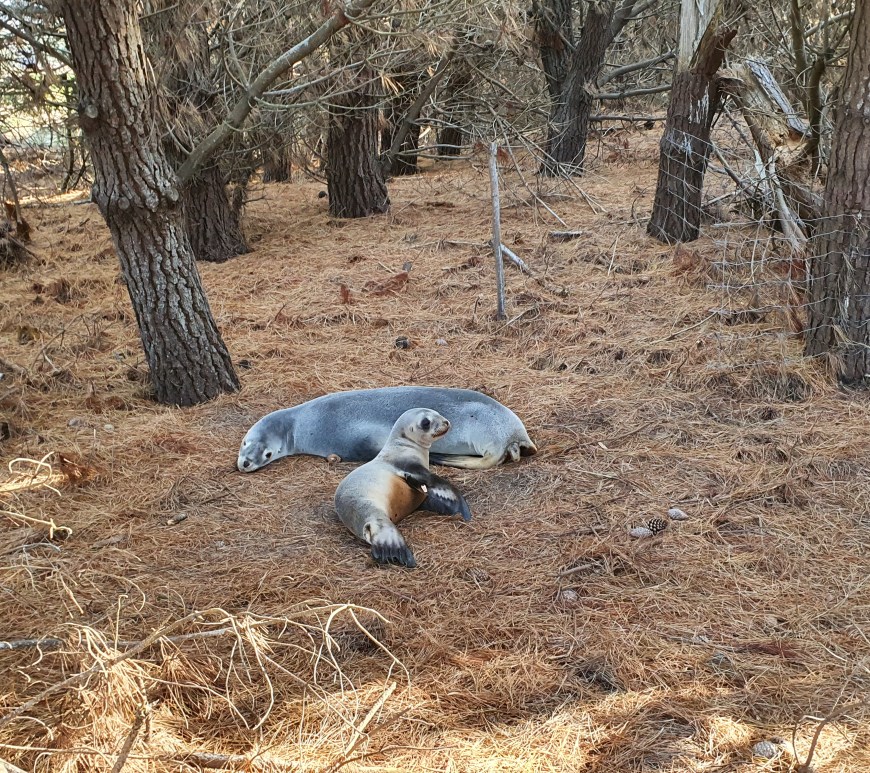
Identifying areas around the world that can best contribute to the conservation of wild animals is a major challenge. Historically, this required conducting extensive surveys in the field, but with the advent of miniature tracking technology we can now follow animals and allow them to indicate which areas they depend on most. In this collaborative post, international researchers from ISPA – Instituto Universitário in Lisbon, the Royal Society for the Protection of Birds, BirdLife International, and British Antarctic Survey present a new conservation tool as outlined in the paper “track2KBA: An R package for identifying important sites for biodiversity from tracking data” recently published in Methods in Ecology and Evolution.    

Continue reading “A new tool to identify important sites for conservation using tracking data”

An Ecologist and a Programmer Walk Into a Bar…

Post provided by Daniel Vedder, Markus Ankenbrand, and Juliano Sarmento Cabral

Five years ago, a new institute opened its doors at the University of Würzburg: the Center for Computational and Theoretical Biology (CCTB). The idea was simple. Take six computational research groups, covering topics from image analysis to genomics and ecological modelling, put them in a building together, and see what happens.

Despite our disparate areas of expertise, this “experiment” has worked really well. It soon turned out that one of our greatest strengths as an institute lay in the cumulative computer know-how we have, or have acquired together. In our experience, many biologists are still somewhat wary of computational techniques, and struggle with them even when they use them. Part of the reason for this unease, we believe, is that few biologists are thoroughly trained in computer science.

Continue reading “An Ecologist and a Programmer Walk Into a Bar…”

Smart genetic analysis made fast and easy

Post provided by: Salvador Herrando-Pérez

If you use genetics to differentiate populations, the new package smartsnp might be your new best friend. Written in R language and available from GitHub and CRAN, this package performs principal component analysis with control for genetic drift, projects ancient samples onto modern genetic space, and tests for population differences in genotypes. The package can load big datasets and run complex stats in the blink of an eye.

In this post, Salvador Herrando-Pérez discusses the features of this new package which is fully described in the new paper “smartsnp, an R package for fast multivariate analyses of big genomic data” recently published in Methods in Ecology & Evolution.

Continue reading “Smart genetic analysis made fast and easy”

FuzzyQ: The Commonness of Rarity

Post provided by Juan A. Balbuena

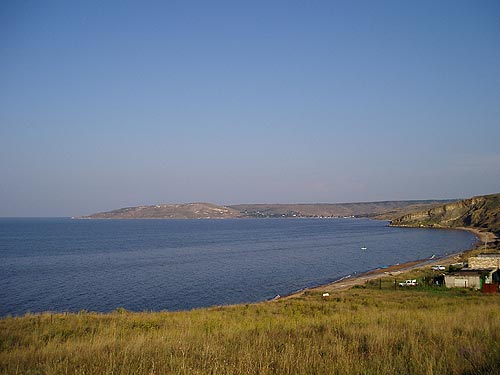
Sea of Azov. Credit: Sergey Sorokin.

Most species in ecological communities are rare, whereas only a few are common. This distributional paradox has intrigued ecologists for decades, but the interpretation of species abundance distributions remains elusive. In this blog post, lead author Juan A. Balbuena discusses how their recently published Methods in Ecology and Evolution paper and R package ‘Fuzzy quantification of common and rare species in ecological communities (FuzzyQ)’, is a potentially valuable analytical tool in community ecology and conservation biology.

Continue reading “FuzzyQ: The Commonness of Rarity”

A new evolutionary simulation R package sheds light on the metaphor of genomic islands of divergence

Robert May Prize Shortlisted Article

Post provided by Claudio S. Quilodrán and Ashley T. Sendell-Price

Nesting eggs of silvereyes (Zosterops lateralis). Heron Island, Australia. Picture: Erik Sandvik.

Each year Methods in Ecology and Evolution awards the Robert May Prize to the best paper in the journal by an author at the start of their career. Claudio S. Quilodrán has been shortlisted for his article ‘The multiple population genetic and demographic routes to islands of genomic divergence’. In this blog, Claudio and co-author Ashley T. Sendell-Price discuss how their paper came to be and how their individual‐based simulation can be used to explore the dynamics of diverging genomes.

Continue reading “A new evolutionary simulation R package sheds light on the metaphor of genomic islands of divergence”

Unmasking Acoustic Indices

Post provided by Oliver Metcalf

Gould’s toucanet Selenidera gouldii display involves dancing, but also lots of vocalisation. Credit: Oliver Metcalf.

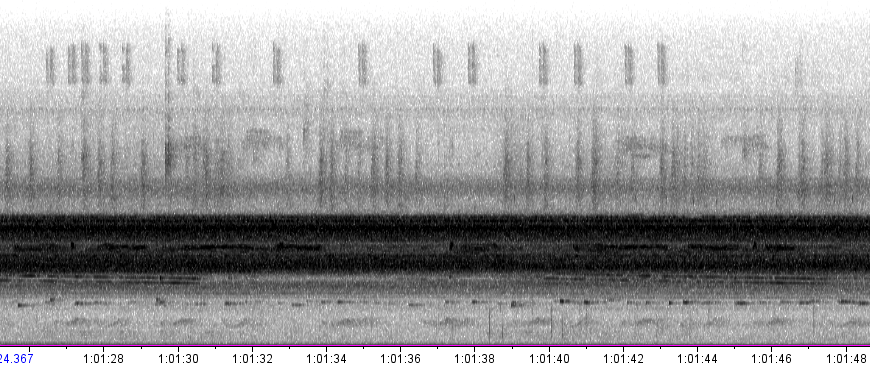
Acoustic indices are increasingly being used when analysing soundscapes to gain information on biodiversity. However, inconsistent results and lack of consensus on best practices has hampered their application in conservation and land‐use management contexts. In this post, Oliver Metcalf talks about his Methods in Ecology and Evolution article ‘Acoustic indices perform better when applied at ecologically meaningful time and frequency scales’, where he highlights the need to  calculate acoustic indices at ecologically appropriate time and frequency bins to reduce signal masking effects.

Continue reading “Unmasking Acoustic Indices”

Species association networks: a bridge between sciences

Robert May Prize Shortlisted Article

Post provided by Raphaëlle Momal

Powdery mildew on oak tree leaves is caused by the fungi Erysiphe alphitoides, which association network helps understanding the behaviour. Credit: Raphaëlle Momal.

Each year Methods in Ecology and Evolution awards the Robert May Prize to the best paper in the journal by an author at the start of their career. Raphaëlle Momal has been shortlisted for her article ‘Tree‐based inference of species interaction networks from abundance data’. In this blog, Raphaëlle discusses how her paper came to be and the applications of the R package developed in her study.

Continue reading “Species association networks: a bridge between sciences”

International Day of Forests: Generation Restoration

Post provided by Chloe Robinson

Credit: Food and Agriculture Organization of the United Nations.

Forests, across all ecozones and in all shapes and sizes, are essential for life on earth. Around 80% of the world’s land-based biodiversity call forests home and over 1 billion people, including more than 2,000 Indigenous cultures, rely on forests for food, shelter, energy and income. As with many other ecosystems, forests worldwide are under increasing threat from human activities, with the current rate of deforestation estimated at 13 million hectares per year.

Continue reading “International Day of Forests: Generation Restoration”

How to assess seed bank effect in a plant metapopulation

Post provided by Apolline Louvet

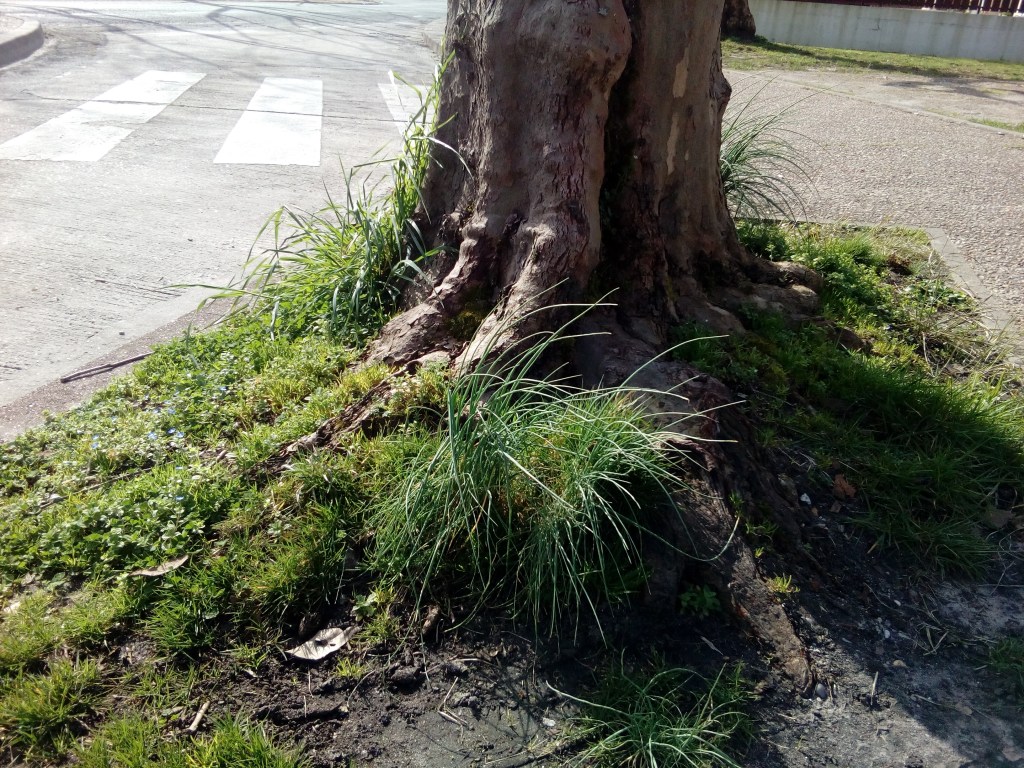
Tree base in an urban area, partly occupied by spontaneous vegetation. Picture credit: Apolline Louvet.

Seed banks play a key role in plant metapopulations, however, detecting seed banks remains challenging. The current method of assessing the effect of seed banks on plant metapopulation dynamics focuses on the presence of standing vegetation. This has direct implications for plant metapopulation models, which require data on the absence of a seed bank to understand plant dynamics.

Our paper, ‘Detecting seed bank influence on plant metapopulation dynamics’ in Methods in Ecology and Evolution, introduces a new metric on plant metapopulations, which assesses the seed bank contribution to the global observed dynamics. In this post, we recall what led us to develop this metric.

Continue reading “How to assess seed bank effect in a plant metapopulation”

What happens to our understanding of functional diversity when we ignore intraspecific trait variability?

Post provided by Mark Wong

Impressive variability sometimes occurs within a species, such as between these sister ants from the same Carebara sp. colony. Credit: Francois Brassard.

Throw a rock at a conference and you’ll likely hit an ecologist who examines the variation among organisms’ functional traits for one reason or another. From understanding the assembly of communities and their responses to environmental change, to the effects of biodiversity on ecosystem functions, and – well, why not – modelling the global spectrum of ecological form and function, assessments of functional diversity have quickly become the bread and butter of community, ecosystem and macro ecology.

In this blog post, Mark Wong discusses his paper ‘Including intraspecific trait variability to avoid distortion of functional diversity and ecological inference: lessons from natural assemblages’, recently published in Methods in Ecology & Evolution.

Continue reading “What happens to our understanding of functional diversity when we ignore intraspecific trait variability?”