Pathogens and the infectious diseases that they cause can have devastating impacts on host individuals and populations. To better understand how pathogens are able to cause disease, we can investigate the genetic mechanisms underlying the infection process. Hosts may respond to infection by upregulating defence pathways. Pathogens, in turn, evade these host immune responses as they infect and cause disease. As this process unfolds and each organism responds to the other, gene expression changes in both the host and the pathogen. These gene expression changes can be captured by dual RNA‐seq, which simultaneously captures the gene expression profiles of a host and of a pathogen during infection. Continue reading “Using Dual RNA-seq to Investigate Host-Pathogen Systems When Genomic Resources are Limited”
Analysis of datasets collected on marked individuals has spurred the development of statistical methodology to account for imperfect detection. This has relevance beyond the dynamics of marked populations. A couple of great examples of this are determining site occupancy or disease infection state.
EURING Meetings
The regular series of EURING-sponsored meetings (which began in 1986) have been key to this development. They’ve brought together biological practitioners, applied modellers and theoretical statisticians to encourage an exchange of ideas, data and methods.
Defining macroecology should be easy; it’s just ecology at large spatial scales, right? In reality though, it’s a little more complex than that. No-one agrees on exactly how large the spatial scale should be, and many studies that could be macroecology may also be defined as biogeography, landscape ecology, community ecology etc. Working at large spatial scales can also mean working at large temporal scales, often in deep-time. So there’s a lot of overlap with studies of macroevolution both on living and extinct species too.
Coming to the BES Annual Meeting? Planning to submit a paper to a BES journal? Then you should sign up for the Speed Review Session on Monday 17 December! (sign-up sheets will be on the BES Stand in the Exhibition Hall.) Find out more about this session below.
Essentially, Speed Review is a chance for you to get a Senior Editor’s opinion on your manuscript. All you need to do is sign-up and bring along a figure or a key finding from your research to centre the discussion on. Each session will be limited to five minutes, so try to have a succinct summary of your manuscript ready as well. The Editor you speak to will let you know what they think of your paper and try to give you some advice about any areas to highlight or any potential concerns that they might have about it. Continue reading “Speed Review at the BES Annual Meeting: Get a Senior Editor’s Opinion on YOUR Manuscript”
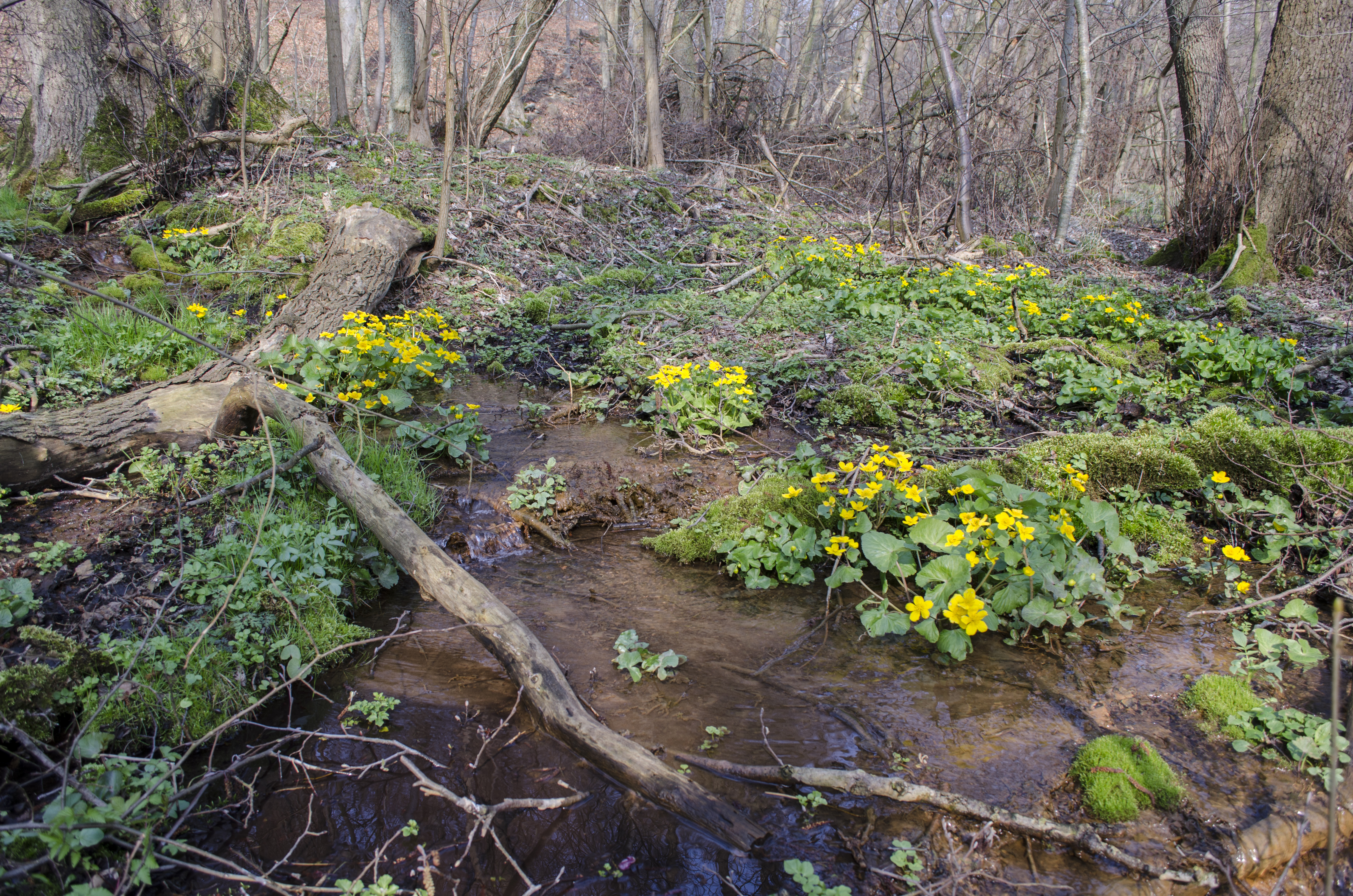
Could we use the plants in this swamp forest to predict the diversity of other species?
Local communities and regional biotas are built of hundreds, if not thousands, of species. Most of these species are small-bodied and discreet lifeforms. So it’s no wonder that naturalists have almost always focused their attention on conspicuous species of their particular liking. Why plants then? Well, plants are practical and efficient. They “stand still and wait to be counted”, as the eminent population biologist John Harper put it. No matter the weather, from spring to autumn. There are enough plant species to show contrasts between sites, and yet they can usually be identified to species level in the field.
You Can’t Predict the Diversity of Beetles from Lichens… Can You?
Today is the first day of the Crossing the Palaeontological-Ecological Gap (CPEG) conference. The aim of the conference is to open a dialogue between palaeontologists and ecologists who work on similar questions but across vastly different timescales. This splitting of temporal scales tends to make communication, data integration and synthesis in ecology harder. A lot of this comes from the fact that palaeontologists and ecologists tend to publish in different journals and attend different meetings.
A fossilized species of the diatom Thalassiosira. B. A species of the dinoflagellate Prorocentrum. (Image provided by A. Ndhlovu).
As any reader of Methods in Ecology and Evolution will know, advances in technologies and methodologies used by ecologists and evolutionary biologists are never-ending. Coupled with the tendency for researchers to become ever more specialised, this means that keeping up to date with all the advances is challenging at best. Occasionally, new advances revolutionise the kinds of questions we ask and encourage us to develop new approaches to answer them. One of these huge advances emerged from the ‘-omics’ revolution.
The application of -omics methodologies to evolution and ecology has been particularly rapid. These technologies usually aren’t part of the basic science education in these fields – it’s more usual for computational biologists to cross over to ecology and evolution than the other way around. The review by Simon Creer and colleagues ’The ecologist’s field guide to sequence-based identification of biodiversity’ helps bridge this gap. It’s not too technical, but sufficiently detailed, and it provides a very handy overview of how genomics, transcriptomics and their meta-analyses can be applied to evolutionary ecology. The paper is filled with enormously helpful workflows, pointers, examples and, as the title suggests, is a guide for those who are not experts in sequence based technologies. Continue reading “Editor Recommendation: The Ecologist’s Field Guide to Sequence-Based Identification of Biodiversity”
Conservation conflicts are actually conflicts among people with different priorities.
Conservation issues seem to be getting ever more complex and challenging. Practitioners and society at large agree on the need to gather – and somehow use – as much information as possible before making any conservation-related decisions. Talking to all kinds of people, ranging from local villagers, fishermen and hunters to international experts, community leaders and environmentalists, is now common practice in conservation research. Not everyone will agree on the eventual conservation decisions, but the idea is that decisions should only be made after (almost) everyone’s opinion has been heard.
So far so good. The calls for inclusive conservation are being acknowledged, and we should be ready to move on and make better decisions, right? Well, it’s not always that easy. Conservation conflicts are actually conflicts among people with different priorities and values. Just calling for dialogue and hoping that consensus and effective conservation action will just follow isn’t enough. Continue reading “Resolving Conservation Conflicts: The Nominal Group Technique”
Ecologists are increasingly in need of quantitative skills and the British Ecological Society Quantitative Ecology Special Interest Group (QE SIG) aims to support skills development, sharing of good practice and highlighting novel methods development within quantitative ecology. We run events throughout the year, as well as contributing to the Annual Meeting and providing a mailing list to share events, jobs and quantitative news.
Ecology Hackathon
The run up to the Ecology Across Borders joint Annual Meeting in Ghent this month is an exciting time for the SIG as we look forward to catching up with existing members as well as hopefully meeting some new recruits! Several of our SIG committee members will be in attendance and if you’ve been lucky enough to get a place at the Hackathon on the Monday you’ll meet most of us there. The Hackathon has been jointly developed by us and two of our allied groups; the GfÖ Computational Ecology Working Group and the NecoV Ecological Informatics SIG and is being sponsored by Methods in Ecology and Evolution. We’ll be challenging participants to work together to produce R packages suggested by the ecological community. You can see the list of package suggestions here. If you weren’t able to book a place at the Hackathon, but are interested in writing your own packages, you may be interested in the new Guide to Reproducible Code from the BES. Continue reading “The BES Quantitative Ecology SIG: Who We Are, What We Do and What to Look Out for at #EAB2017”
This week, more than 150 events along the US shores will celebrate estuaries and educate the public and policy makers of the many benefits we get from healthy and thriving ecosystems. But why do we need to pay more attention to estuaries?
Estuaries are biological hotspots and by far the most productive ecosystems on our planet. The shallow waters where streams and rivers meet the sea often harbour a rich terrestrial and aquatic flora and are home to many animals. They’re important feeding and reproduction areas for a diverse array of wildlife such as birds and fish, which can include both freshwater and marine species. A large portion of the world’s marine fisheries today depend on the ecosystem services of estuaries; it has been estimated that well over half of all marine fishes develop in the protective environment of an estuary. Historically, humans have been attracted to these large expanses of shallow water that could sustain their basic needs. Nowadays, these estuaries also have economic value as recreational and touristic destinations as for example fishing, boating and swimming spots.
However, our understanding of how estuaries function and sustain this amount of biodiversity is limited. As is the case for most ecosystems on our planet, estuaries are under increasing pressure from human activities. Estuaries are subjected to intensive land reclamation and developments like harbours and aquacultural farms. They also receive excessive amounts of of nutrients, soil and organic matter from intensive farms and urban landscapes via small streams and large rivers. These stressors are accentuated by environmental changes such as sea level rise, increasing water temperatures and extreme weather conditions causing droughts and flooding. Continue reading “Tracing New and Old Resources in Estuarine Ecosystems”





 Methods Blog