Biogeographic Regions: What Are They and What Can They Tell Us?

Post provided by Leonardo Dapporto, Gianni Ciolli, Roger L.H. Dennis, Richard Fox and Tim G. Shreeve

Every species in the world has a unique geographic distribution. But many species have similar ranges. There are many things that can cause two (or more) species to have similar ranges – for example shared evolutionary histories, physical obstacles (mountains, oceans etc.) or ecological barriers limiting their dispersal. As a consequence, different regions of the globe are inhabited by different sets of living organisms.

In the mid-19th century ecologists recognised that the earth could be divided into different biogeographic regions. Alfred Russel Wallace (1823–1913) played a key role in defining and recognising biogeographic regions. He improved the existing maps of  biogeographic regions and provided basic rules to identify them. His observation that some of these regions are home to similar species, despite being far away from each other and separated by significant barriers was the inspiration for Alfred Wegener’s theory of continental drift. In more recent years regionalisation has been used to understand the spatial drivers of biological evolution and to protect those regions characterised by particularly unique flora and fauna.

The biogeographic regions identified by Alfred Russel Wallace from The Geographical Distribution of Animals (1876)

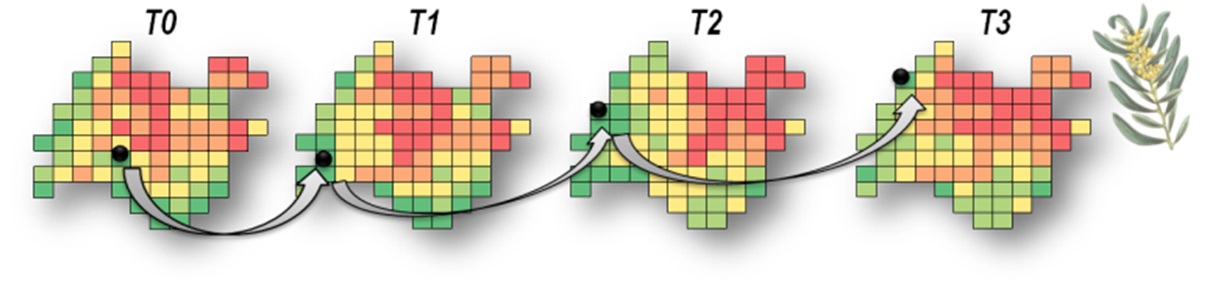
Despite the long history of biological regionalisation, the methods to identify biogeographic regions are still being improved. We are currently working in this exciting field of research and recently published ‘A new procedure for extrapolating turnover regionalization at mid-small spatial scales, tested on British butterflies’ in Methods in Ecology and Evolution. Continue reading “Biogeographic Regions: What Are They and What Can They Tell Us?”

Statistical Ecology Virtual Issue

StatEcolVI_WebAdAt the last ISEC, in Montpellier in 2014, an informal survey suggested that Methods in Ecology and Evolution was the most cited journal in talks. This reflects the importance of statistical methods in ecology and it is one reason for the success of the journal. For this year’s International Statistcal Ecology Conference in Seattle we have produced a virtual issue that presents some of our best recent papers which cross the divide between statistics and ecology. They range over most of the topics covered at ISEC, from statistical theory to abundance estimation and distance sampling.

We hope that Methods in Ecology and Evolution will be equally well represented in talks in Seattle, and also – just as in Montpellier – some of the work presented will find its way into the pages of the journal in the future.

Without further ado though, here is a brief overview of the articles in our Statistical Ecology Virtual Issue: Continue reading “Statistical Ecology Virtual Issue”

A New Modelling Strategy for Conservation Practice? Ensembles of Small Models (ESMS) for Modelling Rare Species

Post provided by FRANK BREINER, ARIEL BERGAMINI, MICHAEL NOBIS and ANTOINE GUISAN

Rare Species and their Protection

Erythronium dens-canis L. – a rare and threatened species used for modelling in Switzerland. ©Michael Nobis

Rare species can be important for ecosystem functioning and there is also a high intrinsic interest to protect them as they are often the most original and unique components of local biodiversity. However, rare species are usually those most threatened with extinction.

In order to help prioritizing conservation efforts, the International Union for Conservation of Nature (IUCN) has published criteria to categorize the status of threatened species, which are then published in Red Lists. Changes in a species’ geographical distribution is one of the several criteria used to assign a threat status. For rare species, however, the exact distribution is often inadequately known. In conservation science, Species Distribution Models (SDMs) have recurrently been used to estimate the potential distribution of rare or insufficiently sampled species. Continue reading “A New Modelling Strategy for Conservation Practice? Ensembles of Small Models (ESMS) for Modelling Rare Species”

Ecological Transcriptomics for Endangered Species: Avoiding the “Successful Operation, but the Patient Died” Problem

Post provided by TILL CZYPIONKA, DANIEL GOEDBLOED, ARNE NOLTE and LEON BLAUSTEIN

Ecological Transcriptomics and Endangered Species

 The small size of the rockpool and the salamander population makes non-invasive sampling a necessity (from left: Tamar Krugman, Alan Templeton, Leon Blaustein). © Arne Nolte
The small size of the rockpool and the salamander population makes non-invasive sampling a necessity (from left: Tamar Krugman, Alan Templeton, Leon Blaustein). © Arne Nolte

Friday was Endangered Species Day – so this is a good time to reflect on what science and scientists can do to support conservation efforts and to reduce the rate of species extinctions. One obvious answer is that we need to study endangered species to understand their habitat requirements as well as their potential for acclimatization and adaptation to changing environmental conditions. This information is crucial to for the design of informed conservation planning. However, for most endangered species the relevant phenotypes are not known a priori, which leaves the well-intentioned scientist asking “which traits should I measure?”. Transcriptome analysis is often a good way to answer to this question.

Transcriptome analysis measures the expression levels of thousands of genes in parallel. This amount of data circumvents the need to decide on a reduced number of traits of unknown relevance and allows for a relatively unbiased phenotypic screen of many traits. In particular, physiological changes, which often influence a species’ distributional range, can be studied using transcriptome analysis. Also, transcriptomics provide a direct connection to the genetic level. This is essential for in-depth analyses of aspects of evolution and might even be helpful for a new kind of conservation planning, which aims to foster endangered species by promoting (supposedly) beneficial hybridization. The integration of transcriptomic analysis with ecological studies is known as ‘Ecological transcriptomics’. Continue reading “Ecological Transcriptomics for Endangered Species: Avoiding the “Successful Operation, but the Patient Died” Problem”

Space-time continuum and conservation planning: Helping Species Adapt to Climate Change

Post provided by Diogo André Alagador

The world’s most threatened felid (Iberian lynx) is endemic in a region predicted to be severely impacted by climate change: the Iberian Peninsula. ©lynxexsitu.es
The world’s most threatened felid (Iberian lynx) is from a region predicted to be severely impacted by climate change: the Iberian Peninsula. ©lynxexsitu.es

Climate change is driving many species to alter their geographic distributions. The ranges of some species contract, expand or shift as individuals track favorable climate conditions. In some cases, threatened species are moving out of protected areas. These trends are expected to intensify in the coming years.

To increase conservation effectiveness within protected areas in the future, researchers at the Research Center on Biodiversity and Genetic Resources at the University of Évora and the Department of Mathematics of the Faculty of Sciences and Technology from the NOVA University in Lisbon, Portugal, have come up with a set of modelling tools to optimize the scheduling of conservation area allocation as the climate changes. These take into account restrictions of conservation area expansion derived from the prevailing socio-economic activities. “The objective is to select the best dispersal corridors for each species considering a budget restriction or competition with other socioeconomic activities” said Diogo Alagador. “These selections are complex and non-trivial as they incorporate decisions on the spatial and temporal trends of large sets of species.”

The concept of a spatio-temporal corridor for a species in an environmental heterogeneous region.

Continue reading “Space-time continuum and conservation planning: Helping Species Adapt to Climate Change”

2015 Robert May Prize Winner: Kim Calders

The Robert May Prize is awarded annually for the best paper published in Methods in Ecology and Evolution by an Early Career Researcher. We’re delighted to announce that the 2015 winner is Kim Calders, for his article ‘Nondestructive estimates of above-ground biomass using terrestrial laser scanning.

Kim led the work on this article and had an international team of co-authors. They have developed a way to harness laser technology for use in measurements of vegetation structure of forests. The study is an important development in the monitoring of carbon stocks for worldwide climate policy-making. Continue reading “2015 Robert May Prize Winner: Kim Calders”

High-Res Camera Surveys of Wildlife Colonies: The advantages over traditional approaches

Post provided by ALISTAIR HOBDAY (senior principal research scientist, CSIRO Australia), Tim Lynch (senior research scientist, CSIRO, Australia) and Rachael Alderman (wildlife biologist, Tasmanian Department of Primary Industry, Parks, Water and Environment, Australia).

Cameras and wildlife monitoring

A Gigapan camera setup to record images of an albatross colony. ©Alistair Hobday

Behavioural and ecological research and monitoring of wildlife populations are based on collection of field data. Demographic data, such as breeding frequency, birth rates and juvenile survival, have been critical in understanding population trends for a wide range of species.

Photography has been extensively used by field biologists and ecologists to gather these data and they have been quick to take up improvements in this technology. Many field programmes today use photography either for primary data collection or the communication of results. Advances in digital photography, image storage and transmission, image processing software and web-based dissemination of images have been extremely rapid in recent years, offering ecologists and biologists a range of powerful tools.

Digital imagery has been captured from a wide range of platforms, each of which has various advantages and limitations for biological study. The most remote images are captured from satellite-based sensors, which have been used to assess population abundance of large animals, such as elephant seals, or locate colonies of emperor penguins. Cameras mounted on aircraft can also provide large-scale perspectives but both of these platforms suffer from high cost, operational limitations due to weather, and limited temporal replication. Recent use of drones, while cheaper, still requires a person to be close to the survey location and can only be used in short bursts, typically lasting less than 20 minutes.

Land-based cameras – or those fixed onto animals – can track behaviour closely, but have low sample size as data tends to be collected at the scale of individual or small groups. To improve replication, fleets of remote cameras can be used or multiple images stitched together post hoc to form a montage. However, this increases cost, either for hardware or labour to manually construct panoramas. To date all these camera systems have had limits to their spatial and/or temporal resolution and, therefore, to the number of individuals covered. This restricts biological study at the population level. Continue reading “High-Res Camera Surveys of Wildlife Colonies: The advantages over traditional approaches”

Making the Most of Volunteer Data: Counting the birds and more…

Post provided by Rob Robinson

It’s 6am on a warm spring morning and I’m about to visit the second of my Breeding Bird Survey1 sites. Like 2,500 other volunteers in the UK, twice a year I get up early to record all the birds I see or hear on the two transects in my randomly selected 1km square. Each year I look forward to these mornings almost as much for the comparisons as the actual sightings. Will there be more or fewer sightings of our summer migrants this year? How will numbers in this rolling Norfolk farmland stack up against those I see in urban, central Norwich?

Dawn bird survey in arable farmland. © Rob Robinson/BTO
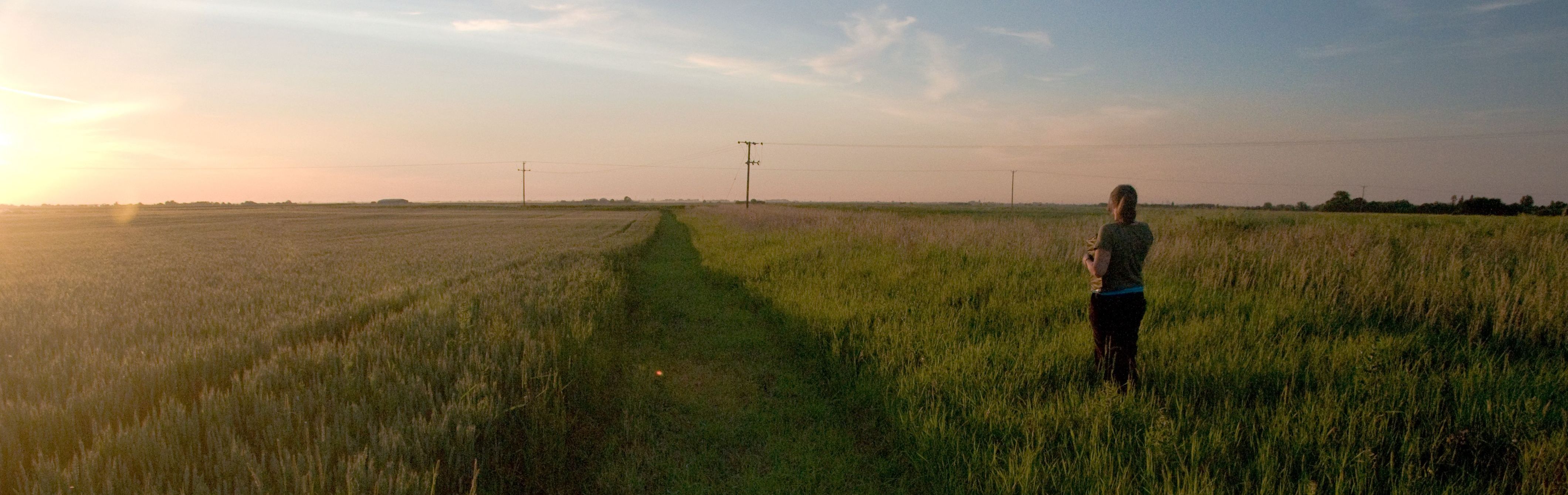
Dawn bird survey in arable farmland. © Rob Robinson/British Trust for Ornithology (BTO)

The importance of demography

But simply recording these changes is not enough; we need to understand why they occur if action is to be taken. This requires us to quantify the demographic rates (survival, productivity and movements) that underlie them, which in turn requires samples of marked individuals. Simply counting individuals is not enough. Continue reading “Making the Most of Volunteer Data: Counting the birds and more…”

Accompanying Marine Mammals into the Abyss: The Benefits of Electronic Tag Data for Undersea Tracking

Post provided by Christophe Laplanche, Tiago Marques and Len Thomas

1km Deep

Most marine mammal species spend the majority of their lifetime at sea… underwater. Some species (like sperm whales, beaked whales, and elephant seals) can go routinely as deep as 1000m below sea level. To mammals like us, these incredible depths seem uninhabitable. It’s cold, dark, under high pressure (100kg/cm²) and 1km from air! Yet deep-diving marine mammals thrive there and have colonized every deep ocean on the planet. They have developed amazing capabilities for that purpose – including efficient swimming, an advanced auditory system, sonar (in some cases), thermal insulation, extreme breath holding abilities and resistance to high pressure.

How is that possible?

Spending most of their time at depth makes them quite difficult to study. And we have a lot of questions to ask them. How do they balance swimming cost versus food intake? Do they forage cooperatively, in groups? For those with sonar, how does it work? With increasing human activities (oil exploration, military sonar, sea transport, fishing etc.) an important new question arises: how do they cope with us?

Researchers tagging a Cuvier's beaked whale with a DTAG sound tag (soundtags.st-andrews.ac.uk) in the Ligurian Sea (© T. Pusser)
Researchers tagging a Cuvier’s beaked whale with a DTAG sound tag (soundtags.st-andrews.ac.uk) in the Ligurian Sea (© T. Pusser)

Continue reading “Accompanying Marine Mammals into the Abyss: The Benefits of Electronic Tag Data for Undersea Tracking”

Progress and Future Directions for Passive Acoustic Monitoring: Listening Out for New Conservation Opportunities

Post provided by Ammie Kalan (Post-doctoral researcher at the Max Planck Institute for Evolutionary Anthropology, Department of Primatology)

A Primate Call in a Forest is like a ‘Needle in a Haystack’

An ARU powered by solar energy recording in the Taï national park, Côte d’Ivoire. ©Ammie Kalan
A solar-powered ARU recording in the Taï national park, Côte d’Ivoire.
©Ammie Kalan

Finding a call of a particular primate species within hours and hours of audio recordings of a forest is no easy task; like finding a ‘needle in a haystack’ so to speak. Automated acoustic monitoring relies on the ability of researchers to easily locate and isolate acoustic signals produced by species of interest from all other sources of noise in the forest, i.e. the background noise. This can be much harder than it sounds. Think about whenever you have to use any kind of voice recognition system: seeking out a quiet room will greatly improve the chances you are understood by the robot-like voice on the other end of the phone. If you ever set foot in a rainforest the first thing you’ll notice is that it is anything but quiet. In fact characterizing and quantifying soundscapes has become a marker for the complexity of the biodiversity present in a given environment.

Primate monitoring programmes can learn a great deal from cetacean research where Passive Acoustic Monitoring (PAM) is the norm (since individuals are rarely observable visually). Research on bats and birds can provide excellent examples to follow as well. Automated algorithm approaches including machine learning techniques, spectral cross-correlation, Gaussian mixture models, and random forests have been used in these fields to be able to detect and classify audio recordings using a trained automated system. Such automated approaches are often investigated for a single species but impressive across-taxa efforts have also been initiated within a framework of real-time acoustic monitoring. Implementing these in other research fields could lead to significant advances. Continue reading “Progress and Future Directions for Passive Acoustic Monitoring: Listening Out for New Conservation Opportunities”