Can colours make animals warmer or cooler? 

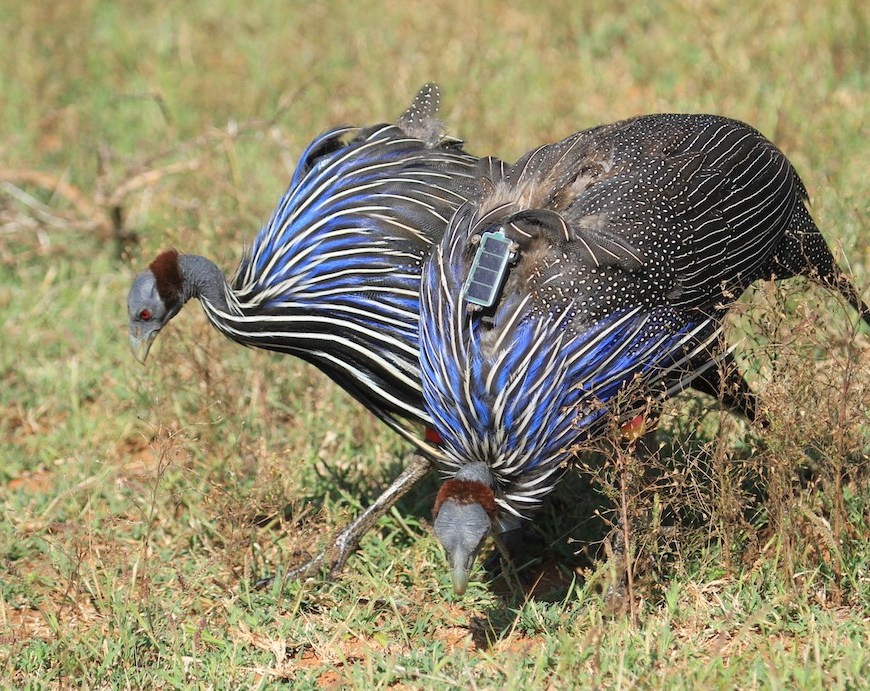
Liliana D’Alba of Naturalis Biodiversity Center explores how feather colouration can affect bird’s body temperature and even make flying more efficient.  This blog is part of our colourful countdown to the holiday season where we’re celebrating the diversity and beauty of the natural world. Click here to read the rest of the Colour Countdown series. In nature we constantly see examples of animals that use the colour of their … Continue reading Can colours make animals warmer or cooler? 

A Multiple-Part Morphospace

Post provided by Daniel Thomas

Many biologists dedicate their careers to finding out why life has taken the shape it has. Darwinian natural selection gives us the how, but researchers are deeply interested in why we find particular morphologies amongst certain organisms, when these morphologies arose, and what these morphologies mean for the organisms and the communities in which they reside. In this post, Daniel Thomas (Massey University, New Zealand) describes the philosophy behind the new morphoBlocks package for R. The package is presented in a new paper within the ‘Realising the promise of large data and complex models’ Special Feature for Methods in Ecology and Evolution. Researchers interested in exploring the morphoBlocks package are encouraged to try these three vignettes.

Continue reading “A Multiple-Part Morphospace”

Camouflage as a window on perception 

Innes Cuthill of University of Bristol takes us on a journey into the world of concealment and camouflage, how have these complex forms of disguise evolved, and what role does the viewer play? This blog is part of our colourful countdown to the holiday season where we’re celebrating the diversity and beauty of the natural world. Click here to read the rest of the colour countdown series. Go to any introductory textbook on … Continue reading Camouflage as a window on perception 

Measuring canopy fuel loads in boreal forests accurately and efficiently using a smartphone

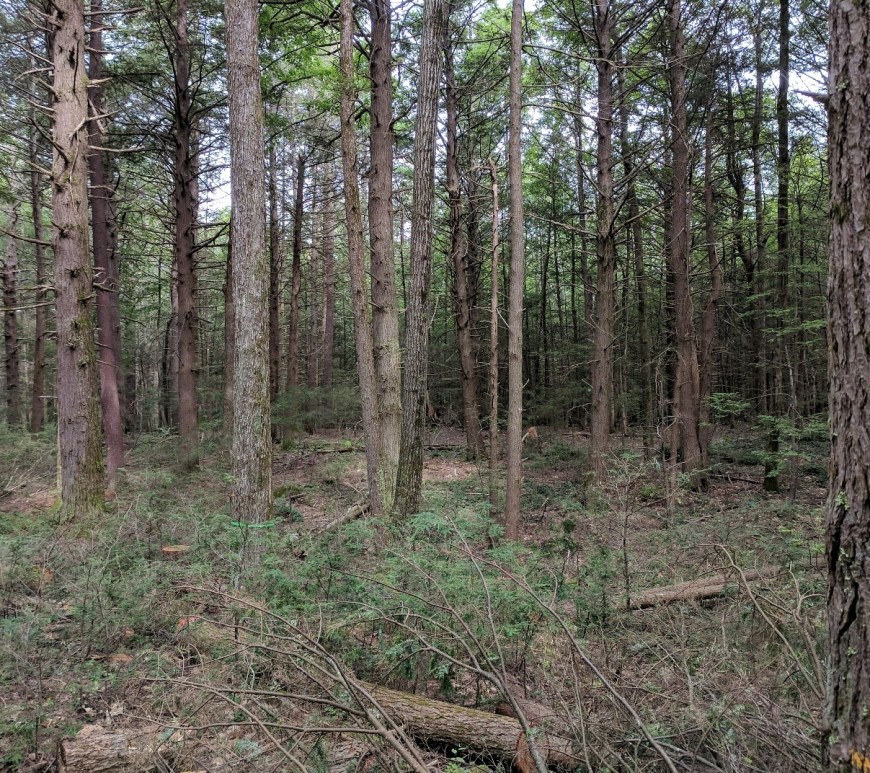
Our Associate Editor Ryan Chisholm of the National University of Singapore tells us about the recent Practical Tools article he handled for MEE which presents a method for estimating canopy fuel load from hemispherical photographs. Fire is a natural process in many ecosystems, but large-scale intense fires can threaten biodiversity, as well as human life and property. Although the annual global area burnt has decreased … Continue reading Measuring canopy fuel loads in boreal forests accurately and efficiently using a smartphone

Meet the Senior Editor: Natalie Cooper

After six years as an Associate Editor for MEE, we are very pleased to welcome Natalie Cooper to the Senior Editor team! Natalie is a Senior Researcher at the Natural History Museum, London, where her research sits at the interface between macroecology and macroevolution, aiming to understand broad-scale patterns of biodiversity. Here we visit Natalie behind the scenes at the Natural History Museum to get … Continue reading Meet the Senior Editor: Natalie Cooper

Why are some mammals black and white? 

Natasha Howell of Bristol University unearths the mystery of striking colouration in mammals and what skunks and bees have in common. This blog is part of our colourful countdown to the holiday season where we’re celebrating the diversity and beauty of the natural world. Click here to read the rest of the colour countdown series. The vast majority of mammal species are not known for their striking colouration. Compared to other … Continue reading Why are some mammals black and white? 

Cover Stories: Making strides towards weighing whole wildlife populations in 3D

Post provided by Michelle Shero

A grey seal pup next to the unoccupied aerial system (UAS) used in this study. Photo credit: Michelle Shero.

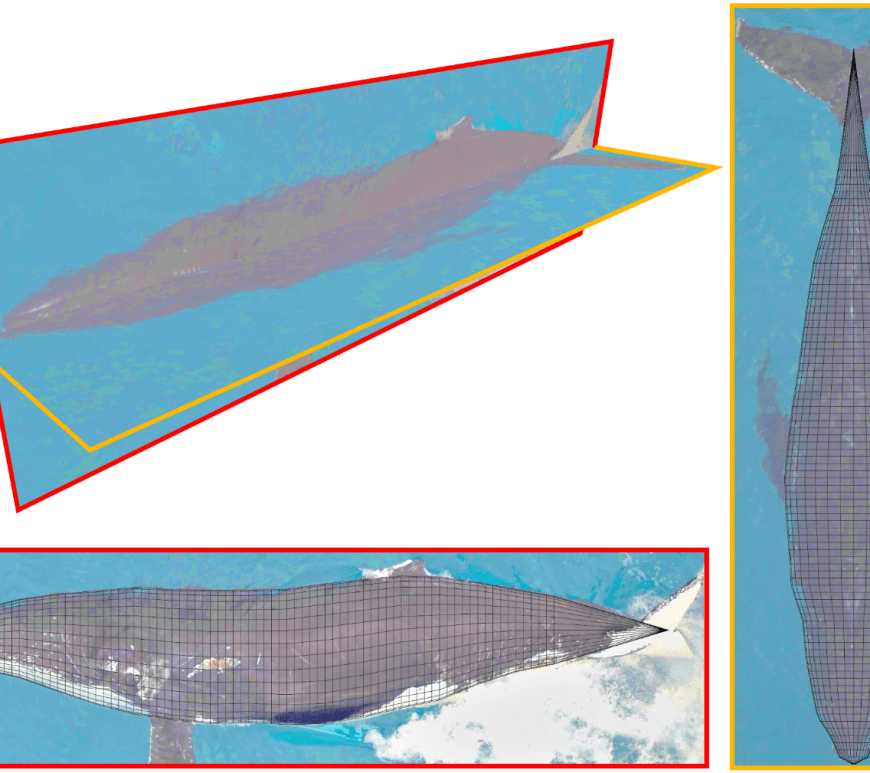
To survive and reproduce, all animals must be able to extract sufficient energy from their environment. It takes energy to forage, but animals can recover those calories if they can successfully capture enough prey – and the animal’s weight tells us about its net energetic costs versus gains. Animals that remain in positive energy-balance can then afford to devote more energy towards growth and reproduction. In this blog post, Michelle Shero of Woods Hole Oceanographic Institution guides us through a new method outlined in her team’s recent Methods in Ecology and Evolution paper ‘Tracking wildlife energy dynamics with unoccupied aircraft systems and three-dimensional photogrammetry’. The team uses drone imagery to 3-D model and ‘weigh’ large groups of free-living animals.

Continue reading “Cover Stories: Making strides towards weighing whole wildlife populations in 3D”

How do birds see the world? 

Almut Kelber, Professor at Lund University, takes us on a sweeping tour of the complex array of bird vision – from chickens to owls – to unravel how their ecology affects the way they see the world. This blog is part of our colourful countdown to the holiday season in which we’re celebrating the diversity and beauty of the natural world. Click here to read the rest of … Continue reading How do birds see the world? 

December Issue Out Now!

Our December issue is online now! Our final issue of the year contains 16 fantastic articles about the latest methods in ecology and evolution. This month we have methods for fine tuning biodiversity assessments, visual analysis of wood samples, analysing environmental audio recordings and much more! Read on to find out all about them. Featured Articles Dealing with software complexity in individual‐based models *open access* Individual-based models … Continue reading December Issue Out Now!

Countdown to the first ISEC in Africa!

Post provided by SEEC The Centre for Statistics in Ecology, Environment and Conservation (SEEC) invites you to ISEC2022 in Cape Town, South Africa, 27 June – 1 July 2022 – the first International Statistical Ecology Conference (ISEC) to be held in Africa! Registration is now open and we would like to welcome all of you to join this exciting event. Statistical ecology is an inherently … Continue reading Countdown to the first ISEC in Africa!