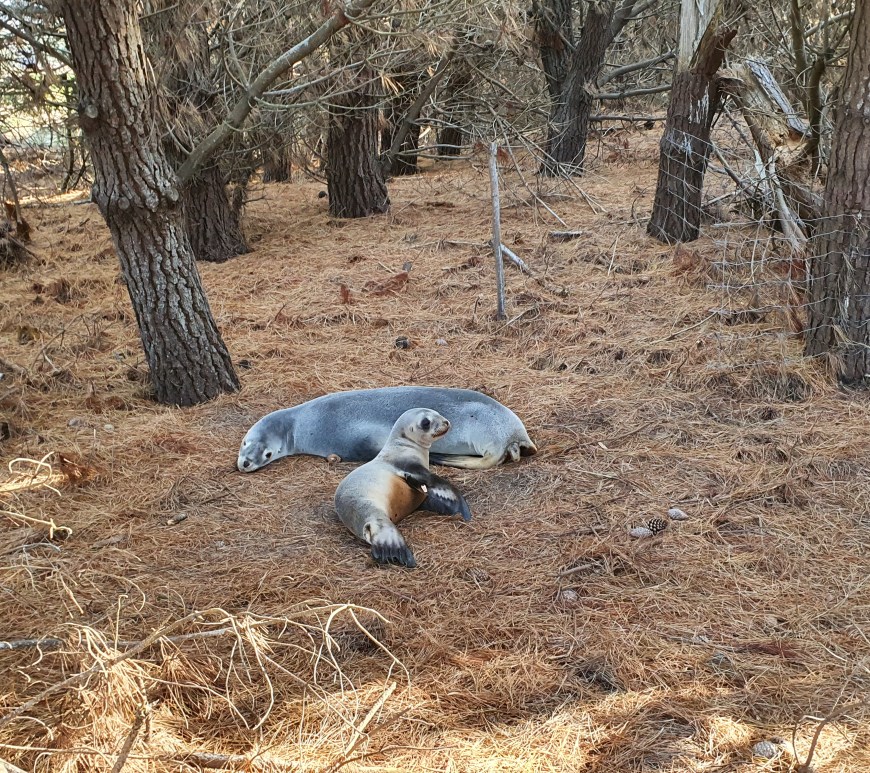
Microscopic phytoplankton are storytellers of our oceans under climate change

Post provided by Dr Rosie Sheward The 2021 UN Climate Change Conference (COP26) is being held Glasgow this week, and now more than ever before, the pressure is on for world leaders to agree on climate action to keep global warming below 1.5°c. In the lead up to the conference, we’re asking our editors and authors to discuss their research at the interface of climate … Continue reading Microscopic phytoplankton are storytellers of our oceans under climate change

Monsters Behind the Movies

Post provided by Ben Whittaker & Chloe Robinson

“There’s no such thing as monsters” you whisper to yourself while creeping into bed, regretting your decision to spend the whole night watching horror movies. Thunder rumbles in the distance as rain begins tapping on the windowpane. The lamps flicker and black out. “Just a power cut” you chuckle nervously, clutching the bed covers up to your face. Laid in the darkness, you become aware of every creak and bump echoing throughout the empty house. But what is that shuffling sound? Is it coming closer? The shuffling stops right outside your bedroom door, which gently rattles and then slowly groans open. A dreadful chill runs down your spine. “There’s no such thing as monsters?”

In this special Halloween post, blog editors Chloe Robinson and Ben Whittaker conjure stories of the real-life monsters that have inspired movie makers. Continue reading at your own peril and be warned that Methods in Ecology and Evolution holds no liability for ensuing nightmares, hauntings, or extra-terrestrial abduction.  

Continue reading “Monsters Behind the Movies”

October Issue Out Now!

Our October Issue is out now! It’s a bumper issue, with 26 articles presenting the latest methods in ecology and evolution. We have methods for measuring temporal change in alpha diversity, aerial imaging of field plots, analysing 3D morphology images and more, plus four Applications and five Practical Tools articles for your reading. Find out more below! Featured Articles The potential and practice of arboreal … Continue reading October Issue Out Now!

Functional Strategies to COP26

This year’s UN Climate Change Conference (COP26) will be held in Glasgow in November, and now more than ever before, the pressure is on for world leaders to agree on climate action to keep global warming below 1.5°c. In the lead up to the conference, we’re asking our editors and authors to share their research at the interface of climate and ecology. In this post, Jesus Aguirre Gutierrez of the University of Oxford presents research on the role of functional diversity in the response of tropical forests to climate change.

Continue reading “Functional Strategies to COP26”

On foot snares and felids

By Methods in Ecology and Evolution Executive Editor Aaron M. Ellison A recent Practical Tools article published in Methods in Ecology & Evolution described a foot snare used to capture jaguars and cougars in Brazil (Ribeiro de Araujo et al. 2021a). Within hours of the posting of the proofed version of the article on the Early View section of the journal’s website, comments on Twitter … Continue reading On foot snares and felids

Trash Talking: Every Litter Bit Hurts

Post provided by Chloe Robinson

Trash collected from a beach clean at Buccaneer Bay Provincial Park, BC in collaboration with Pender Harbour Ocean Discovery Station (PODS) and the Loon Foundation. Picture credit: Jessica Scott.

It is no surprise that COVID-19 has changed the course of a substantial number of things in the world since the start of the pandemic. One of the most understated impacts is the devastating reversal of many years’ worth of fighting plastic pollution. In the wake of International Coast Cleanup Day and World Environmental Health Day, Associate Editor Dr. Chloe Robinson will be discussing the impacts of marine litter and plastic pollution on marine life and how the Great Canadian Shoreline Cleanup program is working to stop the leak of litter and plastic pollution into the ocean.

Continue reading “Trash Talking: Every Litter Bit Hurts”

Call for Proposals: Active Remote Sensing for Ecology, Biodiversity and Ecosystem Conservation

We are now accepting article proposals for a new cross-journal Special Feature entitled ‘Active Remote Sensing for Ecology, Biodiversity and Ecosystem Conservation‘, a joint venture by the journals Methods in Ecology and Evolution, Journal of Ecology, Journal of Animal Ecology and Journal of Applied Ecology. Here, the Special Feature’s Lead Editors Carlos Alberto Silva & Hooman Latifi explain the idea behind this Special Feature. Active … Continue reading Call for Proposals: Active Remote Sensing for Ecology, Biodiversity and Ecosystem Conservation

A new tool to identify important sites for conservation using tracking data

Post provided by Martin Beal, Steffen Oppel, Jonathan Handley, Richard Phillips, Paulo Catry, and Maria Dias.

Identifying areas around the world that can best contribute to the conservation of wild animals is a major challenge. Historically, this required conducting extensive surveys in the field, but with the advent of miniature tracking technology we can now follow animals and allow them to indicate which areas they depend on most. In this collaborative post, international researchers from ISPA – Instituto Universitário in Lisbon, the Royal Society for the Protection of Birds, BirdLife International, and British Antarctic Survey present a new conservation tool as outlined in the paper “track2KBA: An R package for identifying important sites for biodiversity from tracking data” recently published in Methods in Ecology and Evolution.    

Continue reading “A new tool to identify important sites for conservation using tracking data”

On the Benefits of Collaborative Peer Review

At the British Ecological Society journals we strongly encourage senior academics to review our manuscripts in collaboration with more junior members of their labs.

We believe that this is fantastic training for Early Career Researchers, whether it involves sitting down and combing through a manuscript together, or, if they already have some experience, the junior researcher writing the report and the senior researcher editing and adding comments later. We also recommend that the Early Career Researchers read our handy Guide to Peer Review before conducting their report.

This Peer Review Week, some of our past co-reviewers have kindly shared their thoughts on the process.

Continue reading “On the Benefits of Collaborative Peer Review”

An Ecologist and a Programmer Walk Into a Bar…

Post provided by Daniel Vedder, Markus Ankenbrand, and Juliano Sarmento Cabral

Five years ago, a new institute opened its doors at the University of Würzburg: the Center for Computational and Theoretical Biology (CCTB). The idea was simple. Take six computational research groups, covering topics from image analysis to genomics and ecological modelling, put them in a building together, and see what happens.

Despite our disparate areas of expertise, this “experiment” has worked really well. It soon turned out that one of our greatest strengths as an institute lay in the cumulative computer know-how we have, or have acquired together. In our experience, many biologists are still somewhat wary of computational techniques, and struggle with them even when they use them. Part of the reason for this unease, we believe, is that few biologists are thoroughly trained in computer science.

Continue reading “An Ecologist and a Programmer Walk Into a Bar…”