Researchers at Washington State University and Smith-Root recently invented an environmental DNA (eDNA) filter housing that automatically preserves captured eDNA by desiccation. This eliminates the need for filter handling in the field and/or liquid DNA preservatives. The new material is also biodegradable, helping to reduce long-lasting plastic waste associated with eDNA sampling. This video explains their new innovation in the field of eDNA sampling technology: … Continue reading The Self-Preserving eDNA Filter: How It Works and Why You Should Use It
Vector-borne viruses (like those transmitted by mosquitoes) are (re)emerging and they’re hurting local economies and public health. Some typical examples are the West Nile, Zika, dengue, chikungunya and yellow fever viruses. The eco-evolutionary and epidemiological histories of these viruses differ massively. But they share one important factor: their transmission potential is highly dependent on the underlying mosquito population dynamics.
Vírus transmitidos por vetores (ex. mosquitos, carraças) estão a (re)emergir e a ter consequências negativas para a saúde pública e para as economias locais. Exemplos típicos recentes de vírus transmitidos por mosquitos incluem o vírus West Nile na América do Norte, Israel e Europa, e os vírus Zika, dengue, chikungunya, Mayaro e febre amarela na América do Sul e África. A epidemiologia, ecologia, e evolução destes vírus são altamente diversas, mas todos eles partilham um fator crítico: o seus potenciais de transmissão são altamente dependentes da dinâmica de população das espécies de mosquitos envolvidas.
Um dos objetivos principais do controlo de doenças infeciosas é prevenir o inicio (ou alterar o curso) de epidemias. Para esse fim, modelos dinâmicos de transmissão têm sido usados com sucesso desde meados do século XX (ex. no contexto de malaria). Esses modelos são aproximações computacionais dos sistemas biológicos reais, permitindo simular uma multitude de cenários nos nossos computadores pessoais, e com tal testar, reconstruir e projetar o potencial e comportamento epidemiológico de patógenos. Quando tais simulações são comparadas com observações reais (ex. número de casos reportados por um sistema de vigilância), os modelos oferecem respostas sobre a mecânica de transmissão e os fatores epidemiológicos ou demográficos que terão contribuído para determinados padrões observados nos dados. Enquanto que modelos dinâmicos são uma das peças fundamentais da epidemiologia contemporânea, dados imperfeitos ou a falta deles pode tornar difícil (se não impossível) a conceção, implementação e utilidade esses modelos. As razões pelas quais dados podem ser imperfeitos são várias, desde sistemas de vigilância fracos, erros humanos, falta de investimento, etc. Continue reading “Mosquitos, o clima e a transmissão de patógenos: como o índice P pode contribuir para saúde pública e educação”
We’ve got six papers that are freely available to absolutely everyone this month too. You can find out about two of the Open Access papers in the Applications and Practical Tools section below. In the third, Chen et al. show that tree assemblages in tropical forest ecosystems can present a strong signal of extensive distributional interspersion.
A new self-preserving filter housing automatically preserves eDNA, while reducing the risk of contamination, and creating less plastic waste.
Researcher collecting an eDNA sample using the self-preserving filter housing.
In 2015 the inventor of the Keurig disposable coffee cartridge (K-Cups) told reporters that sometimes he regrets ever inventing the technology. The single-use design simply produces too much non-recyclable trash. Well, that very same problem is what ultimately led to the creation of a self-preserving filter for environmental DNA (eDNA); a recently reported Practical Tool in Methods in Ecology and Evolution.
eDNA scientists rely on single-use sampling equipment because eDNA surveys are highly sensitive to potential contamination. “We started out simply looking for biodegradable plastics that could be molded into a filter housing, with the objective of reducing plastic waste.” says Dr. Austen Thomas who led the team of researchers and engineers who invented the Smith-Root eDNA Sampler. “That’s when we realized that some of the biodegradable compounds function by being highly hydrophilic.” Continue reading “Making a Self-Preserving eDNA Filter”
Last week a few things happened in the world of science. One was the publication of the Journal Impact Factors (JIFs)… Followed by journals saying how wonderful their JIF is… And then everyone else saying how awful impact factors are. Methods in Ecology and Evolution is a journal, so naturally we’re obliged to take journal point of view. Which means we need to get really … Continue reading Our 2019 Impact Factor: Now We are Seven
Sequencing ultraconserved DNA for phylogenetic research is a hot topic in evolution right now. As the name implies, Ultraconserved Elements (UCEs) are regions of the genome that are nearly identical among distantly related organisms. They can provide useful information for difficult phylogenetic questions. The list of advantages is long – among others, UCEs are:
phylogenetically informative on different timescales.
A key reason for the method’s success is the developers’ commitment to full transparency, active tutoring, and willingness to help next-gen sequencing newbies like me to get started. Help is just a github-issue post away.
Five years ago at Evolution 2014, ‘The Dark Side of Phylogenetics’ symposium (organised by Natalie Cooper) explored some of the issues with phylogenetic comparative methods (PCMs). This year at Evolution 2019, Michael Landis and Rosana Zenil-Ferguson are organising a contrasting ‘Bright Side of Phylogenetics‘ spotlight session (featuring Michael Matschiner). They aim to promote research that has overcome these pitfalls and that explores innovations in phylogenetics. Clearly they found our lack of faith disturbing.
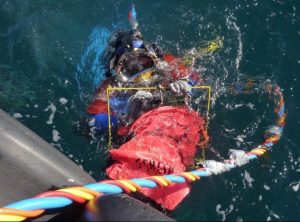
It’s more important than ever for us to have accurate information to help marine conservation efforts. Jordan Goetze and his colleagues have provided the first comprehensive guide for researchers using diver operated stereo-video methods (or stereo-DOVs) to survey fish assemblages and their associated habitat. But what is Stereo DOV? What makes it a better method than the traditional UVC (Underwater Visual Census) method? And when … Continue reading Stereo DOV: A Non-Invasive, Non-Destructive Way to Study Fish Populations
There are an estimated 830,000 species on coral reefs worldwide. At some stage in their lives, nearly all of these species are consumed as prey items. In this super diverse buffet of fishes, corals, crabs, worms, and other critters, the number of possible interactions between predators and prey is nearly inexhaustible.
The extreme diversity of coral reefs has fascinated naturalists for centuries. Pinpointing predator-prey dynamics is essential to fully understand coral reef ecosystem dynamics, and visual analysis of gut contents has been a staple technique of coral reef ecologists. While the joy of spending copious hours looking through a microscope at half-digested marine mush is undeniable, this type of visual inspection has limitations. Even so, visual gut content analysis (along with stable isotope analysis and behavioural observations) has showcased a highly complex dietary network.
To digest this extreme complexity and surmount the hurdle of dietary unknowns, researchers frequently lump fishes into broad trophic categories, such as ‘mobile herbivores’. Broad generalisations are pragmatic and may be help us detect broad ecological trends, but they oversimplify species’ actual dietary preferences. As coral reefs are changing due to anthropogenic disturbances, it’s critical to thoroughly examine how well trophic groupings capture dietary linkages among reef organisms. Continue reading “Using Molecular Power to Reconstruct Hyperdiverse Food Webs”