Alba Motes Rodrigo: Precise tactile stimulation of worker ants by a robotic manipulator reveals that individual responses are density- and context-dependent

Throughout March and April, we are featuring articles shortlisted for the 2024 Robert May Prize. The Robert May Prize is awarded by the British Ecological Society each year for the best paper in Methods in Ecology and Evolution written by an early career author. Alba Motes Rodrigo’s article ‘Precise tactile stimulation of worker ants by a robotic manipulator reveals that individual responses are density- and context-dependent‘ is … Continue reading Alba Motes Rodrigo: Precise tactile stimulation of worker ants by a robotic manipulator reveals that individual responses are density- and context-dependent

From Kenya to Ohio – the inspiration for WildWing: an open-source, autonomous and affordable unmanned aerial system for animal behavioural video monitoring

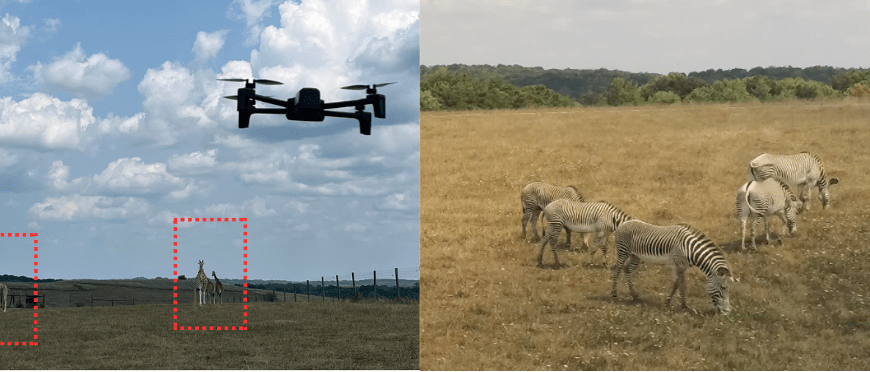
Post provided by Jenna Kline, PhD Candidate, Department of Computer Science and Engineering, The Ohio State University, Columbus, OH, USA The story of the WildWing project began in 2022 when I enrolled in the Experiential Introduction to Imageomics course. For the fieldwork component of the course, I travelled to the Mpala Research Centre in Laikipia, Kenya. My course project advisors, Dr Tanya Berger-Wolf and Dr … Continue reading From Kenya to Ohio – the inspiration for WildWing: an open-source, autonomous and affordable unmanned aerial system for animal behavioural video monitoring

From a frustrated undergraduate to a motivated PhD: The story of YOLO-Behaviour for automated behavioural coding from videos

Post provided by Alex Chan Hoi Hang, PhD student, Centre for the Advanced Study of Collective Behaviour, University of Konstanz The story of this project can be traced back to 2019, as a second-year undergraduate in biological sciences at Imperial College London, UK, where I took an animal behaviour course. For one of the hands-on sessions, Dr. Julia Schroeder (who later became my undergraduate and … Continue reading From a frustrated undergraduate to a motivated PhD: The story of YOLO-Behaviour for automated behavioural coding from videos

Pride Month 2024: Nathaniel Wells

Happy Pride Month! Join the British Ecological Society in this annual, global celebration as we share stories from STEM researchers who belong to the LGBTQ+ community.  This post is by Nathaniel Wells.  About me My name is Nathaniel, and I use he/they pronouns. I’m from Newfoundland and Labrador, Canada, and I’ve just finished my undergraduate degree at Memorial University of Newfoundland with Honours in Psychology. … Continue reading Pride Month 2024: Nathaniel Wells

AnimalTA: an easy-to-use program for tracking and analysing animal movement

Post provided by Violette Chiara and Sin-Yeon Kim There are many tools available to track and analyse animal movement. In this post, Violette Chiara and Sin-Yeon Kim share insights on how AnimalTA fills the niche of an accessible, user-friendly software for video analysis. Why AnimalTA? AnimalTA is a new tool to track and analyse animal movement in digital videos. When we began to develop AnimalTA, … Continue reading AnimalTA: an easy-to-use program for tracking and analysing animal movement

A guide to sample design for GPS-based studies in animal societies

Post provided by Charlotte Christensen (she/her) and Damien Farine (he/him)

Miniaturisation of technology has made GPS tags increasingly accessible for studying animal behaviour. However, limitations in battery life introduces challenging trade-offs in data collection. In this blog post, Charlotte Christensen and Damien Farine discuss how these sampling trade-offs can impact studies that use GPS tags to study social animals.

Continue reading “A guide to sample design for GPS-based studies in animal societies”

Modelling and inference for the movement of interacting animals

Post provided by Jordan Milner

Each year Methods in Ecology and Evolution awards the Robert May Prize to the best paper published in the journal by an author at the start of their career. Ten Early Career Researchers made the shortlist for this year’s prize, including Jordan Milner who studied for his PhD at the University of Sheffield in the UK. In this interview, Jordan shares insights on his paper ‘Modelling and inference for the movement of interacting animals’.

Continue reading “Modelling and inference for the movement of interacting animals”

Tracking harbour porpoises around gill nets

Post provided by Jamie Macaulay Entanglement in net fisheries (static and drift) is the largest known cause of direct anthropogenic mortality to many small cetacean species, including harbour porpoise (Phocoena phocoena), in UK waters. Despite this, little is known about the behaviour of small cetaceans in proximity to nets. In this blog post, Jamie Macaulay discusses the findings of his Methods in Ecology & Evolution … Continue reading Tracking harbour porpoises around gill nets

Non-invasive playback experiments allow for rigorous studies of wildlife interactions

Post provided by Meredith Palmer, Chris “Akiba” Wang, Jacinta Plucinski & Robert M. Pringle

The BoomBox ABR deployed with a Bushnell TrophyCam camera trap in Gorongosa National Park, Mozambique

Camera traps are a valuable tool in ecological research, especially for capturing large quantities of information on the behaviour of an array of wildlife within an ecological community. Camera traps are seldom used to experimentally testing key animal behaviour hypotheses, despite the potential offered by the non-invasive technology. In this blog post, Dr. Meredith Palmer and co-authors discuss the application of the ‘BoomBox’ camera trap module that allows researchers to conduct a unique suite of manipulative experiments on free-living species in complex environments, as published in their Methods in Ecology and Evolution article ‘BoomBox: An Automated Behavioral Response (ABR) Camera Trap Module for Wildlife Playback Experiments’.

Continue reading “Non-invasive playback experiments allow for rigorous studies of wildlife interactions”

The next step for tagging insects: we can’t keep ignoring the impact

Robert May Prize Shortlisted Article

Post provided by Femke Batsleer

Digger wasp (Bembix rostrata). Credit: Femke Batsleer.

Each year Methods in Ecology and Evolution awards the Robert May Prize to the best paper in the journal by an author at the start of their career. Femke Batsleer has been shortlisted for her article ‘The neglected impact of tracking devices on arthropods‘. In this blog, Femke discusses how her paper came to be and the outcomes of the review.

Continue reading “The next step for tagging insects: we can’t keep ignoring the impact”