Biomechanically-Aware Behaviour Recognition using Accelerometers

Post provided by Pritish Chakravarty


Accelerometers, Ground Truthing, and Supervised Learning

Accelerometers are sensitive to movement and the lack of it. They are not sentient and must recognise animal behaviour based on a human observer’s cognition. Therefore, remote recognition of behaviour using accelerometers requires ground truth data which is based on human observation or knowledge. The need for validated behavioural information and for automating the analysis of the vast amounts of data collected today, have resulted in many studies opting for supervised machine learning approaches.

Ground-truthing. The acceleration data stream (recorded using the animal-borne data logger, bottom-left) is synchronised with simultaneously recorded video (near top right). Picture credit: Kamiar Aminian

In such approaches, the process of ground truthing involves time-synchronising acceleration signals with simultaneously recorded video, having an animal behaviour expert create an ethogram, and then annotate the video according to this ethogram. This links the recorded acceleration signal to the stream of observed animal behaviours that produced it. After this, acceleration signals are chopped up into finite sections of pre-set size (e.g. two seconds), called windows. From acceleration data within windows, quantities called ‘features’ are engineered with the aim of summarising characteristics of the acceleration signal. Typically, ~15-20 features are computed. Good features will have similar values for the same behaviour, and different values for different behaviours.

Continue reading “Biomechanically-Aware Behaviour Recognition using Accelerometers”

Stereo DOV: A Non-Invasive, Non-Destructive Way to Study Fish Populations

It’s more important than ever for us to have accurate information to help marine conservation efforts. Jordan Goetze and his colleagues have provided the first comprehensive guide for researchers using diver operated stereo-video methods (or stereo-DOVs) to survey fish assemblages and their associated habitat. But what is Stereo DOV? What makes it a better method than the traditional UVC (Underwater Visual Census) method? And when … Continue reading Stereo DOV: A Non-Invasive, Non-Destructive Way to Study Fish Populations

Quantifying Animal Movement from Videos

Quantifying animal movement is central to research spanning a variety of topics. It’s an important area of study for behavioural ecologists, evolutionary biologists, ecotoxicologists and many more. There are a lot of ways to track animals, but they’re often difficult, especially for people who don’t have a strong background in programming. Vivek Hari Sridhar, Dominique G. Roche and Simon Gingins have developed a new, simple software to … Continue reading Quantifying Animal Movement from Videos

How do You Know that the Top Dog is Really the Top Dog? Using Elo-Ratings and Bayesian Inference to Determine Rankings in Animal Groups

Post provided by Julia Fischer

A female chacma baboon (rear) signals her submission to another female by raising her tail. ©Julia Fischer.

Anyone who studies social animals in the wild (or human groups, for that matter), will soon find that some individuals threaten or attack others frequently, while others try to get out of the way or signal their submission in response to aggression. Observers tally the outcome of such aggressive interactions between any given two individuals (or ‘dyads’) and try to deduce the rank hierarchy from such winner-loser matrices. One drawback of this approach is that all temporal information is lost.

Imagine Royal, a baboon, dominating over Power, another baboon, 20 times, and Power dominating over Royal 20 times as well. If we just look at these data, we might think that they have the same fighting ability and similar ranks. But, if we know that Royal beat Power the first 20 of the interactions, then Power beat Royal in all further interactions, we’d come to a totally different conclusion. We’d infer that Power had toppled Royal and a rank change had taken place.

How do Rank Hierarchies Change Over Time?

One prominent method that takes the temporal dynamics of winner-loser interactions into account was originally developed to calculate the relative skill level of chess players. This method was introduced by Arpad Elo and is hence known as Elo-Rating. Elo-Rating has also been applied to rate the relative skills in a variety of competitive fields, including Major League Baseball, video games, and Scrabble. Continue reading “How do You Know that the Top Dog is Really the Top Dog? Using Elo-Ratings and Bayesian Inference to Determine Rankings in Animal Groups”

Animal Behaviour through a Virtual Lens

Motion vision is an important source of information for many animals. It facilitates an animal’s movement through an environment, as well as being essential for locating prey and detecting predators. However, information on the conditions for motion vision in natural environments is limited. To address this, Bian et al. have developed an innovative approach that combines novel field techniques with tools from 3D animation to … Continue reading Animal Behaviour through a Virtual Lens

Animation Meets Biology: Shedding New Light on Animal Behaviour

Below is a press release about the Methods paper ‘Integrating evolutionary biology with digital arts to quantify ecological constraints on vision-based behaviour‘ taken from the La Trobe University.

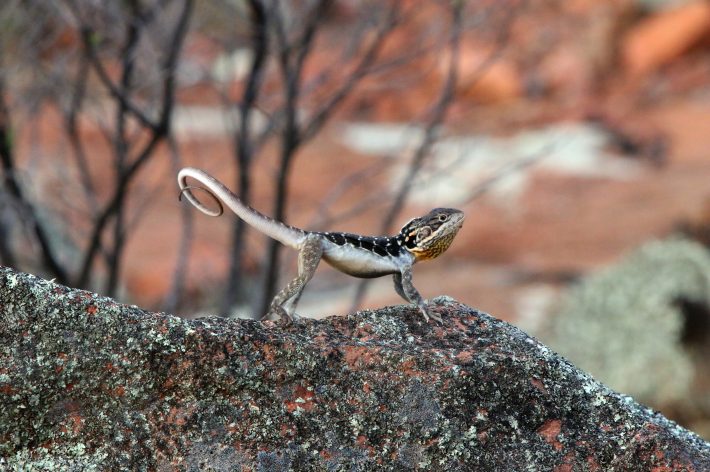
Ctenophorus fionni (Peninsula Dragon), male push up display - Copyright Jose Ramos, La Trobe University
Ctenophorus fionni (Peninsula Dragon), male push up display. © Jose Ramos, La Trobe University

Many animals rely on movement to find prey and avoid predators. Movement is also an essential component of the territorial displays of lizards, comprising tail, limb, head and whole-body movements.

For the first time, digital animation has been used as a research tool to examine how the effectiveness of a lizard’s territorial display varies across ecological environments and conditions. The new research was published today in the journal Methods in Ecology and Evolution.

A team from La Trobe University’s School of Life Sciences, led by Dr Richard Peters, worked with academics from Monash University’s Faculty of IT to create, using 3D animation, a series of varied environmental settings and weather conditions, comprising different plant environments and wind conditions, to quantify how lizard displays are affected by this variation. Continue reading “Animation Meets Biology: Shedding New Light on Animal Behaviour”

Soaring with Eagles, Swimming with Sharks: Measuring Animal Behaviour with Hidden Markov Models

Post provided by THEONI PHOTOPOULOU, MEGAN MURGATROYD, VIANEY LEOS-BARAJAS Around the world there are concerns over the impacts of land use change and the developments (such as wind farms). These concerns have led to the implementation of tracking studies to better understand movement patterns of animals. Such studies have provided a wealth of high-resolution data and opportunities to explore sophisticated statistical methods for analysis of animal behaviour. We use … Continue reading Soaring with Eagles, Swimming with Sharks: Measuring Animal Behaviour with Hidden Markov Models

New Associate Editor: Marie Auger-Méthé

Today, we are pleased to be welcoming a new member of the Methods in Ecology and Evolution Associate Editor Board. Marie Auger-Méthé joins us from Dalhousie University in Canada and you can find out a little more about her below.

Marie Auger-Méthé

Marie Auger-Méthé

“I am broadly interested in developing and applying statistical tools to infer behavioural and population processes from empirical data. My work tends to focus on marine and polar mammals, but the methods I develop are often applicable to a wide range of species and ecosystems. My recent work has centred on modelling animal behaviour using movement data and I generally analyse data with spatial and/or temporal structure.”

Marie has been reviewing for Methods in Ecology and Evolution for a few years and has contributed articles to some of the other journals of the British Ecological Society too. Earlier this month, her article titled ‘Evaluating random search strategies in three mammals from distinct feeding guilds‘ was published in the Journal of Animal Ecology. Continue reading “New Associate Editor: Marie Auger-Méthé”