Don’t have a subscription to the journal? No need to worry – this month’s issue has TEN articles that are free to access for absolutely anyone. You can find out about all 10 below.
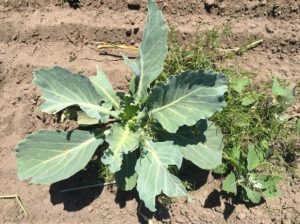
Proportion of leaf damage is a type of measurement that can lead to proportional data.
Imagine the scene: you’re presenting your exciting research results at an important international conference. Being conscientious and aware of statistical best-practice and so you’ve included test statistics and confidence intervals on all your result figures. Not just P values! Some of the data you are presenting involves the proportion of leaf surface damaged by an insect herbivore under different treatments. You finish your presentation (on time!) and there’s time for questions. From the audience a polite but insistent colleague asks: “Your confidence interval for that estimate goes from -0.3 to 0.5… how should we interpret a negative proportion of a leaf?”.
Someone chuckles. As you nervously flick back to the slide in question, you mutter something about the difference between confidence intervals and point estimates. You start to feel dizzy. A murmur of confused voices slowly builds amongst the audience members. In the distance, a dog barks.
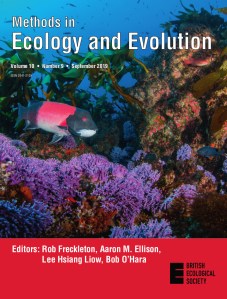 We’ve got another brilliant issue of Methods in Ecology and Evolution out today. In another bumper 250 page offering, you’ll find articles on identifying waterbird hotspots, identity metrics, capture-recapture methods (and the alternative close-kin mark-recpature) and way more.
 Methods Blog