Issue 6.6

Issue 6.6 is now online!

The June issue of Methods is now online!

This month’s issue contains one Applications article and one Open Access article.

VirtualCom: A simple and readily usable tool that will help to resolve theoretical and methodological issues in community ecology. VirtualCom simulates the evolution of the pool of regionally occurring species, the process-based assembly of native communities and the invasion of novel species into native communities. One of the authors of this Application is the 2014 Robert May Young Investigator Prize Winner, Laure Gallien.

Calibrating animal-borne proximity loggers, this month’s only Open Access article, comes from Christian Rutz et al. The authors calibrated a recently developed digital proximity-logging system (‘Encounternet’) for deployment on a wild population of New Caledonian crows. They show that, using signal-strength information only, it is possible to assign crow encounters reliably to predefined distance classes, enabling powerful analyses of social dynamics. Their study demonstrates that well-calibrated proximity-logging systems can be used to chart social associations of free-ranging animals over a range of biologically meaningful distances.

Our June issue also features articles on Phylogenetic MethodsPhysiological Ecology, Biomonitoring and Conservation, Species Distribution Monitoring and Bioinformatics. Continue reading “Issue 6.6”

What fish ears can tell us about sex, surveillance and sustainability

Below is a press release about the Methods paper, ‘Quantifying physiological influences on otolith microchemistry, from the University of Southampton:

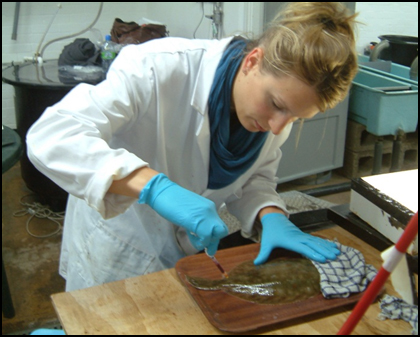
Dr Anna Sturrock blood sampling plaice ©Anna Sturrock

Scientists at the University of Southampton have found a way to pry into the private lives of fish – by looking in their ears!

By studying ear stones in fish, which act as tiny data recorders, scientists can now reveal migration patterns and even provide insights into their sex life.

Managing fish stocks in a sustainable way is a major challenge facing scientists, conservationists, policy makers and fishermen. To get the best results, accurate information about the movements of fish in the wild is needed but gathering this information is extremely difficult. Continue reading “What fish ears can tell us about sex, surveillance and sustainability”

In Defence of Satellite Data: The Perfect Companion to Ground-Based Research

Post provided by Dr Nathalie Pettorelli

Nathalie is an Institute Research Fellow at the Zoological Society of London. She heads the Environmental Monitoring and Conservation Modelling (EMCM) team and her main research involves assessing and predicting the impacts of global environmental change on biodiversity and ecosystem services. Nathalie was one of the presenters at the UK half of the Methods in Ecology and Evolution 5th Anniversary Symposium in April. You can watch her talk, ‘Harnessing the Potential of Satellite Remote Research’ here.

If there is one question I hear over and over again, it’s this: “why, oh why, do you use satellite data instead of ground-based data in your research?” People seem to think that I believe satellite data are better than ground-based data. Do I not value fieldwork? Do I not trust ground-based data? My answer to all of this is: you’ll never catch me preaching that satellite remote sensing can solve the entire data collection gap in ecological monitoring.

I use satellite data because a lot of my work happens at relatively large spatial and temporal scales, targets regions where ground-based data are simply unavailable or extremely difficult to gather and relies on being able to access data that have been collected in a systematic and scalable manner.

Yes, satellite-based techniques can address spatial and temporal domains inaccessible to traditional, on-the-ground, approaches, but I am the first to acknowledge that satellite remote sensing cannot match the accuracy, precision and thematic richness of in-situ measurement and monitoring.

©Clare Duncan
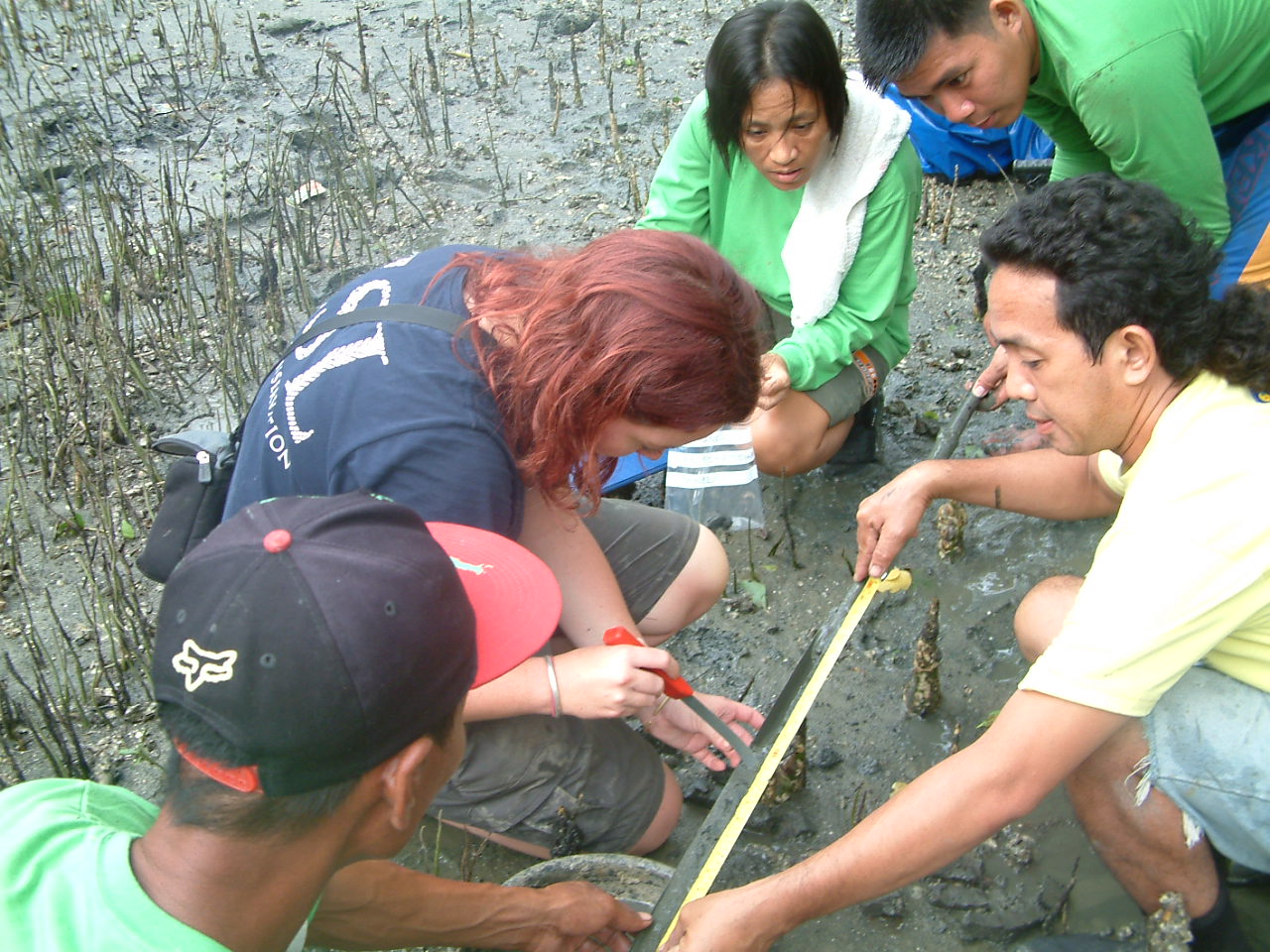
The New Generation of Ecologists in Action: Clare Duncan conducting field measurements in the Philippines to be combined with satellite remote sensing information to monitor ecosystem services delivery. ©Clare Duncan

In spite of this, data collected on the ground are currently difficult to use for mapping and predicting regional or global changes in the spatio-temporal distribution of biodiversity (a problem for those of us trying to tackle these kinds of issues). Ground-based data can also be expensive and tend to come from a single annual time period. This makes it difficult to gather information on temporal changes and phenology. Continue reading “In Defence of Satellite Data: The Perfect Companion to Ground-Based Research”

International Day for Biological Diversity 2015

Happy International Day for Biological Diversity everyone!

As you may know, today (Friday 22 May) is the United Nations Day for Biodiversity and we are celebrating by highlighting some of the best papers that have been published on biodiversity in Methods in Ecology and Evolution. This is by no means an exhaustive list and you can find many more articles on similar topics on the Wiley Online Library (remember, if you are a member of the BES, you can access all Methods articles free of charge).

If you would like to learn more about the International Day for Biological Diversity, you may wish to visit the Convention on Biological Diversity website, follow them on Twitter or check out today’s hashtag: #IBD2015.

Without further ado though, here are a few of the best Methods papers on Biological Diversity:

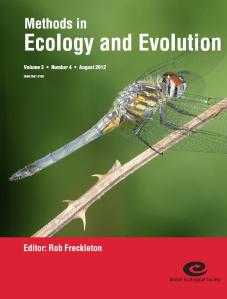
Methods Cover - August 2012Biodiversity Soup

We begin with an Open Access article from one of our Associate Editors, Douglas Yu (et al.). This article was published in the August issue of 2012 and focuses on the metabarcoding of arthropods. The authors present protocols for the extraction of ecological, taxonomic and phylogenetic information from bulk samples of arthropods. They also demonstrate that metabarcoding allows for the precise estimation of pairwise community dissimilarity (beta diversity) and within-community phylogenetic diversity (alpha diversity), despite the inevitable loss of taxonomic information.

Continue reading “International Day for Biological Diversity 2015”

The Delphi Technique: Unleashing the Power of Structured Collaboration in Anonymity

Post provided by Nibedita Mukherjee (author of The Delphi technique in ecology and biological conservation)

The quirky nature of decision making

Two heads are often better than one in decision making. Several heads might have an even higher probability of being better than one. However, people in a group often have different modes of thinking or problem solving, alternate reference frames, subjective biases and varying levels or domains of expertise. How do we harness these messy thought processes and channel them for effective decision-making for biodiversity management?

© Henry Martin (The New Yorker Collection/The Cartoon Bank)

Continue reading “The Delphi Technique: Unleashing the Power of Structured Collaboration in Anonymity”

A Dog’s Nose Knows: The Science is in on Wildlife Sniffer Dogs

Below is a press release about the Methods paper, ‘An assessment of the effects of habitat structure on the scat finding performance of a wildlife detection dog, taken from Science for Wildlife:

Badger the Wildlife Sniffer Dog

Scientists have for the first time tested wildlife detection dogs to see how they perform in different habitats, and the results are very impressive.

Wildlife sniffer dogs are trained to find the scats (poo) or scent of hard to find wildlife species. As threatened species continue to drop in numbers, they become much harder to find and conserve. Detection dogs are a potential solution to that problem.

Despite their amazing skills the use of sniffer dogs by wildlife management agencies is still limited, partly because there are many factors that might impact the dogs’ performance. One well-toted theory states that dogs might not perform well in thicker vegetation, compared to open areas. The lead author of the new study, Dr Kellie Leigh from Science for Wildlife, explains “Scent is heavier than air so it pools and gets caught up in vegetation and depressions, rather than dispersing from its source. That means the dogs might have more trouble finding the scent in some areas.”

Working together with professional dog trainer Martin Dominick from K9-Centre Australia, Dr Leigh ran an experiment with Badger, an Australian Shepherd trained to find the scat of spotted-tailed quolls. The quolls are the largest marsupial predator on mainland Australia and are becoming very hard to find in some areas. Over 120 searches, Badger scoured for quoll scats in three different Australian habitats, from open grassland to thick vegetation, under both winter and summer conditions. Continue reading “A Dog’s Nose Knows: The Science is in on Wildlife Sniffer Dogs”

Issue 6.1

Issue 6.1 is now online! Our first issue of 2015 is now online! This month we include one freely available Applications article: – A biochemical approach for identifying plastics exposure in live wildlife We also have two wonderful Open Access papers, ‘Evaluation and management implications of uncertainty in a multispecies size-structured model of population and community responses to fishing‘ by Robert B. Thorpe, Will J. … Continue reading Issue 6.1

Methods in the press

Two articles have been recently highlighted in the press. Iain Stott, Dave Hodgson and Stuart Townley, University of Exeter, have developed Popdemo, a new software tool for helping prioritise efforts in species conservation. As well as determining which species need our help, it will also be useful in pest control and sustainable harvesting. The University press release was picked up by a variety of websites, … Continue reading Methods in the press

Issue 3.3

About the issue Issue 3.3 contains an amazing number of extra features: three videos, one podcast and one Powerpoint presentation. The topics in the issue range from DNA barcoding, surveys, measuring diversity, population and movement modelling and includes five free applications. About the cover Recently developed light-weighed tracking devices for positioning through light intensity pattern (‘geolocation’) have begun to greatly improve our knowledge of animal … Continue reading Issue 3.3

Issue 3.2

About the issue With topics ranging from phylogenetic analysis to statistics and distribution modelling, conservation, citizen science, surveys, genetic and demographic models to avian biology, our issue 3.2 should be of interest to most ecologists and evolutionary biologists. The issue also contains 5 free applications. About the cover This very high-resolution image of a beech-dominated forest in central Germany was taken by an unmanned aerial … Continue reading Issue 3.2