Map of Chemicals in Jellyfish Could be the Future to Protecting UK Waters and Marine Life

Below is a press release about the Methods in Ecology and Evolution article ‘Spatial models of carbon, nitrogen and sulphur stable isotope distributions (isoscapes) across a shelf sea: An INLA approach‘ taken from the University of Southampton.

Jellyfish opportunistically caught in UK waters are used to map chemical variations across marine space. ©University of Southampton

Scientists at the University of Southampton have developed maps of chemicals found in jellyfish which could offer a new tool for conservation in British waters and fisheries. The maps will also be able to detect fraudulently labelled food in retail outlets by helping to trace the origins of seafood.

The Southampton based research team including Dr Clive Trueman, Dr Katie St. John Glew and Dr Laura Graham, built maps of the chemical variations in jellyfish caught in an area of approximately 1 million km2 of the UK shelf seas. These chemical signals vary according to where the fish has been feeding due to differences in the marine environment’s chemistry, biology and physical processes. Continue reading “Map of Chemicals in Jellyfish Could be the Future to Protecting UK Waters and Marine Life”

Limitations and Benefits of the Unmatched Count Technique: Considering How We Use New Methods in Conservation

Post provided by Amy Hinsley and Ana Nuno

Esta publicação no blogue também está disponível em português

A New Conservation Toolbox

It is widely accepted that many conservation challenges are directly related to human behaviour. Whether it is the over-collection of a rare orchid by harvesters in Southeast Asia, or the decisions by collectors in Europe to buy and smuggle these orchids home, understanding the extent and nature of these behaviours is essential to addressing the threats they might cause. This has led conservation researchers and practitioners to start looking outside of their discipline, to find methods and approaches from across the social sciences to improve our understanding of these complex issues.

A research assistant carrying out a UCT survey about the use of Traditional Medicine products containing bear bile in China. © Chen Haochun.

While this interdisciplinarity is a positive move for conservation, it is important that we treat these ‘new’ methods carefully and understand their limitations. If we don’t, there is a risk that our new toolbox full of exciting methods that sound great on a funding application, may in fact not be making what we do any better, or in extreme cases they may even be making it worse.

With this in mind, a group of conservation social scientists, led by researchers at the Universities of Oxford and Exeter, decided to look in depth into one of these ‘new’ methods, to provide recommendations on when and how it should be used, and when it shouldn’t. Our Open Access article – ‘Asking sensitive questions using the unmatched count technique: Applications and guidelines for conservation‘ – looks at the Unmatched Count Technique (UCT – also called the list experiment), which is increasingly being used in conservation to ask questions about ‘sensitive’ topics. Continue reading “Limitations and Benefits of the Unmatched Count Technique: Considering How We Use New Methods in Conservation”

Methods in Temporal Ecology

Post provided by Althea L. Davies & M. Jane Bunting

This post presents our reflections from two sessions at the first British Ecological Society Annual Meeting since the Palaeoecology Special Interest Group (SIG) was formed. Did the term “palaeoecology” make you want to stop reading? Then you’re not alone – our field of ecology seems to have drifted apart from neoecology over the last couple decades. We seem to have been separated by our choice of methods, rather than brought together by the fascinating, complex and essential challenges of better understanding ecosystem function that we share.

The diversity of talks at BES 2018 showed that ecologists working on time scales beyond the scope of direct study are researching the same urgent, exciting questions as other flavours of ecology. And that they are doing it by using an ever-growing range of methods and technologies. The Thematic Session ‘Advancing Our Understanding of Long-Term Ecology’ showcased advances in studies of long-term ecology. The Palaeoecology Oral Session demonstrated the diversity within this field. We don’t have room to mention all presenters, so we’d like to highlight contributions from two speakers in each session which demonstrate how strong the shared ground between palaeoecology and neoecology is. Continue reading “Methods in Temporal Ecology”

New Associate Editor: Res Altwegg

Today, we are pleased to be welcoming a new member of the Methods in Ecology and Evolution Associate Editor Board. Res Altwegg joins us from the University of Cape Town, South Africa and you can find out a little more about him below. Res Altwegg “My interests lie at the intersection between ecology and statistics, particularly in demography, population ecology, species range dynamics and community ecology. My work … Continue reading New Associate Editor: Res Altwegg

In Conservation Planning, Some Data are More Important Than Others

Provided by Heini Kujala and José Lahoz-Monfort

Esta entrada de blog también está disponible en español

Spatial Conservation Planning and the Quest for Perfect Data

Conservation planners and managers often need to make decisions with imperfect information. When deciding what action to take or how to divide resources between candidate locations, we rarely have all the information we’d like on what species are present at a site or which areas are most critical for supporting their population viability. A large volume of ecological research focuses on answering these very questions.

To make conservation decisions, we need other types of data as well. These include information on things like the cost of carrying out a given conservation action, current condition of sites, the distribution and intensity of threats in a region, and much more. Many conservation problems are spatial, meaning that we often need to decide between multiple candidate locations and that there are spatial dependencies between sites that need to be accounted for. All these different pieces of information are needed to make cost-efficient and effective conservation decisions.

Ecologists and conservation biologists are usually concerned about the completeness and accuracy of the ecological data used to make these decisions (understandably). But less effort has been spent in researching and verifying the accuracy of the types of data mentioned above. At the same time, we have relatively poor understanding of how data gaps influence solutions optimised across multiple species and locations, and the relative importance of gaps in different types of data. This is what we set out to find in ‘Not all data are equal: Influence of data type and amount in spatial conservation prioritisation’. Continue reading “In Conservation Planning, Some Data are More Important Than Others”

New Associate Editors

Today we are welcoming two new Associate Editors to Methods in Ecology and Evolution: Huijie Qiao (Chinese Academy of Sciences, China) and Veronica Zamora-Gutierrez (Unidad Durango, Mexico and University of Southampton, UK). They have both joined on a three-year term and you can find out more about them below. Huijie Qiao “My research is focused broadly on macroecology. I work to clarify the theory and methodology behind ecological niche modelling … Continue reading New Associate Editors

New Research Shows Pretend Porpoise Sounds are Helping Conservation Efforts

Below is a press release about the Methods in Ecology and Evolution article ‘Estimating effective detection area of static passive acoustic data loggers from playback experiments with cetacean vocalisations‘ taken from Swansea University.

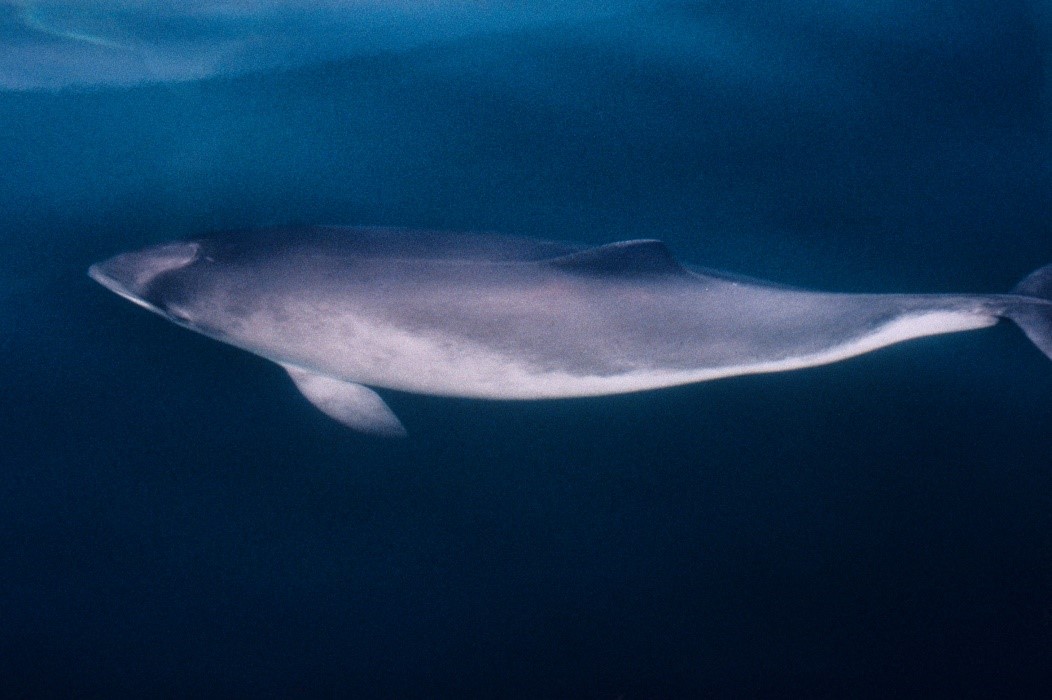
Harbour porpoise under the surface - I. Birks, SeaWatchFoundation
Harbour porpoise under the surface – I. Birks, SeaWatchFoundation

An examination into the detection of harbour porpoises is helping to give new understanding of effective monitoring of species under threat from anthropogenic activities such as fisheries bycatch and coastal pollution.

In a first study of its kind, Dr Hanna Nuuttila, currently at Swansea University’s College of Science – together with scientists from the German Oceanographic Museum, the University of St Andrews and Bangor University – revealed how playing back porpoise sounds to an acoustic logger can be used to assess the detection area of the device, a metric typically required for effective monitoring and conservation of protected species.

Continue reading “New Research Shows Pretend Porpoise Sounds are Helping Conservation Efforts”

Spatial Capture-Recapture: The Pros and Cons of Aggregating Detections

Post provided by Cyril Milleret

Spatial Capture-Recapture and Computation Time

SCR models simultaneously estimate the detection function and density of individual activity centres. A half-normal detection model is generally used.

The estimation of population size is one of the primary goals and challenges in wildlife ecology. Within the last decade and a half, a new class of tools has emerged, allowing us to estimate abundance and other key population parameters in specific areas. So-called spatial capture-recapture (SCR) models are growing in popularity not only because they can map abundance, but also because they can be fitted to data collected from a variety of monitoring methods. For example, the ever increasing use of non-invasive monitoring methods, such as camera trapping and non-invasive genetic-sampling, is one of the reason that makes SCR models so popular.

One other strengths of SCR models is the ability to make population level inferences. But the wider the region you’re monitoring, the greater the computational burden, challenging the use of such methods at really large scale. Continue reading “Spatial Capture-Recapture: The Pros and Cons of Aggregating Detections”

What the Past Can Tell Us About the Future: Notes from Crossing the Palaeontological – Ecological Gap

Post provided by Karen Bacon

I had the pleasure of delivering one of the plenary talks at the first (hopefully of many) Crossing the Palaeontological – Ecological Gap meeting held in the University of Leeds on August 30th and 31st. I’m a geologist and a botanist, so this is a topic that’s close to my heart and my professional interests.

How Palaeoecology Can Help Us Today

©Gail Hampshire
©Gail Hampshire

As we move into an ecologically uncertain future with pressures of climate change, land-use change and resource limitations, the fossil record offers the only truly long-term record of how Earth’s ecosystems respond to major environmental upheaval driven by climate change events. The fossil record is, of course, not without its problems – there are gaps, not everything fossilises in the same way or numbers, and comparisons to today’s ecology are extremely difficult.  It’s these difficulties (and other challenges) that make the uniting of palaeontology and ecology essential to fully address how plants, animals and other organisms have responded to major changes in the past. Perhaps uniting them could give us an idea of what to expect in our near-term future, as carbon dioxide levels return to those not previously experienced on Earth since the Pliocene, over 2 million years ago. Continue reading “What the Past Can Tell Us About the Future: Notes from Crossing the Palaeontological – Ecological Gap”

Bats, Acoustic Methods and Conservation 4.0: An Interview with Kate Jones

At this year’s International Statistical Ecology Conference (ISEC 2018) David Warton interviewed Kate Jones, Chair in Ecology and Biodiversity at University College, London. Their conversation mainly focused on how to classify bats from acoustic data, with particular reference to ‘Acoustic identification of Mexican bats based on taxonomic and ecological constraints on call design‘ by Veronica Zamora‐Gutierrez et al. They also discuss Conservation 4.0! We’ll have more … Continue reading Bats, Acoustic Methods and Conservation 4.0: An Interview with Kate Jones