Cover Stories: Cleaning up false positives with minimum sequence copy thresholds

Post provided by Jordan Cuff and Lorna Drake

Photo credit: Alan Seymour.

The cover of our March issue shows a female Eurasian otter (Lutra lutra), with its young kit bringing a crab to shore before eating it. The photographer, Alan Seymour, had been watching the otter from a distance, while laying low behind a large boulder. Direct observations of trophic interactions take a lot of time and skill, especially concerning cryptic species (e.g., semi-aquatic mammals, small invertebrates). Accurately and precisely identifying prey items is mostly impossible by observation. Molecular methods, such as DNA metabarcoding, offer a sensitive approach for investigating trophic interactions of cryptic species; however, this high sensitivity can introduce errors. In this post, the authors discuss potential sources of errors in dietary metabarcoding datasets, and how to use minimum sequence copy thresholds to carefully remove them, detailed in their Methods in Ecology and Evolution article “An assessment of minimum sequence copy thresholds for identifying and reducing the prevalence of artefacts in dietary metabarcoding data”.

Continue reading “Cover Stories: Cleaning up false positives with minimum sequence copy thresholds”
International Day of Forests: Generation Restoration

Post provided by Chloe Robinson

Credit: Food and Agriculture Organization of the United Nations.

Forests, across all ecozones and in all shapes and sizes, are essential for life on earth. Around 80% of the world’s land-based biodiversity call forests home and over 1 billion people, including more than 2,000 Indigenous cultures, rely on forests for food, shelter, energy and income. As with many other ecosystems, forests worldwide are under increasing threat from human activities, with the current rate of deforestation estimated at 13 million hectares per year.

Continue reading “International Day of Forests: Generation Restoration”

World Wetlands Day: Wetlands and Water

Post provided by Chloe Robinson

World Wetlands Day 2021 shines a spotlight on wetlands as a source of freshwater and encourages actions to restore them and stop their loss. Credit: Ramsar.org.

It doesn’t come as a surprise that healthy wetland systems are linked with freshwater quality. Wetlands form vital habitats for global biodiversity, help combat climate change through storage of carbon and offer defenses against flooding. Freshwater resources, including wetlands, are under increasing pressure from over-abstraction, pollution and habitat destruction among other threats, which is directly contributing to the current global freshwater crisis that threatens people and our planet.

February 2nd each year is World Wetlands Day, which aims to raise global awareness about the vital role of wetlands. This year, the 2021 campaign highlights the contribution of wetlands to the quantity and quality of freshwater on our planet. Water and wetlands are connected in an inseparable co-existence that is vital to life, our well-being, and the health of our planet. In this blog post, Associate Editor Chloe Robinson, will explore why wetlands are so important and the new DNA-based methods being used to monitor wetland health.

Continue reading “World Wetlands Day: Wetlands and Water”

Detecting Diatoms through Kick-net DNA Metabarcoding

Post provided by Dr. Chloe Robinson

Diatoms may be the only organisms to live in houses made of glass, but some species of diatom are far from fragile. Certain groups of diatoms are highly tolerant of poorer water quality and therefore their presence can be diagnostic for freshwater health estimates. A recent study, featuring MEE Associate Editor, Chloe Robinson, investigated whether communities of freshwater diatoms can be collected via kick-net methodology, which is an approach currently used for collecting benthic macroinvertebrates. In this post, Chloe highlights how applying previously optimised freshwater methods can result in a more holistic understanding of freshwater health.

Continue reading “Detecting Diatoms through Kick-net DNA Metabarcoding”

10th Anniversary Volume 7: The ecologist’s field guide to sequence‐based identification of biodiversity

Post provided by Si Creer, Kristy Deiner, Serita Frey and Holly Bik

To celebrate the 10th Anniversary of the launch of Methods in Ecology and Evolution, we are highlighting an article from each volume to feature in the Methods.blog. For Volume 7, we have selected ‘The ecologist’s field guide to sequence‐based identification of biodiversity’ by Creer et al. (2016).

In this post, the authors share their motivation behind the paper and discuss advances in sequencebased identification of biodiversity.

Continue reading “10th Anniversary Volume 7: The ecologist’s field guide to sequence‐based identification of biodiversity”

Earth Day 2020: Monitoring Biodiversity for Climate Action

Post provided by Chloe Robinson

The demands of a growing human population are putting increasing pressure on the Earth’s natural systems and services. Dubbed the ‘Anthropocene’, we are currently living in a period where human actions are directly altering many earth processes, including atmospheric, geologic, hydrologic and biospheric processes. Climatic change and the resulting consequences, including rising temperatures, changing precipitation (i.e. rainfall, snow etc) and increase in frequency of storm events, represent the biggest challenge to our future and the life-support ecosystems that make our world habitable.

Artist’s interpretation of global climate change. Photo credit: Pete Linforth/Pixabay.

In 1970, Earth Day was launched as a modern environmental movement and a unified response to an environment in crisis. Earth Day has provided a platform for action, resulting in the creation of the Environmental Protection Agency (EPA), The Clean Air, Clean Water and Endangered Species Acts in the US and more globally. This year, 22 April marks the 50th anniversary of Earth Day, and the number one environmental crisis theme which needs immediate attention is ‘Climate Action’. Many of our ecosystems on earth are degrading at an alarming pace and we are currently experiencing a species loss at a rate of tens or hundreds of times faster than in the past. 

Continue reading “Earth Day 2020: Monitoring Biodiversity for Climate Action”

Anacapa Toolkit: Automating the Cataloguing of Biodiversity

Post provided by Emily Curd

Imagine that you want to catalogue all of the biodiversity (all of the living organisms) from a particular location; how many trained experts would that require? How many person hours would it take to collect and identify all of the rare, well-disguised, and microscopic organisms? How many of these organisms would have to be removed from the environment and taken back to a lab for taxonomic analysis.

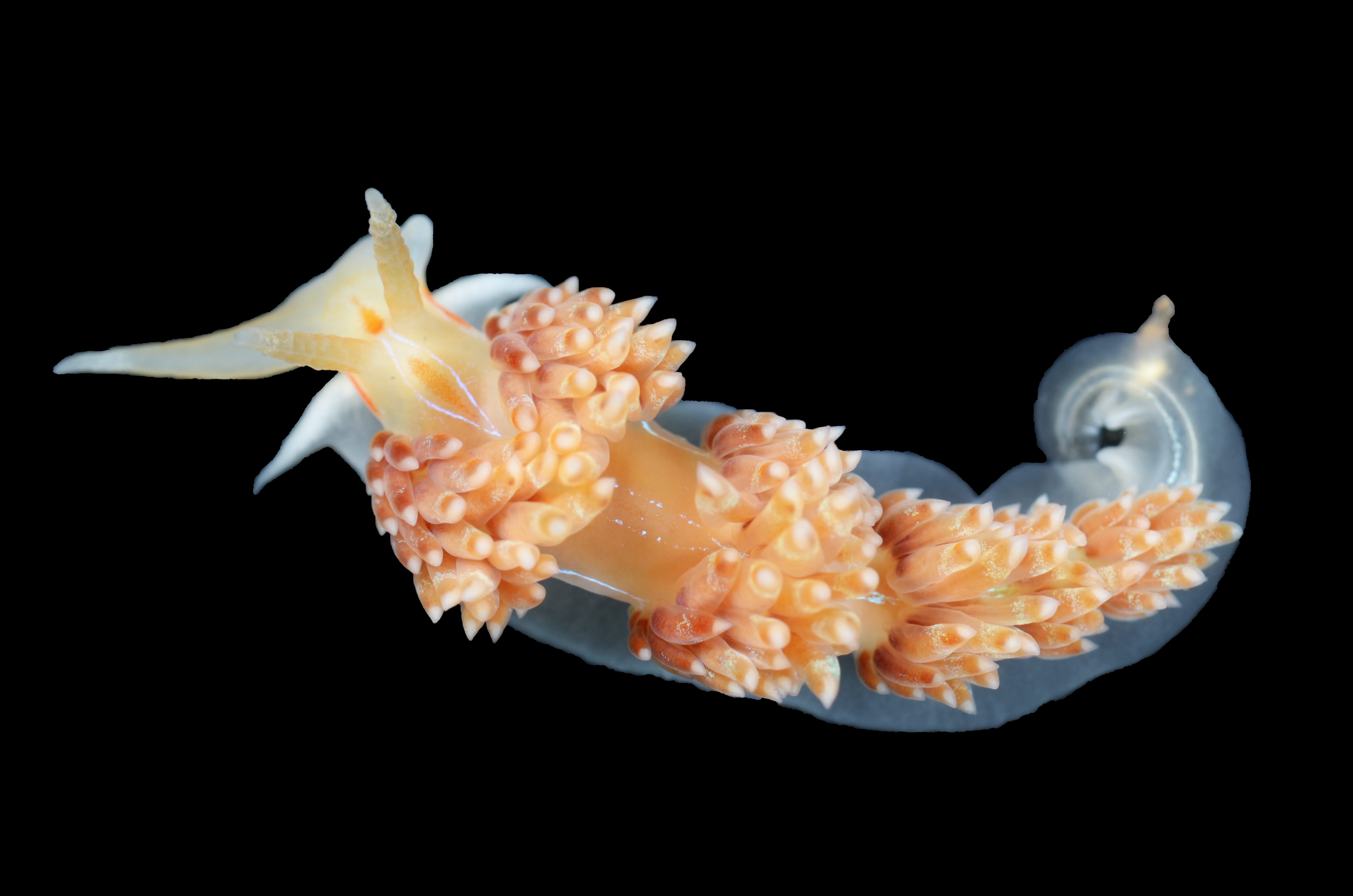
With eDNA, you can survey the presence of this gorgeous opalescent nudibranch without capturing or even touching it.
©Natural History Museum of Los Angeles County — Amanda Bemis & Brittany Cumming

Although there is no substitute for human expertise, we have begun using the traces of DNA that organisms leave behind (e.g. excretions, skin and hair cells) in the environment to catalogue biodiversity. These traces of DNA, referred to as environmental DNA, can persist in the environment for minutes or can persist for centuries depending on where they end up. This field of environmental DNA (eDNA) is rapidly becoming an effective tool to complement surveys of biodiversity, both past and present.

Continue reading “Anacapa Toolkit: Automating the Cataloguing of Biodiversity”

Celebrating World Soil Day 2019: DNA Metabarcoding Uncovers Tropical Forest Soil Microbiomes

Post provided by KATIE M. MCGEE

Tropical forest in Costa Rica ©Katie M. McGee

How much do you think about the world beneath your feet? Soil is essential for life on earth and provides many ecosystem services, including carbon storage and providing habitats for billions of organisms. But one third of our global soils are already degraded and are at risk of further degradation from human activities, such as unsustainable farming practices, industrial activities, mining and other non-environmentally friendly practices. In 2002, the International Union of Soil Sciences (IUSS) marked the 5th December as World Soil Day, to celebrate the importance of soil as a critical component of the natural system and as a vital contributor to human well-being.

Using Molecular Power to Reconstruct Hyperdiverse Food Webs

Post provided by JORDAN CASEY

Coral Reefs: The Ocean’s Most Extravagant Buffet

Coral reefs are home to an incredibly diverse array of species ©Jordan Casey

There are an estimated 830,000 species on coral reefs worldwide. At some stage in their lives, nearly all of these species are consumed as prey items. In this super diverse buffet of fishes, corals, crabs, worms, and other critters, the number of possible interactions between predators and prey is nearly inexhaustible.

The extreme diversity of coral reefs has fascinated naturalists for centuries. Pinpointing predator-prey dynamics is essential to fully understand coral reef ecosystem dynamics, and visual analysis of gut contents has been a staple technique of coral reef ecologists. While the joy of spending copious hours looking through a microscope at half-digested marine mush is undeniable, this type of visual inspection has limitations. Even so, visual gut content analysis (along with stable isotope analysis and behavioural observations) has showcased a highly complex dietary network.

To digest this extreme complexity and surmount the hurdle of dietary unknowns, researchers frequently lump fishes into broad trophic categories, such as ‘mobile herbivores’. Broad generalisations are pragmatic and may be help us detect broad ecological trends, but they oversimplify species’ actual dietary preferences. As coral reefs are changing due to anthropogenic disturbances, it’s critical to thoroughly examine how well trophic groupings capture dietary linkages among reef organisms. Continue reading “Using Molecular Power to Reconstruct Hyperdiverse Food Webs”

Assessment of Stream Health with DNA Metabarcoding

Following on from last week’s press release ‘How Clean are Finnish Rivers?’, Vasco Elbrecht et al. have produced a video to explain the methods in ‘Assessing strengths and weaknesses of DNA metabarcoding-based macroinvertebrate identification for routine stream monitoring‘. In this video, the authors explore the potential of DNA metabarcoding to access stream health using macroinvertebrates. They compared DNA and morphology-based identification of bulk monitoring samples from … Continue reading Assessment of Stream Health with DNA Metabarcoding