Large drones make a big splash: Using smaller drones to conduct less disruptive wildlife surveys

Post provided by Kayla Kuhlmann
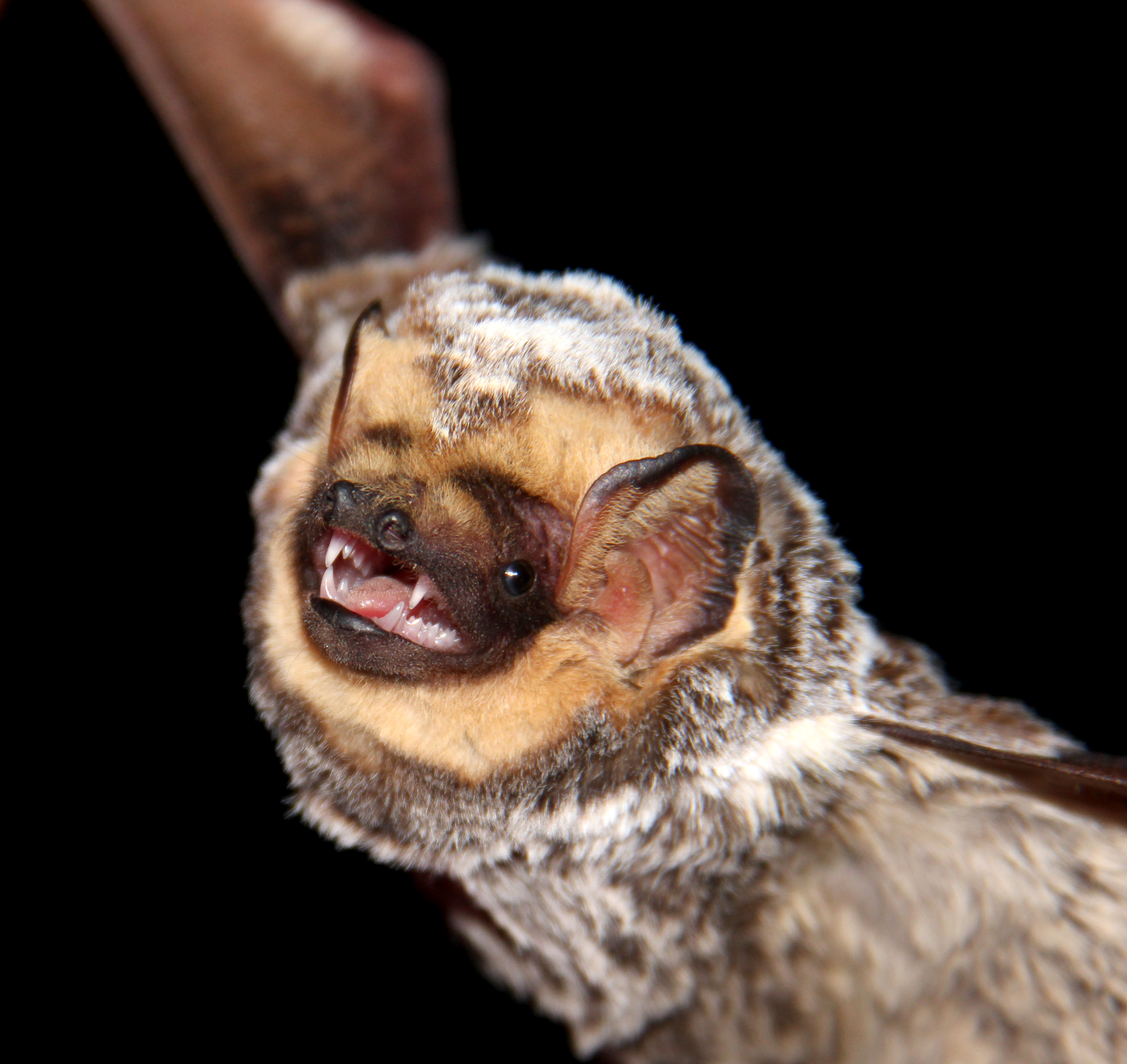
Hoary bat (Lasiurus cinereus). Credit: Veronica Zamora-Gutierrez.

Ecologists have started looking into drones as new tools for wildlife surveys, but how can drone disturbance be minimized in order to produce accurate wildlife counts? In this post, Kayla Kuhlmann describes a drone practice to reduce disruption during acoustic bat surveys as featured in the paper “Miniaturization eliminates detectable impacts of drones on bat activity”, recently published in Methods in Ecology and Evolution.

Continue reading “Large drones make a big splash: Using smaller drones to conduct less disruptive wildlife surveys”

Cover Stories: Making strides towards weighing whole wildlife populations in 3D

Post provided by Michelle Shero

A grey seal pup next to the unoccupied aerial system (UAS) used in this study. Photo credit: Michelle Shero.

To survive and reproduce, all animals must be able to extract sufficient energy from their environment. It takes energy to forage, but animals can recover those calories if they can successfully capture enough prey – and the animal’s weight tells us about its net energetic costs versus gains. Animals that remain in positive energy-balance can then afford to devote more energy towards growth and reproduction. In this blog post, Michelle Shero of Woods Hole Oceanographic Institution guides us through a new method outlined in her team’s recent Methods in Ecology and Evolution paper ‘Tracking wildlife energy dynamics with unoccupied aircraft systems and three-dimensional photogrammetry’. The team uses drone imagery to 3-D model and ‘weigh’ large groups of free-living animals.

Continue reading “Cover Stories: Making strides towards weighing whole wildlife populations in 3D”

Assessing Sea Turtle Populations: Can We Get a Hand From Drones and Deep Learning?

Post provided by PATRICK GRAY

An olive ridley sea turtle in Ostional, Costa Rica. ©Vanessa Bézy.

Understanding animal movement and population size is a challenge for researchers studying any megafauna species. Sea turtles though, add a whole additional level of complexity. These wide-ranging, swift, charismatic animals spend much of their time underwater and in remote places. When trying to track down and count turtles, this obstacle to understanding population size becomes a full-on barricade.

Censusing these animals doesn’t just satisfy our scientific curiosity. It’s critical for understanding the consequences of unsound fishing practices, the benefits of conservation policy, and overall trends in population health for sea turtles, of which, six out of seven species range from vulnerable to critically endangered. Continue reading “Assessing Sea Turtle Populations: Can We Get a Hand From Drones and Deep Learning?”