High-Res Camera Surveys of Wildlife Colonies: The advantages over traditional approaches

Post provided by ALISTAIR HOBDAY (senior principal research scientist, CSIRO Australia), Tim Lynch (senior research scientist, CSIRO, Australia) and Rachael Alderman (wildlife biologist, Tasmanian Department of Primary Industry, Parks, Water and Environment, Australia).

Cameras and wildlife monitoring

A Gigapan camera setup to record images of an albatross colony. ©Alistair Hobday

Behavioural and ecological research and monitoring of wildlife populations are based on collection of field data. Demographic data, such as breeding frequency, birth rates and juvenile survival, have been critical in understanding population trends for a wide range of species.

Photography has been extensively used by field biologists and ecologists to gather these data and they have been quick to take up improvements in this technology. Many field programmes today use photography either for primary data collection or the communication of results. Advances in digital photography, image storage and transmission, image processing software and web-based dissemination of images have been extremely rapid in recent years, offering ecologists and biologists a range of powerful tools.

Digital imagery has been captured from a wide range of platforms, each of which has various advantages and limitations for biological study. The most remote images are captured from satellite-based sensors, which have been used to assess population abundance of large animals, such as elephant seals, or locate colonies of emperor penguins. Cameras mounted on aircraft can also provide large-scale perspectives but both of these platforms suffer from high cost, operational limitations due to weather, and limited temporal replication. Recent use of drones, while cheaper, still requires a person to be close to the survey location and can only be used in short bursts, typically lasting less than 20 minutes.

Land-based cameras – or those fixed onto animals – can track behaviour closely, but have low sample size as data tends to be collected at the scale of individual or small groups. To improve replication, fleets of remote cameras can be used or multiple images stitched together post hoc to form a montage. However, this increases cost, either for hardware or labour to manually construct panoramas. To date all these camera systems have had limits to their spatial and/or temporal resolution and, therefore, to the number of individuals covered. This restricts biological study at the population level. Continue reading “High-Res Camera Surveys of Wildlife Colonies: The advantages over traditional approaches”

Making the Most of Volunteer Data: Counting the birds and more…

Post provided by Rob Robinson

It’s 6am on a warm spring morning and I’m about to visit the second of my Breeding Bird Survey1 sites. Like 2,500 other volunteers in the UK, twice a year I get up early to record all the birds I see or hear on the two transects in my randomly selected 1km square. Each year I look forward to these mornings almost as much for the comparisons as the actual sightings. Will there be more or fewer sightings of our summer migrants this year? How will numbers in this rolling Norfolk farmland stack up against those I see in urban, central Norwich?

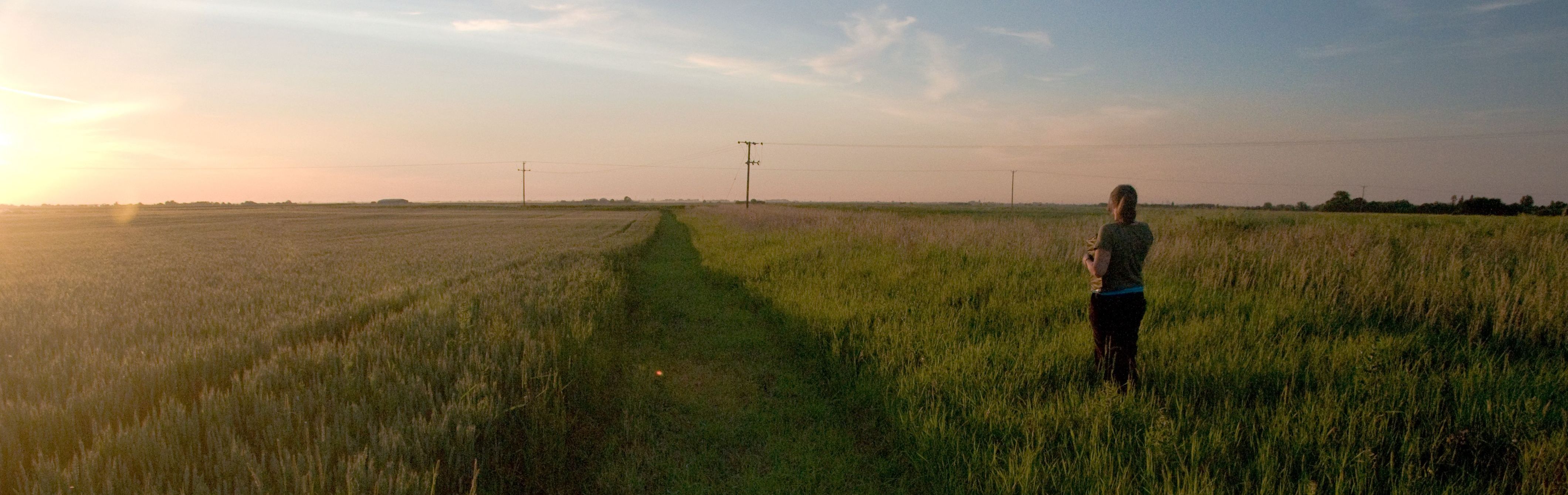
Dawn bird survey in arable farmland. © Rob Robinson/BTO
Dawn bird survey in arable farmland. © Rob Robinson/British Trust for Ornithology (BTO)

The importance of demography

But simply recording these changes is not enough; we need to understand why they occur if action is to be taken. This requires us to quantify the demographic rates (survival, productivity and movements) that underlie them, which in turn requires samples of marked individuals. Simply counting individuals is not enough. Continue reading “Making the Most of Volunteer Data: Counting the birds and more…”

Issue 6.10

Issue 6.10 is now online!

The October issue of Methods is now online!

This month’s issue contains two Applications articles and one Open Access article, all of which are freely available.

letsR: A package for the R statistical computing environment, designed to handle and analyse macroecological data such as species’ geographic distributions and environmental variables. It also includes functions to obtain data on species’ habitat use, description year and current as well as temporal trends in conservation status.

Cleaning Oil from Seabirds: The authors assess the efficacy of sea water as an alternative to fresh water for cleaning oil from seabirds’ feathers. Results indicate that for oiled feathers, a sea water wash/rinse produced clean, low BAI/unclumped feathers with minimal particulate residue.

Stefano Canessa et al. provide this month’s only Open Access article. In ‘When do we need more data? A primer on calculating the value of information for applied ecologists‘ the authors guide readers through the calculation of Value of Information (VoI) using two case studies and illustrate the use of Bayesian updating to incorporate new information. Collecting information can require significant investments of resources; VoI analysis assists managers in deciding whether these investments are justified. The authors also wrote a blog post on VoI which you can find here.

Our October issue also features articles on Niche Modelling, Population Ecology, Spatial Ecology, Conservation, Monitoring and much more. Continue reading “Issue 6.10”

Issue 6.9

Issue 6.9 is now online!

The September issue of Methods is now online!

This month’s issue contains one Applications article and two Open Access articles, all of which are freely available.

POPART: An integrated software package that provides a comprehensive implementation of haplotype network methods, phylogeographic visualisation tools and standard statistical tests, together with publication-ready figure production. The package also provides a platform for the implementation and distribution of new network-based methods.

Michalis Vardakis et al. provide this month’s first Open Access article. In ‘Discrete choice modelling of natal dispersal: ‘Choosing’ where to breed from a finite set of available areas‘ the authors show how the dispersal discrete choice model can be used for analysing natal dispersal data in patchy environments given that the natal and the breeding area of the disperser are observed. This model can be used for any species or system that uses some form of discrete breeding location or a certain degree of discretization can be applied.

Our September issue also features articles on Animal Movement, Population Dynamics, Statistical Ecology, Biodiversity, Conservation Biology and much more. Continue reading “Issue 6.9”

A new tool based on microbial interactions to analyze bipartite networks

Below is a press release about the Methods paper ‘BiMat: a MATLAB package to facilitate the analysis of bipartite networks‘ taken from the Pompeu Fabra University.

The Georgia Institute of Technology has created, together with the Pompeu Fabra University and the University of Canterbury, a new open-access and open-source tool for the study of bipartite networks

The team led by Joshua S. Weitz, Associate Professor at the School of Biology from the Georgia Institute of Technology, has developed BiMat: an open source MATLAB® package for the study of the structure of bipartite ecological networks inspired by real problems in microbiology and with broader applications. Cesar O. Flores, researcher at the School of Physics of the same institute, describes this new tool in an article published in the journal Methods in Ecology and Evolution. Sergi Valverde, Visiting Professor at the Complex Systems Lab from the Pompeu Fabra University, and Timothée Poisot, from the School of Biological Sciences of the University of Canterbury, are involved in the project. Continue reading “A new tool based on microbial interactions to analyze bipartite networks”

Choosing Where to Submit: Is Your Manuscript Right for MEE?

You’ve spent months, or even years, working on a project. You’ve finalised your manuscript and you’re ready to submit. But which journal should you send your paper to?

@ Colin (click image to see original)

In recent years, this question has only gotten harder. As more and more journals enter the market, the decision of where to send your paper is becoming increasingly confusing. With predatory journals muddying the waters and an increasing pressure to publish, deciding where to submit can be a daunting task for even seasoned academics.

Is Methods in Ecology and Evolution the right journal for your manuscript? Is your manuscript right for Methods? Hopefully this blog post will give you a set of tools to make that decision a little easier. Most of these can be applied to other journals too (although some may need to be tweaked a little). Continue reading “Choosing Where to Submit: Is Your Manuscript Right for MEE?”

How Much Methodology Should go into Conference Talks?

The following post was written by Tim Poisot. To see the original version, please visit his blog.

Tim is an Associate Editor who works on Applications submissions for Methods in Ecology and Evolution. His research interests include spatial and temporal dynamics of species interactions at the community level, the relevance of variability in community structure on emerging ecosystem properties, and the evolutionary dynamics of multi-species assemblages.

I am back from the centennial meeting of the Ecological Society of America. I met a lot of great people, saw a lot of great talks, and had lovely discussions. One thing that has been in the back of my mind for a while though, is the question of how much methodology should go into an oral presentation?

How much methodology should be in your presentation? © Phil Whitehouse

Methods are important  —  over the last two years I have found that this has been the part of papers I criticize the most during peer review. Any result is only as robust as its least robust element and there are, in ecology, enough sources of variability that we do not want methods to add any more. As a consequence, appreciating a result and its robustness require that we be able to understand and evaluate the methods by which this result has been obtained.

There are a few elements to evaluating a method. Does it rely on a sound and tested theory? Is it properly applied? Is the method correctly implemented? All of these questions (and some more) should be asked —  and answered in the affirmative  —  before we decide to accept a result. If not, we are putting ourselves in the position to blindly accept what we are being told. Continue reading “How Much Methodology Should go into Conference Talks?”

Study Finds Black Bears in Yosemite Forage Primarily on Plants and Nuts

Below is a press release about the Methods paper ‘Measuring the realized niches of animals using stable isotopes: from rats to bears‘ taken from the University of California, San Diego:

©PLF73 (Click image to see original)
Animal proteins only make up a small part of a black bear’s diet. ©PLF73 (Click image to see original)

Black bears in Yosemite National Park that don’t seek out human foods subsist primarily on plants and nuts, according to a study conducted by biologists at UC San Diego who also found that ants and other sources of animal protein, such as mule deer, make up only a small fraction of the bears’ annual diet.

Their study, published in Methods in Ecology and Evolution, might surprise bear ecologists and conservationists who had long assumed that black bears in the Sierra Nevada rely on lots of protein from ants and other insects because their remains are frequently found in bear feces. Instead, the researchers believe that bears likely eat ants for nutrient balance. Continue reading “Study Finds Black Bears in Yosemite Forage Primarily on Plants and Nuts”

National Honey Bee Day 2015

Happy National Honey Bee Day everyone!

As you may know, tomorrow (Saturday 22 August) is National Honey Bee Day in the USA. To mark the day we will be highlighting some of the best papers that have been published on bees and pollinators in Methods in Ecology and Evolution.

You can find out more about National Honey Bee Day (and about bees in general) HERE.

Without further ado though, here are a few of the best Methods papers related to Honey Bees:

Wildebeast graze on the cover of MEE 2.5Honey Bee Risk Assessment

Our Honey Bee highlights begin with Hendriksma et al.’s article ‘Honey bee risk assessment: new approaches for in vitro larvae rearing and data analyses‘. Robust laboratory methods for assessing adverse effects on honey bee brood are required for research into the issues contributing to global bee losses. To facilitate this, the authors of this article recommend in vitro rearing of larvae and suggest some appropriate statistical tools for the related data analyses. Together these methods can help to improve the quality of environmental risk assessment studies on honey bees and secure honey bee pollination. As this article was published over two years ago, it can be accessed for free by anyone.

Continue reading “National Honey Bee Day 2015”

Issue 6.8

Issue 6.8 is now online!

The August issue of Methods is now online!

This month’s issue contains two Applications article and one Open Access article, all of which are freely available.

LEA: This R package enables users to run ecological association studies from the R command line. It can perform analyses of population structure and genome scans for adaptive alleles from large genomic data sets. The package derives advantages from R programming functionalities to adjust significance values for multiple testing issues and to visualize results.

PIPITS: An open-source stand-alone suite of software for automated processing of Illumina MiSeq sequences for fungal community analysis. PIPITS exploits a number of state of the art applications to process paired-end reads from quality filtering to producing OTU abundance tables.

Giovanni Strona and Joseph Veech provide this month’s Open Access article. Many studies have focused on nestedness, a pattern reflecting the tendency of network nodes to share interaction partners, as a method of measuring the structure of ecological networks. In ‘A new measure of ecological network structure based on node overlap and segregation‘ the authors introduce a new statistical procedure to measure both this kind of structure and the opposite one (i.e. species’ tendency against sharing interacting partners).

In addition to this, our August issue features articles on Estimating Diversity, Ecological Communities and Networks, Genetic Distances and Immunology. Continue reading “Issue 6.8”