Post provided by Mateusz Iskrzyński Would you like to quickly get a clear picture of the food web you are modelling or analysing? Have you thought about including its visualisation in your paper? Or maybe you wanted to show your students or general audience how interconnected food webs are in real ecosystems? Or just wondered how matter flows through an ecosystem? To help you with … Continue reading Visualising the flow of matter within ecosystems
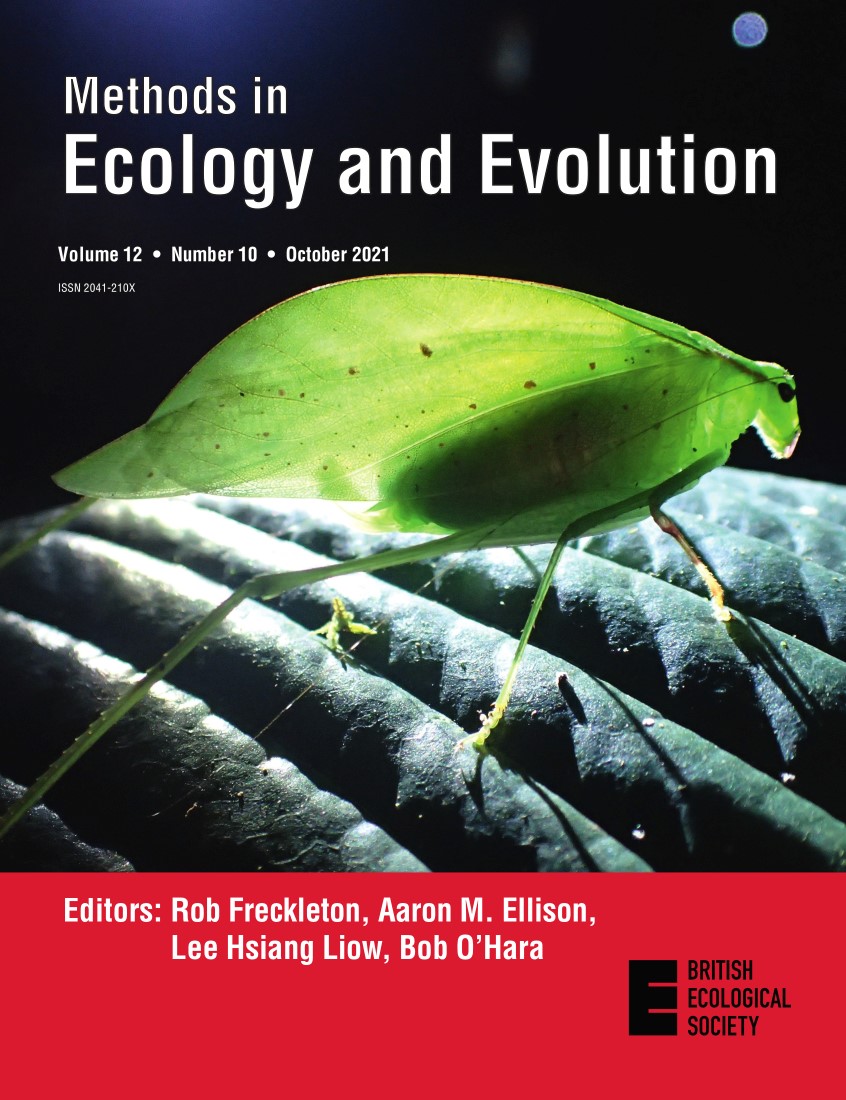
The cover of our October issue shows a katydid feeding on a leaf in the Tirimbina Rainforest National Wildlife Refuge of Costa Rica. Once digested, nitrogen from the leaf is incorporated into the katydid’s tissues in the form of amino acids, with slight modification to their stable nitrogen isotope values (δ15N). In this post the authors discuss the importance of understanding and accounting for variability in primary producer amino acid δ15N values when characterizing where consumers are positioned within food webs, detailed in their Methods in Ecology and Evolution article “Meta-analysis of primary producer amino acid δ15N values and their influence on trophic position estimation.”
There are an estimated 830,000 species on coral reefs worldwide. At some stage in their lives, nearly all of these species are consumed as prey items. In this super diverse buffet of fishes, corals, crabs, worms, and other critters, the number of possible interactions between predators and prey is nearly inexhaustible.
The extreme diversity of coral reefs has fascinated naturalists for centuries. Pinpointing predator-prey dynamics is essential to fully understand coral reef ecosystem dynamics, and visual analysis of gut contents has been a staple technique of coral reef ecologists. While the joy of spending copious hours looking through a microscope at half-digested marine mush is undeniable, this type of visual inspection has limitations. Even so, visual gut content analysis (along with stable isotope analysis and behavioural observations) has showcased a highly complex dietary network.
To digest this extreme complexity and surmount the hurdle of dietary unknowns, researchers frequently lump fishes into broad trophic categories, such as ‘mobile herbivores’. Broad generalisations are pragmatic and may be help us detect broad ecological trends, but they oversimplify species’ actual dietary preferences. As coral reefs are changing due to anthropogenic disturbances, it’s critical to thoroughly examine how well trophic groupings capture dietary linkages among reef organisms. Continue reading “Using Molecular Power to Reconstruct Hyperdiverse Food Webs”
Scientists at the University of Southampton have developed maps of chemicals found in jellyfish which could offer a new tool for conservation in British waters and fisheries. The maps will also be able to detect fraudulently labelled food in retail outlets by helping to trace the origins of seafood.
This new Special Feature is a collection of five articles (plus an Editorial from Guest Editors Bill Sutherland, Lynn Dicks, Mark Everard and Davide Geneletti) brings together authors from a range of disciplines (including ecology, human geography, political science, land economy and management) to examine a set of qualitative techniques used in conservation research. They highlight a worrying extent of poor justification and inadequate reporting of qualitative methods in the conservation literature.
As stated by the Guest Editors in their Editorial “these articles constitute a useful resource to facilitate selection and use of some common qualitative methods in conservation science. They provide a guide for inter-disciplinary researchers to gauge the suitability of each technique to their research questions, and serve as a series of checklists for journal editors and reviewers to determine appropriate reporting.”
Today, we are pleased to be the latest new member of the Methods in Ecology and Evolution Associate Editor Board. David Soto joins us from the University of Leuven in Belgium and you can find out a little more about him below. David Soto “I am an isotope ecologist with interests in developing new stable isotope methods and techniques for tracing spatio-temporal changes in food webs, and understanding … Continue reading New Associate Editor: David Soto
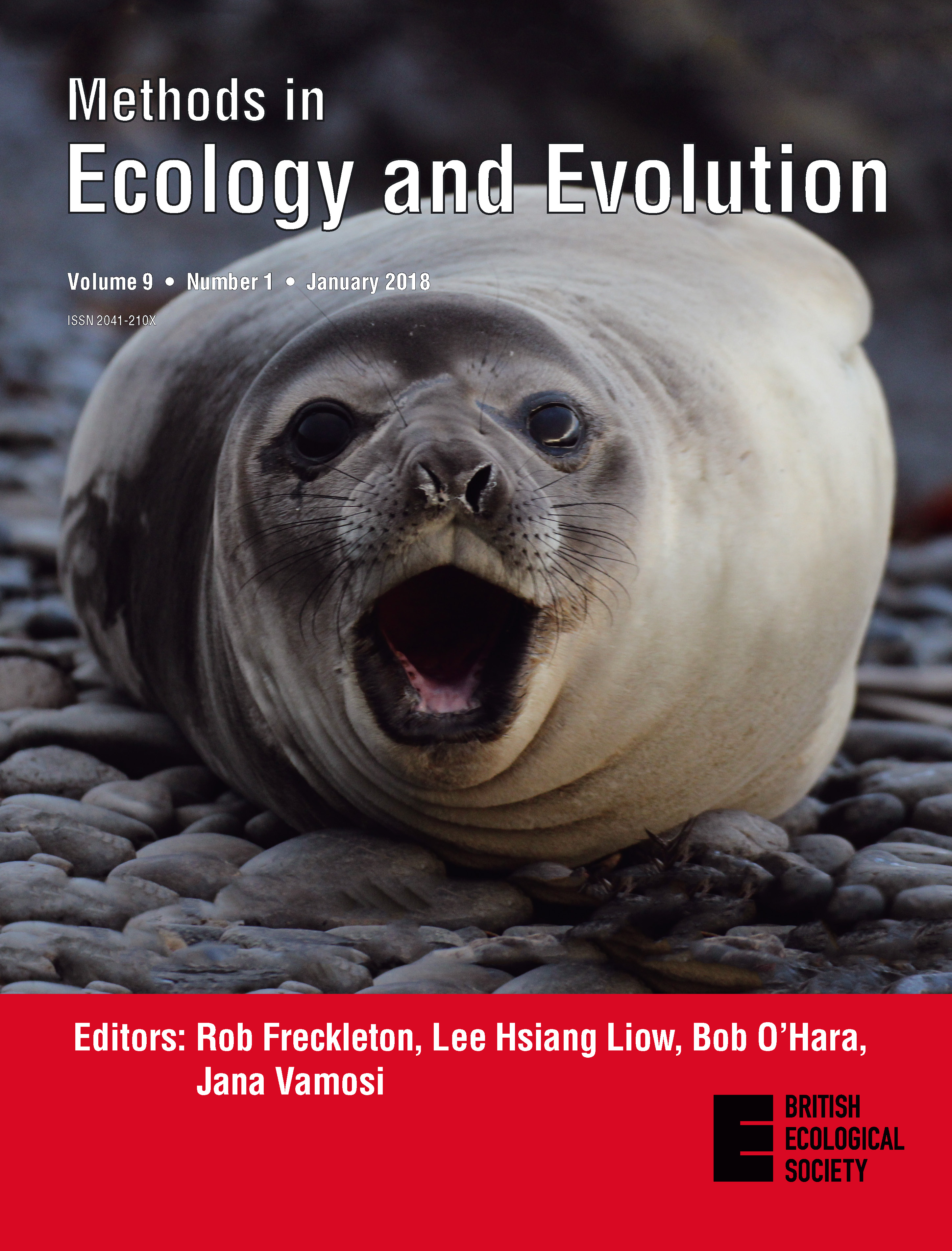
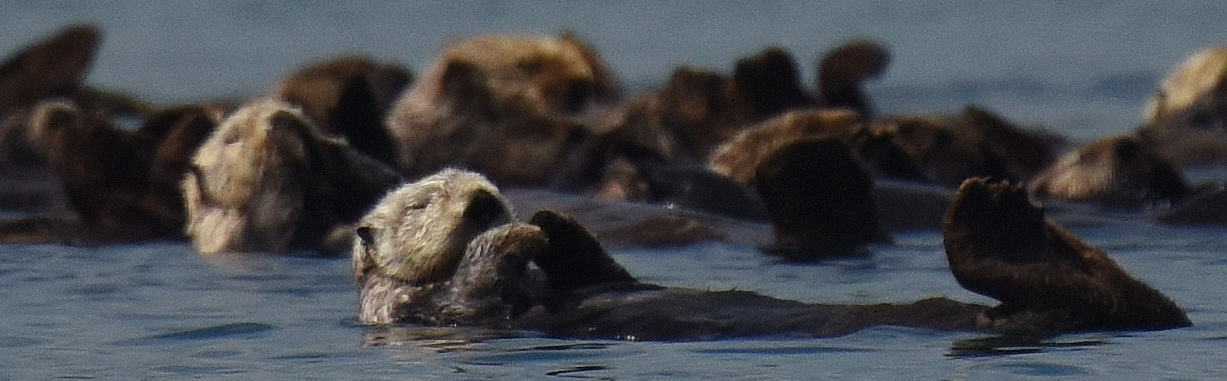
Sea otters (Enhydra lutris) are an apex predator of the nearshore marine ecosystem – the narrow band between terrestrial and oceanic habitat. During the commercial maritime fur trade in the 18th and 19th centuries, sea otters were nearly hunted to extinction across their range in the North Pacific Ocean. By 1911, only a handful of small isolated populations remained.
But sea otter populations have recovered in many areas due to a few changes. The International Fur Seal Treaty in 1911 and the Marine Mammal Protection Act (1972) protected sea otters from most human harvest. Wildlife agencies helped sea otter colonisation by transferring them to unoccupied areas. Eventually, sea otters began to increase in abundance and distribution, and they made their way to Glacier Bay, a tidewater glacier fjord and National Park in southeastern Alaska. Continue reading “Monitoring the Distribution and Abundance of Sea Otters”
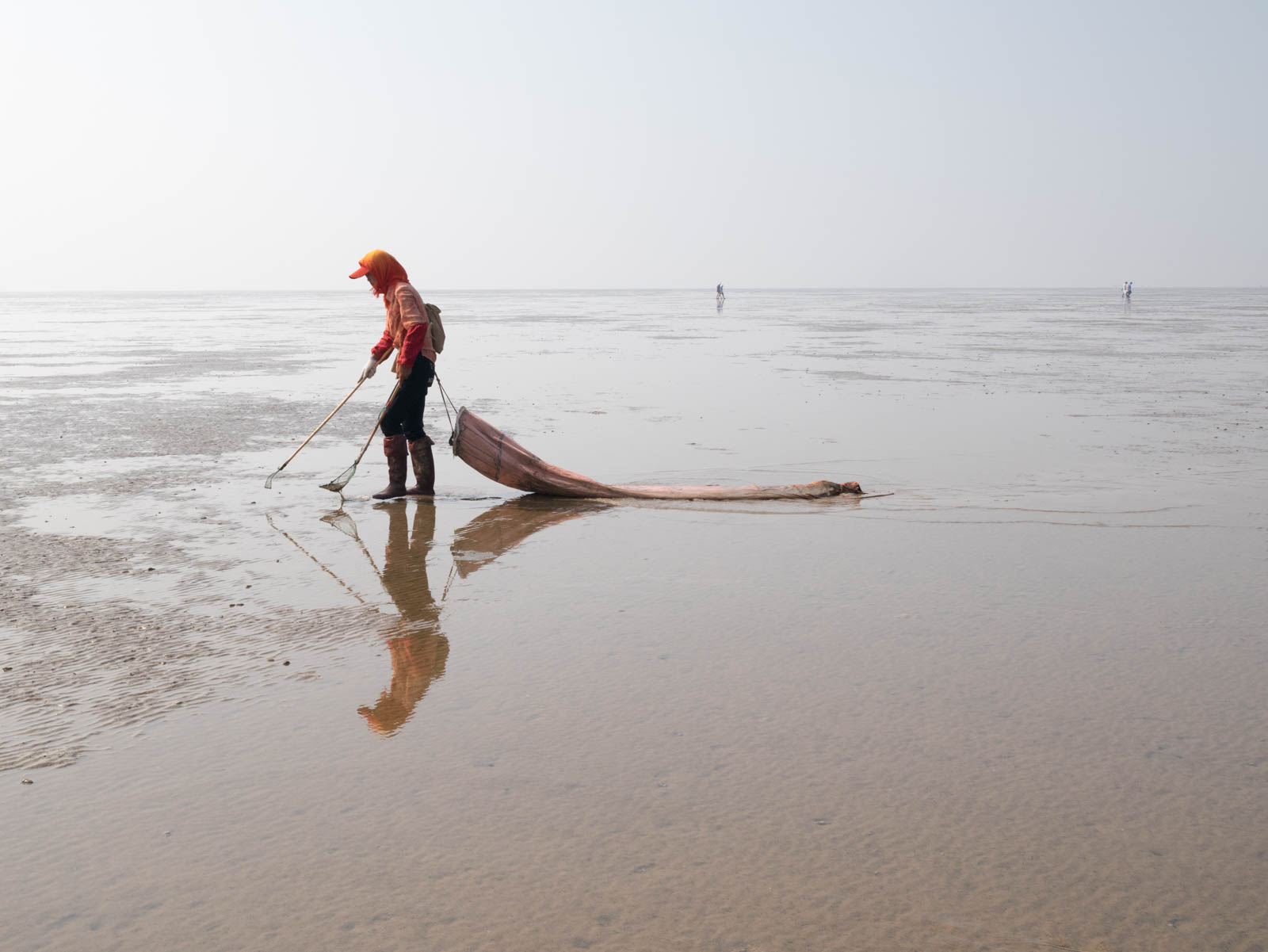
This week, more than 150 events along the US shores will celebrate estuaries and educate the public and policy makers of the many benefits we get from healthy and thriving ecosystems. But why do we need to pay more attention to estuaries?
Estuaries are biological hotspots and by far the most productive ecosystems on our planet. The shallow waters where streams and rivers meet the sea often harbour a rich terrestrial and aquatic flora and are home to many animals. They’re important feeding and reproduction areas for a diverse array of wildlife such as birds and fish, which can include both freshwater and marine species. A large portion of the world’s marine fisheries today depend on the ecosystem services of estuaries; it has been estimated that well over half of all marine fishes develop in the protective environment of an estuary. Historically, humans have been attracted to these large expanses of shallow water that could sustain their basic needs. Nowadays, these estuaries also have economic value as recreational and touristic destinations as for example fishing, boating and swimming spots.
However, our understanding of how estuaries function and sustain this amount of biodiversity is limited. As is the case for most ecosystems on our planet, estuaries are under increasing pressure from human activities. Estuaries are subjected to intensive land reclamation and developments like harbours and aquacultural farms. They also receive excessive amounts of of nutrients, soil and organic matter from intensive farms and urban landscapes via small streams and large rivers. These stressors are accentuated by environmental changes such as sea level rise, increasing water temperatures and extreme weather conditions causing droughts and flooding. Continue reading “Tracing New and Old Resources in Estuarine Ecosystems”
This issue contains three Applications articles (one of which is Open Access) and one additional Open Access article. These four papers are freely available to everyone, no subscription required.
– BioEnergeticFoodWebs: An implementation of Yodzis & Innes bio-energetic model, in the high-performance computing language Julia. This package can be used to conduct numerical experiments in a reproducible and standard way.
–Controlled plant crosses: Chambers which allow you to control pollen movement and paternity of offspring using unpollinated isolated plants and microsatellite markers for parents and their putative offspring. This system has per plant costs and efficacy superior to pollen bags used in past studies of wind-pollinated plants.
–The Global Pollen Project: The study of fossil and modern pollen assemblages provides essential information about vegetation dynamics in space and time. In this Open Access Applications article, Martin and Harvey present a new online tool – the Global Pollen Project – which aims to enable people to share and identify pollen grains. Through this, it will create an open, free and accessible reference library for pollen identification. The database currently holds information for over 1500 species, from Europe, the Americas and Asia. As the collection grows, we envision easier pollen identification, and greater use of the database for novel research on pollen morphology and other characteristics, especially when linked to other palaeoecological databases, such as Neotoma.
Ecological networks represent interactions between different biotic units in an ecosystem and are becoming an increasingly popular tool for describing and illustrating a range of different types of ecological interactions. Food webs – which provide a way to track and quantify the flow of energy and resources in ecosystems – are among the most studied type of ecological networks. These networks usually represent species (nodes) which are connected by pairwise interactions (links) and they play a central role in improving our understanding of ecological and evolutionary dynamics.
Historically, food webs described antagonistic relationships (e.g. plant-herbivore or host-parasitoid networks) but the approach has been developed in recent years to include mutualistic networks (e.g. plant-pollinator networks, phorophyte-epiphyte networks). The development of network ecology, including ever more sophisticated methods to analyse ecological communities, has been driven forward by an enthusiastic community of ecologists, theoreticians and modellers working together to enhance our understanding of how communities interact.
In this blog post, we’ll describe the important role played by female scientists in the development of network ecology, focusing on the contributions by two ground-breaking ecologists and also highlighting contributions from a range of other scientists working in this field. Continue reading “Influential Women in Ecological Network Research”


 Methods Blog