Peering through the shell: tracking stress with heartbeats

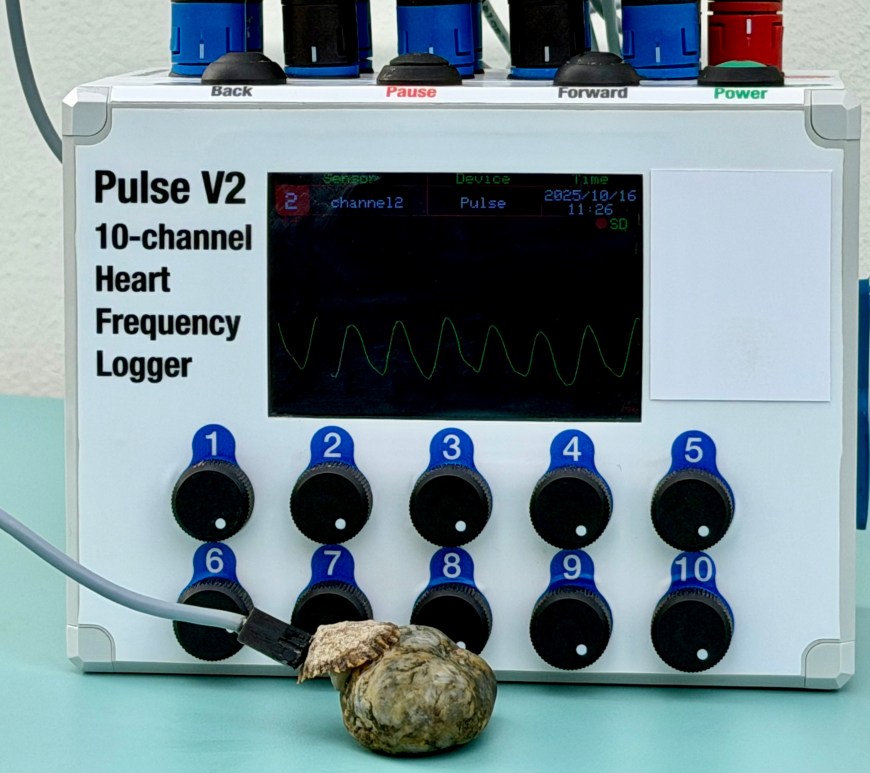
Post provided by Lima F. P.; Pereira F. L.; Loureiro B.; Humet M.; Seabra R. How can we tell when an animal is stressed, long before it dies? For marine invertebrates like mussels, limpets, oysters, or crabs, one of the clearest signals comes from their hearts. Heart rate can vary in response to changes in the environment (such as temperature or oxygen), offering a non-invasive … Continue reading Peering through the shell: tracking stress with heartbeats

MEDI: Macronutrient Extraction and Determination from Invertebrates

Post provided by Jordan Cuff and Maximillian Tercel

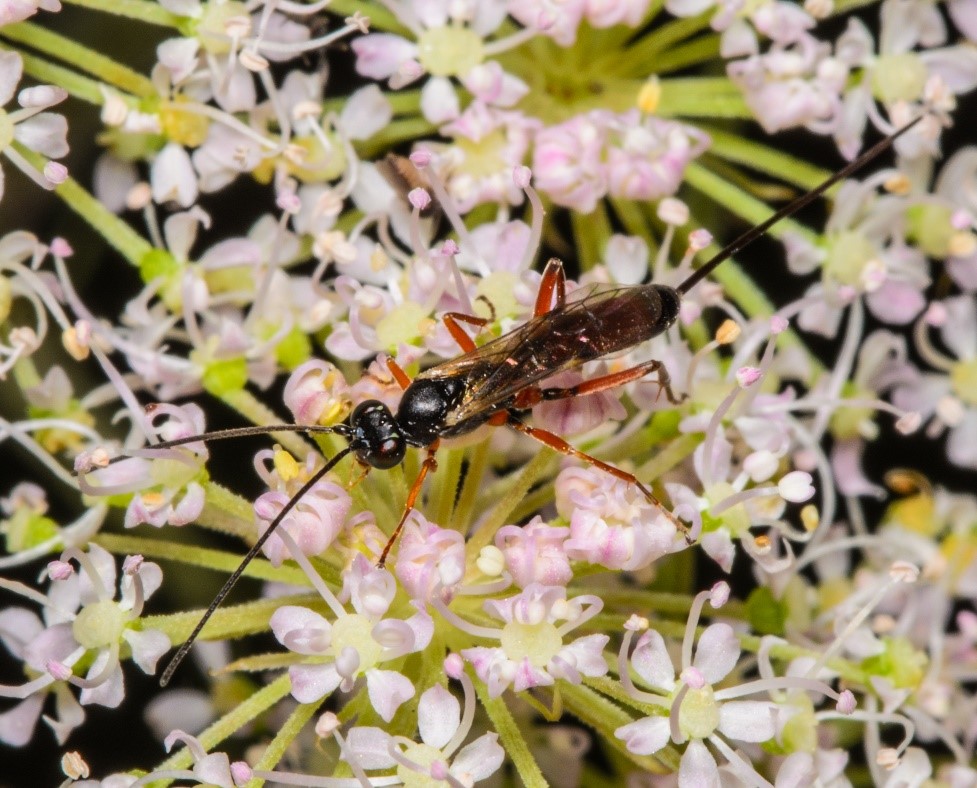
MEDI can be applied to a broad range of small invertebrate specimens, including parasitoid wasps. Credit: Jordan Cuff.

Are you kept awake at night wondering how you would measure the macronutrient content of small invertebrates? Perhaps you have tried but are haunted by the disappointment that you have had to rely on conversion factors, analogues and pooled samples. Get ready to sleep soundly, entomological entrepreneur!

In this blog post, Jordan Cuff and Maximillian Tercel will discuss their latest study published in Methods in Ecology and Evolution, concerning their brand-new method for measuring macronutrient content in invertebrates: MEDI.

Continue reading “MEDI: Macronutrient Extraction and Determination from Invertebrates”

Thermal Images in R

Post provided by REBECCA SENIOR (@REBECCAASENIOR)

Why use Thermal Images?

Temperature is important in ecology. Rising global temperatures have pushed ecologists and conservationists to better understand how temperature influences species’ risk of extinction under climate change. There’s been an increasing drive to measure temperature at the scale that individual organisms actually experience it. This is made possible by advances in technology.

Enter: the thermal camera. Unlike the tiny dataloggers that revolutionised thermal ecology in the past decade or so, thermal images capture surface temperature, not atmospheric temperature. Surface temperature may be as (if not more) relevant for organisms that are very small or flat, or thermoregulate via direct contact with the surface. Invertebrates and herps are two great examples of these types of organisms – and together make up a huge proportion of terrestrial biodiversity. Also, while dataloggers can achieve impressive temporal extent and resolution, they can’t easily capture temperature variation in space.

Like dataloggers, thermal cameras are becoming increasingly affordable and practical. The FLIR One smartphone attachment, for example, weighs in at 34.5 g and costs around ~US$300. For that, you get 4,800 spatially explicit temperature measurements at the click of a button. But without guidelines and tools, the eager thermal photographer runs the risk of accumulating thousands of images with no idea of what to do with them. So we created the R package ThermStats. This package simplifies the processing of data from FLIR thermal images and facilitates analyses of other gridded temperature data too. Continue reading “Thermal Images in R”
Could We Be Treating Invertebrates More Ethically?

Post provided by ELEANOR DRINKWATER

©Joaquim Alves Gaspar

For ecology to stay ethical and maintain public support, we need to revisit invertebrate ethics in research.  With our recent advances in understanding invertebrate cognition and shifts in public opinion, an ethical re-examination of currently used methodologies is needed. In our article – ‘Keeping invertebrate research ethical in a landscape of shifting public opinion’ – that’s exactly what we aim to do.

Invertebrate Cognition

Recent work, particularly on lobsters, has raised questions about whether invertebrates can experience suffering. In lobsters for example, noxious stimuli can induce long term changes in behaviour, and these changes can be inhibited by adding analgesic. While these findings can be interpreted as evidence for pain perception in crustaceans, the question of invertebrate suffering is still hotly debated, and a firm consensus is still to be reached. But these studies, coupled with recent public concern about the ethics of large-scale sampling projects, highlight the need for discussion on invertebrate ethics in ecology research. Continue reading “Could We Be Treating Invertebrates More Ethically?”

Issue 10.5: Movement Ecology, Palaeobiology, Monitoring and More

The May issue of Methods is now online!

The May issue of Methods in Ecology and Evolution is absolutely packed! We’ve got a new ecoacoustics method from Metcalf et al. and a new inference and forecasting method from Cenci et al. There’s also a forum article on image analysis, and papers on physiology, palaeobiology, capture-recapture and much more. We’ve got SIX papers that are freely available to absolutely everyone this month too.

Find out a little more about the new issue of Methods in Ecology and Evolution (including details about what the diver is doing to the coral in the cover image) below. Continue reading “Issue 10.5: Movement Ecology, Palaeobiology, Monitoring and More”

Biodiversity Monitoring by Plant Proxy is Cheap and Easy: Here’s How and Why

Post provided by Rasmus Ejrnæs, Ane Kirstine Brunbjerg & Hans Henrik Bruun

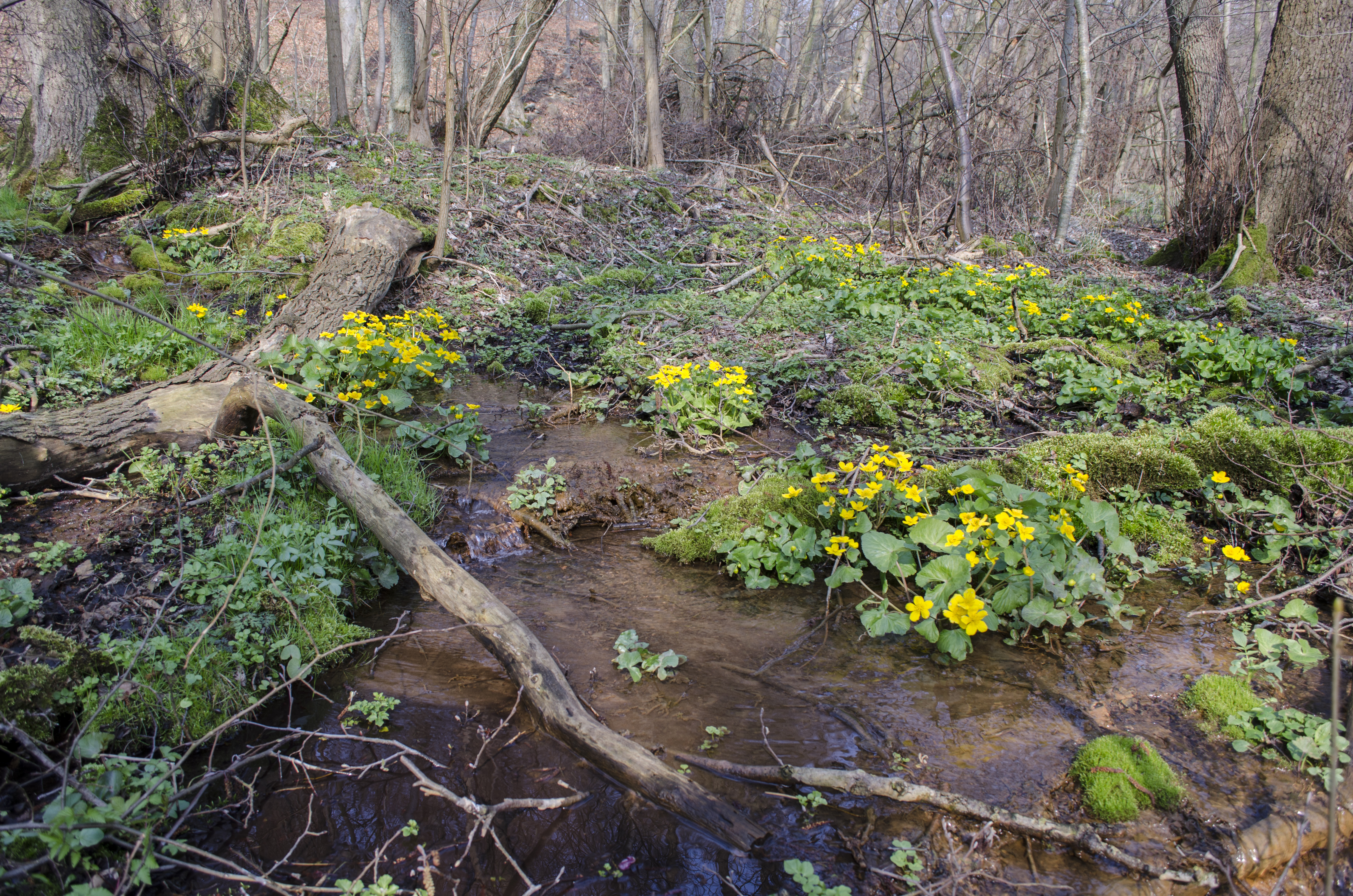
Could we use the plants in this swamp forest to predict the diversity of other species?

Local communities and regional biotas are built of hundreds, if not thousands, of species. Most of these species are small-bodied and discreet lifeforms. So it’s no wonder that naturalists have almost always focused their attention on conspicuous species of their particular liking. Why plants then? Well, plants are practical and efficient. They “stand still and wait to be counted”, as the eminent population biologist John Harper put it. No matter the weather, from spring to autumn. There are enough plant species to show contrasts between sites, and yet they can usually be identified to species level in the field.

You Can’t Predict the Diversity of Beetles from Lichens… Can You?

Unfortunately, the overwhelming scientific consensus seems to be that any particular taxonomic group won’t adequately represent the biodiversity of other taxonomic groups. The idea of surrogacy seems to hit the same hard wall as most attempts to provide generally working models for variation in biodiversity at local and regional scales. Biodiversity remains one of the largest scientific research questions without good general answers. Continue reading “Biodiversity Monitoring by Plant Proxy is Cheap and Easy: Here’s How and Why”

Assessment of Stream Health with DNA Metabarcoding

Following on from last week’s press release ‘How Clean are Finnish Rivers?’, Vasco Elbrecht et al. have produced a video to explain the methods in ‘Assessing strengths and weaknesses of DNA metabarcoding-based macroinvertebrate identification for routine stream monitoring‘. In this video, the authors explore the potential of DNA metabarcoding to access stream health using macroinvertebrates. They compared DNA and morphology-based identification of bulk monitoring samples from … Continue reading Assessment of Stream Health with DNA Metabarcoding

Building Universal PCR Primers for Aquatic Ecosystem Assessments

Post provided by Vasco Elbrecht Many things can negatively affect stream ecosystems – water abstraction, eutrophication and fine sediment influx are just a few. However, only intact freshwater ecosystems can sustainably deliver the ecosystem services – such as particle filtration, food biomass production and the supply of drinking water – that we rely on. Because of this, stream management and restoration has often been in the … Continue reading Building Universal PCR Primers for Aquatic Ecosystem Assessments

Issue 8.5

Issue 8.5 is now online!

The May issue of Methods is now online!

This issue contains three Applications articles and two Open Access articles. These five papers are freely available to everyone, no subscription required.

MatlabHTK: A software interface to a popular speech recognition system making it possible for non-experts to implement hidden Markov models for bioacoustic signal processing.

 PrimerMiner: The R package PrimerMiner batch downloads DNA barcode gene sequences from BOLD and NCBI databases for specified target taxonomic groups and then applies sequence clustering into operational taxonomic units to reduce biases introduced by the different number of available sequences per species.

 BarcodingR: An integrated software package that provides a comprehensive implementation of species identification methods, including artificial intelligence, fuzzy-set, Bayesian and kmer-based methods, that are not readily available in other packages.

Continue reading “Issue 8.5”