Happy New Year! We hope that you all had a wonderful Winter Break and that you’re ready to start 2016. We’re beginning the year with a look back at some of our highlights of 2015. Here’s how last year looked at Methods in Ecology and Evolution.
The Articles
We published some amazing articles in 2015, too many to mention them all here. However, we would like to say a massive thank you to all of the authors, reviewers and editors who contributed to the journal last year. Without your hard work, knowledge and generosity, the journal would not be where it is today. We really appreciate all of your time and effort. THANK YOU!
Opportunities at the Interface between Ecology and Statistics
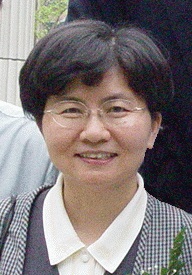
Today, we are pleased to be welcoming a new member of the Methods in Ecology and Evolution Associate Editor Board. Anne Chao joins us from the National Tsing Hua University in Taiwan and you can find out a little more about her below.
Anne Chao
Anne Chao
“I am 60% statistician, 30% mathematician and 10% ecologist. Mathematical and statistical problems in ecology and evolution fascinate me. My current research interests include statistical inferences of biodiversity measures (for example taxonomic, phylogenetic, and functional diversities along with related similarity/differentiation indices), and statistical analysis of ecological and environmental survey data (such as standardising biological samples and rarefaction/extrapolation techniques).”
Like many journals, Methods in Ecology and Evolution asks authors to submit a list of preferred reviewers along with their manuscript. This can be a difficult task and is often one that is overlooked or rushed when submitting. However, this list can be very important in the peer review process.
There are a number of reasons that we ask authors to provide preferred reviewers. These suggestions can be extremely useful in a number of situations. For example, if the Associate Editor is struggling to find referees for a paper, the preferred reviewers become a very valuable resource. Not only are they potential reviewers, but if they are unable to review the paper they can suggest other people who might be able to.
As Methods is a generalist journal, sometimes papers are submitted that do not fit perfectly into the areas of expertise of our Associate Editors. In cases such as these, the preferred reviewers can be a wonderful starting point for the reviewer search. Providing the Editors with a good list of experts in the subject (who they may not know off the top of their head) can make the peer review process quicker and easier for everyone involved.
While Editors are by no means required or obliged to choose the reviewers that authors suggest, the list can often be a source of inspiration. If the Editor chooses not to invite any of the preferred reviewers, they may use the suggestions to try to find people with similar expertise.
Providing a good list of preferred reviewers can speed up the peer review process and make it a much less stressful experience. So, what makes a preferred reviewer list good or bad? The DOs and DON’Ts below should help you to suggest the right reviewers for your paper. Continue reading “The DOs and DON’Ts of Selecting Preferred Reviewers”
Over the next few weeks we will be welcoming three new Associate Editors to Methods in Ecology and Evolution. Susan Johnston (University of Edinburgh, UK) became a member of the Associate Editor Board on Monday 5 October. She will be joined on 19 October by Natalie Cooper (Natural History Museum, London, UK) and finally by Luísa Carvalheiro (University of Brasília, Brazil) on 2 November. You can find out … Continue reading New Associate Editors
You’ve spent months, or even years, working on a project. You’ve finalised your manuscript and you’re ready to submit. But which journal should you send your paper to?
@ Colin (click image to see original)
In recent years, this question has only gotten harder. As more and more journals enter the market, the decision of where to send your paper is becoming increasingly confusing. With predatory journals muddying the waters and an increasing pressure to publish, deciding where to submit can be a daunting task for even seasoned academics.
Applied ecology can be defined as scientific knowledge that helps in making good management decisions. Scientists have a natural desire to collect information, managers want that information so that they know they are doing the right thing, and both generally act under the assumption that more information equals better decisions. This is generally correct, since information helps us make, well, informed decisions. Therefore, when our ecological knowledge is uncertain (which is practically always the case) we usually advocate further research.
On the other hand, however, information comes at a cost. It may cost money to collect it and take time to set up studies: both are usually in short supply. We can’t learn everything and often the information we can actually collect is still imperfect. So how do we determine if that additional piece of information we’d like to have is really valuable for our management?
In decision analysis, the value of information is the improvement in the outcomes of our actions that we would expect if we could reduce or eliminate uncertainty before making a decision. Previously applied in engineering, economics and healthcare planning, VOI is also intuitively appealing for environmental management, where decisions must be made in the face of ubiquitous uncertainty. Knowing the value of information can assist in designing monitoring and experimental programs, implementing adaptive management and prioritising sources of uncertainty. In other words, it can help applied ecologists and conservation managers find a focused, transparent way to address the inevitable need for “more data”.
An increasing number of studies are applying VOI to conservation management; however, in spite of its potential the technique is still underused in real-world applications, particularly beyond the small community of applied ecologists trained in decision-analytic methods.
Click Image to begin a Prezi Presentation on Value of Information
In summary, three things determine the value of information:
How much we already know (the more we know, the less beneficial it is to collect more information)
Whether and how we would react to that extra information by changing actions, and how much better would the updated action be
How good is the information we can actually get (think about sample sizes, imperfect detection, time lags, etc)
Two heads are often better than one in decision making. Several heads might have an even higher probability of being better than one. However, people in a group often have different modes of thinking or problem solving, alternate reference frames, subjective biases and varying levels or domains of expertise. How do we harness these messy thought processes and channel them for effective decision-making for biodiversity management?
The Methods in Ecology and Evolution Symposium was an excellent conference with dynamic and interesting speakers representing a wide range of topics which have been published in the journal over the last five years. It was an unusual conference for a couple of reasons:
It wasn’t all in one place. Talks were relayed between London and Calgary (during convenient times!), a couple of speakers presented via Skype from neither location and it was watched via livestream.com by hundreds of other participants
There were equal numbers of male and female presenters. In my experience this gender balance of invited speakers is unusual and notable
Equal attendance
The gender balance of the speakers encouraged me to look around the room and write down a few figures for other gender dimensions of the London section of the symposium. As well as equal gender representation of speakers, there was also a good gender balance in the attendees – 42% of the attendees were female at the time I wrote down the numbers. These two figures suggest that it was a good conference for gender equality. However, I think these headline figures hide a number of more tricky aspects of gender equality.
Questionable numbers
There were a total of 23 questions asked of the 12 speakers presenting or livestreamed in London and only 3 of these were from women (2 out of 22 if I exclude my own question to reduce any investigator effects). These data points are not independent, as some people asked several questions, but I didn’t keep a record of individuals. Twitter revealed a similar reduced female presence compared to attendance: of those people tweeting to #Methods5th only 37% were women.
Proportion of different symposium participants that were female. Half the speakers and nearly half the attendees were female. But only around 10% of questions were asked by women.
On Wednesday 22 April 2015, Methods in Ecology and Evolution will be celebrating its 5th Anniversary. Methods is the British Ecological Society’s youngest journal and over the past five years it has established itself as the leading publication for methodological advances for both the ecological and evolutionary academic communities.
Our 5th Anniversary Symposium will be streamed though Livestream.com. This platform is optomised for all browsers as well as Android and iOS devices. So all that you need is a computer, tablet or smart phone and the ability to connect to the internet.
As many of you will already know, Dr Vamosi is the newest (and first female) Senior Editor for Methods in Ecology and Evolution.She joined Rob Freckleton and Bob O’Hara in June of 2014 and has been working on manuscripts ever since. Jana is also organising the Canadian half of our 5th Anniversary Symposium in April (the Early Bird deadline for which is approaching – Friday 20 March). We are also running a Poster Session at this event; if you would be interested in submitting a poster, please contact Jana here.
The research in Jana’s lab focuses on the macroevolution, macroecology, community ecology, and conservation biology of plants. Many of their projects require gathering empirical data on the mechanistic underpinnings of plant diversity in specific locales. However, they often incorporate global phylogenetic perspectives as well. You can learn more about the lab’s work here.
As part of our International Women’s Day activities, we wanted to have a short profile on Jana. Luckily, she had recently written one for the 6th International Barcode of Life Conference which will be taking place at the University of Guelph from 18 August to 21 August 2015. Jana will be giving a Plenary session (along with Charles Godfrey and Naomi Pierce) on Ecological Interactions.
 Opportunities at the Interface between Ecology and Statistics


 Methods Blog