A new evolutionary simulation R package sheds light on the metaphor of genomic islands of divergence

Robert May Prize Shortlisted Article

Post provided by Claudio S. Quilodrán and Ashley T. Sendell-Price

Nesting eggs of silvereyes (Zosterops lateralis). Heron Island, Australia. Picture: Erik Sandvik.

Each year Methods in Ecology and Evolution awards the Robert May Prize to the best paper in the journal by an author at the start of their career. Claudio S. Quilodrán has been shortlisted for his article ‘The multiple population genetic and demographic routes to islands of genomic divergence’. In this blog, Claudio and co-author Ashley T. Sendell-Price discuss how their paper came to be and how their individual‐based simulation can be used to explore the dynamics of diverging genomes.

Continue reading “A new evolutionary simulation R package sheds light on the metaphor of genomic islands of divergence”
The need to quantify complex shapes

Robert May Prize Shortlisted Article

Post provided by Arthur Porto

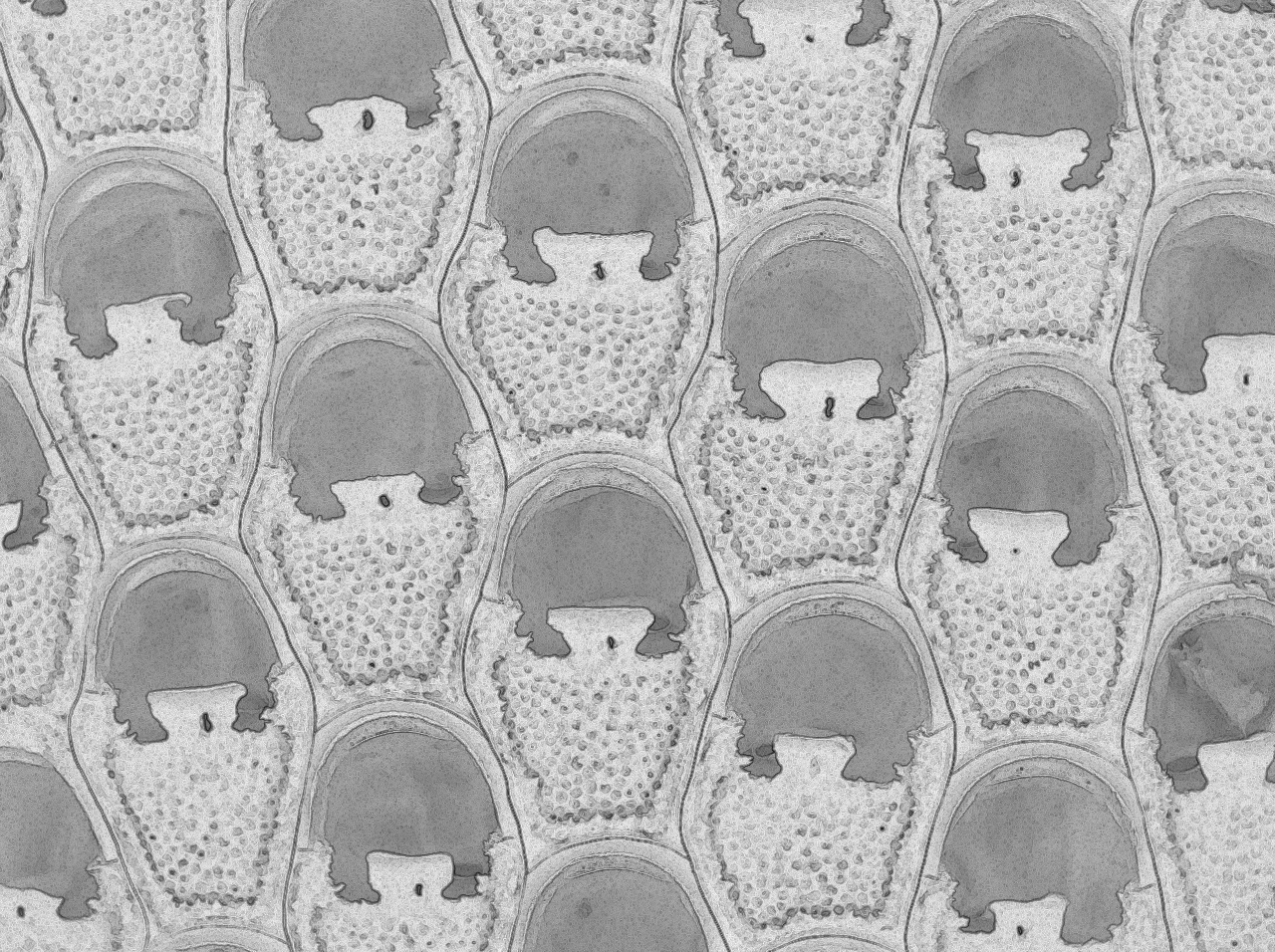
Credit: Kjetil Voje

Each year Methods in Ecology and Evolution awards the Robert May Prize to the best paper in the journal by an author at the start of their career. Arthur Porto has been shortlisted for his article ‘ML‐morph: A fast, accurate and general approach for automated detection and landmarking of biological structures in images’. In this blog, Arthur discusses how his paper came to be and describes development of the ML-morph pipeline.

Continue reading “The need to quantify complex shapes”

The next step for tagging insects: we can’t keep ignoring the impact

Robert May Prize Shortlisted Article

Post provided by Femke Batsleer

Digger wasp (Bembix rostrata). Credit: Femke Batsleer.

Each year Methods in Ecology and Evolution awards the Robert May Prize to the best paper in the journal by an author at the start of their career. Femke Batsleer has been shortlisted for her article ‘The neglected impact of tracking devices on arthropods‘. In this blog, Femke discusses how her paper came to be and the outcomes of the review.

Continue reading “The next step for tagging insects: we can’t keep ignoring the impact”

Species association networks: a bridge between sciences

Robert May Prize Shortlisted Article

Post provided by Raphaëlle Momal

Powdery mildew on oak tree leaves is caused by the fungi Erysiphe alphitoides, which association network helps understanding the behaviour. Credit: Raphaëlle Momal.

Each year Methods in Ecology and Evolution awards the Robert May Prize to the best paper in the journal by an author at the start of their career. Raphaëlle Momal has been shortlisted for her article ‘Tree‐based inference of species interaction networks from abundance data’. In this blog, Raphaëlle discusses how her paper came to be and the applications of the R package developed in her study.

Continue reading “Species association networks: a bridge between sciences”

2019 Robert May Prize Winner: Corneile Minnaar

The Robert May Prize is awarded annually for the best paper published in Methods in Ecology and Evolution by an Early Career Researcher. We’re delighted to announce that the 2019 winner is Corneile Minnaar, for his article ‘Using quantum dots as pollen labels to track the fates of individual pollen grains‘.

A central component of an organism’s fitness is its ability to successfully reproduce. This includes finding a potential mate and successful mating. For plants, movement of pollen from an anther to a conspecific stigma is essential for successful reproduction, but directly tracking movement of individual pollen grains heretofore has been impossible (with the exception of those species of orchids and milkweeds whose pollen comes in large packages (pollinia)). Knowing how pollen move around, whether or not they successfully fertilize ovules, is also central to understanding the evolution and ecology of flowering plants (angiosperms) and floral traits.

Continue reading “2019 Robert May Prize Winner: Corneile Minnaar”

Anacapa Toolkit: Automating the Cataloguing of Biodiversity

Post provided by Emily Curd

Imagine that you want to catalogue all of the biodiversity (all of the living organisms) from a particular location; how many trained experts would that require? How many person hours would it take to collect and identify all of the rare, well-disguised, and microscopic organisms? How many of these organisms would have to be removed from the environment and taken back to a lab for taxonomic analysis.

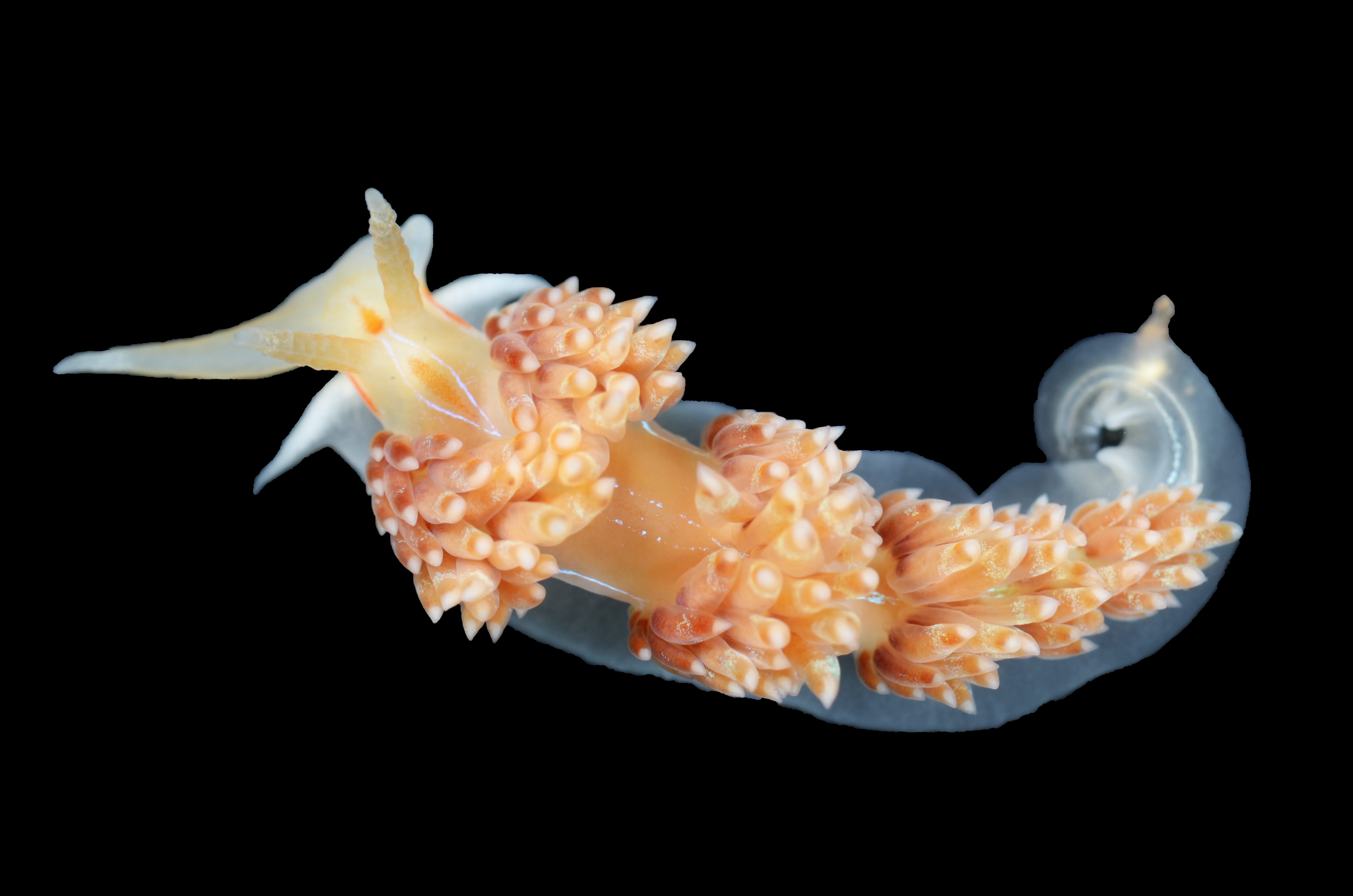
With eDNA, you can survey the presence of this gorgeous opalescent nudibranch without capturing or even touching it.
©Natural History Museum of Los Angeles County — Amanda Bemis & Brittany Cumming

Although there is no substitute for human expertise, we have begun using the traces of DNA that organisms leave behind (e.g. excretions, skin and hair cells) in the environment to catalogue biodiversity. These traces of DNA, referred to as environmental DNA, can persist in the environment for minutes or can persist for centuries depending on where they end up. This field of environmental DNA (eDNA) is rapidly becoming an effective tool to complement surveys of biodiversity, both past and present.

Continue reading “Anacapa Toolkit: Automating the Cataloguing of Biodiversity”

2019 Robert May Early Career Researcher Prize Shortlist

Each year Methods in Ecology and Evolution awards the Robert May Prize to the best paper in the journal by an author at the start of their career. Today we present the shortlisted papers for 2019’s award, based on articles published in volume 10 of the journal. The winner will be chosen by the journal’s Senior Editors in a few weeks. Keep an eye on the blog … Continue reading 2019 Robert May Early Career Researcher Prize Shortlist

ViXeN: View eXtract aNnotate Multimedia Data

Post provided by KadaMbari Devarajan

At a time when data is everywhere, and data science is being talked about as the future in different fields, a method that produces huge amounts of multimedia data is camera-trapping. We need ways to manage these kinds of media data efficiently. ViXeN is an attempt to do just that.

Camera traps have been a game-changer for ecological studies, especially those involving mammals in the wild. This has resulted in an increasing amount of camera trap datasets. However, the tools to manage camera trap data tend to be very specific and customised for images. They typically come with stringent data organisation requirements. There’s a growing amount of multimedia datasets and a lack of tools that can manage several types of media data.

In ‘ViXeN: An open‐source package for managing multimedia data’ we try to fix this visible gap. Camera trap management is a very specific a use-case. We thought that the field was missing general-purpose tools, capable of handling a variety of media data and formats, that were also free and open source. ViXeN was born from this idea. It stands for View eXtract aNnotate (media data). The name is also an ode to the canids I was studying at the time which included two species of foxes.


Example camera trap video Continue reading “ViXeN: View eXtract aNnotate Multimedia Data”

Editor Recommendation: Quantitative Evolutionary Patterns in Bipartite Networks

Post provided by ROB FRECKLETON

The study of interactions and their impacts on communities is a fundamental part of ecology. Much work has been done on measuring the interactions between species and their impacts on relative abundances of species. Progress has been made in understanding of the interactions at the ecological level, but we know that co-evolution is important in shaping the structure of communities in terms of the species that live there and their characteristics. Continue reading “Editor Recommendation: Quantitative Evolutionary Patterns in Bipartite Networks”

2018 Robert May Prize Winner: Laura Russo

The Robert May Prize is awarded annually for the best paper published in Methods in Ecology and Evolution by an Early Career Researcher. We’re delighted to announce that the 2018 winner is Laura Russo, for her article ‘Quantitative evolutionary patterns in bipartite networks: Vicariance, phylogenetic tracking or diffuse co‐evolution?‘.

Plant-pollinator interactions are often considered to be the textbook example of co-evolution. But specialised interactions between plants and pollinators are the exception, not the rule. Plants tend to be visited by many different putative pollinator species, and pollinating insects tend to visit many plant hosts. This means that diffuse co-evolution is a much more likely driver of speciation in these communities. So, the standard phylogenetic methods for evaluating co-evolution aren’t applicable in most plant-pollinator interactions. Also, many plant-pollinator communities involve insect species for which we do not yet have fully resolved phylogenies. Continue reading “2018 Robert May Prize Winner: Laura Russo”