Cover Stories: Overlooked primary producers key to accurate trophic position estimation

Post provided by Matthew Ramirez, Alexi Besser, Seth Newsome, and Kelton McMahon
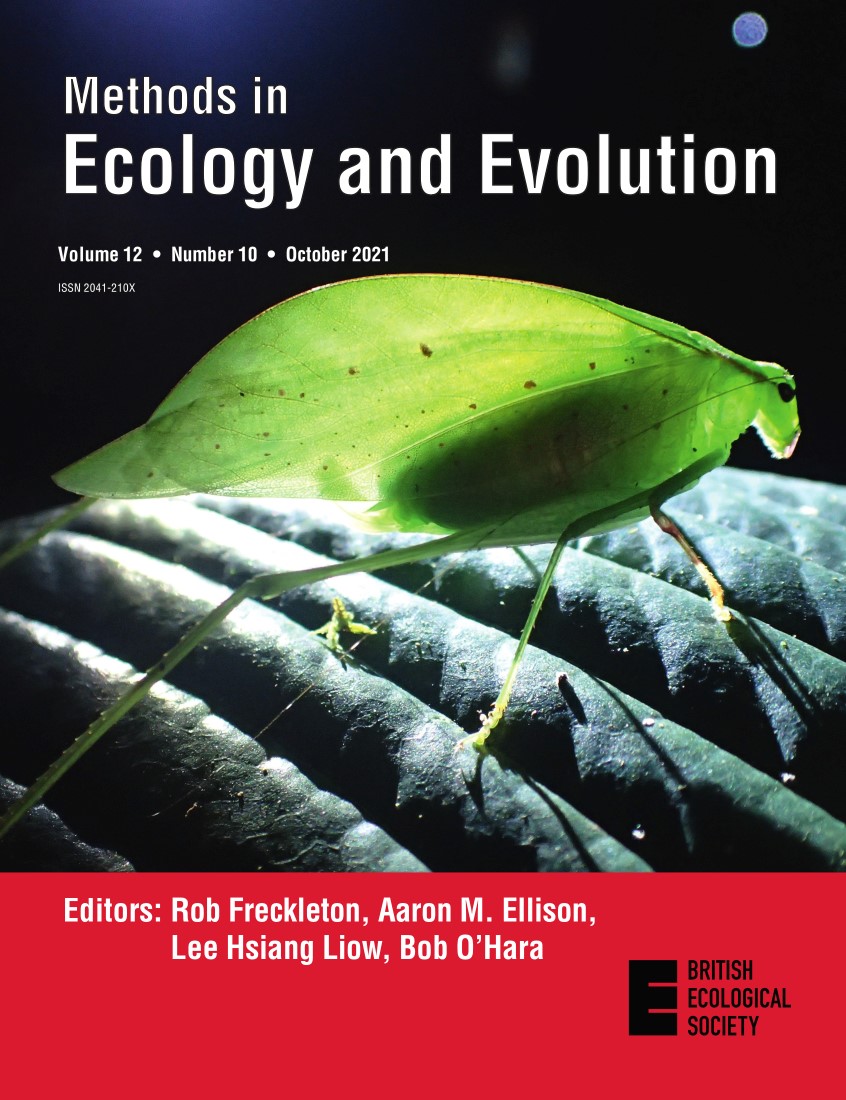
The cover of our October issue shows a katydid feeding on a leaf in the Tirimbina Rainforest National Wildlife Refuge of Costa Rica. Once digested, nitrogen from the leaf is incorporated into the katydid’s tissues in the form of amino acids, with slight modification to their stable nitrogen isotope values (δ15N). In this post the authors discuss the importance of understanding and accounting for variability in primary producer amino acid δ15N values when characterizing where consumers are positioned within food webs, detailed in their Methods in Ecology and Evolution article “Meta-analysis of primary producer amino acid δ15N values and their influence on trophic position estimation.”

Continue reading “Cover Stories: Overlooked primary producers key to accurate trophic position estimation”
Biodiversity Monitoring by Plant Proxy is Cheap and Easy: Here’s How and Why

Post provided by Rasmus Ejrnæs, Ane Kirstine Brunbjerg & Hans Henrik Bruun

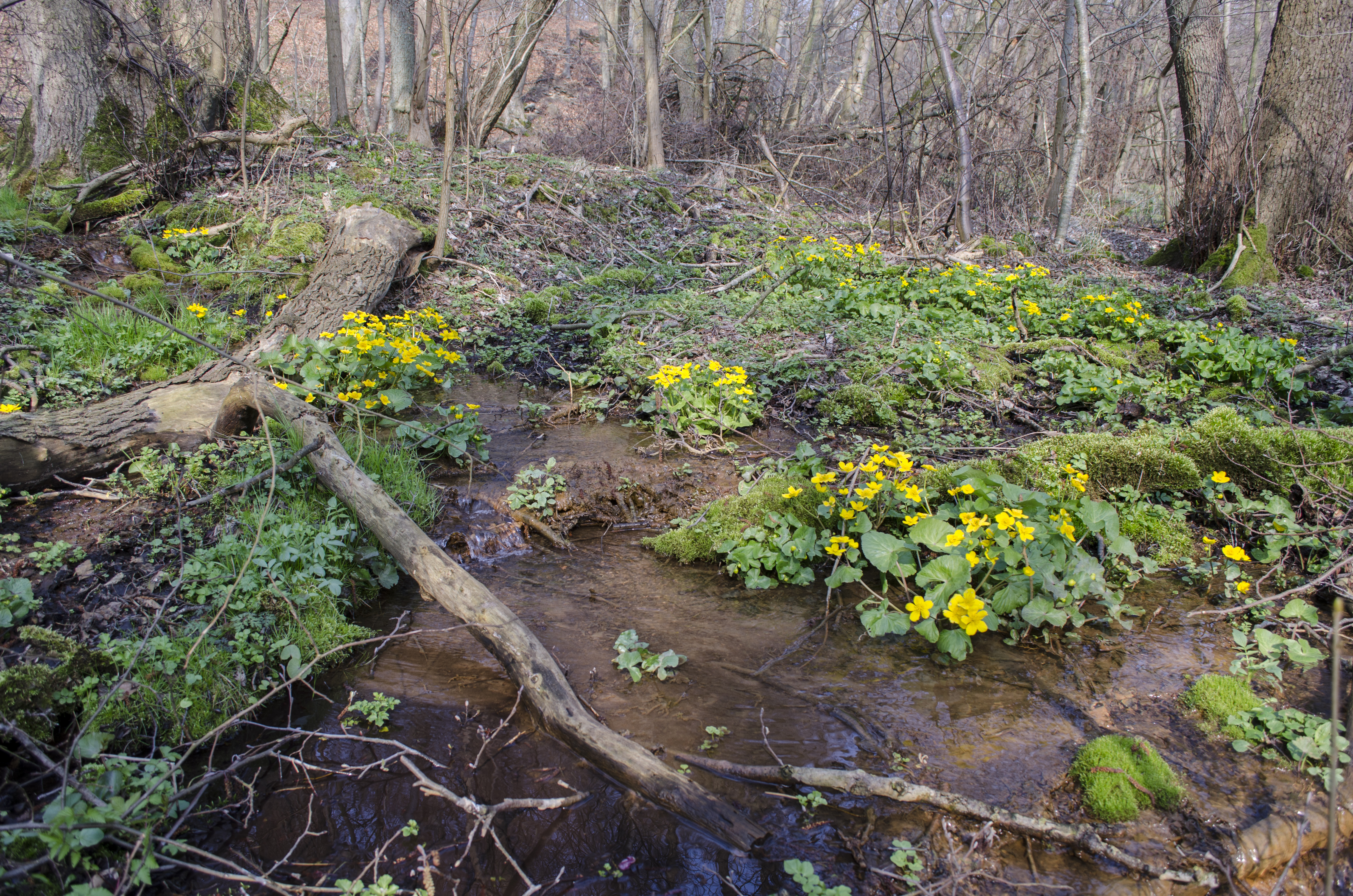
Could we use the plants in this swamp forest to predict the diversity of other species?

Local communities and regional biotas are built of hundreds, if not thousands, of species. Most of these species are small-bodied and discreet lifeforms. So it’s no wonder that naturalists have almost always focused their attention on conspicuous species of their particular liking. Why plants then? Well, plants are practical and efficient. They “stand still and wait to be counted”, as the eminent population biologist John Harper put it. No matter the weather, from spring to autumn. There are enough plant species to show contrasts between sites, and yet they can usually be identified to species level in the field.

You Can’t Predict the Diversity of Beetles from Lichens… Can You?

Unfortunately, the overwhelming scientific consensus seems to be that any particular taxonomic group won’t adequately represent the biodiversity of other taxonomic groups. The idea of surrogacy seems to hit the same hard wall as most attempts to provide generally working models for variation in biodiversity at local and regional scales. Biodiversity remains one of the largest scientific research questions without good general answers. Continue reading “Biodiversity Monitoring by Plant Proxy is Cheap and Easy: Here’s How and Why”