Blog post provided by Ann Russell
The Need for Authentic, Open Educational Resources
Given the rapid changes underway in undergraduate STEM education, the teaching community aspires to move beyond models that involve static content to develop agile, scalable ways to create authentic open educational resources (OERs). Researchers can provide authentic case studies, but they may lack the skills to create engaging OERs based on their research. Thus, the challenge: How can educational communities bridge the researcher-educator-software developer gaps and systematically translate underrepresented scientific research, such as tropical ecology, into immersive, interactive, and quantitative virtual active-learning experiences without having top-down institutional support?
To address this, we have been building a network that intentionally brings together people who would not normally work together: tropical biology researchers and specialists in active learning methods, media, and software development. This network, OCELOTS (Online Content for Experiential Learning of Tropical Systems), is funded through the National Science Foundation’s Research Coordination Network in Undergraduate Biology Education program, awarded to Iowa State University.
Here are some important resources:
- The full article
- The library of OCELOTS OERs, aka modules, on the Gala platform
- OCELOTS modules in a searchable format
- Implementation Plans and Teaching Notes for modules
The Innovation
The OCELOTS network integrates the use of two open platforms. We build community through virtual workshops on the Bioquest/QUBESHub platform, as well as in-person workshops. The Gala platform enables us to create modules using a media-rich, interactive storytelling presentation. This community of people comes together to create, review, and implement our modules.
We describe a novel, transferable co-production matrix in which researchers, educators, software developers, and the network community share their expertise in a variety of network-based activities designed to produce, review, and publish the modules and then share how they are used in courses.
The Modules
As a result of this process, 29 modules by 68 authors had been published by February 2026, with 12 more modules recently completed. Many modules have been translated into multiple languages, including this example:
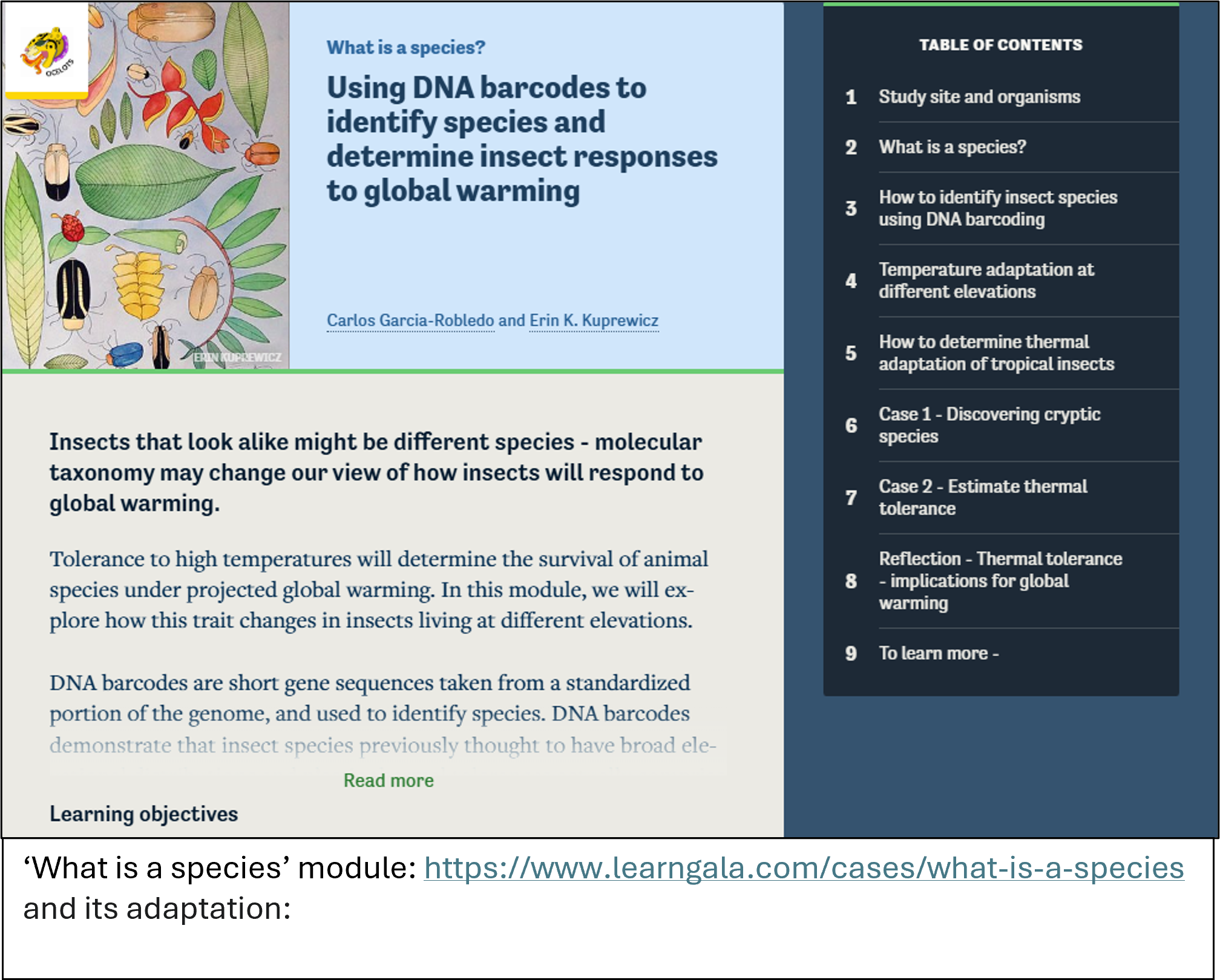
https://www.learngala.com/cases/what-is-a-species-intro-majors
Many modules offer interactive data tools that provide opportunities to visualize and analyze data, and work with simulation models, e.g.:

https://www.learngala.com/cases/human-seagrass/
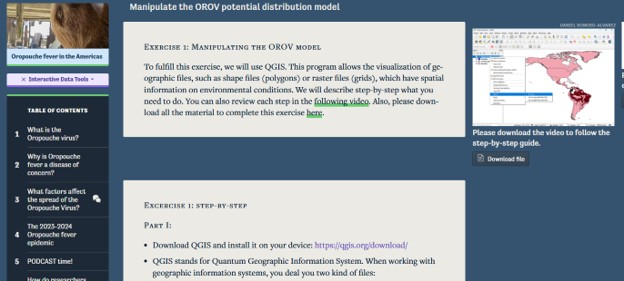
Researchers also provide immersive experiences by including podcasts, videography and their own artwork. Here are some examples:
- https://www.learngala.com/cases/functional-trait-based-restoration/12
- https://www.learngala.com/cases/coral-and-fishes-on-reefs/5
- https://www.learngala.com/cases/agoutis-bite-science-cookies/3
- https://www.learngala.com/cases/treefalls-plant-microbes/4
- https://www.learngala.com/cases/between-a-rock-and-a-hard-place/4https://www.learngala.com/cases/tropical-rainforest-carbon-cycling/5
The Objectives and Process
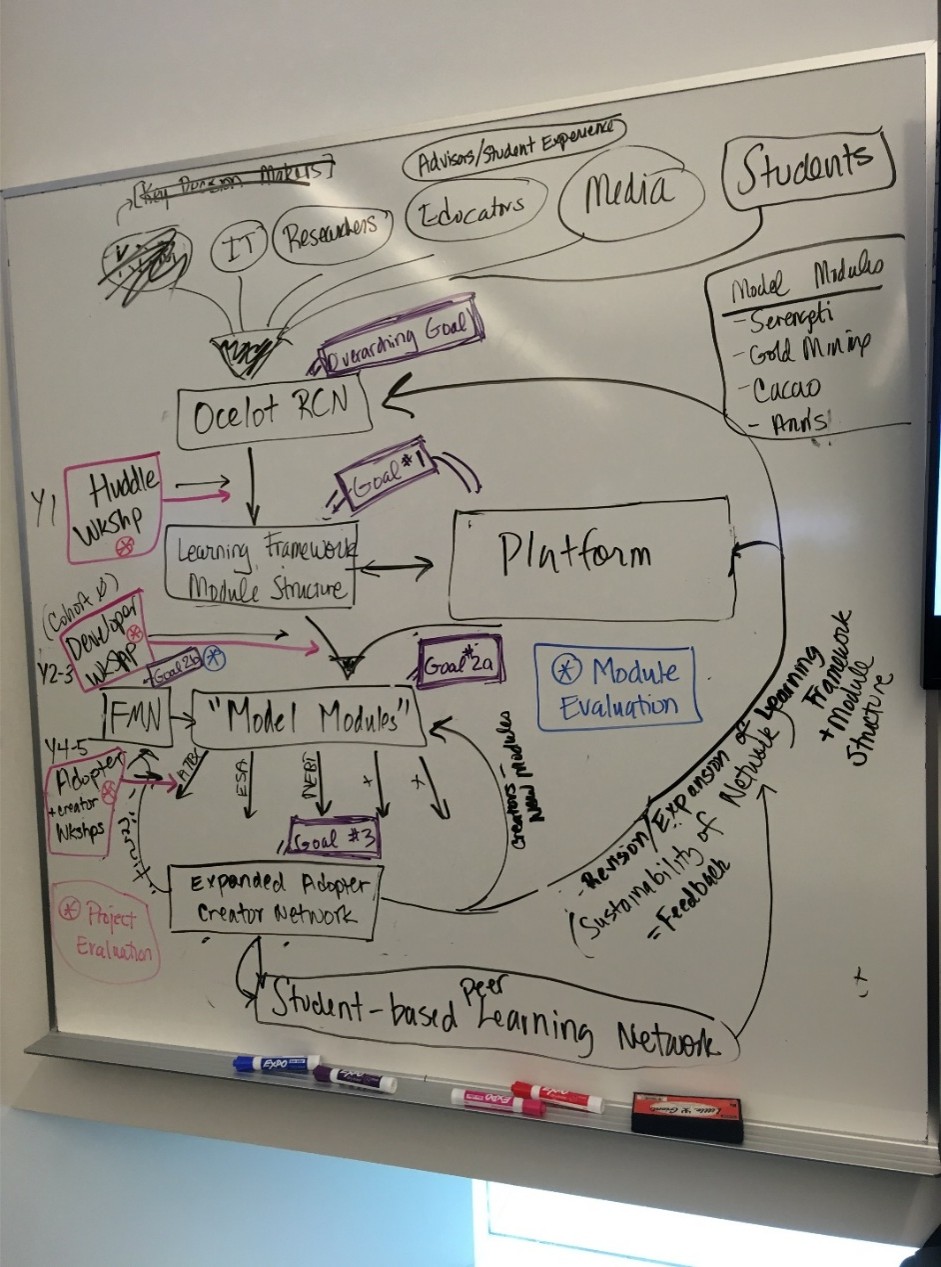
Our overarching goal is to change the way students learn and access experiences in ecology so that a diverse group of students will be ready to create solutions for complex biological problems. We use tropical ecosystems as the focal point for creating a virtual, place-based, student-centered online experience.
This project began in November 2019 when 22 people met in person on the University of Minnesota campus to begin to organize our network and develop our conceptual framework. From the outset, given the diversity of disciplines of our participants, we have leaned heavily into a co-production mentality. This type of collaboration honors and respects the different types of knowledge that participants bring to the community and entails intellectual humility and working together to reach our common goals.
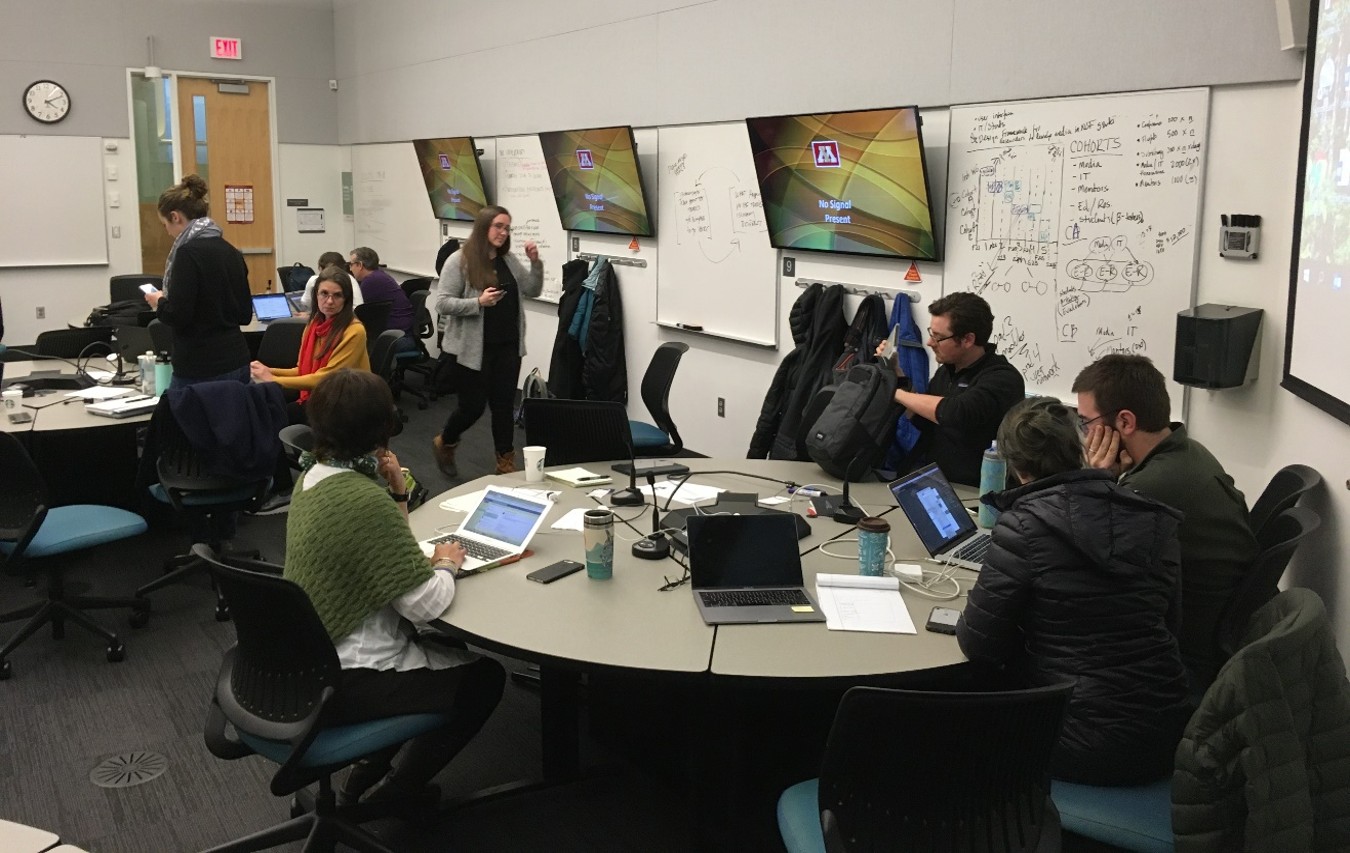
Most of our workshops for creating and implementing modules take place virtually.

We also hold in-person workshops at professional meetings.

Working groups provide a way to address specific needs and tasks. In the first year of our grant, one working group, the ‘Huddle’ developed ‘Author Guidelines and Toolkits’ for creating modules.

https://www.learngala.com/cases/ocelots-author-guidelines-toolkits
In Summary
Moving beyond the limitations of standard static text portals, our network presents a highly transferable methodological framework. It demonstrates how global research coordination networks can actively create, review, and implement high-quality interactive open materials that democratize complex biological data across diverse institutional types around the world.
Read our accompanying paper: ‘Fostering a network for creating and implementing open education resources in ecology’ by Ann Russell et al. (2026)

