Spatial Cross-Validation of Species Distribution Models in R: Introducing the blockCV Package

Post provided by Roozbeh Valavi

این پست به فارسی موجود است

Modelling species distributions involves relating a set of species occurrences to relevant environmental variables. An important step in this process is assessing how good your model is at figuring out where your target species is. We generally do this by evaluating the predictions made for a set of locations that aren’t included in the model fitting process (the ‘testing points’).
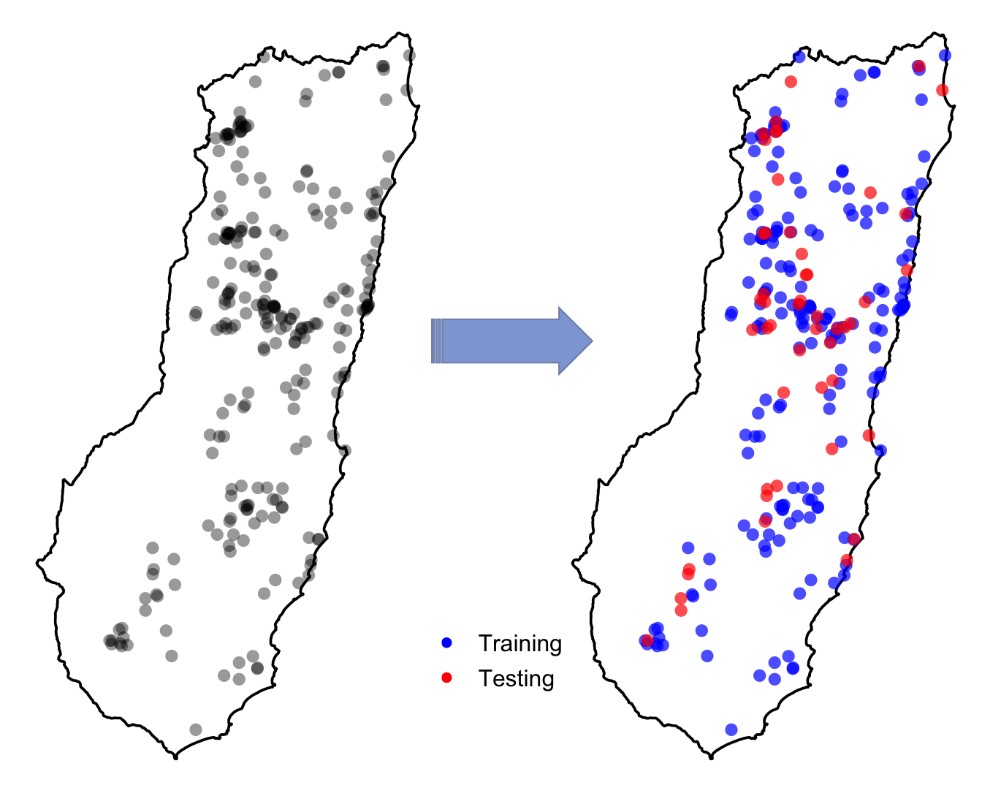
Random splitting of the species occurrence data into training and testing points

The normal, practical advice people give about this suggests that, for reliable validation, the testing points should be independent of the points used to train the model. But, truly independent data are often not available. Instead, modellers usually split their data into a training set (for model fitting) and a testing set (for model validation), and this can be done to produce multiple splits (e.g. for cross-validation). The splitting is typically done randomly. So testing points sometimes end up located close to training points. You can see this in the figure to the right: the testing points are in red and training points are in blue. But, could this cause any problem? Continue reading “Spatial Cross-Validation of Species Distribution Models in R: Introducing the blockCV Package”

اعتبارسنجی متقاطع مکانی در مدلسازی توزیع گونه‌‌ها

نویسنده: روزبه وَلَوی

This post is available in English

مدلسازی توزیع گونه‌ها به تخمین و برآورد ارتباط بین مجموعه‌ای از نقاط حضور گونه با متغیرهای زیست‌محیطی مرتبط می پردازد. یکی از مراحل اساسی این فرایند، ارزیابی قدرت مدل برای پیش­بینی مکان‌هایی است که احتمال حضورگونه در آنجا وجود دارد. این کار اغلب با ارزیابی پیش­بینی انجام شده در مجموعه‌ای ازنقاط که در فرآیند مدلسازی مورد استفاده قرار نگرفته اند (نقاط آزمایشی) صورت می‌گیرد.

تقسیم تصادفی داده‌های حضور گونه به نقاط آزمایشی و آموزشی

مطالعات پیشین بر این نکته تاکید دارند که به منظور ارزیابی معتبر، نقاط آزمایشی باید مستقل از نقاط آموزشی باشند، این درحالیست که داده مستقل واقعی به ندرت در دسترس می باشد. به همین دلیل، در فرایند مدلسازی معمولا داده‌های موجود را به دو قسمت داده‌های آموزشی (برای کالیبره کردن مدل) و داده های آزمایشی (برای ارزیابی دقت مدل) تقسیم می‌کنند، این استراتژی می‌تواند چند قسمتی هم باشد (برای مثال اعتبارسنجی متقاطع یا cross-validation). از آنجاییکه این تقسیم بندی معمولا بصورت تصادفی انجام می‌شود، بنابراین گاهی اوقات نقاط آزمایشی در فواصل نزدیک به نقاط آموزشی قرار می‌گیرند. شکل زیر این مساله را به خوبی نشان می دهد که در آن نقاط آزمایشی به رنگ قرمز و نقاط آموزشی آبی هستند. اما آیا این مساله می‌تواند مشکلی ایجاد کند؟ Continue reading “اعتبارسنجی متقاطع مکانی در مدلسازی توزیع گونه‌‌ها”

New Associate Editors

Two new Associate Editors are joining the Methods in Ecology and Evolution Board today: Sydne Record (Bryn Mawr College, USA) and Hao Ye (University of Florida, USA). They have both joined on a three-year term and you can find out more about them below. Sydne Record “My research incorporates knowledge of field-based natural history, ecological theory, statistics, remote sensing, and computer modeling to ask how abiotic, biotic, and anthropogenic … Continue reading New Associate Editors

Monitoring Ecosystems through Sound: The Present and Future of Passive Acoustics

Post provided by Ella Browning and Rory Gibb

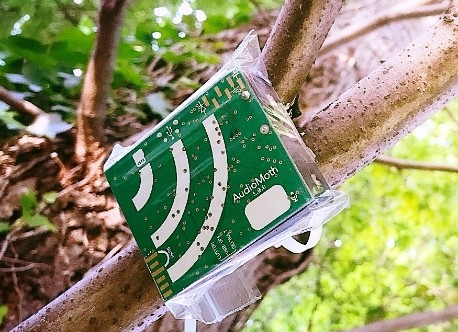
AudioMoth low-cost, open-source acoustic sensor ©openacousticdevices.info

As human impacts on the world accelerate, so does the need for tools to monitor the effects we have on species and ecosystems. Alongside technologies like camera traps and satellite remote sensing, passive acoustic monitoring (PAM) has emerged as an increasingly valuable and flexible tool in ecology. The idea behind PAM is straightforward: autonomous acoustic sensors are placed in the field to collect audio recordings. The wildlife sounds within those recordings are then used to calculate important ecological metrics – such as species occupancy and relative abundance, behaviour and phenology, or community richness and diversity.

The Pros and Cons of Passive Acoustic Monitoring

Using sound to monitor ecosystems, rather than traditional survey methods or visual media, has many advantages. For example, it’s much easier to survey vocalising animals that are nocturnal, underwater or otherwise difficult to see. Also, because acoustic sensors capture the entire soundscape, it’s possible to calculate acoustic biodiversity metrics that aim to describe the entire vocalising animal community, as well as abiotic elements in the environment.

The use of PAM in ecology has been steadily growing for a couple of decades, mainly in bat and cetacean studies. But with sensor costs dropping and audio processing tools improving, there’s currently a massive growth in interest in applying acoustic methods to large-scale or long-term monitoring projects. As very low-cost sensors such as AudioMoth start to emerge, it’s becoming easier to deploy large numbers of sensors in the field and start collecting data. Continue reading “Monitoring Ecosystems through Sound: The Present and Future of Passive Acoustics”

New Associate Editor: Res Altwegg

Today, we are pleased to be welcoming a new member of the Methods in Ecology and Evolution Associate Editor Board. Res Altwegg joins us from the University of Cape Town, South Africa and you can find out a little more about him below. Res Altwegg “My interests lie at the intersection between ecology and statistics, particularly in demography, population ecology, species range dynamics and community ecology. My work … Continue reading New Associate Editor: Res Altwegg

In Conservation Planning, Some Data are More Important Than Others

Provided by Heini Kujala and José Lahoz-Monfort

Esta entrada de blog también está disponible en español

Spatial Conservation Planning and the Quest for Perfect Data

Conservation planners and managers often need to make decisions with imperfect information. When deciding what action to take or how to divide resources between candidate locations, we rarely have all the information we’d like on what species are present at a site or which areas are most critical for supporting their population viability. A large volume of ecological research focuses on answering these very questions.

To make conservation decisions, we need other types of data as well. These include information on things like the cost of carrying out a given conservation action, current condition of sites, the distribution and intensity of threats in a region, and much more. Many conservation problems are spatial, meaning that we often need to decide between multiple candidate locations and that there are spatial dependencies between sites that need to be accounted for. All these different pieces of information are needed to make cost-efficient and effective conservation decisions.

Ecologists and conservation biologists are usually concerned about the completeness and accuracy of the ecological data used to make these decisions (understandably). But less effort has been spent in researching and verifying the accuracy of the types of data mentioned above. At the same time, we have relatively poor understanding of how data gaps influence solutions optimised across multiple species and locations, and the relative importance of gaps in different types of data. This is what we set out to find in ‘Not all data are equal: Influence of data type and amount in spatial conservation prioritisation’. Continue reading “In Conservation Planning, Some Data are More Important Than Others”

En la planificación de la conservación, algunos datos son más importantes que otros

Por Heini Kujala y José Lahoz-Monfort

This blog post is also available in English

La planificación espacial de la conservación y la búsqueda de datos perfectos

Los planificadores y administradores de la conservación a menudo necesitan tomar decisiones con información imperfecta. Al decidir qué acción tomar o cómo dividir recursos entre diferentes localizaciones, rara vez tenemos toda la información que nos gustaría sobre qué especies están presentes en un lugar o qué áreas son las más críticas para respaldar su viabilidad poblacional. Un gran volumen de investigación ecológica se focaliza en responder a estas preguntas.

Para tomar decisiones de conservación, también necesitamos otros tipos de datos, incluyendo, entre otros, información sobre el costo de llevar a cabo una acción de conservación determinada, la condición actual de los diferentes sitios, y la distribución e intensidad de las amenazas en una región. Muchos problemas de conservación son espaciales, es decir que a menudo tenemos que decidir entre varias ubicaciones candidatas, con dependencias espaciales entre ellas. Todas estas diferentes piezas de información son necesarias para tomar decisiones de conservación rentables y efectivas.

Los ecólogos y los biólogos de la conservación suelen estar preocupados por la integridad y exactitud de los datos ecológicos utilizados para tomar estas decisiones (comprensiblemente). Pero se ha dedicado menos esfuerzo a investigar y verificar la exactitud de los otros tipos de datos mencionados anteriormente. Además, tenemos una comprensión relativamente pobre de cómo las lagunas en los datos influyen en las soluciones optimizadas en múltiples especies y ubicaciones, y la importancia relativa de las lagunas en los diferentes tipos de datos. Es esto precisamente lo que nos propusimos investigar en el artículo ‘Not all data are equal: Influence of data type and amount in spatial conservation prioritisation’. Continue reading “En la planificación de la conservación, algunos datos son más importantes que otros”

New Associate Editors

Today we are welcoming two new Associate Editors to Methods in Ecology and Evolution: Huijie Qiao (Chinese Academy of Sciences, China) and Veronica Zamora-Gutierrez (Unidad Durango, Mexico and University of Southampton, UK). They have both joined on a three-year term and you can find out more about them below. Huijie Qiao “My research is focused broadly on macroecology. I work to clarify the theory and methodology behind ecological niche modelling … Continue reading New Associate Editors

Balance: Time for Your Life and Your Career

Post Provided by Stacy De Ruiter

There’s an Impostor Behind this Post

The premise of this post is that it might provide some useful advice on how to achieve a tenable work-life balance and find a satisfying, successful career in science.

©Paul VanDerWerf

I’m writing this post, but there is no way that I would hold myself up as an example of success. I have a job that’s a great fit for me, but there was probably no-one else who wanted it, and there are so many others with more prestigious and high-profile jobs. I sometimes manage to divide my time well between my family and my work goals, but I actually feel like I am shortchanging both of them, basically all the time. And how long ago was the last time I got enough sleep, enough exercise, enough personal time? I often feel like someday very soon everyone is going to realise that I really don’t have it all together.

But here’s the thing: almost all the successful, self-aware people I know feel this way, at least some of the time. Impostor syndrome seems to be incredibly common, and I think at least partly it grows out of a genuine awareness of the privilege and luck that helped pave the way to your achievements. Impostor syndrome that interferes with your mental health or limits your potential is clearly unhealthy, and the part where you refuse to believe in your own competence must go immediately. But if it can peacefully coexist with confidence in your own abilities and healthy ambition, it might even be a good thing (or at least, an honest thing). Continue reading “Balance: Time for Your Life and Your Career”

New Research Shows Pretend Porpoise Sounds are Helping Conservation Efforts

Below is a press release about the Methods in Ecology and Evolution article ‘Estimating effective detection area of static passive acoustic data loggers from playback experiments with cetacean vocalisations‘ taken from Swansea University.

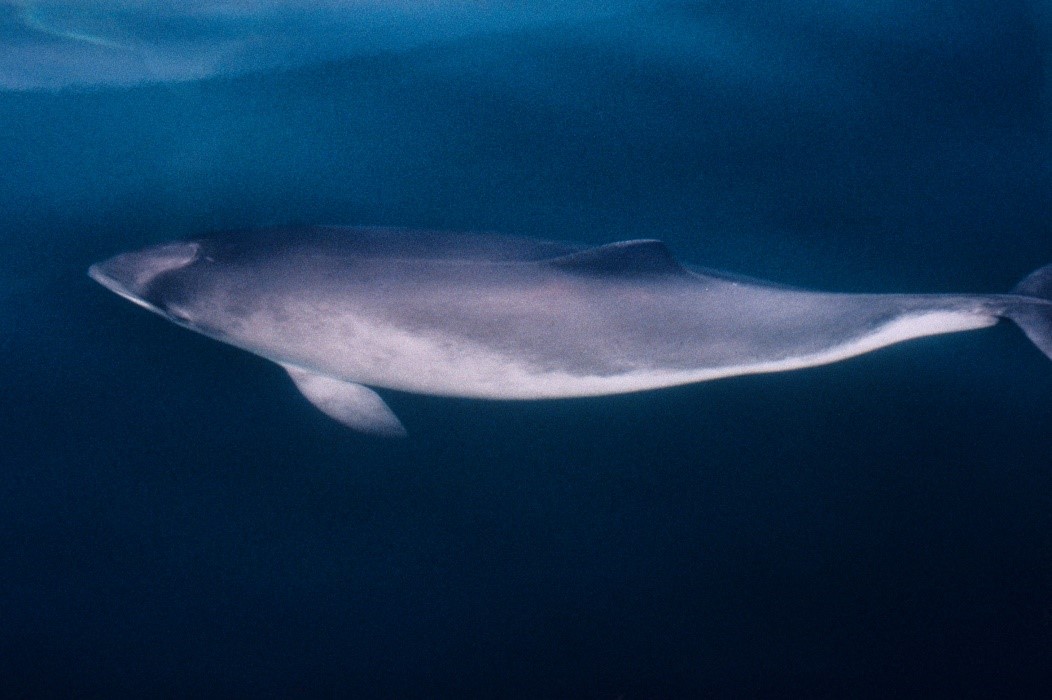
Harbour porpoise under the surface - I. Birks, SeaWatchFoundation
Harbour porpoise under the surface – I. Birks, SeaWatchFoundation

An examination into the detection of harbour porpoises is helping to give new understanding of effective monitoring of species under threat from anthropogenic activities such as fisheries bycatch and coastal pollution.

In a first study of its kind, Dr Hanna Nuuttila, currently at Swansea University’s College of Science – together with scientists from the German Oceanographic Museum, the University of St Andrews and Bangor University – revealed how playing back porpoise sounds to an acoustic logger can be used to assess the detection area of the device, a metric typically required for effective monitoring and conservation of protected species.

Continue reading “New Research Shows Pretend Porpoise Sounds are Helping Conservation Efforts”