Editor Recommendation – HistMapR: Rapid Digitization of Historical Land-Use Maps in R

Post provided by Sarah Goslee For an ecologist interested in long-term dynamics, one of the most thrilling experiences is discovering a legacy dataset stashed away somewhere. For an ecologist interested in long-term dynamics, one of the most daunting experiences is figuring how to turn that box full of paper into usable data. The new tool HistMapR, described in ’HistMapR: Rapid digitization of historical land-use maps in … Continue reading Editor Recommendation – HistMapR: Rapid Digitization of Historical Land-Use Maps in R

Estimating the Size of Animal Populations from Camera Trap Surveys

Below is a press release about the Methods paper ‘Distance sampling with camera traps‘ taken from the Max Planck Society.

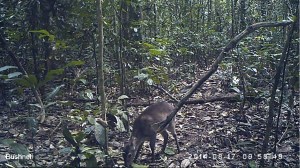
A Maxwell's duiker photographed using a camera trap. Marie-Lyne Després-Einspenner
A Maxwell’s duiker photographed using a camera trap. ©Marie-Lyne Després-Einspenner

Camera traps are a useful means for researchers to observe the behaviour of animal populations in the wild or to assess biodiversity levels of remote locations like the tropical rain forest. Researchers from the University of St Andrews, the Max Planck Institute for Evolutionary Anthropology (MPI-EVA) and the German Centre for Integrative Biodiversity Research (iDiv) recently extended distance sampling analytical methods to accommodate data from camera traps. This new development allows abundances of multiple species to be estimated from camera trapping data collected over relatively short time intervals – information critical to effective wildlife management and conservation.

Remote motion-sensitive photography, or camera trapping, is revolutionising surveys of wild animal populations. Camera traps are an efficient means of detecting rare species, conducting species inventories and biodiversity assessments, estimating site occupancy, and observing behaviour. If individual animals can be identified from the images obtained, camera trapping data can also be used to estimate animal density and population size – information critical to effective wildlife management and conservation. Continue reading “Estimating the Size of Animal Populations from Camera Trap Surveys”

Building Universal PCR Primers for Aquatic Ecosystem Assessments

Post provided by Vasco Elbrecht Many things can negatively affect stream ecosystems – water abstraction, eutrophication and fine sediment influx are just a few. However, only intact freshwater ecosystems can sustainably deliver the ecosystem services – such as particle filtration, food biomass production and the supply of drinking water – that we rely on. Because of this, stream management and restoration has often been in the … Continue reading Building Universal PCR Primers for Aquatic Ecosystem Assessments

What silver fir aDNA can tell us about Neolithic forests

Below is a press release about the Methods paper ‘HyRAD-X, a versatile method combining exome capture and RAD sequencing to extract genomic information from ancient DNA‘ taken from Swiss Federal Institute for Forest, Snow and Landscape Research WSL (this press release is also available in French, German and Italian via the links below).

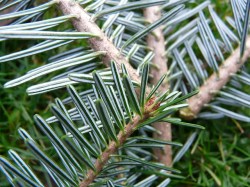
A new technique makes it possible to cost-effectively analyse genetic material from fossil plants and animals. Researchers from the Swiss Federal Institute for Forest, Snow and Landscape Research WSL and the universities of Lausanne and Bern have used this technique to examine the DNA of silver fir remains found in lake sediment in Ticino. They found clues as to how forests reacted to the emergence of agriculture.

The new process utilises the latest advances in DNA technology to isolate ancient DNA (aDNA) from prehistoric plants and animals. The techniques used to date are, however, expensive. “As population geneticists often need several dozens samples to make reliable statements, many research ideas are not currently financially viable,” says Nadir Alvarez, a professor at the University of Lausanne’s Department of Ecology and Evolution.

The research team led by Alvarez and his colleagues Christoph Sperisen (a population geneticist at the WSL), Willy Tinner (a professor of palaeoecology at the University of Bern) and Sarah Schmid (a biologist from the University of Lausanne) has now developed a cost-effective alternative and demonstrated its potential with subfossil silver fir needles found at Origlio lake in Ticino. The team showcased the results in the research journal Methods in Ecology and Evolution. Continue reading “What silver fir aDNA can tell us about Neolithic forests”

New Associate Editors

Today we are welcoming four new Associate Editors to Methods in Ecology and Evolution. Graziella Iossa (University of Lincoln) and Theoni Photopoulou (Nelson Mandela Metropolitan University) are joining as regular Associate Editors and Simon Jarman (Unversity of Porto) and Daniele Silvestro (University of Gothenburg) will be working on Applications articles. You can find out more about all of our new Associate Editors below. Graziella Iossa “I am … Continue reading New Associate Editors

Issue 8.5

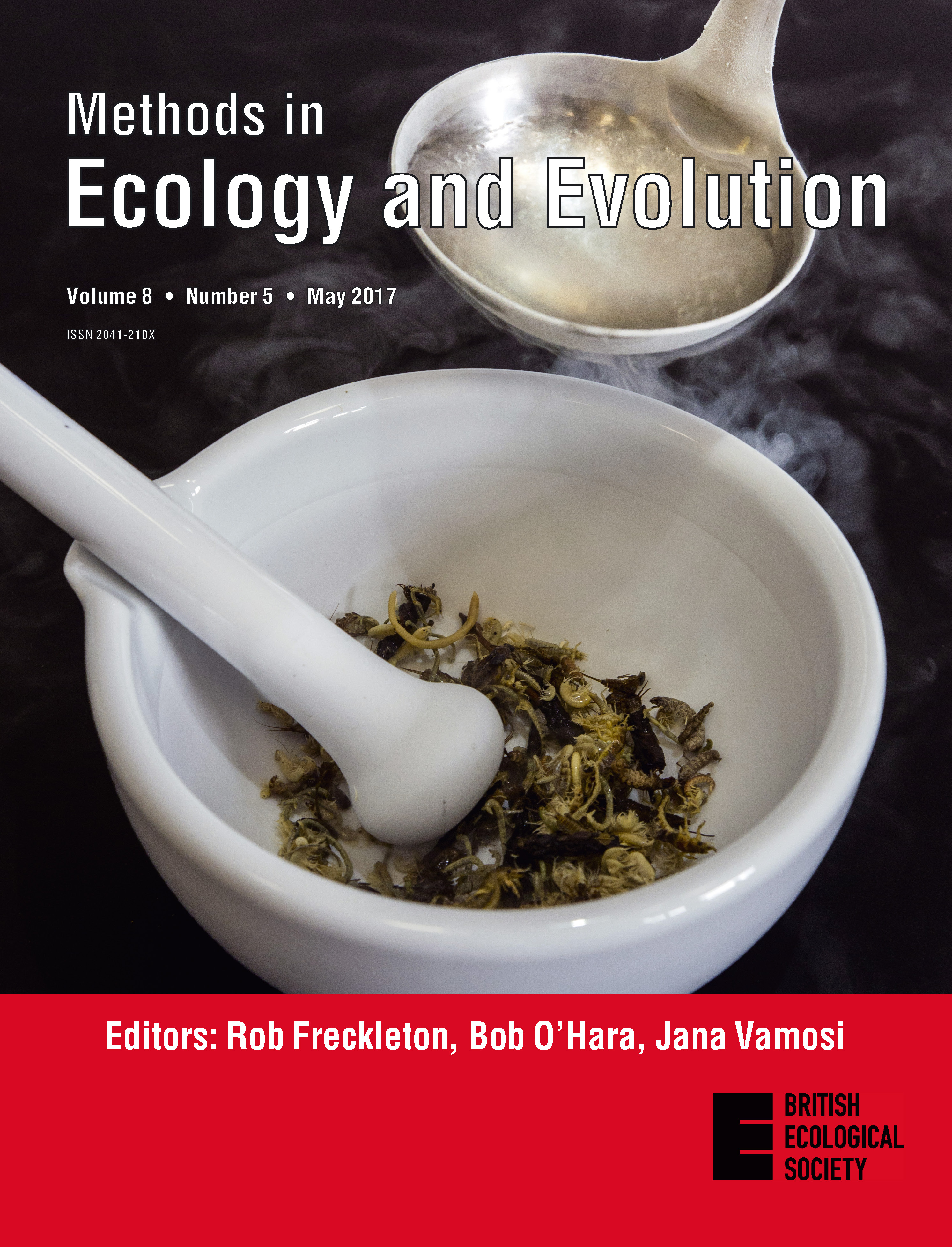
Issue 8.5 is now online!

The May issue of Methods is now online!

This issue contains three Applications articles and two Open Access articles. These five papers are freely available to everyone, no subscription required.

MatlabHTK: A software interface to a popular speech recognition system making it possible for non-experts to implement hidden Markov models for bioacoustic signal processing.

 PrimerMiner: The R package PrimerMiner batch downloads DNA barcode gene sequences from BOLD and NCBI databases for specified target taxonomic groups and then applies sequence clustering into operational taxonomic units to reduce biases introduced by the different number of available sequences per species.

 BarcodingR: An integrated software package that provides a comprehensive implementation of species identification methods, including artificial intelligence, fuzzy-set, Bayesian and kmer-based methods, that are not readily available in other packages.

Continue reading “Issue 8.5”

Digitizing Historical Land-use Maps with HistMapR

Habitat destruction and degradation represent serious threats to biodiversity, and quantification of land-use change over time is important for understanding the consequences of these changes to organisms and ecosystem service provision. Historical land-use maps are important for documenting how habitat cover has changed over time, but digitizing these maps is a time consuming process. HistMapR is an R package designed to speed up the digitization … Continue reading Digitizing Historical Land-use Maps with HistMapR

What Can Penguins Tell Us About Mitochondria? And Vice-Versa!

Post provided by Antoine Stier

Why on earth would someone try to combine field ornithology and mitochondrial biology? They’re so different! However, as I have a general background in both ecology and physiology, I am deeply convinced that physiology can help us to better understand ecology. I also see ways that ecology can help us to better understand physiological processes.

Admittedly, my memories from lectures on the mitochondrial electron transport chain are a little fuzzy – many ecologists and evolutionary biologists might feel the same way. Yet, I discovered the importance of getting over this first negative feeling when realizing the importance of mitochondrial function in shaping both ecological and evolutionary processes. Continue reading “What Can Penguins Tell Us About Mitochondria? And Vice-Versa!”

When Measuring Biodiversity, Do Individuals Matter?

Post provided by Samuel RP-J Ross

Close up of a black-capped babbler (Pellorneum capistratum), one of the species included in our study.
Close up of a black-capped babbler (Pellorneum capistratum), one of the species in our study.

Our newly-developed method simulates intraspecific trait variation when measuring biodiversity. This gives us an understanding of how individual variation affects ecosystem processes and functioning. We were able to show that accounting for within-species variation when measuring functional diversity can reveal details about ecological communities which would otherwise remain unseen. Namely, we found a negative impact of selective-logging on birds in Borneo when accounting for intraspecific variation which we could not detect when ignoring intraspecific variation.

Why Biodiversity Matters

Biodiversity is important for many reasons. One of the main reasons is its contribution to the range of goods and services provided by ecosystems (i.e. ecosystem services) that we can take advantage of, such as natural food resources or climatic regulation. It’s generally believed that biodiversity contributes to these services by increasing and maintaining ‘ecosystem functioning’ – often defined as the rate at which ecosystems are turning input energy (e.g. sunlight) into outputs (e.g. plant biomass). Continue reading “When Measuring Biodiversity, Do Individuals Matter?”

Capturing the Contribution of Rare and Common Species to Turnover: A Multi-Site Version of Generalised Dissimilarity Modelling

Post provided by Guillaume Latombe and Melodie A. McGeoch

Understanding how biodiversity is distributed and its relationship with the environment is crucial for conservation assessment. It also helps us to predict impacts of environmental changes and design appropriate management plans. Biodiversity across a network of local sites is typically described using three components:

  1. alpha (α) diversity, the average number of species in each specific site of the study area
  2. beta (β) diversity, the difference in species composition between sites
  3. gamma (γ) diversity, the total number of species in the study area.
Two tawny frogmouths, a species native to Australia. ©Marie Henriksen.

Despite the many insights provided by the combination of alpha, beta and gamma diversity, the ability to describe species turnover has been limited by the fact that they do not consider more than two sites at a time. For more than two sites, the average beta diversity is typically used (multi-site measures have also been developed, but suffer shortcomings, including difficulties of interpretation). This makes it difficult for researchers to determine the likely environmental drivers of species turnover.

We have developed a new method that combines two pre-existing advances, zeta diversity and generalised dissimilarity modelling (both explained below). Our method allows the differences in the contributions of rare versus common species to be modelled to better understand what drives biodiversity responses to environmental gradients. Continue reading “Capturing the Contribution of Rare and Common Species to Turnover: A Multi-Site Version of Generalised Dissimilarity Modelling”