Making the Most of Volunteer Data: Counting the birds and more…

Post provided by Rob Robinson

It’s 6am on a warm spring morning and I’m about to visit the second of my Breeding Bird Survey1 sites. Like 2,500 other volunteers in the UK, twice a year I get up early to record all the birds I see or hear on the two transects in my randomly selected 1km square. Each year I look forward to these mornings almost as much for the comparisons as the actual sightings. Will there be more or fewer sightings of our summer migrants this year? How will numbers in this rolling Norfolk farmland stack up against those I see in urban, central Norwich?
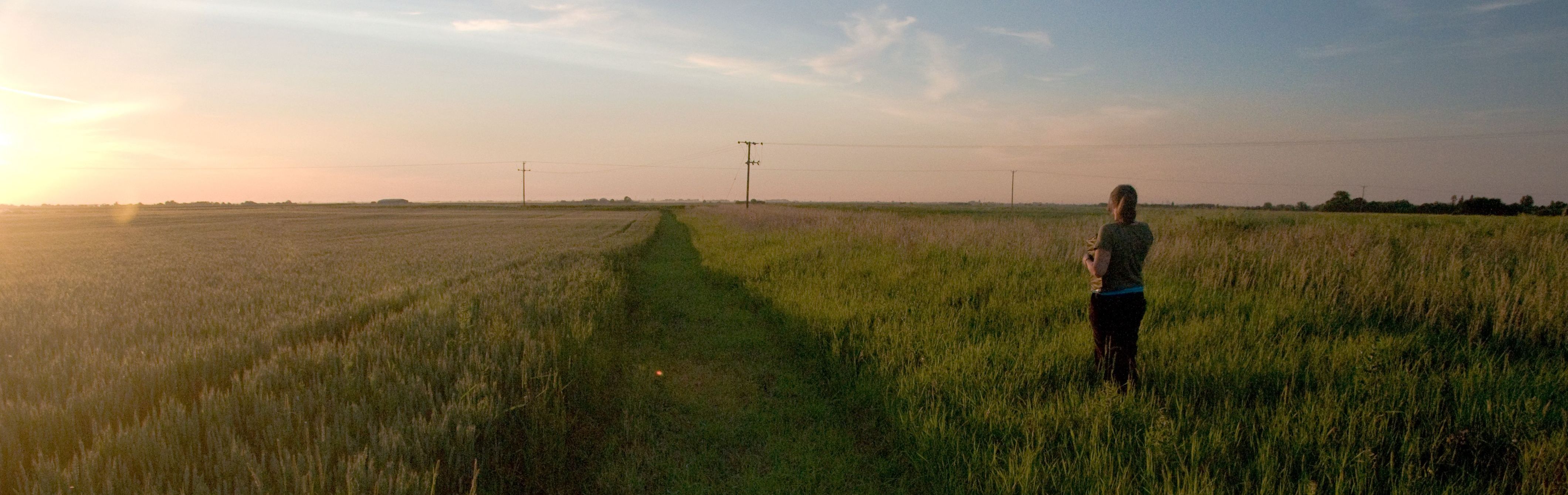
Dawn bird survey in arable farmland. © Rob Robinson/BTO
Dawn bird survey in arable farmland. © Rob Robinson/British Trust for Ornithology (BTO)

The importance of demography

But simply recording these changes is not enough; we need to understand why they occur if action is to be taken. This requires us to quantify the demographic rates (survival, productivity and movements) that underlie them, which in turn requires samples of marked individuals. Simply counting individuals is not enough. Continue reading “Making the Most of Volunteer Data: Counting the birds and more…”

Accompanying Marine Mammals into the Abyss: The Benefits of Electronic Tag Data for Undersea Tracking

Post provided by Christophe Laplanche, Tiago Marques and Len Thomas

1km Deep

Most marine mammal species spend the majority of their lifetime at sea… underwater. Some species (like sperm whales, beaked whales, and elephant seals) can go routinely as deep as 1000m below sea level. To mammals like us, these incredible depths seem uninhabitable. It’s cold, dark, under high pressure (100kg/cm²) and 1km from air! Yet deep-diving marine mammals thrive there and have colonized every deep ocean on the planet. They have developed amazing capabilities for that purpose – including efficient swimming, an advanced auditory system, sonar (in some cases), thermal insulation, extreme breath holding abilities and resistance to high pressure.

How is that possible?

Spending most of their time at depth makes them quite difficult to study. And we have a lot of questions to ask them. How do they balance swimming cost versus food intake? Do they forage cooperatively, in groups? For those with sonar, how does it work? With increasing human activities (oil exploration, military sonar, sea transport, fishing etc.) an important new question arises: how do they cope with us?

Researchers tagging a Cuvier's beaked whale with a DTAG sound tag (soundtags.st-andrews.ac.uk) in the Ligurian Sea (© T. Pusser)
Researchers tagging a Cuvier’s beaked whale with a DTAG sound tag (soundtags.st-andrews.ac.uk) in the Ligurian Sea (© T. Pusser)

Continue reading “Accompanying Marine Mammals into the Abyss: The Benefits of Electronic Tag Data for Undersea Tracking”

Progress and Future Directions for Passive Acoustic Monitoring: Listening Out for New Conservation Opportunities

Post provided by Ammie Kalan (Post-doctoral researcher at the Max Planck Institute for Evolutionary Anthropology, Department of Primatology)

A Primate Call in a Forest is like a ‘Needle in a Haystack’

An ARU powered by solar energy recording in the Taï national park, Côte d’Ivoire. ©Ammie Kalan
A solar-powered ARU recording in the Taï national park, Côte d’Ivoire.
©Ammie Kalan

Finding a call of a particular primate species within hours and hours of audio recordings of a forest is no easy task; like finding a ‘needle in a haystack’ so to speak. Automated acoustic monitoring relies on the ability of researchers to easily locate and isolate acoustic signals produced by species of interest from all other sources of noise in the forest, i.e. the background noise. This can be much harder than it sounds. Think about whenever you have to use any kind of voice recognition system: seeking out a quiet room will greatly improve the chances you are understood by the robot-like voice on the other end of the phone. If you ever set foot in a rainforest the first thing you’ll notice is that it is anything but quiet. In fact characterizing and quantifying soundscapes has become a marker for the complexity of the biodiversity present in a given environment.

Primate monitoring programmes can learn a great deal from cetacean research where Passive Acoustic Monitoring (PAM) is the norm (since individuals are rarely observable visually). Research on bats and birds can provide excellent examples to follow as well. Automated algorithm approaches including machine learning techniques, spectral cross-correlation, Gaussian mixture models, and random forests have been used in these fields to be able to detect and classify audio recordings using a trained automated system. Such automated approaches are often investigated for a single species but impressive across-taxa efforts have also been initiated within a framework of real-time acoustic monitoring. Implementing these in other research fields could lead to significant advances. Continue reading “Progress and Future Directions for Passive Acoustic Monitoring: Listening Out for New Conservation Opportunities”

The DOs and DON’Ts of Selecting Preferred Reviewers

Like many journals, Methods in Ecology and Evolution asks authors to submit a list of preferred reviewers along with their manuscript. This can be a difficult task and is often one that is overlooked or rushed when submitting. However, this list can be very important in the peer review process.

Why Do We Need Preferred Reviewers?

©Nic McPhee
©Nic McPhee

There are a number of reasons that we ask authors to provide preferred reviewers. These suggestions can be extremely useful in a number of situations. For example, if the Associate Editor is struggling to find referees for a paper, the preferred reviewers become a very valuable resource. Not only are they potential reviewers, but if they are unable to review the paper they can suggest other people who might be able to.

As Methods is a generalist journal, sometimes papers are submitted that do not fit perfectly into the areas of expertise of our Associate Editors. In cases such as these, the preferred reviewers can be a wonderful starting point for the reviewer search. Providing the Editors with a good list of experts in the subject (who they may not know off the top of their head) can make the peer review process quicker and easier for everyone involved.

While Editors are by no means required or obliged to choose the reviewers that authors suggest, the list can often be a source of inspiration. If the Editor chooses not to invite any of the preferred reviewers, they may use the suggestions to try to find people with similar expertise.

Providing a good list of preferred reviewers can speed up the peer review process and make it a much less stressful experience. So, what makes a preferred reviewer list good or bad? The DOs and DON’Ts below should help you to suggest the right reviewers for your paper. Continue reading “The DOs and DON’Ts of Selecting Preferred Reviewers”

Issue 6.10

Issue 6.10 is now online!

The October issue of Methods is now online!

This month’s issue contains two Applications articles and one Open Access article, all of which are freely available.

letsR: A package for the R statistical computing environment, designed to handle and analyse macroecological data such as species’ geographic distributions and environmental variables. It also includes functions to obtain data on species’ habitat use, description year and current as well as temporal trends in conservation status.

Cleaning Oil from Seabirds: The authors assess the efficacy of sea water as an alternative to fresh water for cleaning oil from seabirds’ feathers. Results indicate that for oiled feathers, a sea water wash/rinse produced clean, low BAI/unclumped feathers with minimal particulate residue.

Stefano Canessa et al. provide this month’s only Open Access article. In ‘When do we need more data? A primer on calculating the value of information for applied ecologists‘ the authors guide readers through the calculation of Value of Information (VoI) using two case studies and illustrate the use of Bayesian updating to incorporate new information. Collecting information can require significant investments of resources; VoI analysis assists managers in deciding whether these investments are justified. The authors also wrote a blog post on VoI which you can find here.

Our October issue also features articles on Niche Modelling, Population Ecology, Spatial Ecology, Conservation, Monitoring and much more. Continue reading “Issue 6.10”

New Associate Editors

Over the next few weeks we will be welcoming three new Associate Editors to Methods in Ecology and Evolution. Susan Johnston (University of Edinburgh, UK) became a member of the Associate Editor Board on Monday 5 October. She will be joined on 19 October by Natalie Cooper (Natural History Museum, London, UK) and finally by Luísa Carvalheiro (University of Brasília, Brazil) on 2 November. You can find out … Continue reading New Associate Editors

Issue 6.9

Issue 6.9 is now online!

The September issue of Methods is now online!

This month’s issue contains one Applications article and two Open Access articles, all of which are freely available.

POPART: An integrated software package that provides a comprehensive implementation of haplotype network methods, phylogeographic visualisation tools and standard statistical tests, together with publication-ready figure production. The package also provides a platform for the implementation and distribution of new network-based methods.

Michalis Vardakis et al. provide this month’s first Open Access article. In ‘Discrete choice modelling of natal dispersal: ‘Choosing’ where to breed from a finite set of available areas‘ the authors show how the dispersal discrete choice model can be used for analysing natal dispersal data in patchy environments given that the natal and the breeding area of the disperser are observed. This model can be used for any species or system that uses some form of discrete breeding location or a certain degree of discretization can be applied.

Our September issue also features articles on Animal Movement, Population Dynamics, Statistical Ecology, Biodiversity, Conservation Biology and much more. Continue reading “Issue 6.9”

A new tool based on microbial interactions to analyze bipartite networks

Below is a press release about the Methods paper ‘BiMat: a MATLAB package to facilitate the analysis of bipartite networks‘ taken from the Pompeu Fabra University.

The Georgia Institute of Technology has created, together with the Pompeu Fabra University and the University of Canterbury, a new open-access and open-source tool for the study of bipartite networks

The team led by Joshua S. Weitz, Associate Professor at the School of Biology from the Georgia Institute of Technology, has developed BiMat: an open source MATLAB® package for the study of the structure of bipartite ecological networks inspired by real problems in microbiology and with broader applications. Cesar O. Flores, researcher at the School of Physics of the same institute, describes this new tool in an article published in the journal Methods in Ecology and Evolution. Sergi Valverde, Visiting Professor at the Complex Systems Lab from the Pompeu Fabra University, and Timothée Poisot, from the School of Biological Sciences of the University of Canterbury, are involved in the project. Continue reading “A new tool based on microbial interactions to analyze bipartite networks”

Mainz scientists develop new soil moisture sensor

Below is a press release about the Methods paper ‘Development and calibration of a novel sensor to quantify the water content of surface soils and biological soil crusts‘ taken from the Max Planck Institute.

Innovative measuring device enables the water content of biological soil crusts to be measured for the first time.

Biological soil crusts comprising lichens, algae and mosses play an important role in the earth’s ecosystems. They fix carbon dioxide and nitrogen while giving off significant amounts of the greenhouse gas nitrous oxide. Information on soil moisture is of vital importance to investigate their fixation and release processes and to understand them in detail. Previously, no sensor existed that could measure the water content in the top millimeters of the soil with sufficient accuracy. This gap has now been closed by a new development of Bettina Weber and her colleagues at the Max Planck Institute for Chemistry in Mainz, as can be read online in the ‘Early View’ section of the Methods in Ecology and Evolution Wiley Online Library. They have managed to construct an appropriate soil moisture sensor, which delivers reliable data, as well as being cost-effective and flexible to use.

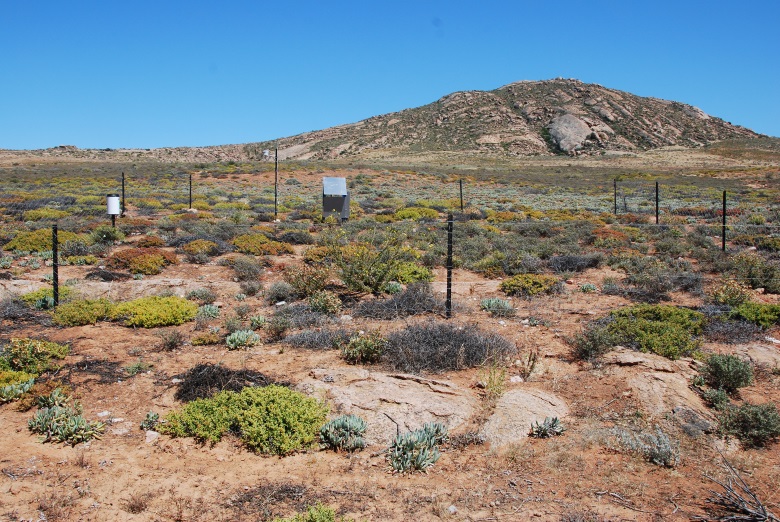
The site, where the soil moisture sensors are installed as a compound of climate stations, is protected from grazing animals by means of a fence. ©Bettina Weber

Biological soil crusts consist of a community of cyanobacteria, lichens, algae and bryophytes, together with fungi, bacteria, and archaea, which grow in the upper three to five millimeters of the soil, forming a hardened layer. They exist in dry regions throughout the world and occupy approximately 20 million square meters, which is almost as large as the surface of South America. All the organisms in biological soil crusts are poikilohydric, which means that they are only active when the soil is sufficiently moist, but survive in an inactive state under dry conditions. Continue reading “Mainz scientists develop new soil moisture sensor”

National Wildlife Day 2015

Happy National Wildlife Day everyone!

Today is 10th National Wildlife Day. As we have done for a few awareness days this year (Bats, Biodiversity and Bees so far) we are marking the day by highlighting some of our favourite Methods in Ecology and Evolution articles on the subject. Obviously ‘wildlife’ is a pretty big topic, so we have narrowed our focus (slightly) to monitoring wildlife (with one or two additional papers that we didn’t want to leave out).

This list is certainly not exhaustive and there are many more wonderful articles on these topics in the journal. You can see more of them on the Wiley Online Library.

If you would like to learn more about National Wildlife Day, you may wish to visit the organisation’s website, follow them on Twitter and Facebook or check out today’s hashtag: #NationalWildlifeDay.

Without further ado though, please enjoy our selection of Methods articles for National Wildlife Day:

Integrating Demographic Data

Our National Wildlife Day celebration begins with an article from our EURING Special Feature. Robert Robinson et al. present an approach which allows important demographic parameters to be identified, even if they are not measured directly, in ‘Integrating demographic data: towards a framework for monitoring wildlife populations at large spatial scales‘. Using their approach they were able to retrieve known demographic signals both within and across species and identify the demographic causes of population decline in Song Thrush and Lawping.


Continue reading “National Wildlife Day 2015”