Flawed Method puts Tiger Rise in Doubt

The following is a press release about the Methods paper ‘An examination of index-calibration experiments: counting tigers at macroecological scales‘ taken from the University of Oxford News and Events page:

Flaws in a method commonly used in censuses of tigers and other rare wildlife put the accuracy of such surveys in doubt, a new study suggests.

A team of scientists from theNH_QT_K2934024 University of Oxford, Indian Statistical Institute, and Wildlife Conservation Society exposes, for the first time, inherent shortcomings in the ‘index-calibration’ method that means it can produce inaccurate results. Amongst recent studies thought to be based on this method is India’s national tiger survey (January 2015) which claimed a surprising but welcome 30 percent rise in tiger numbers in just four years.
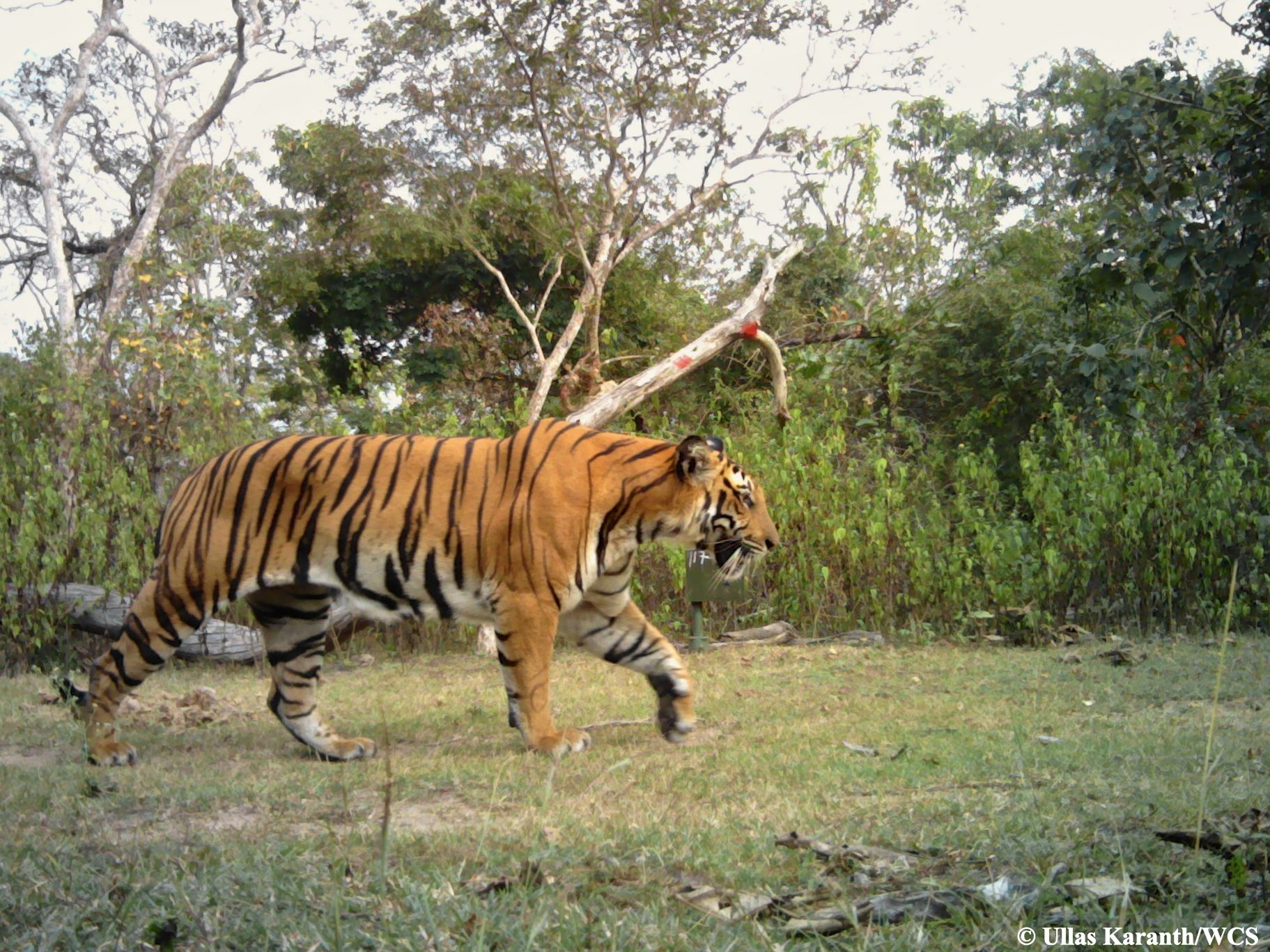
The team urges conservation practitioners to guard against these sources of error, which could mislead even the best conservation efforts, and suggests a constructive way forward using alternative methods of counting rare animals that avoid the pitfalls of the index-calibration approach.

A report of the research is published this week in the journal Methods in Ecology and Evolution.

Continue reading “Flawed Method puts Tiger Rise in Doubt”

Issue 6.2

Issue 6.2 is now online! The February issue of Methods is now online! This month we have two applications articles. Both are free to access, no subscription required. – NLMpy: A PYTHON software package for the creation of neutral landscape models (there are also two videos associated to this paper on our Youtube channel) – BAT – an R package for the measurement and estimation of … Continue reading Issue 6.2

BES 2015 Annual Symposium: Demography Beyond the Population

Demographic methods and population modeling have been popular tools amongst ecologists for a long time. Recent advances, some of which have been written about in the pages of Methods, have allowed these approaches to be applied to a wide range of questions, helping to integrate population-level processes more broadly into ecological research.

Continue reading “BES 2015 Annual Symposium: Demography Beyond the Population”

Thank you to our 2014 Reviewers

2014 was a wonderful year for Methods in Ecology and Evolution. We had a record number of submissions and we published some fantastic articles (if we do say so ourselves). None of this would have been possible though without the work of the people who generously provide reviews for the journal. Whether you reviewed one paper or twenty, we really appreciate your time and effort. … Continue reading Thank you to our 2014 Reviewers

Issue 6.1

Issue 6.1 is now online! Our first issue of 2015 is now online! This month we include one freely available Applications article: – A biochemical approach for identifying plastics exposure in live wildlife We also have two wonderful Open Access papers, ‘Evaluation and management implications of uncertainty in a multispecies size-structured model of population and community responses to fishing‘ by Robert B. Thorpe, Will J. … Continue reading Issue 6.1

NLMpy: a python software package for the creation of neutral landscape models

In this video Thomas Etherington shows how to use the NLMpy Python package to create neutral landscape models.  The video demonstrates how the paper’s Supporting Information documentation, Python scripts, and GIS data can be used to create a the example neutral landscape models that are shown in the paper. Recognising that some ecologists may not be very familiar with Python, the authors have also created … Continue reading NLMpy: a python software package for the creation of neutral landscape models

Issue 5.11

Issue 5.11 is now online! This month we include 2 freely available application articles: – ENMeval: An R package for conducting spatially independent evaluations and estimating optimal model complexity for Maxent ecological niche models – enaR: An r package for Ecosystem Network Analysis We also have 4 interesting open access papers, ‘The accuracy of Fastloc-GPS locations and implications for animal tracking‘ by Antoine Dujon et … Continue reading Issue 5.11