Rainbow Research: Nature

Post provided by Natalie Yoh

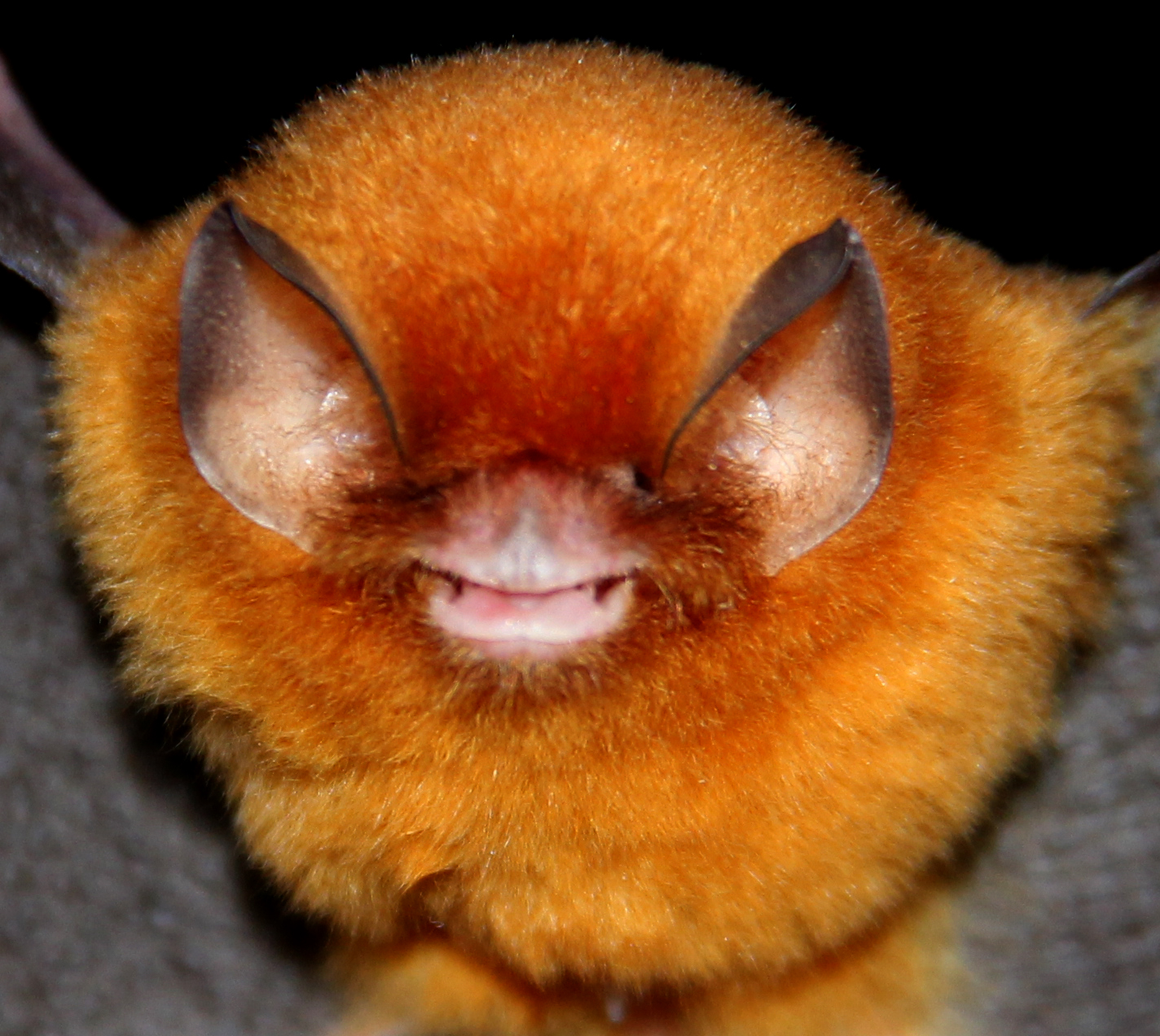
To celebrate UK Pride Month, the British Ecological Society journal blogs are posting a ‘Rainbow Research’ series, which aims to promote visibility of STEM researchers from the LGBTQ+ community. Each post will be connected to a theme represented by one of the colours shown in the Progress Pride flag. In this post, Natalie Yoh discusses their bat conservation research under the flag theme of ‘Nature’.

Continue reading “Rainbow Research: Nature”

FuzzyQ: The Commonness of Rarity

Post provided by Juan A. Balbuena

Sea of Azov. Credit: Sergey Sorokin.

Most species in ecological communities are rare, whereas only a few are common. This distributional paradox has intrigued ecologists for decades, but the interpretation of species abundance distributions remains elusive. In this blog post, lead author Juan A. Balbuena discusses how their recently published Methods in Ecology and Evolution paper and R package ‘Fuzzy quantification of common and rare species in ecological communities (FuzzyQ)’, is a potentially valuable analytical tool in community ecology and conservation biology.

Continue reading “FuzzyQ: The Commonness of Rarity”

The quest for a sharp definition of function in biological networks

Robert May Prize Shortlisted Article

Post provided by Alberto Pascual-García

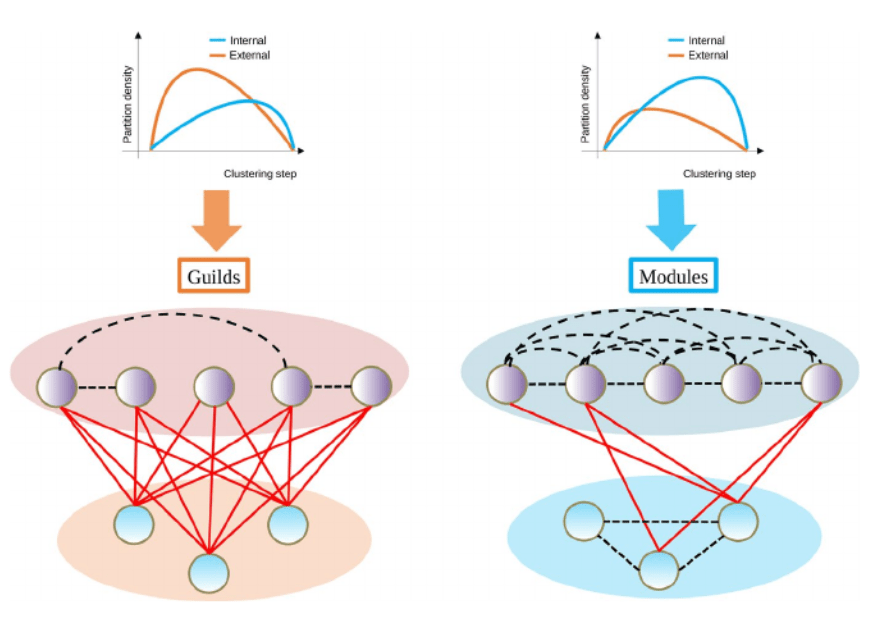
Each year Methods in Ecology and Evolution awards the Robert May Prize to the best paper in the journal by an author at the start of their career. Alberto Pascual has been shortlisted for his article ‘functionInk: An efficient method to detect functional groups in multidimensional networks reveals the hidden structure of ecological communities’. In this post, Alberto discusses the application of the functionInk (functional linkage) package for distinguishing modules and guilds from large multidimensional networks.

Continue reading “The quest for a sharp definition of function in biological networks”

International Bat Appreciation Day: Giving thanks to the real superheroes of the sky

Post provided by Chloe Robinson

Mexican greater funnel-eared bat (Natalus mexicanus). Credit: Veronica Zamora-Gutierrez.

Bat Conservation International (BCI), founded in 1982, aims to conserve bats and their habitats through a combination of education, conservation, and research. Bats worldwide contribute towards controlling pests, create rich fertilizer for landowners, and pollinate fruit and flowers. BCI introduced International Bat Appreciation Day to increase awareness about bats and what they do for our environment.

In this post, associate editor Chloe Robinson will be summarising the various MEE published methods for bat monitoring and how technological developments have allowed us to further look and listen into the lives of these incredible creatures.

Continue reading “International Bat Appreciation Day: Giving thanks to the real superheroes of the sky”

A new evolutionary simulation R package sheds light on the metaphor of genomic islands of divergence

Robert May Prize Shortlisted Article

Post provided by Claudio S. Quilodrán and Ashley T. Sendell-Price

Nesting eggs of silvereyes (Zosterops lateralis). Heron Island, Australia. Picture: Erik Sandvik.

Each year Methods in Ecology and Evolution awards the Robert May Prize to the best paper in the journal by an author at the start of their career. Claudio S. Quilodrán has been shortlisted for his article ‘The multiple population genetic and demographic routes to islands of genomic divergence’. In this blog, Claudio and co-author Ashley T. Sendell-Price discuss how their paper came to be and how their individual‐based simulation can be used to explore the dynamics of diverging genomes.

Continue reading “A new evolutionary simulation R package sheds light on the metaphor of genomic islands of divergence”

The need to quantify complex shapes

Robert May Prize Shortlisted Article

Post provided by Arthur Porto

Credit: Kjetil Voje

Each year Methods in Ecology and Evolution awards the Robert May Prize to the best paper in the journal by an author at the start of their career. Arthur Porto has been shortlisted for his article ‘ML‐morph: A fast, accurate and general approach for automated detection and landmarking of biological structures in images’. In this blog, Arthur discusses how his paper came to be and describes development of the ML-morph pipeline.

Continue reading “The need to quantify complex shapes”

The next step for tagging insects: we can’t keep ignoring the impact

Robert May Prize Shortlisted Article

Post provided by Femke Batsleer

Digger wasp (Bembix rostrata). Credit: Femke Batsleer.

Each year Methods in Ecology and Evolution awards the Robert May Prize to the best paper in the journal by an author at the start of their career. Femke Batsleer has been shortlisted for her article ‘The neglected impact of tracking devices on arthropods‘. In this blog, Femke discusses how her paper came to be and the outcomes of the review.

Continue reading “The next step for tagging insects: we can’t keep ignoring the impact”

Unmasking Acoustic Indices

Post provided by Oliver Metcalf

Gould’s toucanet Selenidera gouldii display involves dancing, but also lots of vocalisation. Credit: Oliver Metcalf.

Acoustic indices are increasingly being used when analysing soundscapes to gain information on biodiversity. However, inconsistent results and lack of consensus on best practices has hampered their application in conservation and land‐use management contexts. In this post, Oliver Metcalf talks about his Methods in Ecology and Evolution article ‘Acoustic indices perform better when applied at ecologically meaningful time and frequency scales’, where he highlights the need to  calculate acoustic indices at ecologically appropriate time and frequency bins to reduce signal masking effects.

Continue reading “Unmasking Acoustic Indices”

Species association networks: a bridge between sciences

Robert May Prize Shortlisted Article

Post provided by Raphaëlle Momal

Powdery mildew on oak tree leaves is caused by the fungi Erysiphe alphitoides, which association network helps understanding the behaviour. Credit: Raphaëlle Momal.

Each year Methods in Ecology and Evolution awards the Robert May Prize to the best paper in the journal by an author at the start of their career. Raphaëlle Momal has been shortlisted for her article ‘Tree‐based inference of species interaction networks from abundance data’. In this blog, Raphaëlle discusses how her paper came to be and the applications of the R package developed in her study.

Continue reading “Species association networks: a bridge between sciences”

International Day of Forests: Generation Restoration

Post provided by Chloe Robinson

Credit: Food and Agriculture Organization of the United Nations.

Forests, across all ecozones and in all shapes and sizes, are essential for life on earth. Around 80% of the world’s land-based biodiversity call forests home and over 1 billion people, including more than 2,000 Indigenous cultures, rely on forests for food, shelter, energy and income. As with many other ecosystems, forests worldwide are under increasing threat from human activities, with the current rate of deforestation estimated at 13 million hectares per year.

Continue reading “International Day of Forests: Generation Restoration”