Being Certain about Uncertainty: Can We Trust Data from Citizen Science Programs?

Post provided by VIVIANA RUIZ GUTIERREZ

Citizen Science: A Growing Field

Thousands of volunteers around the world work on Citizen Science projects. ©GlacierNPS

As you read this, thousands of volunteers of all ages and backgrounds are collecting information for over 1,100 citizen science projects worldwide. These projects cover a broad range of topics: from volunteers collecting samples of the microbes in their digestive tracts, to tourists providing images of endangered species (such as tigers) that are often costly to survey.

The popularity of citizen science initiatives has been increasing exponentially in the past decade, and the wealth of knowledge being contributed is overwhelming. For example, almost 300,000 participants have submitted around 300 million bird observations from 252 countries worldwide to the eBird program since 2002. Amazingly, rates of submissions have exceeded 9.5 million observations in a single month! Continue reading “Being Certain about Uncertainty: Can We Trust Data from Citizen Science Programs?”

Getting Every Last Bit Out of Dives: Data Abstraction On-board Telemetry Tags

Post provided by THEONI PHOTOPOULOU, MIKE FEDAK, LEN THOMAS and JASON MATTHIOPOULOS

Animal Telemetry for Air-breathing Divers

CTD-SRDL Tags
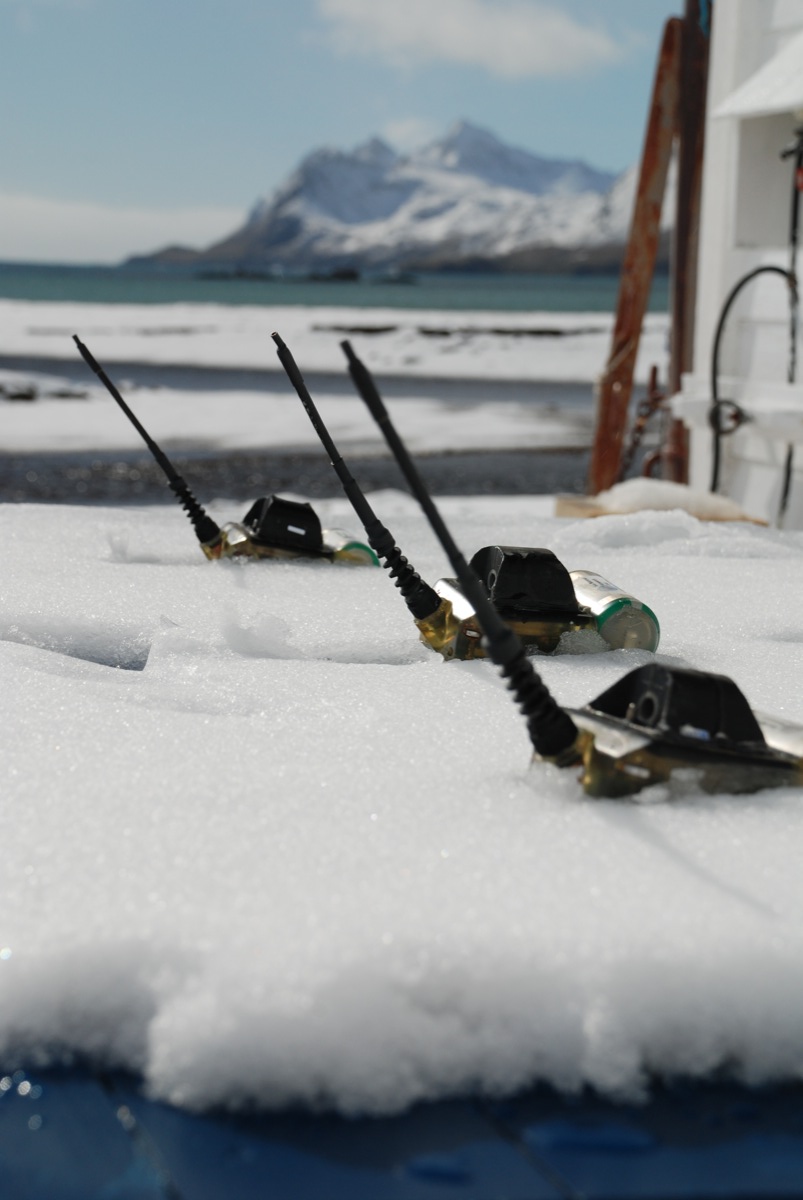
CTD-SRDL telemetry tags being primed for deployment. ©Theoni Photopoulou

Nowadays animal telemetry tags for air-breathing divers come in all shapes and sizes. In four short decades tags for diving animals have gone from prototypes like the one built by Jerry Kooyman for deployment on Weddell seals – which consisted of a kitchen timer and a roll of graph paper – to a multitude of sophisticated electronic devices, fit for just about any animal or purpose you can think of.

All this progress has meant we can collect more information than ever before and do so remotely. Nevertheless, the lives of most divers remain a well-kept secret. For tags that transmit what they collect (as opposed to those that store data until they’re retrieved), the transmission stage is usually the bottleneck. This has driven the development of energy and time efficient software and data processing.

For a tag like the conductivity-temperature-depth Satellite Relay Data Logger (CTD-SRDL) built by the Sea Mammal Research Unit Instrumentation Group at the University of St Andrews – which was designed to spend months at sea – the problem boils down to one thing. Data are collected at a high resolution on-board the tag amounting to 100kB daily, but only 1kB of this information (at best) can be transmitted to the ground station. Therefore in preparation for transmission, the data need to be chosen carefully, compacted and fitted into several satellite messages of fixed size to ensure that enough useful information is received. Each satellite message can hold up to 248bits of information. To give an idea of how limiting this is, consider that this sentence would (without compaction) take up 896bits! Continue reading “Getting Every Last Bit Out of Dives: Data Abstraction On-board Telemetry Tags”

Inferring Extinction: When is a Species as Dead as a Dodo?

Post provided by ELIZABETH BOAKES

The indisputably extinct Dodo (Raphus cucullatus). ©Ballista

A species is either extant or extinct – it exists or it does not exist. Black and white, a binary choice. Surely it should not be difficult to assign species to one of these two categories? Well, in practice it can be extremely challenging and a plethora of methods have been developed to deal with the problem.  This of course leads to a second challenge – which of the plethora should you use?! (More on this later…)

There are a few well-studied cases where we can assert extinction confidently. For example, the chances of the Dodo (Raphus cucullatus) having existed undetected for upwards of 300 years on an island now densely populated by humans are infinitesimally small. However, many extinctions are far harder to diagnose. Species typically become extremely rare before becoming extinct. If taxa are particularly cryptic or are found across a huge geographic range it is quite plausible that the few remaining individuals may exist undetected for decades. An extreme illustration of this is the 1938 discovery of Latimeria chalumnae, a deep-sea member of the Coelacanths, the entire order of which was believed to have become extinct 80 million years earlier! Continue reading “Inferring Extinction: When is a Species as Dead as a Dodo?”

Revealing Biodiversity on Rocky Reefs using Natural Soundscapes

Post Provided by SYDNEY HARRIS

The Biodiversity Struggle

Typical rocky reef habitat in northeast New Zealand, characterized by encrusting red algae and Kelp forest. ©Sydney Harris
Typical rocky reef habitat in north east New Zealand, characterized by encrusting red algae and Kelp forest. ©Sydney Harris

By now we’re all familiar with the global biodiversity crisis: increasing numbers of species extinct or at risk of extinction; widespread habitat loss and a seemingly endless set of political, logistical and financial obstacles hampering swift action for conservation. The international Convention on Biological Diversity (CBD) has set twenty global diversity targets, many of which require participating nations to conduct accurate and efficient monitoring to assess their progress and inform policy decisions. Governing bodies and organizations worldwide have agreed that immediate, efficient action is essential to preserving our planet’s increasingly threatened ecosystems.

But how? Diversity measurement techniques are a tricky business. Accurately recording diversity can be time-consuming, labor-intensive, expensive, invasive and highly susceptible to human error. Often these methods involve the employment of trained specialists to individually identify hundreds or even thousands of species, a process that can take many months to complete.

Marine habitats are particularly difficult to access because of the physical limitations of humans underwater, and are often flawed due to the influence of our presence on marine organisms. However, the oceans contain many of the world’s most diverse systems, and, despite the limitations of current methods, the need to monitor marine diversity is a top priority for the global conservation movement. Continue reading “Revealing Biodiversity on Rocky Reefs using Natural Soundscapes”

Demography and Big Data

Post provided by BRITTANY TELLER, KRISTIN HULVEY and ELISE GORNISH

Follow Brittany (@BRITTZINATOR) and Elise (@RESTORECAL) on Twitter

To understand how species survive in nature, demographers pair field-collected life history data on survival, growth and reproduction with statistical inference. Demographic approaches have significantly contributed to our understanding of population biology, invasive species dynamics, community ecology, evolutionary biology and much more.

As ecologists begin to ask questions about demography at broader spatial and temporal scales and collect data at higher resolutions, demographic analyses and new statistical methods are likely to shed even more light on important ecological mechanisms.

Population Processes

Midsummer Opuntia cactus in eastern Idaho, USA. © B. Teller.

Traditionally, demographers collect life history data on species in the field under one or more environmental conditions. This approach has significantly improved our understanding of basic biological processes. For example, rosette size is a significant predictor of survival for plants like wild teasel (Werner 1975 – links to all articles are at the end of the post), and desert annual plants hedge their bets against poor years by optimizing germination strategies (Gremer & Venable 2014).

Demographers also include temporal and spatial variability in their models to help make realistic predictions of population dynamics. We now know that temporal variability in carrying capacity dramatically improves population growth rates for perennial grasses and provides a better fit to data than models with varying growth rates because of this (Fowler & Pease 2010). Moreover, spatial heterogeneity and environmental stochasticity have similar consequences for plant populations (Crone 2016). Continue reading “Demography and Big Data”

On the Tail of Reintroduced Canada Lynx: Leveraging Archival Telemetry Data to Model Animal Movement

Post provided by FRANCES E. BUDERMAN

Animal Movement

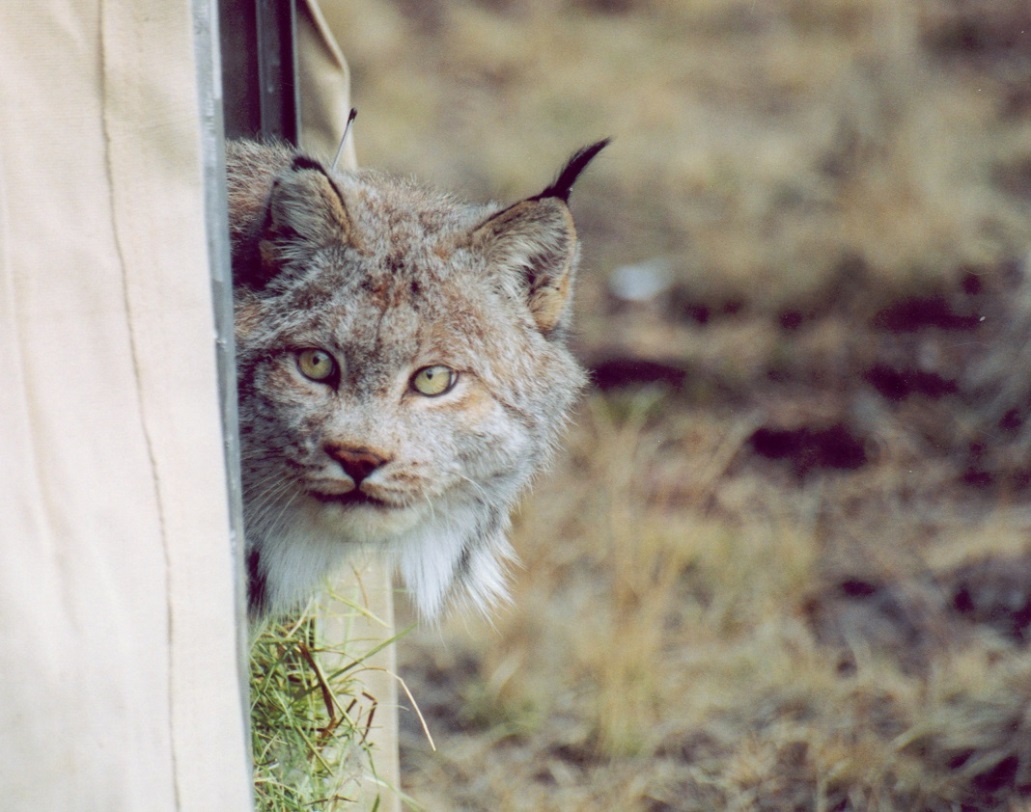
218 Canada lynx were reintroduced to the San Juan Mountains between 1999 and 2006 with VHF/Argos collars. © Colorado Parks and Wildlife

Animal movement is a driving factor underlying many ecological processes including disease transmission, extinction risk and range shifts. Understanding why, when and how animals traverse a landscape can provide much needed information for landscape-level conservation and management practices.

The theoretical underpinnings for modelling animal movement were developed about seventy years ago. Technological developments followed, with radio-collars initially deployed on large mammals such as grizzly bears and elk. We can now monitor animal movement of a wide variety of species, including those as small as a honeybee, at an unprecedented temporal and spatial scale.

However, location-based data sets are often time consuming and costly to collect. For many species, especially those that are rare and elusive, pre-existing data sets may be the only viable data source to inform management decisions. Continue reading “On the Tail of Reintroduced Canada Lynx: Leveraging Archival Telemetry Data to Model Animal Movement”

The Smart Nest Box: Stepping into the World of Cavity-Dwelling Animals

Post provided by MARKÉTA ZÁRYBNICKÁ

The SNBox in the field

Seeing is better than being told, isn’t it? In recent years, video recording and analysis has become a successful non-invasive method for collecting biological data on many species. At Project Smart Nestbox (a collaborative project between the Czech University of Life Science Prague and the Czech Technical University in Prague) we decided to push these methods forward to allow for the long term surveillance of cavity or box-nesting species. We developed and tested the Smart Nest Box (SNBox) – a system that overcomes some of the usual limitations found in video recording fieldwork: data storage capacity, power source and insufficient light. As it’s National Nest Box Week in the UK, Methods in Ecology and Evolution have asked me to write a blog post about it. Continue reading “The Smart Nest Box: Stepping into the World of Cavity-Dwelling Animals”

Safeguarding Sturgeon: Satellite measurements of ocean color and temperature help researchers predict sturgeon locations

Below is a press release about the Methods paper ‘Dynamic seascapes predict the marine occurrence of an endangered species: Atlantic Sturgeon Acipenser oxyrinchus oxyrinchus‘ taken from the University of Delaware.

New clues are helping University of Delaware researchers develop an online map to help Mid-Atlantic fishermen avoid catching Atlantic sturgeon.

Researchers at the University of Delaware are one step closer to developing an online map that would help Mid-Atlantic fishermen avoid catching Atlantic sturgeon.

The research team, led by Matthew J. Oliver, Patricia and Charles Robertson Professor of Marine Science and Policy, found they could make useful predictions about sturgeon locations using satellite measurements of ocean color and temperature. They reported their findings Feb. 3 in the journal Methods in Ecology and Evolution.

The researchers believe this to be an important step toward helping both fishermen and the vulnerable fish. If they can reliably predict where sturgeon or other “species of concern” are congregating or migrating, they can relay this information to fishermen through a daily fishing forecast, similar to a weather forecast. Continue reading “Safeguarding Sturgeon: Satellite measurements of ocean color and temperature help researchers predict sturgeon locations”

Celebrating Wetlands Today, Protecting Them for Tomorrow

Post Provided by JULIA CHERRY, UNIVERSITY OF ALABAMA

Today is World Wetlands Day, a day to raise awareness about wetlands and the many ecosystem services that they provide. Wetlands are broadly defined as areas saturated or inundated with water for periods long enough to generate anaerobic soils and support water-loving plants. They include bogs, swamps, floodplain forests, marshes and mangroves.

Some may wonder why these habitats deserve their own day of recognition, as wetlands can evoke images of the soggy, unpleasant wild places– the “ghast pools” of Dante’s Divine Comedy or the “waste places” of Beowulf. Unfortunately, these descriptions overshadow the true beauty and value of the world’s diverse wetland ecosystems. For those of us dedicated to researching and enjoying wetlands, these areas are worth appreciating every day of the year for numerous reasons.

In honor of World Wetlands Day, I will make the case for wetlands and highlight an example of a new research tool designed to understand how coastal wetlands may respond to sea-level rise.

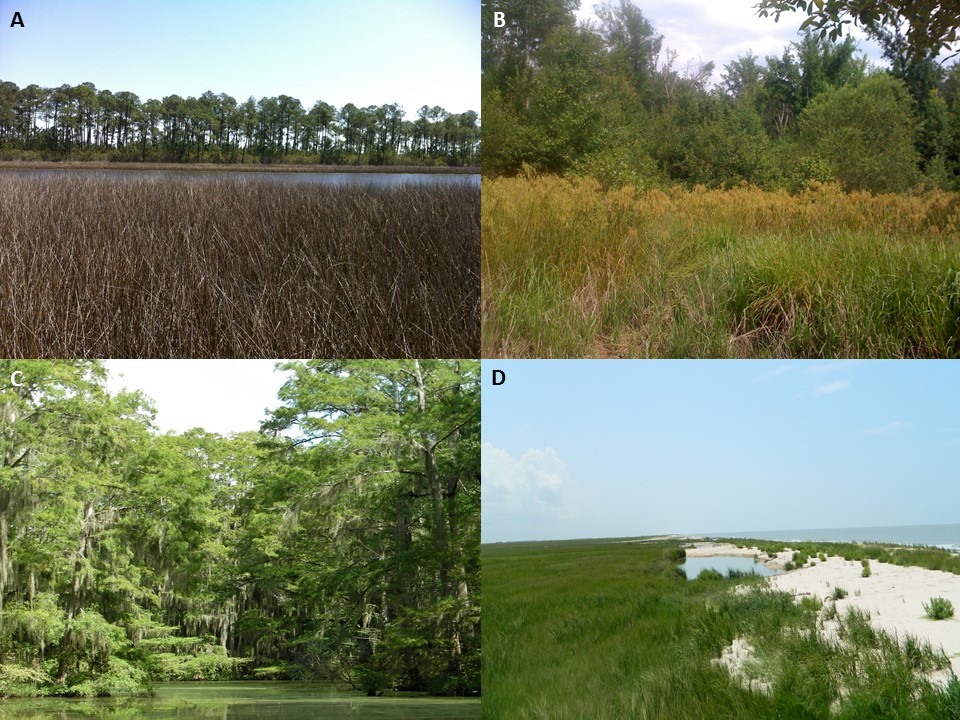
Wetland habitats, including (A) a marine-dominated coastal marsh and maritime pine island complex (Grand Bay National Estuarine Research Reserve, Mississippi, USA), (B) a freshwater floodplain marsh (Hale County, Alabama, USA), (C) a cypress-tupelo swamp (Perry Lakes, Alabama, USA), and (D) a Gulf of Mexico salt marsh (Rockefeller Wildlife Refuge, Louisiana, USA). ©Julia Cherry

Continue reading “Celebrating Wetlands Today, Protecting Them for Tomorrow”

Models, Practical Management and Invasive Critters

POST PROVIDED BY NICK BEETON

How Simple Should a Model Be?

Should scientists make simplifying assumptions in complex models? This is a debate as old as the hills, and one that everyone seems to have strong opinions about. Some argue that because even the most simplistic model based on the best available estimates is objective, it is better than relying solely on “gut feelings”. In such a model, estimates based on expert opinion or simplifying assumptions can at least be included in a transparent fashion. Others argue that such an approach can miss important emergent properties as a result of missed complexity, making any results misleading and potentially even worse than not using a model at all.

Models to Support Management: Invasive Horses, Cats and Deer

Wild horses in the Australian alps. © Regina Magierowski
Wild horses in the Australian Alps. © Regina Magierowski

Both sides are right in their own way, of course, but perhaps unusually (as an applied mathematics graduate working in ecology), I’ve found myself leaning towards the former view as my career progresses. During my last postdoc, I was confronted with a large, vexing problem: the incursion of wild horses in the Australian Alps. The species was already impacting bogs and wetlands, overpopulated in some places to the point of starvation, and spreading to previously pristine areas of National Park. The issue was (and still is) highly contentious, with activists applying considerable political pressure against lethal forms of control. Knowledge of population densities across the horses’ range was patchy and ability to predict their likely movements equally unreliable. Even predicting their demographics was difficult, with most values for population growth rates conflicting and spatially variable. Continue reading “Models, Practical Management and Invasive Critters”