Movement Ecology: Stepping into the Mainstream

Post provided by Theoni Photopoulou

“Movement is the glue that ties ecological processes together”
from Francesca Cagnacci et al. 2010
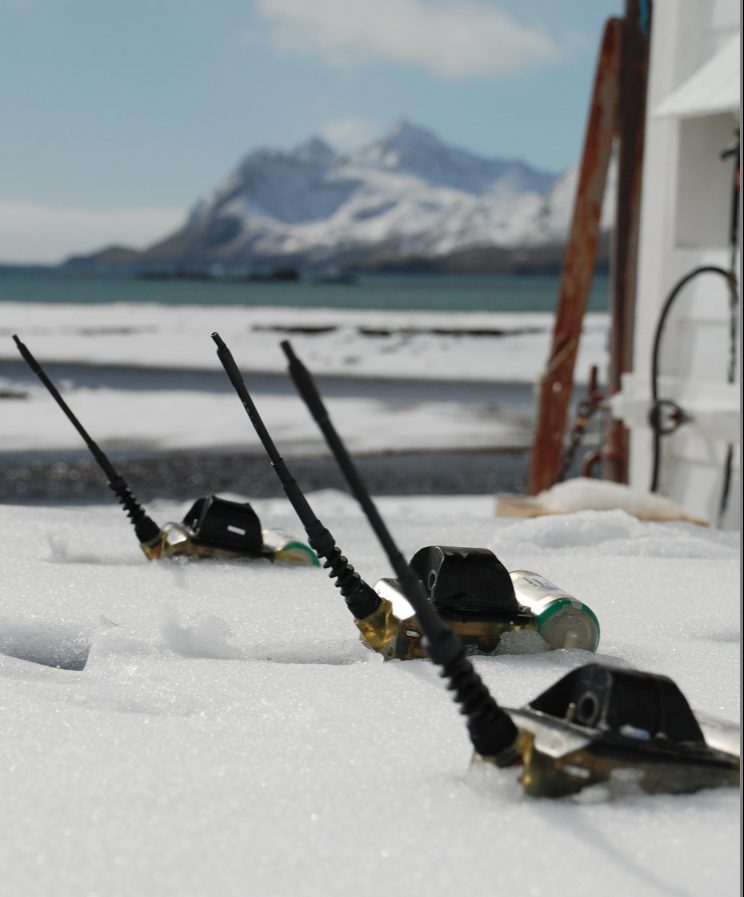
CTD-SRDL telemetry tags being primed for deployment. ©Theoni Photopoulou

Movement ecology is a cross-disciplinary field. Its main aim is to quantitatively describe and understand how movement relates to individual and population-level processes for resource acquisition and, ultimately, survival. Today the study of movement ecology hinges on two 21st century advances:

  1. Animal-borne devices/tags (biologging science, Hooker et al., 2007) and/or remote sensing technology to quantify movement and collect data from remote or otherwise challenging environments
  2. Computational power sufficient to manipulate, process and analyse substantial volumes of data

Although datasets often involve small numbers of individuals, each individual can have thousands – sometimes even millions – of data points associated with it. Study species have tended to be large birds and mammals, due to the ease of tag attachment. However, the trend for miniaturisation of tags and the development of remote detection technologies (such as radar, e.g. Capaldi et al., 2000), have allowed researchers to track and study ever smaller animals. Continue reading “Movement Ecology: Stepping into the Mainstream”


We Shall Overcome, Someday! Tips for Breaking Academia’s Glass Ceiling

Post provided by Nibedita Mukherjee

Breaking academia’s glass ceiling

Women in academia are special. This isn’t because of their abundance and diversity (or lack of it in some circles) but rather because of the challenges faced by women. As an early career woman researcher, I have had the privilege of knowing and learning from some incredibly inspirational women scientists. In this post – peppered with the lyrics of Joan Baez – we will meet three of these exceptional scientists working in three different realms (terrestrial, estuarine and marine). I hope that their strengths will be as inspirational to others – as they have been to me – and that in the years to come, we, as women, shall overcome the glass cliffs and glass ceilings of academia.

We’ll Walk Hand in Hand, Some Day #Equality

In the terrestrial realm of tropical forests, researchers often have to work with government officials (for instance, the forest department). Challenges of gender equality can be particularly stark in these workplaces. A key challenge for women in such a setting is not being considered a professional. Female researchers are far too often underestimated: lecturers assumed to be trainees, post-doctoral researchers mistaken for students. Continue reading “We Shall Overcome, Someday! Tips for Breaking Academia’s Glass Ceiling”

Carson’s Call: An Inspiration for Ecologists Working in a Post-Truth World

Post provided by Will Pearse

Rachel Carson (1940) Fish & Wildlife Service employee photo.

I can’t think of a more inspirational and influential ecologist than Rachel Carson. Nearly fifty years ago she released a book called Silent Spring, which argued that pesticides such as DDT were cascading up through food chains causing the death or sterilisation of birds and other animals. The publication of her book provoked public debate, likely in part because it was serialised in The New Yorker, and led to a paradigm shift in US and (arguably) global pest control policy.

With the full support of the scientific community to verify her facts and arguments, she was able to defeat the chemical industry’s backlash and galvanise public opinion in her favour. The 2005 Stockholm Convention, in which DDT was banned from agricultural use, would likely have never happened if it were not for her work.

“In a post-truth world where trust in the scientific process is being eroded almost daily, Rachel Carson is a perfect example of how we can speak out and be heard while still being scientists.”

Continue reading “Carson’s Call: An Inspiration for Ecologists Working in a Post-Truth World”

Influential Women in Ecological Network Research

Post provided by Katherine Baldock and Luísa G. Carvalheiro

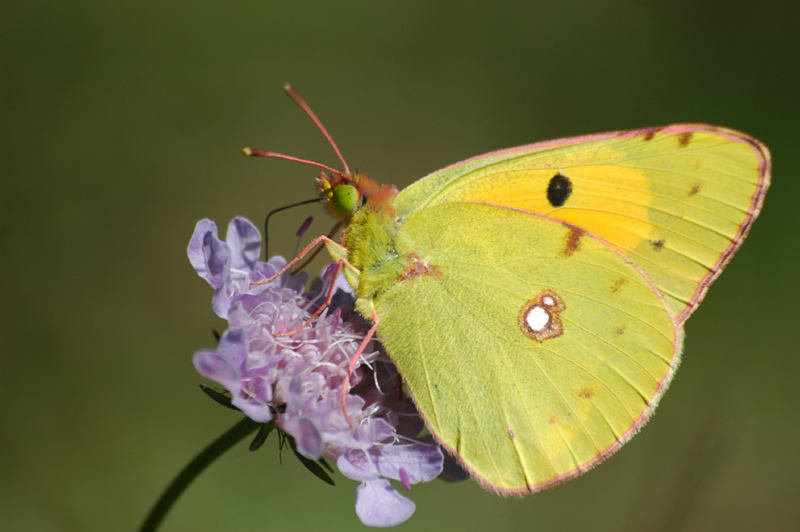
luisa-carvalheiro-butterfly
©Luísa G. Carvalheiro

Ecological networks represent interactions between different biotic units in an ecosystem and are becoming an increasingly popular tool for describing and illustrating a range of different types of ecological interactions. Food webs – which provide a way to track and quantify the flow of energy and resources in ecosystems – are among the most studied type of ecological networks. These networks usually represent species (nodes) which are connected by pairwise interactions (links) and they play a central role in improving our understanding of ecological and evolutionary dynamics.

Historically, food webs described antagonistic relationships (e.g. plant-herbivore or host-parasitoid networks) but the approach has been developed in recent years to include mutualistic networks (e.g. plant-pollinator networks, phorophyte-epiphyte networks). The development of network ecology, including ever more sophisticated methods to analyse ecological communities, has been driven forward by an enthusiastic community of ecologists, theoreticians and modellers working together to enhance our understanding of how communities interact.

In this blog post, we’ll describe the important role played by female scientists in the development of network ecology, focusing on the contributions by two ground-breaking ecologists and also highlighting contributions from a range of other scientists working in this field. Continue reading “Influential Women in Ecological Network Research”

New Associate Editor: Marie Auger-Méthé

Today, we are pleased to be welcoming a new member of the Methods in Ecology and Evolution Associate Editor Board. Marie Auger-Méthé joins us from Dalhousie University in Canada and you can find out a little more about her below.

Marie Auger-Méthé

Marie Auger-Méthé

“I am broadly interested in developing and applying statistical tools to infer behavioural and population processes from empirical data. My work tends to focus on marine and polar mammals, but the methods I develop are often applicable to a wide range of species and ecosystems. My recent work has centred on modelling animal behaviour using movement data and I generally analyse data with spatial and/or temporal structure.”

Marie has been reviewing for Methods in Ecology and Evolution for a few years and has contributed articles to some of the other journals of the British Ecological Society too. Earlier this month, her article titled ‘Evaluating random search strategies in three mammals from distinct feeding guilds‘ was published in the Journal of Animal Ecology. Continue reading “New Associate Editor: Marie Auger-Méthé”

New Associate Editors

Today we are welcoming two new Associate Editors to Methods in Ecology and Evolution: Samantha Price (University of California, Davis, USA) and Andrés Baselga (University of Santiago de Compostela, Spain). Samantha Price “My research seeks to answer the question ‘What regulates biodiversity?’. I use phylogenetic and comparative methods to investigate the abiotic and biotic drivers of global patterns of ecomorphological and lineage diversity over long periods of time and across … Continue reading New Associate Editors

New Associate Editor: Michael Morrissey

Today, we are pleased to be welcoming a new member of the Methods in Ecology and Evolution Associate Editor Board. Michael Morrissey joins us from the University of St Andrews in Scotland and you can find out a little more about him below.

Michael Morrissey

“I am an evolutionary quantitative geneticist. I am interested in the selection, genetics, and evolutionary trajectories of traits in natural populations. I typically work at the interface of statistics, evolutionary theory, and empirical problems.”

Michael has been an active reviewer for Methods for the past few years and has provided excellent comments and recommendations on a number of papers. He also had an article – ‘In search of the best methods for multivariate selection analysis‘ – published in the journal in 2014 (which will become freely available in October this year).
Continue reading “New Associate Editor: Michael Morrissey”

New Associate Editor: Will Pearse

Today, we are pleased to be welcoming a new member of the Methods in Ecology and Evolution Associate Editor Board. Will Pearse joins us from McGill University in Canada and you can find out a little more about him below. Will Pearse “I am an evolutionary ecologist and use phylogeny to link the evolution of species’ traits with their ecological community assembly. I’m interested in phylogenetic methods, macro-evolution of species’ traits, community assembly … Continue reading New Associate Editor: Will Pearse

New Associate Editor: Sarah Goslee

Today, we are pleased to be welcoming a new member of the Methods in Ecology and Evolution Associate Editor Board. Sarah Goslee joins us from the USDA Agricultural Research Service in the USA and you can find out a little more about her below.

Sarah Goslee

“‘Why is this plant growing here?’ Tackling this question has led me through wetlands, forests, deserts and grasslands. I’ve poked at this question from the scale of plant traits all the way up to satellite imagery. I employ tools that include multivariate analysis, community and landscape diversity metrics, simulation modelling, and spatial classification. My current focus is on agricultural decision support tools for pasture and rangeland.”

Sarah will be handling Applications articles for the journal. Applications papers describe new software, equipment or other practical tools, with the intention of promoting and maximising the uptake of these new approaches. All of our published Applications articles are freely available to everyone.
Continue reading “New Associate Editor: Sarah Goslee”

2015 Robert May Prize Winner: Kim Calders

The Robert May Prize is awarded annually for the best paper published in Methods in Ecology and Evolution by an Early Career Researcher. We’re delighted to announce that the 2015 winner is Kim Calders, for his article ‘Nondestructive estimates of above-ground biomass using terrestrial laser scanning.

Kim led the work on this article and had an international team of co-authors. They have developed a way to harness laser technology for use in measurements of vegetation structure of forests. The study is an important development in the monitoring of carbon stocks for worldwide climate policy-making. Continue reading “2015 Robert May Prize Winner: Kim Calders”