Understanding Deep Learning

Post provided by Sylvain Christin

We have now entered the era of artificial intelligence. In just a few years, the number of applications using AI has grown tremendously, from self-driving cars to recommendations from your favourite streaming provider. Almost every major research field is now using AI. Behind all this, there is one constant: the reliance, in one way or another, on deep learning. Thanks to its power and flexibility, this new subset of AI approach is now everywhere, even in ecology we show in ‘Applications for deep learning in ecology’.

But what is deep learning exactly? What makes it so special?

Deep Learning: The Basics

Deep learning is a set of methods based on representation learning: a way for machines to automatically detect how to classify data from raw examples. This means they can detect features in data by themselves, without any prior knowledge of the system. While some models can learn without any supervision (i.e. they can learn to detect and classify objects without knowing anything about them) so far these models are outperformed by supervised models. Supervised models require labelled data to train. So, if we want the model to detect cars in pictures, it will need examples with cars in them to learn to recognise them.

Continue reading “Understanding Deep Learning”

Bats aren’t just for Halloween: Insectivorous Bats in North America

Post provided by CHLOE ROBINSON (@CVROBINSON92)

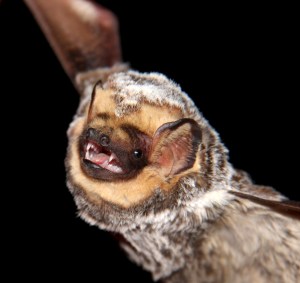
The Hoary bat (Lasiurus cinereus) is the most widespread bat in the US. ©Veronica Zamora-Gutierrez

Hello! This is my first post as Blog Editor for Methods in Ecology and Evolution and I’m thrilled to be starting with an exciting, thought-provoking topic in the wake of Halloween. But first, let me introduce myself. I currently work as a Postdoctoral Fellow and Project Manager in the Hajibabaei Lab at the Centre for Biodiversity Genomics (University of Guelph, ON, Canada) and my undergraduate and postgraduate degrees are both from Swansea University (UK). My research background is largely focused around the application of environmental DNA (i.e. free DNA found in natural environments) to detect and monitor aquatic species and answer ecological questions through both single-species detection and DNA metabarcoding.

At the moment, I’m working on the STREAM project, which combines community-based monitoring with DNA metabarcoding to gain a better understanding of freshwater health across Canada. One of my favourite parts about being in this position is the opportunity to get involved with other research being conducted in the Hajibabaei Lab. This is how I branched out into the wonderful world of bat ecology. Continue reading “Bats aren’t just for Halloween: Insectivorous Bats in North America”

‘Tis the Season for Modelling Mortalities

Post provided by ELIE GURARIE

A warning: Halloween is nigh, and the following post contains graphic real-life imagery of maggot-eaten eye-sockets and deadly pianos. Read on… if you dare!

A Death in the Woods 

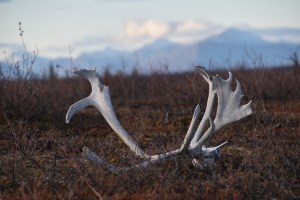
In the vast and often frozen boreal forest of northern Canada there is a slow-burning forensic investigation into a death. The victim: a woodland caribou, an iconic species that is threatened or endangered throughout its range.

Kyle Joly

The scene is very much made for TV neo-Scandinavian neo-noir. From a not-too-luxurious regional office in the town of Fort Smith, just north of the Alberta border, over a steaming cup of coffee, world-weary biologist Allicia Kelly – who’s seen it all and then some – is monitoring the movements of collared animals on her computer screen. It’s the middle of May. The females, nearly all pregnant, are scattering to higher ground to find suitably cozy and secluded sites to calve. All is as peaceful and idyllic as a bunch of blips on a computer screen can be.

But then (cue slightly unsettling dissonance in the soundtrack) one of the little blips seems to have stopped moving. Kelly raises her eyebrow, tells herself to keep an eye out. A moment later she makes the call: “Team, we’ve got another ringer … let’s roll!Continue reading “‘Tis the Season for Modelling Mortalities”

A Move Towards Trait-Data Democracy: Creating the Ecological Trait-Data Standard Vocabulary

Post provided by FLORIAN D. SCHNEIDER

The past ten years brought a major game changer to ecological community and ecosystems research: functional trait data. This has shifted the focus from assessing and analysing ecosystems by not just the quantities of species but also those species’ qualities. Functional trait data can give us major insights into how communities are composed and how species assemblages evolve under certain environmental pressures. They also link community composition to ecosystem functioning and provide a framework for the assessment of communities across trophic levels and functional groups. Continue reading “A Move Towards Trait-Data Democracy: Creating the Ecological Trait-Data Standard Vocabulary”

Researchers Use Drones to Weigh Whales

Below is a press release about the Methods in Ecology and Evolution article ‘Estimating body mass of free‐living whales using aerial photogrammetry and 3D volumetrics‘ taken from the British Ecological Society.

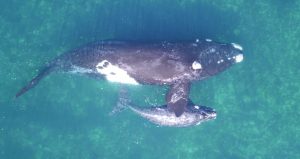
A southern right whale female rolling on her side and exposing her lateral side to the surface while gently touching her calf. ©Fredrik Christiansen

Researchers have devised a way to accurately estimate the weight of free-living whales using only aerial images taken by drones. By measuring the body length, width and height of free-living southern right whales photographed by drones, researchers were able to develop a model that accurately calculated the body volume and mass of the whales.

Because of their large size and aquatic life, previously the only way to obtain data on the body mass of whales was to weigh dead or stranded individuals.

The innovative method can be used to learn more about the physiology and ecology of whales. “Knowing the body mass of free-living whales opens up new avenues of research. We will now be able to look at the growth of known aged individuals to calculate their body mass increase over time and the energy requirements for growth. We will also be able to look at the daily energy requirements of whales and calculate how much prey they need to consume.” said Assistant Professor Fredrik Christiansen from Aarhus Institute of Advanced Studies in Denmark and lead author of the study. Continue reading “Researchers Use Drones to Weigh Whales”

Meaningful Monitoring or Monitoring for the Sake of Monitoring? epower Helps You Tell the Difference

Post provided by REBECCA FISHER and GLENN R SHIELL

As environmental managers, we’re frequently asked to make judgements about the relative health of the environment. This is often difficult because, by its nature, the environment is highly variable in space and time. Ideally, such judgements should be informed by robust scientific investigation, or more precisely, the reliable interpretation of the resulting data.

Type I and Type II Errors

Even with robust investigations and good data, our interpretations can sometimes be wrong. In general, this happens when:

  • the investigation concludes that an impact has occurred, when in fact it hasn’t (Type I error)
  • fails to detect an impact, when an impact has actually occurred (Type II error).

Understanding the circumstances that lead to these errors is unfortunately complicated, and difficult unless you have a strong statistical background. Continue reading “Meaningful Monitoring or Monitoring for the Sake of Monitoring? epower Helps You Tell the Difference”

Issue 10.10: Conservation, Molecular Techniques, Stats and More

The October issue of Methods is now online!

We’re a little lat on this post, but there’s another great issue of Methods in Ecology and Evolution online now.

This month, we cover movement ecology, plant cover class data, acoustic indices, local adaptations an much more.

There’s more information below on the Featured Articles selected by the Senior Editor and all of our freely available papers (Practical Tools and Applications articles are always free to access for everyone upon publication, whether you have a subscription or not). Continue reading “Issue 10.10: Conservation, Molecular Techniques, Stats and More”

Responding to New Weeds Needs Speed: Spatial Modelling with riskmapr Can Help

Post provided by JENS FROESE

Disclaimer: this post is NOT about the drug or the TV series, but about invasive alien plants. Yes, even biologists often refer to them as ‘weeds’.

Responding to New Weed Incursions

Responding to new weed incursions early and rapidly is very important. ©Panda8pie2

Weeds are a major threat to biodiversity and agricultural industries globally. New alien plant species are constantly introduced across borders, regions or landscapes. We know that some (such as those listed in the IUCN Global Invasive Species Database) are likely become problematic invasive weeds from experiences elsewhere.

When a weed is first introduced, population growth and spread is typically slow. This ‘invasion lag’ may be due to straightforward mathematics (population dynamics) as well as geography, environmental change or genetics. In any case, the lag period often presents the only window of opportunity where weed eradication or effective containment can be achieved. So, responding to new weed incursions early and rapidly is very important. Anyone who has ever battled with a bad weed infestation in their backyard knows it’s best to get in early and decisively! But decisions about where to target surveillance and control activities are often made under considerable time, knowledge and capacity constraints. Continue reading “Responding to New Weeds Needs Speed: Spatial Modelling with riskmapr Can Help”

Using Artificial Intelligence to Track Birds’ Dark-of-Night Migrations

Below is a press release about the Methods in Ecology and Evolution article ‘MistNet: Measuring historical bird migration in the US using archived weather radar data and convolutional neural networks‘ taken from the University of Massachusetts Amherst.

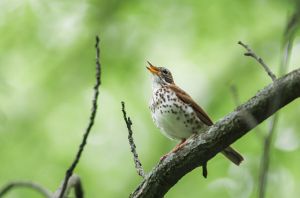
Wood thrush. ©CheepShot

On many evenings during spring and fall migration, tens of millions of birds take flight at sunset and pass over our heads, unseen in the night sky. Though these flights have been recorded for decades by the National Weather Services’ network of constantly-scanning weather radars, until recently these data have been mostly out of reach for bird researchers.

“That’s because the sheer magnitude of information and lack of tools to analyse it made only limited studies possible,” says artificial intelligence (AI) researcher Dan Sheldon at the University of Massachusetts Amherst. Continue reading “Using Artificial Intelligence to Track Birds’ Dark-of-Night Migrations”

A Celebration of World Rivers Day

Post provided by Alfred Burian, Antonia Ford and Quentin Mauvisseau

Celebrating our river ecosystems world-wide on the 22nd of September.
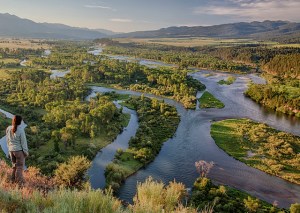
Celebrating our river ecosystems world-wide on the 22nd of September. ©Bob Wick, BLM.

It’s the 22nd of September and that means it’s this year’s UN World Rivers Day! In over 60 countries around the globe events are going on today to bring attention to the many values of our waterways. And we, the Aquatic Ecology Special Interest Group of the BES, are joining in with the celebrations! We’re highlighting recent methodological advancements that will help us to manage and conserve our rivers in the future. So let’s get started…

Multiple Stressors and Molecular Tools

Today, human activities across the world are impacting rivers to varying degrees. As scientists, we frequently see the interaction of multiple different stressors such as flow regulations, pollution or climate change affecting our rivers. The combined impact of stressors like these may be worse than any of their individual impacts. To understand and manage the effect of them, we need cost-effective and reliable analytical tools that can capture site-specific and ecosystem-wide effects.

Recent methodological advances that will help us to achieve these goals often rely on the application of new or improved molecular tools. Emerging techniques include environmental DNA (eDNA) based applications to monitor endangered and invasive species as well as stable isotope ecology, which provides us with new insights into animal diets and energy flows through aquatic food webs. We’d like to take the opportunity to introduce some of the novel developments in both of these exciting fields. Continue reading “A Celebration of World Rivers Day”