Issue 10.7: Aquatic Ecology, Zeroes, Sequencing and More

The July issue of Methods is now online!
We’ve got a bumper issue of Methods in Ecology and Evolution this month. In the 200+ pages, you’ll find articles about measuring species distributions and abundances, integrated population models, and working at the whole-plant scale.

We’ve got six papers that are freely available to absolutely everyone this month too. You can find out about two of the Open Access papers in the Applications and Practical Tools section below. In the third, Chen et al. show that tree assemblages in tropical forest ecosystems can present a strong signal of extensive distributional interspersion.

Find out a little more about the new issue of Methods in Ecology and Evolution below. Continue reading “Issue 10.7: Aquatic Ecology, Zeroes, Sequencing and More”

Making a Self-Preserving eDNA Filter

Below is a press release about the Methods in Ecology and Evolution article ‘A self‐preserving, partially biodegradable eDNA filter‘ taken from the Smith-Root.

A new self-preserving filter housing automatically preserves eDNA, while reducing the risk of contamination, and creating less plastic waste.

Researcher collecting an eDNA sample using the self-preserving filter housing.

In 2015 the inventor of the Keurig disposable coffee cartridge (K-Cups) told reporters that sometimes he regrets ever inventing the technology. The single-use design simply produces too much non-recyclable trash. Well, that very same problem is what ultimately led to the creation of a self-preserving filter for environmental DNA (eDNA); a recently reported Practical Tool in Methods in Ecology and Evolution.

eDNA scientists rely on single-use sampling equipment because eDNA surveys are highly sensitive to potential contamination. “We started out simply looking for biodegradable plastics that could be molded into a filter housing, with the objective of reducing plastic waste.” says Dr. Austen Thomas who led the team of researchers and engineers who invented the Smith-Root eDNA Sampler. “That’s when we realized that some of the biodegradable compounds function by being highly hydrophilic.” Continue reading “Making a Self-Preserving eDNA Filter”

Ultraconserved Elements are Widely Shared across the Tree of Life

Post provided by SILAS BOSSERT

Large-scale phylogenies are increasingly fueled by genomic-data from Ultraconserved Elements. ©Silas Bossert
Large-scale phylogenies are increasingly fuelled by genomic-data from Ultraconserved Elements. ©Silas Bossert

Sequencing ultraconserved DNA for phylogenetic research is a hot topic in evolution right now. As the name implies, Ultraconserved Elements (UCEs) are regions of the genome that are nearly identical among distantly related organisms. They can provide useful information for difficult phylogenetic questions. The list of advantages is long – among others, UCEs are:

A key reason for the method’s success is the developers’ commitment to full transparency, active tutoring, and willingness to help next-gen sequencing newbies like me to get started. Help is just a github-issue post away.

It took little to convince me that I wanted to use UCEs to reconstruct the phylogeny of one of my favourite groups of bees. I eventually met that objective but it won’t be part of this post. This blog post is about the journey to get there—the background story to the article ‘On the universality of target‐enrichment baits for phylogenomic research’. Continue reading “Ultraconserved Elements are Widely Shared across the Tree of Life”

The Dark and Bright Sides of Phylogenetics and Comparative Methods

Five years ago at Evolution 2014, ‘The Dark Side of Phylogenetics’ symposium (organised by Natalie Cooper) explored some of the issues with phylogenetic comparative methods (PCMs). This year at Evolution 2019, Michael Landis and Rosana Zenil-Ferguson are organising a contrasting ‘Bright Side of Phylogenetics‘ spotlight session (featuring Michael Matschiner). They aim to promote research that has overcome these pitfalls and that explores innovations in phylogenetics. Clearly they found our lack of faith disturbing.

Natalie and Michael have created a Virtual Issue to complement the spotlight session: Phylogenetics and Comparative Methods: The Bright and Dark Sides. It highlights recent Methods in Ecology and Evolution papers that feature either the ‘Bright Side’ or ‘Dark Side’ of phylogenetics and comparative methods. This Virtual Issue also highlights the diversity of researchers around the world working on these exciting questions. We hope you have a good feeling about it! Continue reading “The Dark and Bright Sides of Phylogenetics and Comparative Methods”

Stereo DOV: A Non-Invasive, Non-Destructive Way to Study Fish Populations

It’s more important than ever for us to have accurate information to help marine conservation efforts. Jordan Goetze and his colleagues have provided the first comprehensive guide for researchers using diver operated stereo-video methods (or stereo-DOVs) to survey fish assemblages and their associated habitat. But what is Stereo DOV? What makes it a better method than the traditional UVC (Underwater Visual Census) method? And when … Continue reading Stereo DOV: A Non-Invasive, Non-Destructive Way to Study Fish Populations

Using Molecular Power to Reconstruct Hyperdiverse Food Webs

Post provided by JORDAN CASEY

Coral Reefs: The Ocean’s Most Extravagant Buffet

Coral reefs are home to an incredibly diverse array of species ©Jordan Casey

There are an estimated 830,000 species on coral reefs worldwide. At some stage in their lives, nearly all of these species are consumed as prey items. In this super diverse buffet of fishes, corals, crabs, worms, and other critters, the number of possible interactions between predators and prey is nearly inexhaustible.

The extreme diversity of coral reefs has fascinated naturalists for centuries. Pinpointing predator-prey dynamics is essential to fully understand coral reef ecosystem dynamics, and visual analysis of gut contents has been a staple technique of coral reef ecologists. While the joy of spending copious hours looking through a microscope at half-digested marine mush is undeniable, this type of visual inspection has limitations. Even so, visual gut content analysis (along with stable isotope analysis and behavioural observations) has showcased a highly complex dietary network.

To digest this extreme complexity and surmount the hurdle of dietary unknowns, researchers frequently lump fishes into broad trophic categories, such as ‘mobile herbivores’. Broad generalisations are pragmatic and may be help us detect broad ecological trends, but they oversimplify species’ actual dietary preferences. As coral reefs are changing due to anthropogenic disturbances, it’s critical to thoroughly examine how well trophic groupings capture dietary linkages among reef organisms. Continue reading “Using Molecular Power to Reconstruct Hyperdiverse Food Webs”

Assessing Sea Turtle Populations: Can We Get a Hand From Drones and Deep Learning?

Post provided by PATRICK GRAY

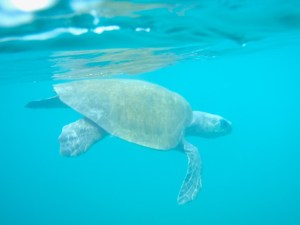
An olive ridley sea turtle in Ostional, Costa Rica. ©Vanessa Bézy.

Understanding animal movement and population size is a challenge for researchers studying any megafauna species. Sea turtles though, add a whole additional level of complexity. These wide-ranging, swift, charismatic animals spend much of their time underwater and in remote places. When trying to track down and count turtles, this obstacle to understanding population size becomes a full-on barricade.

Censusing these animals doesn’t just satisfy our scientific curiosity. It’s critical for understanding the consequences of unsound fishing practices, the benefits of conservation policy, and overall trends in population health for sea turtles, of which, six out of seven species range from vulnerable to critically endangered. Continue reading “Assessing Sea Turtle Populations: Can We Get a Hand From Drones and Deep Learning?”

Where do Animals Spend Their Time and Energy? Theory, Simulations and GPS Trackers Can Help Us Find Out

Post provided by MATT MALISHEV (@DARWINANDDAVIS)

 An adult sleepy lizard with a GPS tracker and body temperature logger strapped to her tail. ©Mike Bull.

An adult sleepy lizard with a GPS tracker and body temperature logger strapped to her tail. ©Mike Bull.

Changes in temperature and available food determine where and when animals move, reproduce, and survive. Our understanding of how environmental change impacts biodiversity and species survival is well-established at the landscape, country and global scales. But, we know less about what could happen at finer space and time scales, such as within habitats, where behavioural responses by animals are crucial for daily survival.

Simulating Movement and Daily Survival with Individual-Based Movement Models

Key questions at these scales are how the states of individuals (things like body temperature and nutritional condition) influence movement decisions in response to habitat change, and how these decisions relate to patchiness in microclimates and food. So we need tools to make reliable forecasts of how fine-scale habitat use will change under future environments. Individual-based movement simulation models are powerful tools for these kinds of studies. They let you construct habitats that vary in temperature and food conditions in both space and time and ask ‘what if’ questions. By populating these models with activity, behaviour, and movement data of animals, we can simulate different habitat conditions and predict how animals will respond to future change. Continue reading “Where do Animals Spend Their Time and Energy? Theory, Simulations and GPS Trackers Can Help Us Find Out”

Early Spring: Predicting Budburst with Genetics

Below is a press release about the Methods in Ecology and Evolution article ‘On the importance of accounting for intraspecific genomic relatedness in multi‐species studies‘ taken from the Université de Montréal.

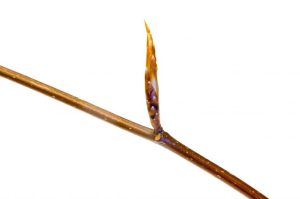
Bud of American beech (Fagus grandifolia). ©Tim Savas

Researchers from Canada and the USA found that tree and shrub genetics can be used to produce more accurate predictions of when leaves will burst bud in the spring. Their study was published in Methods in Ecology and Evolution.

Although climate sceptics might find it hard to believe with this year’s endless snow and freezing temperatures, climate change is making warm, sunny early springs increasingly common. And that affects when trees start to leaf out. But how much?

Simon Joly, biology professor at Université de Montréal and Elizabeth Wolkovich, an ecology professor at University of British Columbia, showed that a plant’s genetics can be used to produce more accurate predictions of when its leaves will burst bud in spring. Continue reading “Early Spring: Predicting Budburst with Genetics”

Scant Amounts of DNA Reveal Conservation Clues

Below is a press release about the Methods in Ecology and Evolution article ‘Empowering conservation practice with efficient and economical genotyping from poor quality samples‘ taken from the Stanford Woods Institute for the Environment.

Wild tiger in India. ©Prasenjeet Yadav

The challenges of collecting DNA samples directly from endangered species makes understanding and protecting them harder. A new approach promises cheap, rapid analysis of genetic clues in degraded and left-behind material, such as hair and commercial food products.

The key to solving a mystery is finding the right clues. Wildlife detectives aiming to protect endangered species have long been hobbled by the near impossibility of collecting DNA samples from rare and elusive animals. Continue reading “Scant Amounts of DNA Reveal Conservation Clues”