Microbial Methods Virtual Issue

The BES Microbial Ecology Special Interest Group is running a workshop today (Thursday 2 November) on Novel Tools for Microbial Ecology. To compliment this workshop, Xavier Harrison has edited a Virtual Issue of the best Methods in Ecology and Evolution articles on advances in methods of studying microbial evolution and ecology from the past few years.
Advances in Next-Generation Sequencing (NGS) technology now allow us to study associations between hosts and their microbial communities in unprecedented detail. However, studies investigating host-microbe interactions in the field of ecology and evolution are dominated by 16S and ITS amplicon sequencing. While amplicon sequencing is a useful tool for describing microbial community composition, it is limited in its ability to quantify the function(s) performed by members of those communities. Characterising function is vital to understanding how microbes and their hosts interact, and consequently whether those interactions are adaptive for, or detrimental to, the host. The articles in this Virtual Issue cover a broad suite of approaches that allow us to study host-microbe and microbe-microbe interactions in novel ways.

All of the articles in the Microbial Methods Virtual Issue will be freely available for the next two months. You can find out a little more about each one below. Continue reading “Microbial Methods Virtual Issue”

Midwater Ocean Communities: Sounds Like Siphonophore Soup

Post provided by Roland Proud

How do we know how many fish there are in the ocean? 1000, 1 billion, 1000 billion? We can’t catch them all and count – that’s not practical. Nor can we make observations from Earth-orbiting satellites – light does not penetrate far into the ocean. What we can use is sound.

Sound travels well in water (faster and further than it does in air), so we can use scientific SONAR (echosounders) to produce sound waves and record backscatter from organisms and communities. This provides information concerning their biomass, distribution and behaviour. A recent study used echoes from the mesopelagic zone (200 – 1,000m) to predict global mesopelagic fish biomass to be between 11 and 15 billion tonnes (that’s a lot), suggesting that mesopelagic fish communities could potentially provide global food security.

Mesopelagic Biogeography

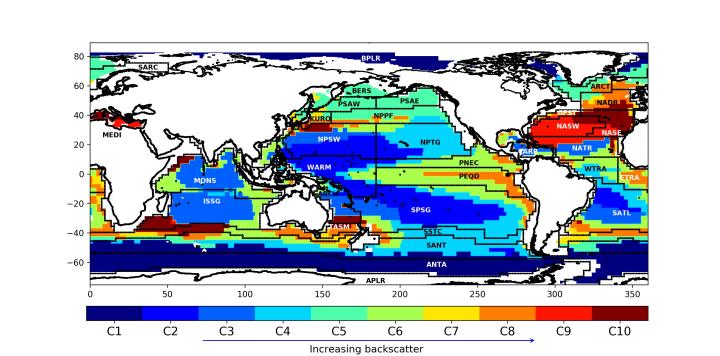
In a recent paper, we (the Pelagic Ecology Research Group, PERG at the University of St Andrews) divided the global ocean up into regions based on the properties of echoes from the mesopelagic zone (see below).

10 mesopelagic classes are shown for the open-ocean, echo intensity (a proxy for biomass) increases from blue to red. Coastal zones excluded. Longhurst provinces overlaid. Shapefile here. Proud et al. (2017)

Continue reading “Midwater Ocean Communities: Sounds Like Siphonophore Soup”

Phylogenies, Trait Evolution and Fancy Glasses

Post provided by Daniel S. Caetano

Phylogenetic trees represent the evolutionary relationships among different lineages. These trees give us two crucial pieces of information:

  1. the relationships between lineages (which we can tell from the pattern of the branches (i.e., topology))
  2. the point when lineages separated from a common ancestor (which we can tell from the length of the branches, when estimated from genetic sequences and fossils).
Phylogeny of insects inferred from genetic sequences showing the time of divergence between ants and bees.

As systematic biologists, we are interested in the evolutionary history of life. We use phylogenetic trees to uncover the past, understand the present, and predict the future of biodiversity on the planet. Among the tools for this thrilling job are the comparative methods, a broad set of statistical tools built to help us understand and interpret the tree of life.

Here’s a Tree, Now Tell Me Something

The comparative methods we use to study the evolution of traits are mainly based on the idea that since species share a common evolutionary history, the traits observed on these lineages will share this same history. In the light of phylogenetics, we can always make a good bet about how a species will look if we know how closely related it is to another species or group. Comparative models aim to quantify the likelihood of our bet being right and use the same principle to estimate how fast evolutionary changes accumulate over time. Continue reading “Phylogenies, Trait Evolution and Fancy Glasses”

Imperfect Pathogen Detection: What to Do When Sampling and Diagnostic Tests Produce Inaccurate Results

Post Provided by Graziella DiRenzo

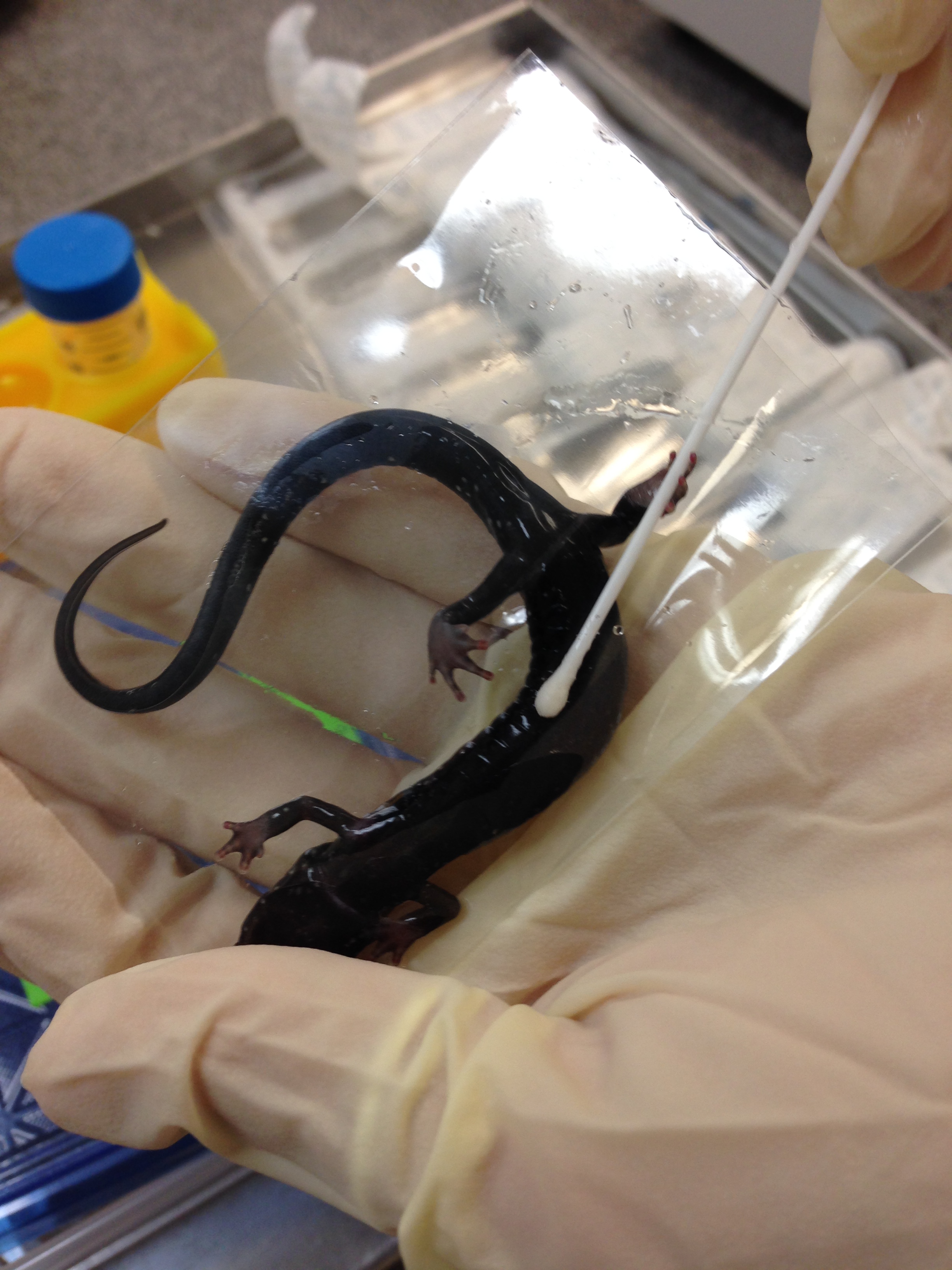
A salamander having its skin swabbed to test for Bsal infection.

Imagine you’re at the doctor’s office. You’re waiting to hear back on a critical test result. With recent emerging infectious diseases in human populations, you are worried you may be infected after a sampling trip to a remote field site. The doctor walks in. You sit nervously, sensing a slight tremble in your left leg. The doctor confidently declares, “Well, your tests results came back negative.” In that moment, you let out a sigh of relief, the kind you feel throughout your body. Then, thoughts start flooding your mind. You wonder– what are the rates of false negatives associated with the test? How sensitive is the diagnostic test to low levels of infection? The doctor didn’t sample all of your blood, so how can they be sure I’m not infected? Is the doctor’s conclusion right?

 Now, let’s say I’m the doctor and my patient is an amphibian. I don’t have an office where the amphibian can come in and listen to me explain the diagnosis or the progression of disease − BUT I do regularly test amphibians in the wild for a fatal fungal pathogen, known as Batrachochytrium dendrobatidis (commonly known as Bd). Diseases like Bd are among the leading causes of the approximately one-third of amphibian species that are threatened, near threatened, or vulnerable to extinction. To test for Bd, and the recently emerged sister taxon Batrachochytrium salamandrivorans (hereafter referred to as: Bsal), disease ecologists rely on non-invasive skin swabs. Continue reading “Imperfect Pathogen Detection: What to Do When Sampling and Diagnostic Tests Produce Inaccurate Results”

Monitoring the Distribution and Abundance of Sea Otters

Post provided by Perry Williams

Sea otters (Enhydra lutris) are an apex predator of the nearshore marine ecosystem – the narrow band between terrestrial and oceanic habitat. During the commercial maritime fur trade in the 18th and 19th centuries, sea otters were nearly hunted to extinction across their range in the North Pacific Ocean. By 1911, only a handful of small isolated populations remained.

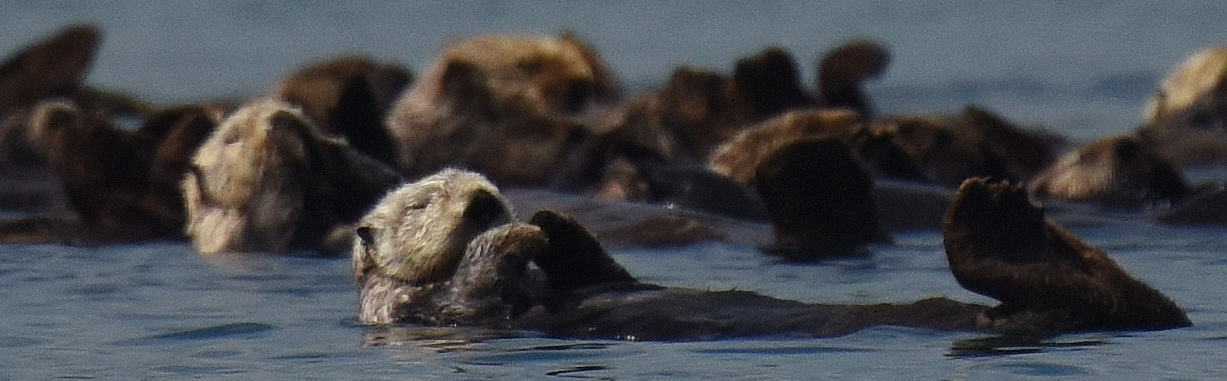
Sea otters resting in Glacier Bay National Park. © Jamie Womble, NPS. USFWS Permit #14762C-0, NPS Permit #GLBA-2016- SCI-0022.

But sea otter populations have recovered in many areas due to a few changes. The International Fur Seal Treaty in 1911 and the Marine Mammal Protection Act (1972) protected sea otters from most human harvest. Wildlife agencies helped sea otter colonisation by transferring them to unoccupied areas. Eventually, sea otters began to increase in abundance and distribution, and they made their way to Glacier Bay, a tidewater glacier fjord and National Park in southeastern Alaska. Continue reading “Monitoring the Distribution and Abundance of Sea Otters”

A New Way to Study Bee Cognition in the Wild

Understanding how animals perceive, learn and remember stimuli is critical for understanding both how cognition is shaped by natural selection, and how ecological factors impact behaviour.Unfortunately, the limited number of protocols currently available for studying insect cognition has restricted research to a few commercially available bee species, in almost exclusively laboratory settings. In a new video Felicity Muth describes a simple method she developed with Trenton Cooper, Rene … Continue reading A New Way to Study Bee Cognition in the Wild

Multi-State Species Distribution Models: What to do When Species Need Multiple Habitats

Post provided by Jan Engler, Veronica Frans and Amélie Augé

The north, south, east, and west boundaries of a species’ range tell us very little about what is happening inside…

― Robert H. MacArthur (1972, p. 149)

When You Enter the Matrix, Things Become Difficult!

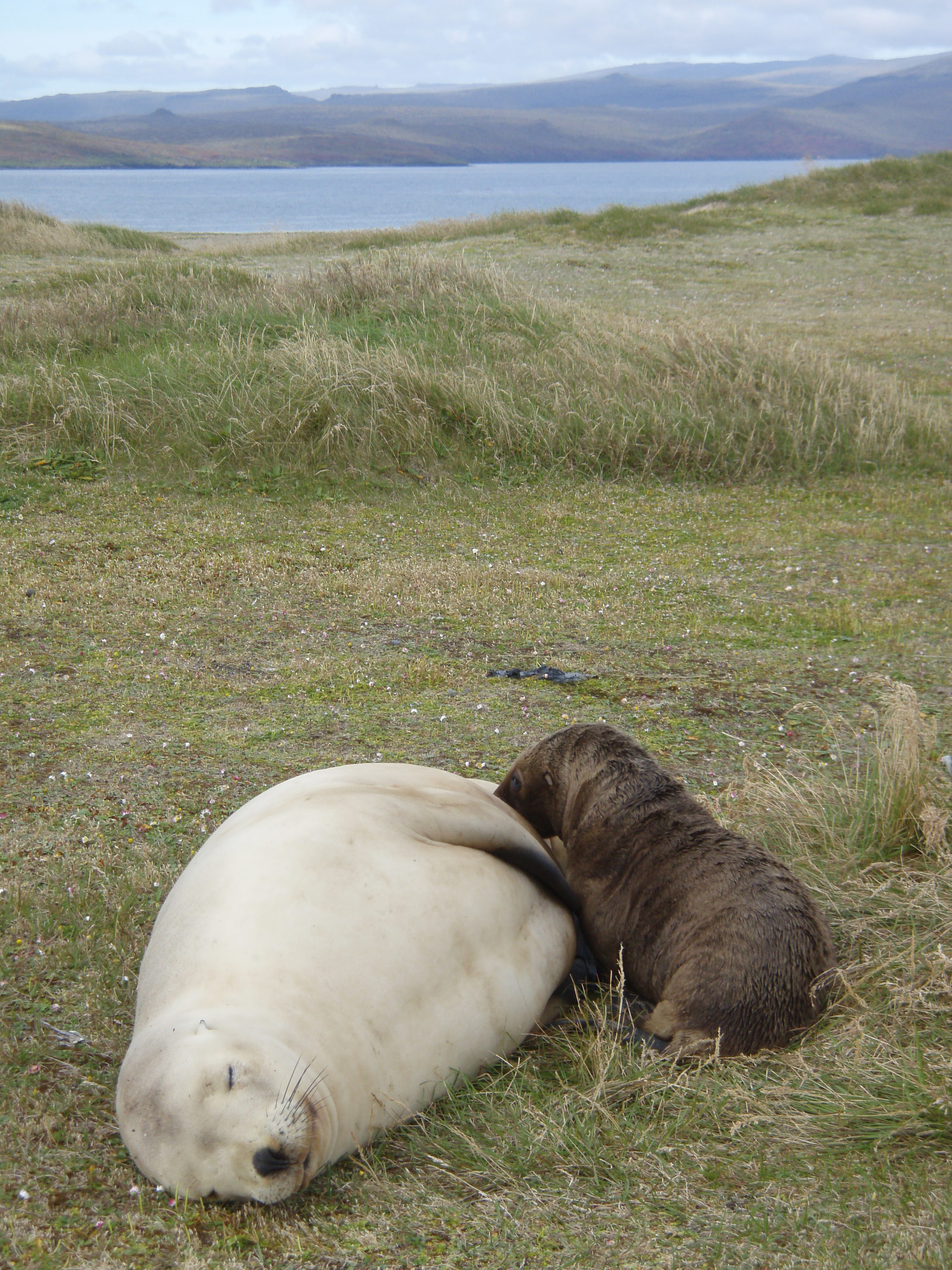
New Zealand sea lion mother and pup. © Amélie Augé

Protecting wildlife calls for a profound understanding of species’ habitat demands to guide concrete conservation actions. Quantifying the relationships between species and their environment using species distribution models (SDMs) has attracted tremendous attention over the past two decades. Usually these species-environment relationships are estimated on coarse spatial scales, using globally-interpolated long-term climate data sets. While they’re useful for studies on large-scale species distributions, these environmental predictors have limited applications for conservation management.

Climatic data were the first environmental information available with global coverage, but a wide range of Earth observation techniques have increased the availability of much finer environmental information. This allows us to quantify species-environment relationships in unprecedented detail. We can now shift the scale that SDMs operate at, resulting in more useful applications in conservation – SDMs now enter the matrix.

This shift in scale brings new challenges, especially for species using multiple distinct habitat types to survive. The landscape matrix, which has been negligible at the broad (global) scale, is hugely important at the fine (local) scale. It is not only that we need to quantify certain habitat types but also need to consider their arrangement in the landscape, which is basically what the landscape matrix is about. But as we enter the matrix, things become difficult. Continue reading “Multi-State Species Distribution Models: What to do When Species Need Multiple Habitats”

Protecting Habitat Connectivity for Endangered Vultures: Identifying Priorities with Network Analysis

Post provided by Juliana Pereira, Santiago Saura and Ferenc Jordán

The endangered Egyptian vulture. ©Carlos Delgado

One of the main causes behind biodiversity loss is the reduction and fragmentation of natural habitats. The conversion of natural areas into agricultural, urban or other human-modified landscapes often leaves wild species confined to small and isolated areas of habitat, which can only support small local populations. The problem with small, isolated populations is that they are highly vulnerable to extinction caused by chance events (such as an epidemic or a natural disaster in the area), or by genetic erosion (dramatic loss of genetic diversity that weakens species and takes away their ability to adapt to new conditions).

On top of that, we now have the added concern of climate change, which is altering environmental conditions and shifting habitats to different latitudes and altitudes. To survive in the face of these changes, many species need to modify their geographical distribution and reach new areas with suitable conditions. The combination of mobility (a biological property of species) and the possibility of spatial movement (a physical property of the landscape) is critically important for this. Continue reading “Protecting Habitat Connectivity for Endangered Vultures: Identifying Priorities with Network Analysis”

Uncertainties in Species Occurrence Data: How to deal with False Positives and False Negatives

Post provided by Gurutzeta Guillera-Arroita

Species Surveys: New Opportunities and Ongoing Data Challenges

Technologies, such as drones, open new opportunities for wildlife monitoring ©J. Lahoz-Monfort, UMelb.

Monitoring is a fundamental step in the management of any species. The collection and careful analysis of species data allows us to make informed decisions about management priorities and to critically evaluate our actions. There are many aspects of a natural system that we can measure and, when it comes to monitoring the status of species, occurrence is a commonly used metric.

Ecologists have a long history of collecting species occurrence data from systematic surveys and our ability to gather species data is only going to grow! This is partly enabled by the fact that citizen science programs are starting to gain a prominent role in wildlife monitoring. There’s a growing recognition that well-managed citizen science surveys can produce useful data, while scaling up monitoring effort thanks to the increased human-power from large numbers of committed volunteers. Continue reading “Uncertainties in Species Occurrence Data: How to deal with False Positives and False Negatives”