Trash Talking: Every Litter Bit Hurts

Post provided by Chloe Robinson

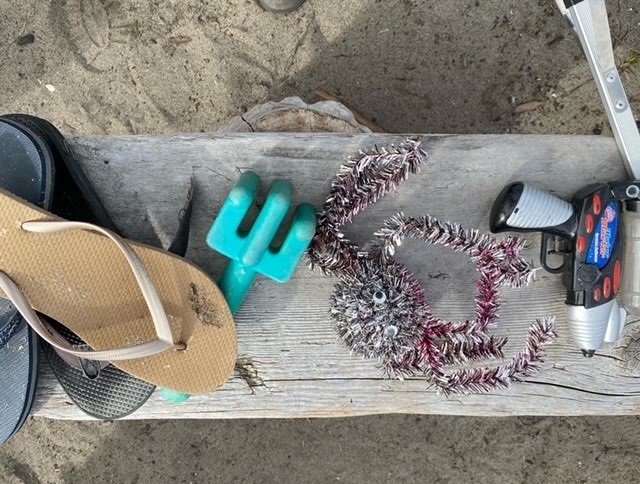
Trash collected from a beach clean at Buccaneer Bay Provincial Park, BC in collaboration with Pender Harbour Ocean Discovery Station (PODS) and the Loon Foundation. Picture credit: Jessica Scott.

It is no surprise that COVID-19 has changed the course of a substantial number of things in the world since the start of the pandemic. One of the most understated impacts is the devastating reversal of many years’ worth of fighting plastic pollution. In the wake of International Coast Cleanup Day and World Environmental Health Day, Associate Editor Dr. Chloe Robinson will be discussing the impacts of marine litter and plastic pollution on marine life and how the Great Canadian Shoreline Cleanup program is working to stop the leak of litter and plastic pollution into the ocean.

Continue reading “Trash Talking: Every Litter Bit Hurts”

An Ecologist and a Programmer Walk Into a Bar…

Post provided by Daniel Vedder, Markus Ankenbrand, and Juliano Sarmento Cabral

Five years ago, a new institute opened its doors at the University of Würzburg: the Center for Computational and Theoretical Biology (CCTB). The idea was simple. Take six computational research groups, covering topics from image analysis to genomics and ecological modelling, put them in a building together, and see what happens.

Despite our disparate areas of expertise, this “experiment” has worked really well. It soon turned out that one of our greatest strengths as an institute lay in the cumulative computer know-how we have, or have acquired together. In our experience, many biologists are still somewhat wary of computational techniques, and struggle with them even when they use them. Part of the reason for this unease, we believe, is that few biologists are thoroughly trained in computer science.

Continue reading “An Ecologist and a Programmer Walk Into a Bar…”

Creating a research and conservation tool to support pollinator survival

Post provided by Matthias Becher, Grace Twiston-Davies & Juliet Osborne

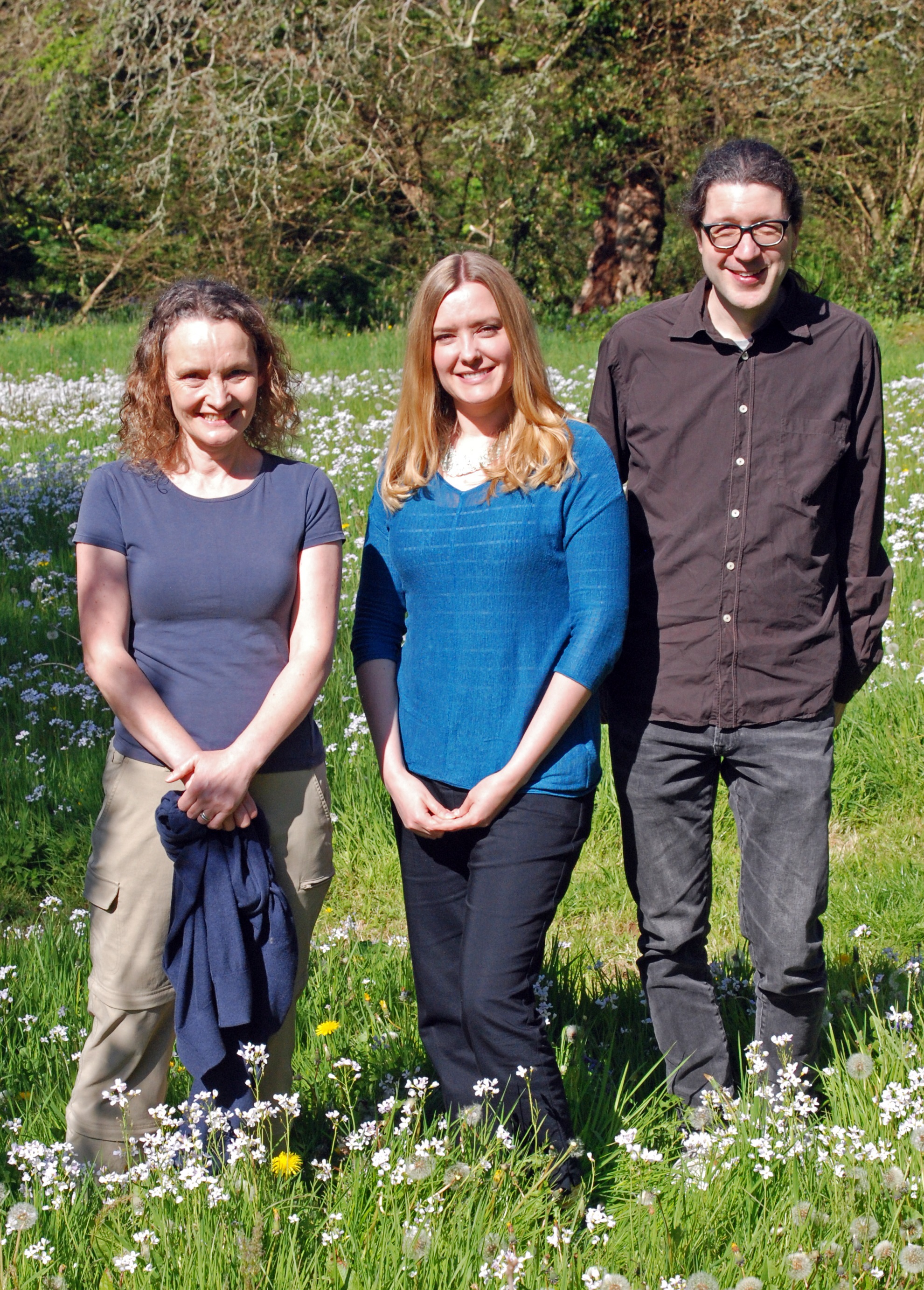
The BEEHAVE Team Osborne Becher and Twiston-Davies. Credit: Pete Kennedy.

Everyone, well, almost everyone, loves honey – that sweet, liquid gold laboriously collected by busy bees from countless little flowers. But of course, much more important than honey or wax or even cosmetic royal jelly products are the pollination services that bees provide to wildflowers and crops. In this blog post, authors Matthias Becher, Grace Twiston-Davies & Juliet Osborne discuss their latest paper published in Methods in Ecology & Evolution, “BEE-STEWARD: a research and decision support software for effective land management to promote bumblebee populations”.

Continue reading “Creating a research and conservation tool to support pollinator survival”

MEEin3: A standardisation framework for bio-logging data to advance ecological research and conservation

We are very excited to share the second episode of MEEin3 with you! Listen to Dr Ana Sequeira share the story behind the paper ‘A standardisation framework for bio-logging data to advance ecological research and conservation‘. Ana is a Senior Research Fellow at the University of Western Australia, with research focusing on understanding the movement of marine megafauna. But what inspired this article, what was … Continue reading MEEin3: A standardisation framework for bio-logging data to advance ecological research and conservation

Smart genetic analysis made fast and easy

Post provided by: Salvador Herrando-Pérez

If you use genetics to differentiate populations, the new package smartsnp might be your new best friend. Written in R language and available from GitHub and CRAN, this package performs principal component analysis with control for genetic drift, projects ancient samples onto modern genetic space, and tests for population differences in genotypes. The package can load big datasets and run complex stats in the blink of an eye.

In this post, Salvador Herrando-Pérez discusses the features of this new package which is fully described in the new paper “smartsnp, an R package for fast multivariate analyses of big genomic data” recently published in Methods in Ecology & Evolution.

Continue reading “Smart genetic analysis made fast and easy”

FuzzyQ: The Commonness of Rarity

Post provided by Juan A. Balbuena

Sea of Azov. Credit: Sergey Sorokin.

Most species in ecological communities are rare, whereas only a few are common. This distributional paradox has intrigued ecologists for decades, but the interpretation of species abundance distributions remains elusive. In this blog post, lead author Juan A. Balbuena discusses how their recently published Methods in Ecology and Evolution paper and R package ‘Fuzzy quantification of common and rare species in ecological communities (FuzzyQ)’, is a potentially valuable analytical tool in community ecology and conservation biology.

Continue reading “FuzzyQ: The Commonness of Rarity”

International Bat Appreciation Day: Giving thanks to the real superheroes of the sky

Post provided by Chloe Robinson

Mexican greater funnel-eared bat (Natalus mexicanus). Credit: Veronica Zamora-Gutierrez.

Bat Conservation International (BCI), founded in 1982, aims to conserve bats and their habitats through a combination of education, conservation, and research. Bats worldwide contribute towards controlling pests, create rich fertilizer for landowners, and pollinate fruit and flowers. BCI introduced International Bat Appreciation Day to increase awareness about bats and what they do for our environment.

In this post, associate editor Chloe Robinson will be summarising the various MEE published methods for bat monitoring and how technological developments have allowed us to further look and listen into the lives of these incredible creatures.

Continue reading “International Bat Appreciation Day: Giving thanks to the real superheroes of the sky”

A new evolutionary simulation R package sheds light on the metaphor of genomic islands of divergence

Robert May Prize Shortlisted Article

Post provided by Claudio S. Quilodrán and Ashley T. Sendell-Price

Nesting eggs of silvereyes (Zosterops lateralis). Heron Island, Australia. Picture: Erik Sandvik.

Each year Methods in Ecology and Evolution awards the Robert May Prize to the best paper in the journal by an author at the start of their career. Claudio S. Quilodrán has been shortlisted for his article ‘The multiple population genetic and demographic routes to islands of genomic divergence’. In this blog, Claudio and co-author Ashley T. Sendell-Price discuss how their paper came to be and how their individual‐based simulation can be used to explore the dynamics of diverging genomes.

Continue reading “A new evolutionary simulation R package sheds light on the metaphor of genomic islands of divergence”

The need to quantify complex shapes

Robert May Prize Shortlisted Article

Post provided by Arthur Porto

Credit: Kjetil Voje

Each year Methods in Ecology and Evolution awards the Robert May Prize to the best paper in the journal by an author at the start of their career. Arthur Porto has been shortlisted for his article ‘ML‐morph: A fast, accurate and general approach for automated detection and landmarking of biological structures in images’. In this blog, Arthur discusses how his paper came to be and describes development of the ML-morph pipeline.

Continue reading “The need to quantify complex shapes”

The next step for tagging insects: we can’t keep ignoring the impact

Robert May Prize Shortlisted Article

Post provided by Femke Batsleer

Digger wasp (Bembix rostrata). Credit: Femke Batsleer.

Each year Methods in Ecology and Evolution awards the Robert May Prize to the best paper in the journal by an author at the start of their career. Femke Batsleer has been shortlisted for her article ‘The neglected impact of tracking devices on arthropods‘. In this blog, Femke discusses how her paper came to be and the outcomes of the review.

Continue reading “The next step for tagging insects: we can’t keep ignoring the impact”