Unmasking Acoustic Indices

Post provided by Oliver Metcalf

Gould’s toucanet Selenidera gouldii display involves dancing, but also lots of vocalisation. Credit: Oliver Metcalf.

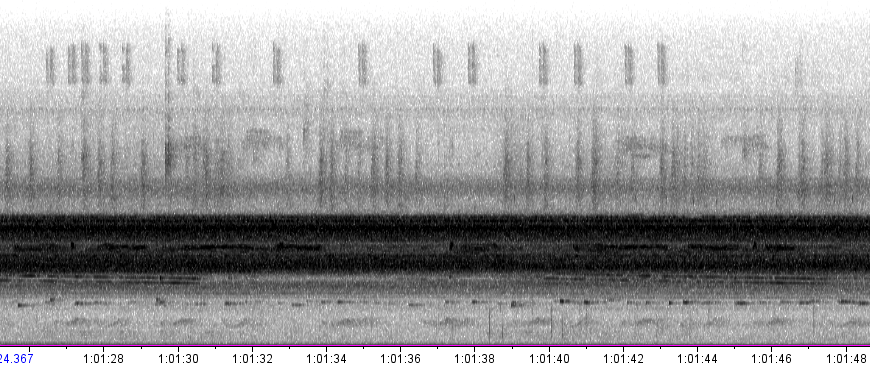
Acoustic indices are increasingly being used when analysing soundscapes to gain information on biodiversity. However, inconsistent results and lack of consensus on best practices has hampered their application in conservation and land‐use management contexts. In this post, Oliver Metcalf talks about his Methods in Ecology and Evolution article ‘Acoustic indices perform better when applied at ecologically meaningful time and frequency scales’, where he highlights the need to  calculate acoustic indices at ecologically appropriate time and frequency bins to reduce signal masking effects.

Continue reading “Unmasking Acoustic Indices”

Species association networks: a bridge between sciences

Robert May Prize Shortlisted Article

Post provided by Raphaëlle Momal

Powdery mildew on oak tree leaves is caused by the fungi Erysiphe alphitoides, which association network helps understanding the behaviour. Credit: Raphaëlle Momal.

Each year Methods in Ecology and Evolution awards the Robert May Prize to the best paper in the journal by an author at the start of their career. Raphaëlle Momal has been shortlisted for her article ‘Tree‐based inference of species interaction networks from abundance data’. In this blog, Raphaëlle discusses how her paper came to be and the applications of the R package developed in her study.

Continue reading “Species association networks: a bridge between sciences”

The worldwide use of wildlife detection dogs – and how they became part of our life

Post provided by Annegret Grimm-Seyfarth

Border Collie Zammy is trained to search for Eurasian otter scat and pond, alpine and great crested newts. Photo: André Künzelmann.

For those not directly working with them, using wildlife detection dogs always sound like a new fancy idea that should be tested somehow. However, this method is neither new nor rare, and people working with wildlife detection dogs often call them their best method in finding their target species. In this post, Annegret Grimm-Seyfarth discusses her paper ‘Detection dogs in nature conservation: A database on their worldwide deployment with a review on breeds used and their performance compared to other methods’, which shows the broad and worldwide applications of wildlife detection dogs.

Continue reading “The worldwide use of wildlife detection dogs – and how they became part of our life”

How to assess seed bank effect in a plant metapopulation

Post provided by Apolline Louvet

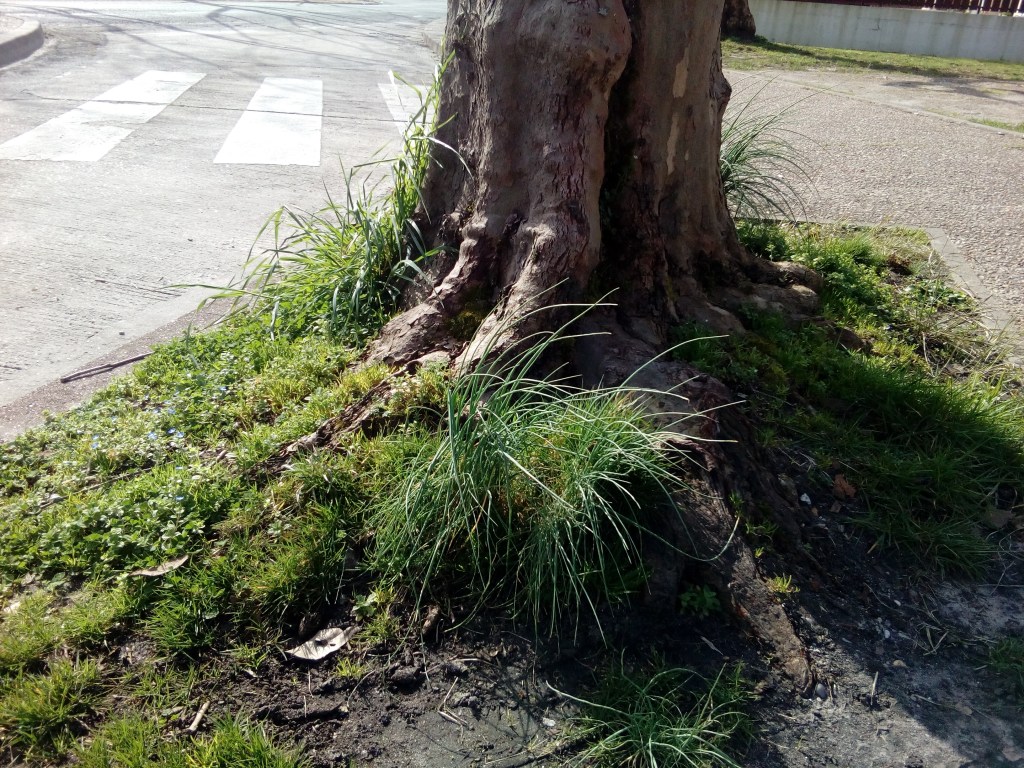
Tree base in an urban area, partly occupied by spontaneous vegetation. Picture credit: Apolline Louvet.

Seed banks play a key role in plant metapopulations, however, detecting seed banks remains challenging. The current method of assessing the effect of seed banks on plant metapopulation dynamics focuses on the presence of standing vegetation. This has direct implications for plant metapopulation models, which require data on the absence of a seed bank to understand plant dynamics.

Our paper, ‘Detecting seed bank influence on plant metapopulation dynamics’ in Methods in Ecology and Evolution, introduces a new metric on plant metapopulations, which assesses the seed bank contribution to the global observed dynamics. In this post, we recall what led us to develop this metric.

Continue reading “How to assess seed bank effect in a plant metapopulation”

What happens to our understanding of functional diversity when we ignore intraspecific trait variability?

Post provided by Mark Wong

Impressive variability sometimes occurs within a species, such as between these sister ants from the same Carebara sp. colony. Credit: Francois Brassard.

Throw a rock at a conference and you’ll likely hit an ecologist who examines the variation among organisms’ functional traits for one reason or another. From understanding the assembly of communities and their responses to environmental change, to the effects of biodiversity on ecosystem functions, and – well, why not – modelling the global spectrum of ecological form and function, assessments of functional diversity have quickly become the bread and butter of community, ecosystem and macro ecology.

In this blog post, Mark Wong discusses his paper ‘Including intraspecific trait variability to avoid distortion of functional diversity and ecological inference: lessons from natural assemblages’, recently published in Methods in Ecology & Evolution.

Continue reading “What happens to our understanding of functional diversity when we ignore intraspecific trait variability?”

Searching for snow leopards

Post provided by Ian Durbach and Koustubh Sharma

Snow leopard captured via camera trap in Mongolia. Picture credit: Snow Leopard Conservation Foundation/Snow Leopard Trust/Panthera (OR SLCF/SLT/PF).

Snow leopards are notoriously elusive creatures and monitoring their population status within the remote, inhospitable habitats they call home, can be challenging.  In this post, co-authors Ian Durbach and Koustubh Sharma discuss the applications of their Methods in Ecology and Evolution article, ‘Fast, flexible alternatives to regular grid designs for spatial capture–recapture’, for monitoring snow leopard populations.

Continue reading “Searching for snow leopards”

MEDI: Macronutrient Extraction and Determination from Invertebrates

Post provided by Jordan Cuff and Maximillian Tercel

MEDI can be applied to a broad range of small invertebrate specimens, including parasitoid wasps. Credit: Jordan Cuff.

Are you kept awake at night wondering how you would measure the macronutrient content of small invertebrates? Perhaps you have tried but are haunted by the disappointment that you have had to rely on conversion factors, analogues and pooled samples. Get ready to sleep soundly, entomological entrepreneur!

In this blog post, Jordan Cuff and Maximillian Tercel will discuss their latest study published in Methods in Ecology and Evolution, concerning their brand-new method for measuring macronutrient content in invertebrates: MEDI.

Continue reading “MEDI: Macronutrient Extraction and Determination from Invertebrates”

Individual History and the Matrix Projection Model

Post provided by Rich Shefferson

A single time-step projection of a historical matrix projection model (hMPM), for a 7 life stage life history model of Cypripedium parviflorum, the small yellow lady’s slipper. In this case, the vector of biologically plausible stage pairs in time 2 is equal to the full projection matrix multiplied by the vector of biologically plausible stage pairs in time 1.

Matrix projection modeling is a mainstay of population ecology. Ecologists working in natural area management and conservation, as well as in theoretical and academic realms such as the study of life history evolution, develop and use these models routinely. Matrix projection models (MPMs) have advanced dramatically in complexity over the years, originating from age-based and stage-based matrix models parameterized directly from the data, to complex matrices developed from statistical models of vital rates such as integral projection models (IPMs) and age-by-stage models. We consider IPMs to be a class of function-based MPM, while age-by-stage MPMs may be raw or function-based, but are typically the latter due to a better ability to handle smaller dataset. The rapid development of these methods can leave many feeling bewildered if they need to use these methods but lack sufficient understanding of scientific programming and of the background theory to analyze them properly.

Continue reading “Individual History and the Matrix Projection Model”

December Issue Out Now!

The latest issue of Methods in Ecology and Evolution is now online!

Senior Editor Bob O’Hara has selected five Featured Articles this month, including methods for predicting pollinator abundance, evaluating species distribution modelling applications and accelerating image‐based ecological surveys using interactive machine learning – find out about all of them below.

We also have 12 articles that are free to read, including five Applications and two Practical Tools articles – no subscription required!

Continue reading “December Issue Out Now!”