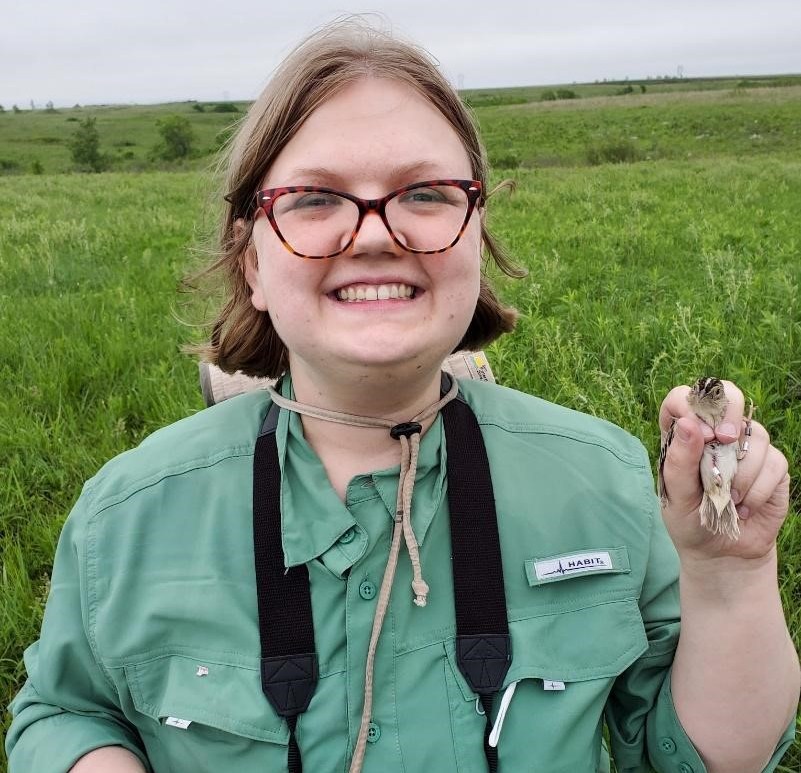
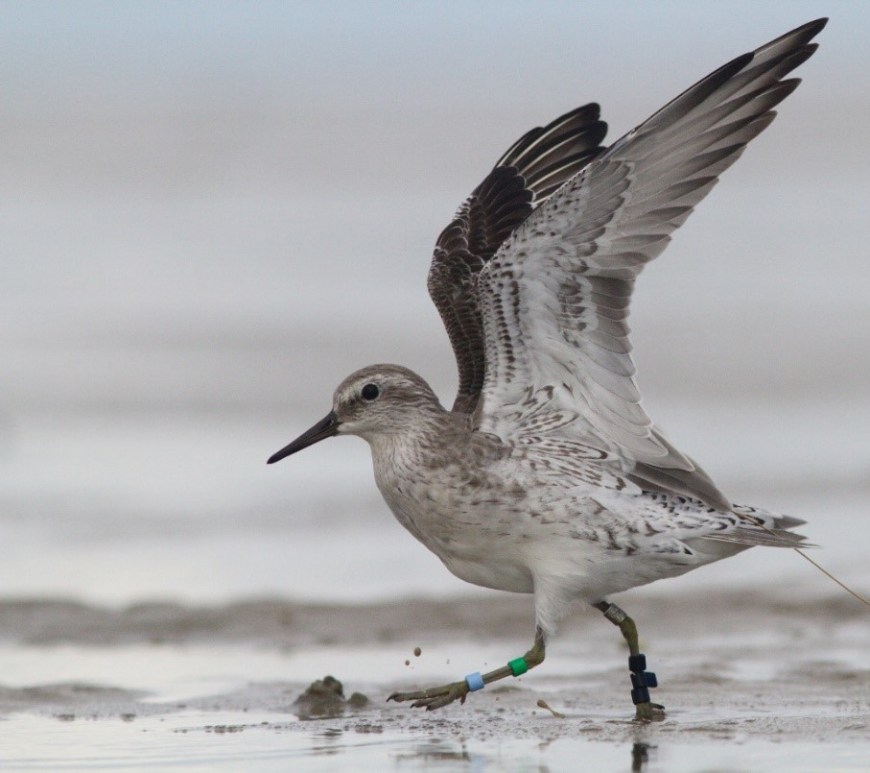
Spatial thinning and class balancing: Key choices lead to variation in the performance of species distribution models with citizen science data

Post provided by Valerie Steen

Each year Methods in Ecology and Evolution awards the Robert May Prize to the best paper published in the journal by an author at the start of their career. Ten Early Career Researchers made the shortlist for this year’s prize, including Valerie Steen who is a Postdoctoral Researcher at Oregon State University in the USA. In this interview, Valerie shares insights on her paper ‘Spatial thinning and class balancing: Key choices lead to variation in the performance of species distribution models with citizen science data’.

Continue reading “Spatial thinning and class balancing: Key choices lead to variation in the performance of species distribution models with citizen science data”

Robert May Prize 2021: Winner Announced

We are delighted to announce David Wilkinson as the winner of the Robert May Prize 2021, awarded to the best paper by an early career researcher in the 2021 volume of Methods in Ecology and Evolution. In this interview, David shares insights on his winning article ‘Defining and evaluating predictions of joint species distribution models’. Congratulations to all the shortlisted authors, whose articles you can read … Continue reading Robert May Prize 2021: Winner Announced

Tropical forest structure and diversity: a comparison of methodological choices

Post provided by Cléber Rodrigo de Souza

Each year Methods in Ecology and Evolution awards the Robert May Prize to the best paper published in the journal by an author at the start of their career. Ten Early Career Researchers made the shortlist for this year’s prize, including Cléber Rodrigo de Souza who is a data scientist at the Federal University of Lavras in Brazil. In this interview, Cléber shares insights on their paper ‘Tropical forests structure and diversity: a comparison of methodological choices’.

Continue reading “Tropical forest structure and diversity: a comparison of methodological choices”

Low-cost open electronics like the Raspberry Pi are revolutionizing biological research

Post provided by Jolle Jolles Each year Methods in Ecology and Evolution awards the Robert May Prize to the best paper published in the journal by an author at the start of their career. 10 Early Career Researchers made the shortlist for this year’s prize, including Jolle Jolles, a postdoctoral researcher at CREAF, Barcelona. In this interview, Jolle shares insights on his paper Broad-scale applications … Continue reading Low-cost open electronics like the Raspberry Pi are revolutionizing biological research

New hope for urban wildlife

Post provided by Dan Parker, Dr Stanislav Roudavski, Therésa Jones & Dr Kylie Soanes The cover of our April issue shows a small model of a 3D-printed artificial hollow created by Parker et al. as part of their article ‘A framework for computer-aided design and manufacturing of habitat structures for cavity-dependent animals‘. In this cover story, the authors explain their method and what it means … Continue reading New hope for urban wildlife

April 2022 Issue Out Now!

Our April Issue is now online! This issue contains 14 brilliant articles about the latest methods in ecology and evolution, including methods for creating habitat structures for cavity‐dependent animals, quantifying small animal activity, identifying trends in multivariate time series and much more! Read on to find out about this month’s featured articles. Featured Articles The einet package *Open Access* Understanding noise in networks and finding the right … Continue reading April 2022 Issue Out Now!

Rhodamine B – a non-toxic biomarker for assessing the distance travelled by rats in urban slums

Post provided by Awoniyi Michael Adedayo Each year Methods in Ecology and Evolution awards the Robert May Prize to the best paper published in the journal by an author at the start of their career. Ten Early Career Researchers made the shortlist for this year’s prize, including Awoniyi Michael Adedayo, who recently defended his PhD from the Federal University of Bahia (UFBA) Brazil. In this … Continue reading Rhodamine B – a non-toxic biomarker for assessing the distance travelled by rats in urban slums

The potential and practice of arboreal camera trapping

Post provided by Jennifer Moore

Each year Methods in Ecology and Evolution awards the Robert May Prize to the best paper published in the journal by an author at the start of their career. Ten Early Career Researchers made the shortlist for this year’s prize, including Jennifer Moore who is a post-doctoral associate at the University of Florida in the USA. In this interview, Jennifer shares insights on her paper ‘The potential and practice of arboreal camera trapping’.

Continue reading “The potential and practice of arboreal camera trapping”

A new graphical interface and toolkit for phylogenetic analyses

Post provided by Daniel Edler

Each year Methods in Ecology and Evolution awards the Robert May Prize to the best paper published in the journal by an author at the start of their career. Ten Early Career Researchers made the shortlist for this year’s prize, including Daniel Edler who is a PhD student at Umeå University in Sweden. In this interview, Daniel shares insights on his paper ‘raxmlGUI2.0: a graphical interface and toolkit for phylogenetic analyses using RAxML’.

Continue reading “A new graphical interface and toolkit for phylogenetic analyses”

Merging dietary metabarcoding into networks: turning “don’ts” into “dos”

Post provided by Jordan Cuff, Fredric Windsor, Maximillian Tercel, James Kitson and Darren Evans.

Do you spend your days incapacitated by the agony of not knowing how to combine your field-based observational data with your dietary metabarcoding results? Perhaps every time you go to merge them, the horror of conflicting data types and biases causes you to run and hide from the mere thought of analysis. Or maybe the thought of such problems hadn’t even crossed your mind! In this post, Jordan Cuff and co-authors share insight from their recent publication on using dietary metabarcoding in network ecology and how to merge metabarcoding with traditional data types.

Continue reading “Merging dietary metabarcoding into networks: turning “don’ts” into “dos””