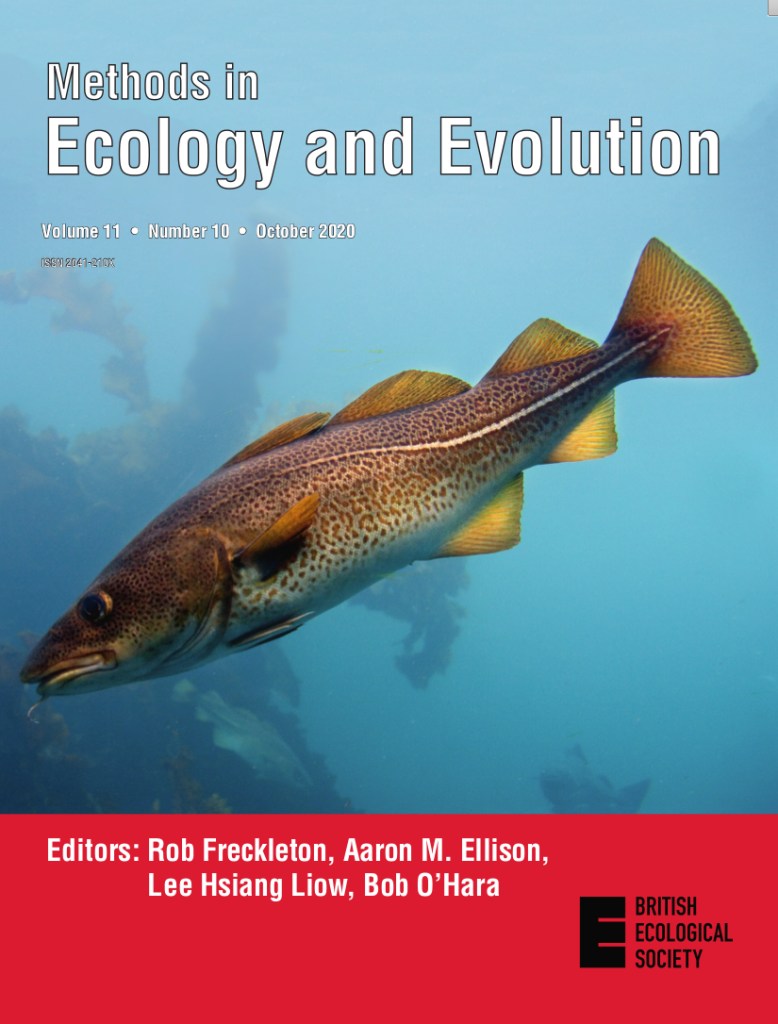
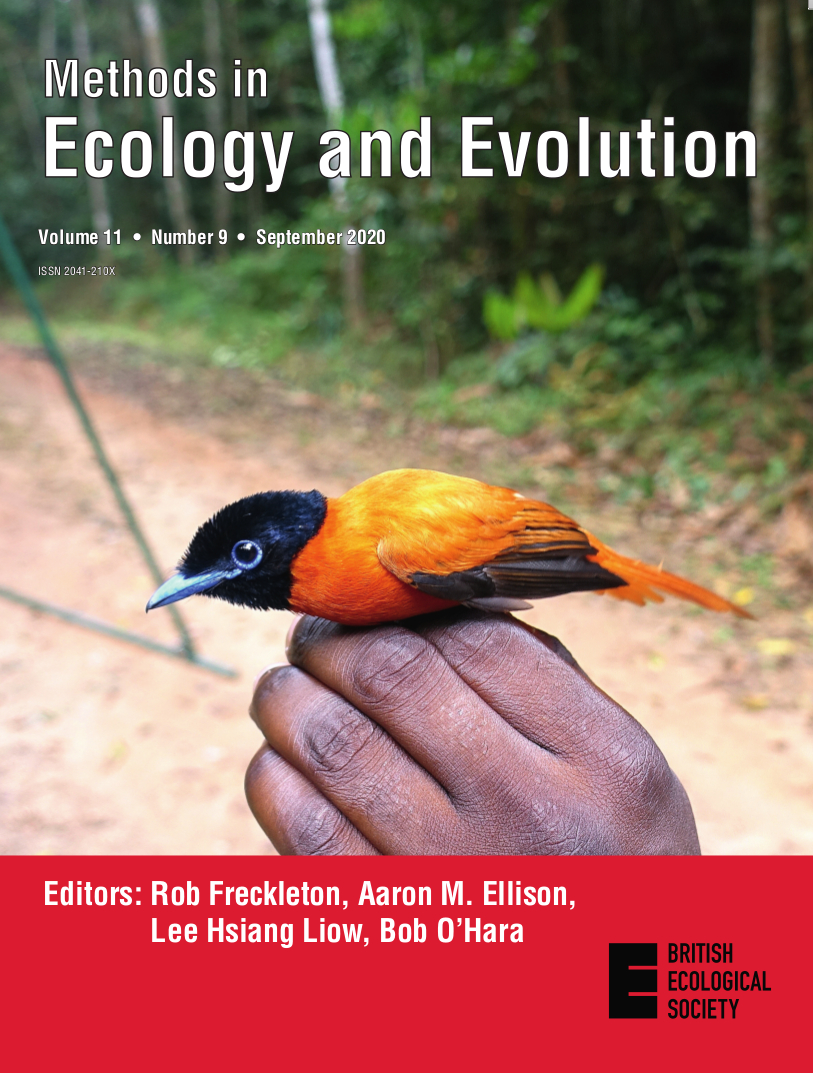
Issue 11.6: goats, camera traps, coral imaging and more!

The June issue of Methods is now online!

June Cover

This month’s issue features articles on designing camera trap studies, measuring coral growth rates, quantifying carbon assimilation by marine calcifiers and much more.

Senior Editor Rob Freckleton has selected six featured articles this month – find out about them below. We’ve also got three Applications and a Practical Tools article which are freely available to everyone – no subscription required!

Continue reading “Issue 11.6: goats, camera traps, coral imaging and more!”

10th Anniversary Volume 2: Methods for Collaboratively Identifying Research Priorities and Emerging Issues in Science and Policy

Post provided by William J Sutherland, Erica Fleishman, Michael Mascia, Jules Pretty and Murray Rudd

10th anniversary logo

To celebrate the 10th Anniversary of the launch of Methods in Ecology and Evolution, we are highlighting an article from each volume to feature in the Methods.blog. For Volume 2, we have selected ‘Methods for Collaboratively Identifying Research Priorities and Emerging Issues in Science and Policy’ by Sutherland et al. (2011).  In this post, the authors discuss the background and key concepts of the article, and changes in the relation between science and policy since the paper was published.


The Knowledge Cycle: an idealistic conceptual model of Science-Policy Interaction. Picture credit: Job Dronkers (2019): Science-Policy Interaction.

Between the late 1990s and early 2000s, recognition of the value of scientific evidence to government decision-making grew. As interest in projecting future issues to inform policy decisions increased, we recognised that ecologists did not have the methods to conduct this type of work effectively. In the United Kingdom, the Government Office for Science established the Foresight programme to support policy making; scientific advisory committees became common, and every Ministry appointed a Chief Scientist. Given this context, we explored the use of horizon scans to assess the future and better understand uncertainties.

Continue reading “10th Anniversary Volume 2: Methods for Collaboratively Identifying Research Priorities and Emerging Issues in Science and Policy”

Uma breve história sobre o pacote R ‘metan’

Post ESCRITO POR Tiago Olivoto

This post is also available in English

Em nosso recente artigo na Methods in Ecology and Evolution, Alessandro D. Lúcio e eu descrevemos um novo pacote R para análise de ensaios multi-ambientes chamado metan. Ensaios multi-ambientes são um tipo de ensaio em programas de melhoramento de plantas, onde vários genótipos são avaliados em um conjunto de ambientes. A análise desses dados requer a combinação de várias abordagens, incluindo manipulação, visualização e modelagem de dados. A versão estável mais recente do metan (v1.5.1) está disponível agora no repositório CRAN. Então, pensei em compartilhar a história da minha primeira incursão no uso do R criando um pacote e submetendo um artigo para uma revista que nunca havia submetido antes.

Continue reading “Uma breve história sobre o pacote R ‘metan’”

A brief history about the R package ‘metan’

Post provided by Tiago Olivoto

Este post também pode ser lido em Português

In our recent paper in Methods in Ecology and Evolution, Alessandro Lúcio and I describe a new R package, metan, for multi-environment trial analysis. Multi-environment trials are a kind of trial in plant breeding programs where several genotypes are evaluated in a set of environments. Analyzing such data requires the combination of several approaches including data manipulation, visualization and modelling. The latest stable version of metan (v1.5.1) is now on CRAN. So, I want to share the history about my first foray into using R, creating an R package, and submitting a paper to a journal that I’ve never had submitted before.

Continue reading “A brief history about the R package ‘metan’”

An interview with the editors of “Population Ecology in Practice”: Part I

Post provided by Daniel Caetano

Today we bring the first part of an interview with Dennis Murray and Brett Sandercock about their brand new book in population ecology methods: “Population Ecology in Practice.” The editors were kind enough to share some interesting backstage information with us.

Snowshoe hare in winter

Population Ecology in Practice introduces a synthesis of analytical and modelling approaches currently used in demographic, genetic, and spatial analyses. Chapters provide examples based on real datasets together with a companion website with study cases and exercises implemented in the R statistical programming language.

Stay tuned for the second part of this interview, where we talk about some of the challenges of editing a large book and the editors share essential advice for anyone looking into leading such a project!

Continue reading “An interview with the editors of “Population Ecology in Practice”: Part I”

10th Anniversary Volume 1: The Art of Modelling Range-Shifting Species

Post provided by Jane Elith, Mike Kearney and Steven Phillips  

10th anniversary logo

To celebrate the 10th Anniversary of the launch of Methods in Ecology and Evolution, we are highlighting an article from each volume to feature in the Methods.blog. For Volume 1, we have selected ‘The art of modelling range-shifting species’ by Elith et al. (2010).  In this post, first author, Professor Jane Elith, discusses the background and key concepts of the article, and how things have changed since the paper was published.

Illustration of the idea that model settings affect prediction.

We started work on this manuscript around 2008, prompted by increasing use of species distribution models for climate change and invasive species problems. At that stage there was growing recognition of the problems in these applications (e.g. see a recent MEE review on transferability) but relatively few tools for dealing with them. In our view, if correlative models are to be used for such purposes, the data and models require special attention.

Continue reading “10th Anniversary Volume 1: The Art of Modelling Range-Shifting Species”

Gaining Genetic and Epigenetic Data from a Single Established Next-Generation Sequencing Approach

Post provided by Marco Crotti

How organisms adapt to the environment they live in is a key question in evolutionary biology. Genetic variation, i.e. how individuals within populations differ from each other in terms of their DNA, is an essential element in the process of adaptation. It can arise through different mechanisms, including DNA mutations, genetic drift, and recombination.

Example of how genetic drift can occur over generations via random sampling (i.e. random mating) in a population. (Picture credit: Gringer).

Differences in DNA sequences between individuals can results in differences in the expression of genes. This can therefore determine the organism’s capacity to grow, develop, and react to environmental stimuli. However, a growing body of literature reveals that there are other ways organisms can change the way they interact with the world without mutations in the DNA sequence.

Continue reading “Gaining Genetic and Epigenetic Data from a Single Established Next-Generation Sequencing Approach”

Issue 11.5: Our May issue is now online!

The May issue of Methods is now online! As well as four Application and two Practical Tools articles, the latest issue of Methods in Ecology and Evolution includes six Featured Articles handpicked by our editors – you can find out more about them below.     Featured Articles Tree-based inference of species interaction networks from abundance data To be relevant, any network inference methodology needs … Continue reading Issue 11.5: Our May issue is now online!

The Ecology of Dance

Post provided by Chloe Robinson

Dance has been part of human culture for millennia. Some scholars refer to dance as a specific language, dependent on the space and time in which it exists and dependent on the power structures that rule in that time. April 29th marks International Dance Day; a day initiated in 1982 by the International Dance Committee of the UNESCO International Theatre Institute to commemorate the birthday of Jean-Georges Noverre, a distinguished French choreographer.

Male Maratus volans peacock spider. Picture credit: Jürgen Otto.

For humans, dance is considered a sacred ritual, sometimes a form of communication and sometimes an important social and courtship activity. A recent study has even linked the innate ability to dance with greater survival rates in prehistoric times. However, for certain species of wild animal, dance-like behaviours are crucial for communication and mating. In this blog, I am going to highlight the evolutionary foundations of dance in wild animals and explore some of the ways that dance is used in ecology.

Continue reading “The Ecology of Dance”

2019 Robert May Prize Winner: Corneile Minnaar

The Robert May Prize is awarded annually for the best paper published in Methods in Ecology and Evolution by an Early Career Researcher. We’re delighted to announce that the 2019 winner is Corneile Minnaar, for his article ‘Using quantum dots as pollen labels to track the fates of individual pollen grains‘.

A central component of an organism’s fitness is its ability to successfully reproduce. This includes finding a potential mate and successful mating. For plants, movement of pollen from an anther to a conspecific stigma is essential for successful reproduction, but directly tracking movement of individual pollen grains heretofore has been impossible (with the exception of those species of orchids and milkweeds whose pollen comes in large packages (pollinia)). Knowing how pollen move around, whether or not they successfully fertilize ovules, is also central to understanding the evolution and ecology of flowering plants (angiosperms) and floral traits.

Continue reading “2019 Robert May Prize Winner: Corneile Minnaar”