When to Identify Non-Preferred Reviewers

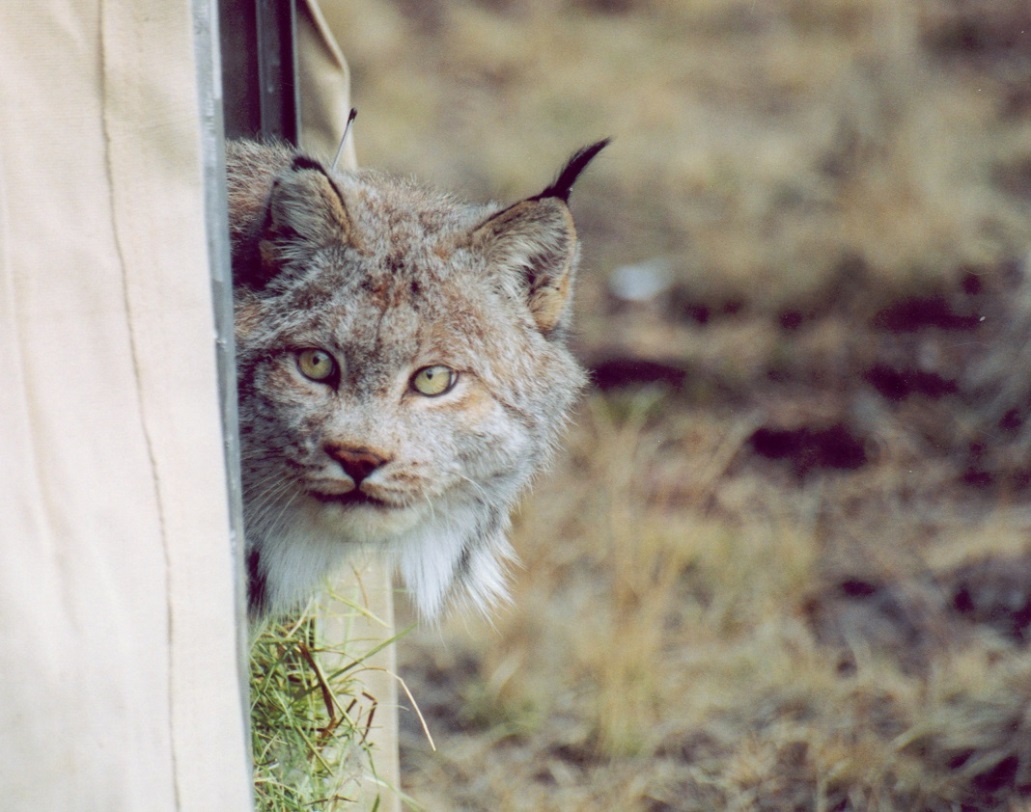
©Nic McPhee
©Nic McPhee

Last month we published a blog post with some tips on selecting preferred reviewers for your manuscript. It was hugely popular (if you haven’t read it yet you can do so here), so we have decided to follow it up with some advice on identifying NON-preferred reviewers (or Author Opposed Reviewers as they are now known on ScholarOne).

Unlike preferred reviewers, you are not required to identify non-preferred reviewers when you submit your paper to Methods. However, in certain cases this option is can be very useful for your manuscript. It is important not to overuse or misuse this feature of the submission system though and the below tips will help you to avoid doing this.

The Golden Rule: Always Explain Why!

It can often be difficult to decide whether to identify someone as an author opposed reviewer. While there are some guidelines that journals can (and do) offer, a lot of the time authors find themselves in the grey area between these. We understand that it is unlikely that every question you have will be answered by our guidance (although we hope that we can address at least a few of them), but there is a way around this: explain why you have made a person a non-preferred reviewer. Continue reading “When to Identify Non-Preferred Reviewers”

There’s Madness in our Methods: Improving inference in ecology and evolution

Post provided by JARROD HADFIELD

Last week the Center for Open Science held a meeting with the aim of improving inference in ecology and evolution. The organisers (Tim Parker, Jessica Gurevitch & Shinichi Nakagawa) brought together the Editors-in-chief of many journals to try to build a consensus on how improvements could be made. I was brought in due to my interest in statistics and type I errors – be warned, my summary of the meeting is unlikely to be 100% objective.

True Positives and False Positives

The majority of findings in psychology and cancer biology cannot be replicated in repeat experiments. As evolutionary ecologists we might be tempted to dismiss this because psychology is often seen as a “soft science” that lacks rigour and cancer biologists are competitive and unscrupulous. Luckily, we as evolutionary biologists and ecologists have that perfect blend of intellect and integrity. This argument is wrong for an obvious reason and a not so obvious reason.

We tend to concentrate on significant findings, and with good reason: a true positive is usually more informative than a true negative. However, of all the published positives what fraction are true positives rather than false positives? The knee-jerk response to this question is 95%. However, the probability of a false positive (the significance threshold, alpha) is usually set to 0.05, and the probability of a true positive (the power, beta) in ecological studies is generally less than 0.5 for moderate sized effects. The probability that a published positive is true is therefore 0.5/(0.5+0.05) =91%. Not so bad. But, this assumes that the hypotheses and the null hypothesis are equally likely. If that were true, rejecting the null would give us very little information about the world (a single bit actually) and is unlikely to be published in a widely read journal. A hypothesis that had a plausibility of 1 in 25 prior to testing would, if true, be more informative, but then the true positive rate would be down to (1/25)*0.5/((1/25)*0.5+(24/25)*0.05) =29%. So we can see that high false positive rates aren’t always the result of sloppiness or misplaced ambition, but an inevitable consequence of doing interesting science with a rather lenient significance threshold. Continue reading “There’s Madness in our Methods: Improving inference in ecology and evolution”

Why Accurate Stable Isotope Discrimination Factors are so Important: A cautionary tale (involving kea)

Post provided by AMANDA GREER

Stable isotopes as a tool for ecologists

Our research into the foraging ecology of this cheeky parrot (kea: Nestor notabilis) prompted us to develop a simple method to establish discrimination factors © Andruis Pašukonis
Our research into the foraging ecology of this cheeky parrot (kea: Nestor notabilis) prompted us to develop a simple method to establish discrimination factors © Andruis Pašukonis

Isotopes are atoms that have the same number of protons and electrons but differ in their number of neutrons; they are lighter and heavier forms of the same element. Unlike radioactive isotopes, stable isotopes do not decay over time.

The ratio of heavy to light stable carbon (δ13C) and nitrogen (δ15N) isotopes in an animal’s tissues depend on its diet, although offset by a certain amount. This integration of δ13C and δ15N from an animal’s diet into its tissues allows ecologists to use stable isotope analysis to investigate a species’ present and historical diets, food-web structures, niche shifts,  migration patterns and more.   Continue reading “Why Accurate Stable Isotope Discrimination Factors are so Important: A cautionary tale (involving kea)”

Issue 6.11

Issue 6.11 is now online!

The November issue of Methods is now online!

This month’s issue contains two Applications articles and one Open Access article, all of which are freely available.

mvMORPH: A package of multivariate phylogenetic comparative methods for the R statistical environment which allows fitting a range of multivariate evolutionary models under a maximum-likelihood criterion. Its use can be extended to any biological data set with one or multiple covarying continuous traits.

Low-cost soil CO2 efflux and point concentration sensing systems: The authors use commercially available, low-cost and low-power non-dispersive infrared (NDIR) CO2 sensors to develop a soil CO2 efflux system and a point CO2 concentration system. Their methods enable terrestrial ecologists to substantially improve the characterization of CO2 fluxes and concentrations in heterogeneous environments.

This month’s Open Access article comes from Jolyon Troscianko and Martin Stevens. In ‘Image calibration and analysis toolbox – a free software suite for objectively measuring reflectance, colour and pattern‘ they introduce a toolbox that can convert images to correspond to the visual system (cone-catch values) of a wide range of animals, enabling human and non-human visual systems to be modelled. The toolbox is freely available as an addition to the open source ImageJ software and will considerably enhance the appropriate use of digital cameras across multiple areas of biology. In particular, researchers aiming to quantify animal and plant visual signals will find this useful. This article received some media attention upon Early View publication over the summer. You can read the Press Release about it here.

Our November issue also features articles on Population Genetics, Macroevolution, Modelling species turnover, Abundance modelling, Measuring stress and much more. Continue reading “Issue 6.11”

High-Res Camera Surveys of Wildlife Colonies: The advantages over traditional approaches

Post provided by ALISTAIR HOBDAY (senior principal research scientist, CSIRO Australia), Tim Lynch (senior research scientist, CSIRO, Australia) and Rachael Alderman (wildlife biologist, Tasmanian Department of Primary Industry, Parks, Water and Environment, Australia).

Cameras and wildlife monitoring

A Gigapan camera setup to record images of an albatross colony. ©Alistair Hobday

Behavioural and ecological research and monitoring of wildlife populations are based on collection of field data. Demographic data, such as breeding frequency, birth rates and juvenile survival, have been critical in understanding population trends for a wide range of species.

Photography has been extensively used by field biologists and ecologists to gather these data and they have been quick to take up improvements in this technology. Many field programmes today use photography either for primary data collection or the communication of results. Advances in digital photography, image storage and transmission, image processing software and web-based dissemination of images have been extremely rapid in recent years, offering ecologists and biologists a range of powerful tools.

Digital imagery has been captured from a wide range of platforms, each of which has various advantages and limitations for biological study. The most remote images are captured from satellite-based sensors, which have been used to assess population abundance of large animals, such as elephant seals, or locate colonies of emperor penguins. Cameras mounted on aircraft can also provide large-scale perspectives but both of these platforms suffer from high cost, operational limitations due to weather, and limited temporal replication. Recent use of drones, while cheaper, still requires a person to be close to the survey location and can only be used in short bursts, typically lasting less than 20 minutes.

Land-based cameras – or those fixed onto animals – can track behaviour closely, but have low sample size as data tends to be collected at the scale of individual or small groups. To improve replication, fleets of remote cameras can be used or multiple images stitched together post hoc to form a montage. However, this increases cost, either for hardware or labour to manually construct panoramas. To date all these camera systems have had limits to their spatial and/or temporal resolution and, therefore, to the number of individuals covered. This restricts biological study at the population level. Continue reading “High-Res Camera Surveys of Wildlife Colonies: The advantages over traditional approaches”

Making the Most of Volunteer Data: Counting the birds and more…

Post provided by Rob Robinson

It’s 6am on a warm spring morning and I’m about to visit the second of my Breeding Bird Survey1 sites. Like 2,500 other volunteers in the UK, twice a year I get up early to record all the birds I see or hear on the two transects in my randomly selected 1km square. Each year I look forward to these mornings almost as much for the comparisons as the actual sightings. Will there be more or fewer sightings of our summer migrants this year? How will numbers in this rolling Norfolk farmland stack up against those I see in urban, central Norwich?

Dawn bird survey in arable farmland. © Rob Robinson/BTO
Dawn bird survey in arable farmland. © Rob Robinson/British Trust for Ornithology (BTO)

The importance of demography

But simply recording these changes is not enough; we need to understand why they occur if action is to be taken. This requires us to quantify the demographic rates (survival, productivity and movements) that underlie them, which in turn requires samples of marked individuals. Simply counting individuals is not enough. Continue reading “Making the Most of Volunteer Data: Counting the birds and more…”

Accompanying Marine Mammals into the Abyss: The Benefits of Electronic Tag Data for Undersea Tracking

Post provided by Christophe Laplanche, Tiago Marques and Len Thomas

1km Deep

Most marine mammal species spend the majority of their lifetime at sea… underwater. Some species (like sperm whales, beaked whales, and elephant seals) can go routinely as deep as 1000m below sea level. To mammals like us, these incredible depths seem uninhabitable. It’s cold, dark, under high pressure (100kg/cm²) and 1km from air! Yet deep-diving marine mammals thrive there and have colonized every deep ocean on the planet. They have developed amazing capabilities for that purpose – including efficient swimming, an advanced auditory system, sonar (in some cases), thermal insulation, extreme breath holding abilities and resistance to high pressure.

How is that possible?

Spending most of their time at depth makes them quite difficult to study. And we have a lot of questions to ask them. How do they balance swimming cost versus food intake? Do they forage cooperatively, in groups? For those with sonar, how does it work? With increasing human activities (oil exploration, military sonar, sea transport, fishing etc.) an important new question arises: how do they cope with us?

Researchers tagging a Cuvier's beaked whale with a DTAG sound tag (soundtags.st-andrews.ac.uk) in the Ligurian Sea (© T. Pusser)
Researchers tagging a Cuvier’s beaked whale with a DTAG sound tag (soundtags.st-andrews.ac.uk) in the Ligurian Sea (© T. Pusser)

Continue reading “Accompanying Marine Mammals into the Abyss: The Benefits of Electronic Tag Data for Undersea Tracking”

Progress and Future Directions for Passive Acoustic Monitoring: Listening Out for New Conservation Opportunities

Post provided by Ammie Kalan (Post-doctoral researcher at the Max Planck Institute for Evolutionary Anthropology, Department of Primatology)

A Primate Call in a Forest is like a ‘Needle in a Haystack’

An ARU powered by solar energy recording in the Taï national park, Côte d’Ivoire. ©Ammie Kalan
A solar-powered ARU recording in the Taï national park, Côte d’Ivoire.
©Ammie Kalan

Finding a call of a particular primate species within hours and hours of audio recordings of a forest is no easy task; like finding a ‘needle in a haystack’ so to speak. Automated acoustic monitoring relies on the ability of researchers to easily locate and isolate acoustic signals produced by species of interest from all other sources of noise in the forest, i.e. the background noise. This can be much harder than it sounds. Think about whenever you have to use any kind of voice recognition system: seeking out a quiet room will greatly improve the chances you are understood by the robot-like voice on the other end of the phone. If you ever set foot in a rainforest the first thing you’ll notice is that it is anything but quiet. In fact characterizing and quantifying soundscapes has become a marker for the complexity of the biodiversity present in a given environment.

Primate monitoring programmes can learn a great deal from cetacean research where Passive Acoustic Monitoring (PAM) is the norm (since individuals are rarely observable visually). Research on bats and birds can provide excellent examples to follow as well. Automated algorithm approaches including machine learning techniques, spectral cross-correlation, Gaussian mixture models, and random forests have been used in these fields to be able to detect and classify audio recordings using a trained automated system. Such automated approaches are often investigated for a single species but impressive across-taxa efforts have also been initiated within a framework of real-time acoustic monitoring. Implementing these in other research fields could lead to significant advances. Continue reading “Progress and Future Directions for Passive Acoustic Monitoring: Listening Out for New Conservation Opportunities”

The DOs and DON’Ts of Selecting Preferred Reviewers

Like many journals, Methods in Ecology and Evolution asks authors to submit a list of preferred reviewers along with their manuscript. This can be a difficult task and is often one that is overlooked or rushed when submitting. However, this list can be very important in the peer review process.

Why Do We Need Preferred Reviewers?

©Nic McPhee
©Nic McPhee

There are a number of reasons that we ask authors to provide preferred reviewers. These suggestions can be extremely useful in a number of situations. For example, if the Associate Editor is struggling to find referees for a paper, the preferred reviewers become a very valuable resource. Not only are they potential reviewers, but if they are unable to review the paper they can suggest other people who might be able to.

As Methods is a generalist journal, sometimes papers are submitted that do not fit perfectly into the areas of expertise of our Associate Editors. In cases such as these, the preferred reviewers can be a wonderful starting point for the reviewer search. Providing the Editors with a good list of experts in the subject (who they may not know off the top of their head) can make the peer review process quicker and easier for everyone involved.

While Editors are by no means required or obliged to choose the reviewers that authors suggest, the list can often be a source of inspiration. If the Editor chooses not to invite any of the preferred reviewers, they may use the suggestions to try to find people with similar expertise.

Providing a good list of preferred reviewers can speed up the peer review process and make it a much less stressful experience. So, what makes a preferred reviewer list good or bad? The DOs and DON’Ts below should help you to suggest the right reviewers for your paper. Continue reading “The DOs and DON’Ts of Selecting Preferred Reviewers”

Issue 6.10

Issue 6.10 is now online!

The October issue of Methods is now online!

This month’s issue contains two Applications articles and one Open Access article, all of which are freely available.

letsR: A package for the R statistical computing environment, designed to handle and analyse macroecological data such as species’ geographic distributions and environmental variables. It also includes functions to obtain data on species’ habitat use, description year and current as well as temporal trends in conservation status.

Cleaning Oil from Seabirds: The authors assess the efficacy of sea water as an alternative to fresh water for cleaning oil from seabirds’ feathers. Results indicate that for oiled feathers, a sea water wash/rinse produced clean, low BAI/unclumped feathers with minimal particulate residue.

Stefano Canessa et al. provide this month’s only Open Access article. In ‘When do we need more data? A primer on calculating the value of information for applied ecologists‘ the authors guide readers through the calculation of Value of Information (VoI) using two case studies and illustrate the use of Bayesian updating to incorporate new information. Collecting information can require significant investments of resources; VoI analysis assists managers in deciding whether these investments are justified. The authors also wrote a blog post on VoI which you can find here.

Our October issue also features articles on Niche Modelling, Population Ecology, Spatial Ecology, Conservation, Monitoring and much more. Continue reading “Issue 6.10”