Stop, think, and beware of default options

Post provided by Paula Pappalardo (with contributions from Elizabeth Hamman, Jim Bence, Bruce Hungate & Craig Osenberg)

Esta publicación también está disponible en español.

You spent months carefully collecting data from articles addressing your favorite scientific question, you have dozens of articles neatly arranged on a spreadsheet, you found software or code to analyze the data, and then daydream about how your publication will be the most cited in your field while making cool plots. If that sounds familiar, you have probably done a meta-analysis. Meta-analysis uses statistical models to combine data from different publications to answer a specific question.

What you may not have realized when going down the meta-analysis rabbit hole, is that small, seemingly inconsequential, choices can greatly affect your results. If you want to know about one of them lurking behind the scenes… read on!

Continue reading “Stop, think, and beware of default options”
Para, piensa, y ten cuidado con las configuraciones por defecto

Post escrito por Paula Pappalardo (con aportes de Elizabeth Hamman, Jim Bence, Bruce Hungate & Craig Osenberg)

This post is also available in English.

Pasaste meses laboriosamente colectando datos de artículos científicos acerca de tu pregunta favorita, tienes decenas de artículos perfectamente organizados en una base de datos, ya encontraste el programa o código para analizar los datos, y entonces imaginas como tu publicación va a ser la más citada en tu campo de investigación mientras haces unos gráficos lindísimos. Si esto te suena familiar, seguramente has hecho un meta-análisis. Un meta-análisis usa modelos estadísticos para combinar datos de distintas publicaciones para responder a una pregunta específica.

Lo que quizás no te diste cuenta mientras navegabas los pasos del meta-análisis, es que pequeñas decisiones (a veces pareciendo de muy poca importancia) pueden tener grandes efectos en los resultados. Si quieres saber más acerca de una de estas decisiones en particular… ¡sigue leyendo!

Continue reading “Para, piensa, y ten cuidado con las configuraciones por defecto”

Also of Interest… Journal of Applied Ecology

Post provided by Aaron M. Ellison

The Struggle is Real: Finding Interesting and Relevant Articles

Where to start? We are awash in data, information, papers, and books. There are hundreds of ecological and environmental journals published regularly around the world; the British Ecological Society alone publishes five journals and is now accepting submissions for a sixth (more information on People and Nature here).

None of us has time even to click on the various articles flagged by alerts, feeds, or keywords, and few even browse tables of contents (which are becoming irrelevant as we move to DOIs and immediate-online publication). Increasingly, we rely on our friends, colleagues, students, and mentors to point us towards papers we might find interesting – further evidence, I suppose, of the importance of good networks for knowledge creation and scientific understanding.

Regular readers of Methods in Ecology and Evolution or this Methods blog may not realise how many methodological papers are published routinely in our BES sister journals. In this inaugural posting of Also of interest…, I highlight three papers recently published in Journal of Applied Ecology that introduce and apply new, model-based methodology to interesting ecological questions. The specific methods are like many seen in the pages of Methods in Ecology and Evolution and suggest general approaches for modelling and studying complex ecological and environmental phenomena. Continue reading “Also of Interest… Journal of Applied Ecology”

Editor Recommendation: How Do Trait Distributions Differ Across Species and Their Environments?

Post provided by Pedro Peres-Neto

The rise of trait ecology led to many quantitative frameworks to understand the underlying rules that determine how species are assembled into local communities from regional pools. Ecologists are interested in understanding whether environmental features select for particular traits that optimise local fitness and regulate species co-existence.

In ‘Assessing the joint behaviour of species traits as filtered by environment’, Erin Schliep and her co-authors aimed to develop a joint probabilistic model under a Bayesian framework to help explain the correlations among traits and how trait distributions differ across species and their environments. The end product is a model of trait-environmental relationships that takes full advantage of information on intra- and interspecific variation typically found within and among species.  Continue reading “Editor Recommendation: How Do Trait Distributions Differ Across Species and Their Environments?”

Two More New Associate Editors

Today we are welcoming two more Associate Editors to the Methods in Ecology and Evolution who were invited to work with the journal following our open call earlier this year. Jessica Royles joins from the University of Cambridge, UK and Simon Blomberg is coming to us from the University of Queensland, Australia. You can find out more about both of them below. Simon Blomberg “I am a statistician who started out … Continue reading Two More New Associate Editors

New Associate Editors

Today we are welcoming four new Associate Editors to Methods in Ecology and Evolution. Graziella Iossa (University of Lincoln) and Theoni Photopoulou (Nelson Mandela Metropolitan University) are joining as regular Associate Editors and Simon Jarman (Unversity of Porto) and Daniele Silvestro (University of Gothenburg) will be working on Applications articles. You can find out more about all of our new Associate Editors below. Graziella Iossa “I am … Continue reading New Associate Editors

Issue 8.5

Issue 8.5 is now online!

The May issue of Methods is now online!

This issue contains three Applications articles and two Open Access articles. These five papers are freely available to everyone, no subscription required.

MatlabHTK: A software interface to a popular speech recognition system making it possible for non-experts to implement hidden Markov models for bioacoustic signal processing.

 PrimerMiner: The R package PrimerMiner batch downloads DNA barcode gene sequences from BOLD and NCBI databases for specified target taxonomic groups and then applies sequence clustering into operational taxonomic units to reduce biases introduced by the different number of available sequences per species.

 BarcodingR: An integrated software package that provides a comprehensive implementation of species identification methods, including artificial intelligence, fuzzy-set, Bayesian and kmer-based methods, that are not readily available in other packages.

Continue reading “Issue 8.5”

Animal Density and Acoustic Detection: An Interview with Ben Stevenson

David Warton (University of New South Wales) interviews  interviews  Ben Stevenson (University of St Andrews) about his 2015 Methods in Ecology and Evolution paper ‘A general framework for animal density estimation from acoustic detections across a fixed microphone array’. They also discuss what Ben is currently up to, including an interesting new method for dealing with uncertain identification in capture-recapture, published in Statistical Science as ‘Trace-Contrast Models for Capture–Recapture Without Capture Histories’.

Continue reading “Animal Density and Acoustic Detection: An Interview with Ben Stevenson”

Statistical Ecology Virtual Issue

StatEcolVI_WebAdAt the last ISEC, in Montpellier in 2014, an informal survey suggested that Methods in Ecology and Evolution was the most cited journal in talks. This reflects the importance of statistical methods in ecology and it is one reason for the success of the journal. For this year’s International Statistcal Ecology Conference in Seattle we have produced a virtual issue that presents some of our best recent papers which cross the divide between statistics and ecology. They range over most of the topics covered at ISEC, from statistical theory to abundance estimation and distance sampling.

We hope that Methods in Ecology and Evolution will be equally well represented in talks in Seattle, and also – just as in Montpellier – some of the work presented will find its way into the pages of the journal in the future.

Without further ado though, here is a brief overview of the articles in our Statistical Ecology Virtual Issue: Continue reading “Statistical Ecology Virtual Issue”

Making the Most of Volunteer Data: Counting the birds and more…

Post provided by Rob Robinson

It’s 6am on a warm spring morning and I’m about to visit the second of my Breeding Bird Survey1 sites. Like 2,500 other volunteers in the UK, twice a year I get up early to record all the birds I see or hear on the two transects in my randomly selected 1km square. Each year I look forward to these mornings almost as much for the comparisons as the actual sightings. Will there be more or fewer sightings of our summer migrants this year? How will numbers in this rolling Norfolk farmland stack up against those I see in urban, central Norwich?

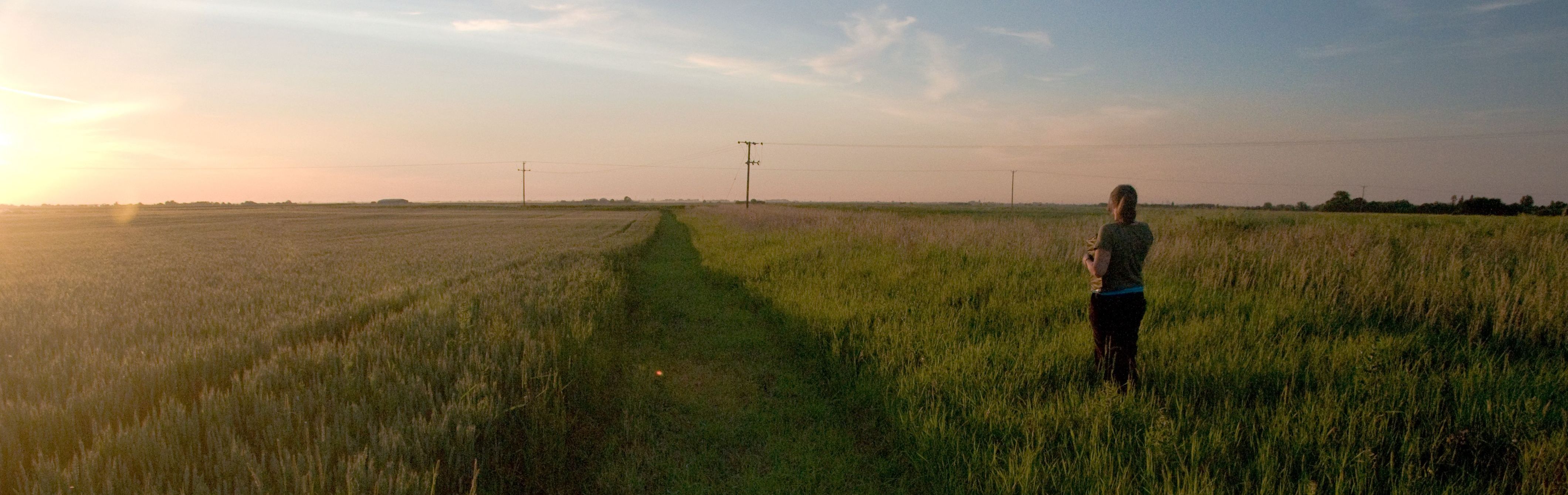
Dawn bird survey in arable farmland. © Rob Robinson/BTO
Dawn bird survey in arable farmland. © Rob Robinson/British Trust for Ornithology (BTO)

The importance of demography

But simply recording these changes is not enough; we need to understand why they occur if action is to be taken. This requires us to quantify the demographic rates (survival, productivity and movements) that underlie them, which in turn requires samples of marked individuals. Simply counting individuals is not enough. Continue reading “Making the Most of Volunteer Data: Counting the birds and more…”