Issue 6.12

Issue 6.12 is now online!
The December issue of Methods is now online! 

Our final issue of 2015 contains one Applications article and two Open Access articles, all of which are freely available.

stagePOP: A tool for predicting the deterministic dynamics and interactions of stage-structured populations (i.e. where the life cycle consists of distinct stages, for example eggs, juveniles and reproductive adults). The continuous-time formulation enables stagePop to easily simulate time-varying stage durations, overlapping generations and density-dependent vital rates.

Julia Cherry et al. provide one of this month’s Open Access articles. In ‘Testing sea-level rise impacts in tidal wetlands: a novel in situ approach‘ the authors describe the use of experimental weirs that manipulate water levels to test sea-level rise impacts in situ and at larger spatial scales. This new method can provide more robust estimates of sea-level rise impacts on tidal wetland processes. This article was accompanied by a press release when it was published in Early View. You can read more about this article here.

Our September issue also features articles on Biodiversity, Demography, Predator-Prey Interactions, Animal Communication and much more. Continue reading “Issue 6.12”

Building a Better Indicator

Post Provided by Charlie Outhwaite & Nick Isaac

Nick and Charlie are giving a presentation on ‘Biodiversity Indicators from Occurrence Records’ at the BES Annual Meeting on Wednesday 16 December at 13:30 in Moorfoot Hall. Charlie will also be presenting a poster on Tuesday 15 December between 17:00 and 18:30 on ‘Monitoring the UK’s less well-studied species using biological records‘ in the Lennox Suite.

Biodiversity Indicators are some of the most important tools linking ecological data with government policy. Indicators need to summarise large amounts of information in a format that is accessible to politicians and the general public. The primary use of indicators is to monitor progress towards environmental targets. For the UK, a suite of indicators are produced annually which are used to monitor progress towards the Aichi targets of the Convention on Biological Diversity as well as for European Union based commitments.  However, this is complicated by the fact that biodiversity policy within the UK is devolved to each of the four nations, so additional indicators have been developed to monitor the commitments of each country.

© Dave Colliers
© Dave Colliers

A range of biodiversity indicators exist within this suite covering the five strategic goals of the Convention; which include addressing the causes of biodiversity loss, reducing pressures on biodiversity and improving status of biodiversity within the UK. Within strategic goal C (improve status of biodiversity by safeguarding ecosystems, species and genetic diversity) there are currently 11 “State” indicators that use species data to monitor progress towards the targets underlying this goal. Most existing species based indicators use abundance data from large scale monitoring schemes with systematic protocols. However, there are other sources of data, such as occurrence records, that can offer an alternative if they are analysed using the appropriate methods. This post will discuss the development of species indicators for occurrence records to complement the current UK species based indicators, specifically relating to the C4b priority species indicator and the D1c pollinators indicator. Continue reading “Building a Better Indicator”

Making the Most of Volunteer Data: Counting the birds and more…

Post provided by Rob Robinson

It’s 6am on a warm spring morning and I’m about to visit the second of my Breeding Bird Survey1 sites. Like 2,500 other volunteers in the UK, twice a year I get up early to record all the birds I see or hear on the two transects in my randomly selected 1km square. Each year I look forward to these mornings almost as much for the comparisons as the actual sightings. Will there be more or fewer sightings of our summer migrants this year? How will numbers in this rolling Norfolk farmland stack up against those I see in urban, central Norwich?

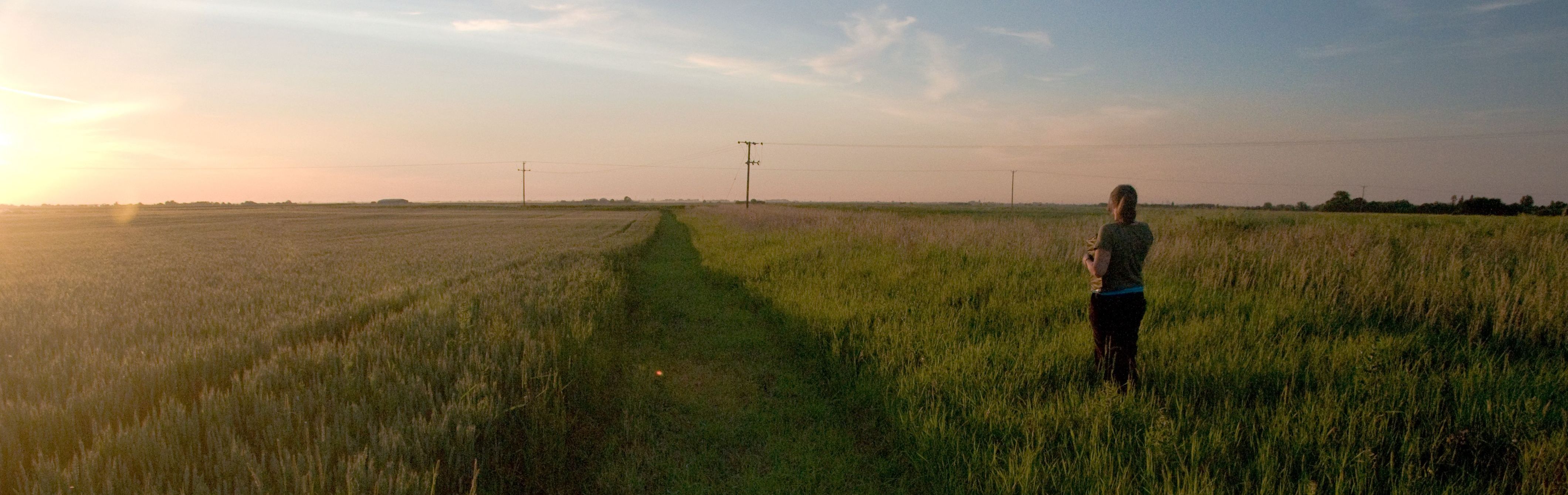
Dawn bird survey in arable farmland. © Rob Robinson/BTO
Dawn bird survey in arable farmland. © Rob Robinson/British Trust for Ornithology (BTO)

The importance of demography

But simply recording these changes is not enough; we need to understand why they occur if action is to be taken. This requires us to quantify the demographic rates (survival, productivity and movements) that underlie them, which in turn requires samples of marked individuals. Simply counting individuals is not enough. Continue reading “Making the Most of Volunteer Data: Counting the birds and more…”

New Associate Editors

Over the next few weeks we will be welcoming three new Associate Editors to Methods in Ecology and Evolution. Susan Johnston (University of Edinburgh, UK) became a member of the Associate Editor Board on Monday 5 October. She will be joined on 19 October by Natalie Cooper (Natural History Museum, London, UK) and finally by Luísa Carvalheiro (University of Brasília, Brazil) on 2 November. You can find out … Continue reading New Associate Editors

Issue 6.9

Issue 6.9 is now online!

The September issue of Methods is now online!

This month’s issue contains one Applications article and two Open Access articles, all of which are freely available.

POPART: An integrated software package that provides a comprehensive implementation of haplotype network methods, phylogeographic visualisation tools and standard statistical tests, together with publication-ready figure production. The package also provides a platform for the implementation and distribution of new network-based methods.

Michalis Vardakis et al. provide this month’s first Open Access article. In ‘Discrete choice modelling of natal dispersal: ‘Choosing’ where to breed from a finite set of available areas‘ the authors show how the dispersal discrete choice model can be used for analysing natal dispersal data in patchy environments given that the natal and the breeding area of the disperser are observed. This model can be used for any species or system that uses some form of discrete breeding location or a certain degree of discretization can be applied.

Our September issue also features articles on Animal Movement, Population Dynamics, Statistical Ecology, Biodiversity, Conservation Biology and much more. Continue reading “Issue 6.9”

National Wildlife Day 2015

Happy National Wildlife Day everyone!

Today is 10th National Wildlife Day. As we have done for a few awareness days this year (Bats, Biodiversity and Bees so far) we are marking the day by highlighting some of our favourite Methods in Ecology and Evolution articles on the subject. Obviously ‘wildlife’ is a pretty big topic, so we have narrowed our focus (slightly) to monitoring wildlife (with one or two additional papers that we didn’t want to leave out).

This list is certainly not exhaustive and there are many more wonderful articles on these topics in the journal. You can see more of them on the Wiley Online Library.

If you would like to learn more about National Wildlife Day, you may wish to visit the organisation’s website, follow them on Twitter and Facebook or check out today’s hashtag: #NationalWildlifeDay.

Without further ado though, please enjoy our selection of Methods articles for National Wildlife Day:

Integrating Demographic Data

Our National Wildlife Day celebration begins with an article from our EURING Special Feature. Robert Robinson et al. present an approach which allows important demographic parameters to be identified, even if they are not measured directly, in ‘Integrating demographic data: towards a framework for monitoring wildlife populations at large spatial scales‘. Using their approach they were able to retrieve known demographic signals both within and across species and identify the demographic causes of population decline in Song Thrush and Lawping.


Continue reading “National Wildlife Day 2015”

National Honey Bee Day 2015

Happy National Honey Bee Day everyone!

As you may know, tomorrow (Saturday 22 August) is National Honey Bee Day in the USA. To mark the day we will be highlighting some of the best papers that have been published on bees and pollinators in Methods in Ecology and Evolution.

You can find out more about National Honey Bee Day (and about bees in general) HERE.

Without further ado though, here are a few of the best Methods papers related to Honey Bees:

Wildebeast graze on the cover of MEE 2.5Honey Bee Risk Assessment

Our Honey Bee highlights begin with Hendriksma et al.’s article ‘Honey bee risk assessment: new approaches for in vitro larvae rearing and data analyses‘. Robust laboratory methods for assessing adverse effects on honey bee brood are required for research into the issues contributing to global bee losses. To facilitate this, the authors of this article recommend in vitro rearing of larvae and suggest some appropriate statistical tools for the related data analyses. Together these methods can help to improve the quality of environmental risk assessment studies on honey bees and secure honey bee pollination. As this article was published over two years ago, it can be accessed for free by anyone.

Continue reading “National Honey Bee Day 2015”

Advances in Phylogenetic Methods – The Applications Papers

Original Image ©PLOS One Phylogeny

Timed to coincide with Evolution 2015, we have released a new Virtual Issue on Phylogenetic Methods. All of the articles in this Virtual Issue will be freely available for a limited period.

On Friday, we gave some more information about the research articles in this Virtual Issue. In this post, we will be focusing on the Applications papers.

Applications papers introduce new tools for research, which provide practitioners with an important source of information and background on the tools they use. In this Virtual Issue we have highlighted the newest Applications papers that describe how phylogenetic methods are contributing to the fields of ecology and evolution. These include tools with aims as diverse as phylogenetic tree reconstruction and analysing phylogenetic diversity in communities. All Applications papers, not just those in the Virtual Issue, are free to access.

You can see a little more information on each of the Applications Papers below.

Continue reading “Advances in Phylogenetic Methods – The Applications Papers”

Virtual Issue: Advances in Phylogenetic Methods

Original Image ©PLOS One Phylogeny

Timed to coincide with Evolution 2015, we have released a new Virtual Issue on Phylogenetic Methods. All of the articles in this Virtual Issue will be freely available for a limited period.

An understanding of the tree of life contributes to many facets of biology. This Virtual Issue has assembled studies that showcase the breadth of the utility of phylogenetic trees, including phylogenetic beta diversity, trait evolution, diversification, biodiversity studies, phylogenetic signal, biogeography, ecosystem functioning, and host-pathogen dynamics.

The Research papers included are excellent examples of new ways that phylogenies can be applied to central questions in ecology, evolution and biodiversity, such as measuring niche conservatism, trait evolution and diversification rates. The issue also has articles on barcoding methods, which increasingly are used to understand phylogenetic and functional diversity.

You can see a little more information on each of the articles below.

Continue reading “Virtual Issue: Advances in Phylogenetic Methods”

What is Beta Diversity?

Post provided by Dr Andrés Baselga

Dr Andrés Baselga

A key property of biodiversity is that it is not evenly distributed around the world. In other words, different sites are usually  home to different biological communities. Quantifying the differences among biological communities is a major step towards understanding how and why biodiversity is distributed in the way it is.

The term beta diversity was introduced by R.H. Whittaker in 1960. He defined it as “the extent of change in community composition, or degree of community differentiation, in relation to a complex-gradient of environment, or a pattern of environments”. In his original paper, Whittaker proposed several ways to quantify beta diversity. In its simplest form (which we will call strict sense or multiplicative beta diversity), beta diversity is defined as the ratio between gamma (regional) and alpha (local) diversities (Whittaker, 1960; Jost, 2007). Therefore, it is the effective number of distinct compositional units in the region (Tuomisto, 2010). Essentially, beta diversity quantifies the number of different communities in the region. So it’s clear that beta diversity does not only account for the relationship between local and regional diversity, but also informs about the degree of differentiation among biological communities. This is because alpha and gamma diversities are different if (and only if) the biological communities within the region are different.

It’s easy to demonstrate how beta diversity varies from the minimum to the maximum differentiation of local assemblages in a region. For simplicity, we will quantify biological diversity as species richness (number of species), but it’s important to remember that alpha, beta and gamma diversities can also be defined to account for richness and relative abundances (see Jost, 2007 for a detailed explanation). When local assemblages are all identical (minimum differentiation), alpha diversity equals gamma diversity, and beta diversity equals 1 (figure below).

beta1

Continue reading “What is Beta Diversity?”