Spatially-explicit Power Analysis: A First Step for Occupancy-Based Monitoring

Post provided by Martha Ellis and Jody Tucker

Where’s Waldo? Trying to find this fisher somewhere in a giant landscape is going to be tricky! ©Mike Schwartz
Where’s Waldo? Trying to find this little guy somewhere in a giant landscape is going to be tricky! © Mike Schwartz

The seemingly basic question of whether a population is increasing, decreasing, or stable can be one of the most difficult to answer. Collecting data on rare and elusive species is hard. Imagine trying to detect a handful of fisher or wolverine across hundreds of thousands of acres – it is physically demanding, time consuming and logistically complicated. And that’s just to do it once! To monitor a population for changes, you have to repeat these surveys regularly over many years. The long-term monitoring that is necessary for conservation requires careful planning and a substantial commitment of resources and funding. So before we spend these valuable resources, it’s critical to know whether the data we are collecting can help us to answer our questions. Continue reading “Spatially-explicit Power Analysis: A First Step for Occupancy-Based Monitoring”

Issue 7.4

Issue 7.4 is now online!

The April issue of Methods is now online!

This month’s issue contains two Applications articles and one Open Access article, all of which are freely available.

CPW Photo Warehouse: freely available software that has been customized to identify, archive, and transform photographs into data formats required for statistical analyses. Users navigate a series of point-and-click menu items that allow them to input information from camera deployments, import photos and store data. Images are seamlessly incorporated into the database windows, but are stored separately.

SIMR: An R package that allows users to calculate power for generalized linear mixed models from the lme4 package. The power calculations are based on Monte Carlo simulations. It includes tools for (i) running a power analysis for a given model and design; and (ii) calculating power curves to assess trade-offs between power and sample size.

Continue reading “Issue 7.4”

Stage-dependent Demographic Modelling at Your Finger Tips

Post provided by EELKE JONGEJANS and ROB SALGUERO- GÓMEZ

Soay sheep: an organism that can be modelled with two-sex dynamics. ©Julian Paren

Typically, ecology courses contain at least a day of matrix population models. So most ecologists are somewhat familiar with how simple life cycles (and complex ones) can be depicted and analysed using matrix models. Briefly, these models represent what happens to individuals over a certain time interval (do they die? do they reproduce? if so, how much?). What individuals do in the context of these models can then be used to study the dynamics of a population.

Often, individuals are classified by size in matrix models, as small individuals tend to have different survival, growth and reproduction rates than large ones. But how many classes do you need to model the dynamics of a size-structured population properly? Instead of choosing arbitrary size class boundaries, Easterling, Ellner and Dixon (2000) came up with the idea of using continuous size variables and integrals to define a population model… and that’s how the first Integral Projection Model (‘IPM’ for us friends) came to be.

Naturally, for the development of a new demographic tool to prove useful to the scientific community, it must be flexible enough to be ‘one-size-fits-all’… and the needs of ecologists, evolutionary biologists and conservation biologists – who have to date used extensively size-based matrix models – are rather variable in size, colour and shape. Continue reading “Stage-dependent Demographic Modelling at Your Finger Tips”

A Model Approach to Weed Management

Post provided by VANESSA ADAMS

Vanessa Adams in the field with gamba grass in the Batchelor region, NT. ©Amy Kimber (NERP Northern Australia Hub)
Vanessa Adams in the field with gamba grass in the Batchelor region, NT.
©Amy Kimber (NERP Northern Australia Hub)

Invasive weeds cause environmental and economic harm around the world. Land managers bear a heavy responsibility for the control of infestations in what is often a time-consuming and costly battle.

Fortunately, an increasing number of research-based solutions are giving land managers an advantage. This includes tools to determine the distribution of weeds and also the development of modelling approaches to predict their spread.

Understanding the current and future distribution of an invasive species allows managers to better direct their limited resources. However, the direct and strategic management of weeds is tricky and that’s why population models (in particular spatial dispersal models that can be applied without much data) are needed to inform and facilitate action on the ground. Continue reading “A Model Approach to Weed Management”

Issue 7.3

Issue 7.3 is now online!

The March issue of Methods is now online!

This month’s issue contains two Applications articles and two Open Access articles, all of which are freely available.

METAGEAR: A comprehensive, multifunctional toolbox with capabilities aimed to cover much of the research synthesis taxonomy: from applying a systematic review approach to objectively assemble and screen the literature, to extracting data from studies, and to finally summarize and analyse these data with the statistics of meta-analysis.

Universal FQA Calculator: A free, open-source web-based Floristic Quality Assessment (FQA) Calculator. The calculator offers 30 FQA data bases (with more being added regularly) from across the United States and Canada and has been used to calculate thousands of assessments. Its growing repository for site inventory and transect data is accessible via a REST API and represents a valuable resource for data on the occurrence and abundance of plant species. Continue reading “Issue 7.3”

Demography and Big Data

Post provided by BRITTANY TELLER, KRISTIN HULVEY and ELISE GORNISH

Follow Brittany (@BRITTZINATOR) and Elise (@RESTORECAL) on Twitter

To understand how species survive in nature, demographers pair field-collected life history data on survival, growth and reproduction with statistical inference. Demographic approaches have significantly contributed to our understanding of population biology, invasive species dynamics, community ecology, evolutionary biology and much more.

As ecologists begin to ask questions about demography at broader spatial and temporal scales and collect data at higher resolutions, demographic analyses and new statistical methods are likely to shed even more light on important ecological mechanisms.

Population Processes

Midsummer Opuntia cactus in eastern Idaho, USA. © B. Teller.

Traditionally, demographers collect life history data on species in the field under one or more environmental conditions. This approach has significantly improved our understanding of basic biological processes. For example, rosette size is a significant predictor of survival for plants like wild teasel (Werner 1975 – links to all articles are at the end of the post), and desert annual plants hedge their bets against poor years by optimizing germination strategies (Gremer & Venable 2014).

Demographers also include temporal and spatial variability in their models to help make realistic predictions of population dynamics. We now know that temporal variability in carrying capacity dramatically improves population growth rates for perennial grasses and provides a better fit to data than models with varying growth rates because of this (Fowler & Pease 2010). Moreover, spatial heterogeneity and environmental stochasticity have similar consequences for plant populations (Crone 2016). Continue reading “Demography and Big Data”

On the Tail of Reintroduced Canada Lynx: Leveraging Archival Telemetry Data to Model Animal Movement

Post provided by FRANCES E. BUDERMAN

Animal Movement

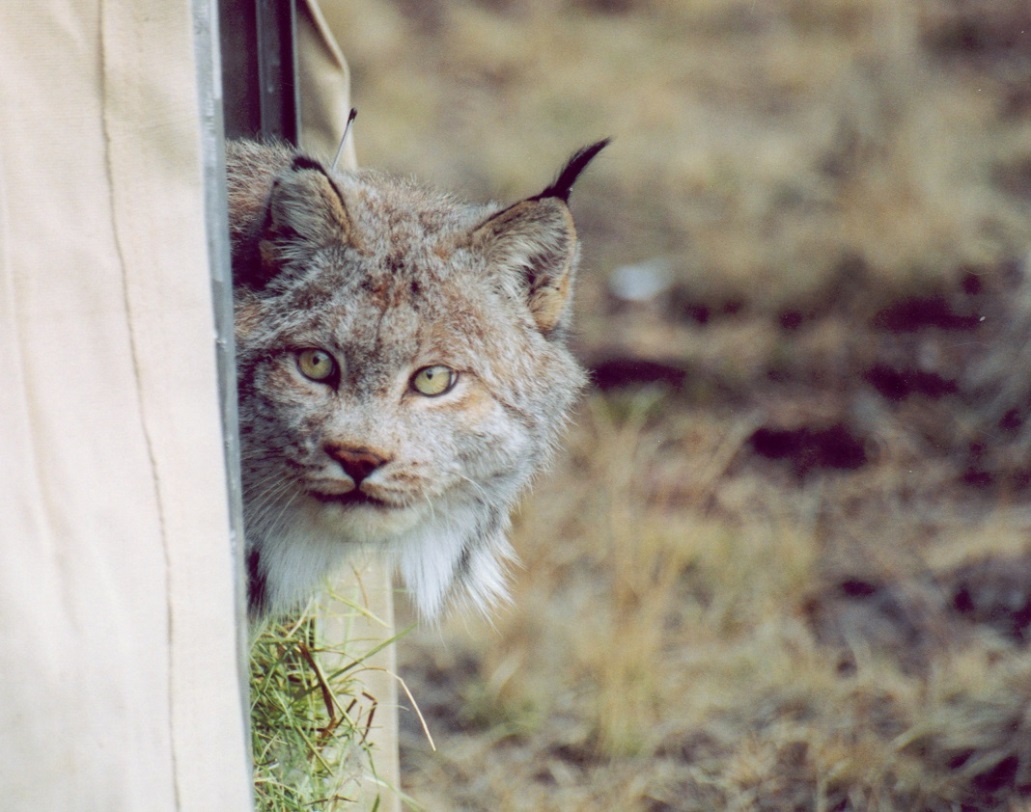
218 Canada lynx were reintroduced to the San Juan Mountains between 1999 and 2006 with VHF/Argos collars. © Colorado Parks and Wildlife

Animal movement is a driving factor underlying many ecological processes including disease transmission, extinction risk and range shifts. Understanding why, when and how animals traverse a landscape can provide much needed information for landscape-level conservation and management practices.

The theoretical underpinnings for modelling animal movement were developed about seventy years ago. Technological developments followed, with radio-collars initially deployed on large mammals such as grizzly bears and elk. We can now monitor animal movement of a wide variety of species, including those as small as a honeybee, at an unprecedented temporal and spatial scale.

However, location-based data sets are often time consuming and costly to collect. For many species, especially those that are rare and elusive, pre-existing data sets may be the only viable data source to inform management decisions. Continue reading “On the Tail of Reintroduced Canada Lynx: Leveraging Archival Telemetry Data to Model Animal Movement”

New Associate Editors

Today we are welcoming three new Associate Editors to Methods in Ecology and Evolution: Nick Golding (University of Melbourne, Australia), Rachel McCrea (University of Kent, UK) and Francesca Parrini (University of the Witwatersrand, South Africa). They have all joined on a three-year term and you can find out more about them below. Nick Golding “I develop statistical models and software for mapping the distributions of species and diseases. I’m particularly interested in … Continue reading New Associate Editors

Introducing Biodiverse: Phylodiversity Made Easy

Post provided by SHAWN LAFFAN and ANDREW THORNHILL

© Shawn Laffan
© Shawn Laffan

Phylodiversity indices are increasingly used in spatial analyses of biodiversity, driven largely by the increased availability of phylogenetic trees and the tools to analyse them. Such analyses are integral to understanding evolutionary history and deciding where to allocate conservation resources.

Phylogenetic Indices: The Current Favourites

The most commonly used phylogenetic index is Faith’s Phylogenetic Diversity (PD; Faith 1992). PD is the phylogenetic analogue of taxon richness and is expressed as the number of tree units which are found in a sample.

More recently developed phylodiversity indices adapt the calculation of PD by adjusting the branch lengths of a sample using the local lineage range sizes and abundances, for example Phylogenetic Endemism (PE) and Abundance weighted Evolutionary Diversity (AEDt). In PE the length of each branch in a sample is multiplied by the fraction of its total geographic range found in that sample. The AEDt index uses the same general approach, but weights each branch by the fraction of total abundances found in the sample. The weighting process is generic, so one can scale the branch lengths by any relevant factor, for example the threat status (Faith 2015). Continue reading “Introducing Biodiverse: Phylodiversity Made Easy”

Making the Most of Volunteer Data: Counting the birds and more…

Post provided by Rob Robinson

It’s 6am on a warm spring morning and I’m about to visit the second of my Breeding Bird Survey1 sites. Like 2,500 other volunteers in the UK, twice a year I get up early to record all the birds I see or hear on the two transects in my randomly selected 1km square. Each year I look forward to these mornings almost as much for the comparisons as the actual sightings. Will there be more or fewer sightings of our summer migrants this year? How will numbers in this rolling Norfolk farmland stack up against those I see in urban, central Norwich?

Dawn bird survey in arable farmland. © Rob Robinson/BTO
Dawn bird survey in arable farmland. © Rob Robinson/British Trust for Ornithology (BTO)

The importance of demography

But simply recording these changes is not enough; we need to understand why they occur if action is to be taken. This requires us to quantify the demographic rates (survival, productivity and movements) that underlie them, which in turn requires samples of marked individuals. Simply counting individuals is not enough. Continue reading “Making the Most of Volunteer Data: Counting the birds and more…”