A framework for unifying disturbance ecology

Post provided by: Brian Buma

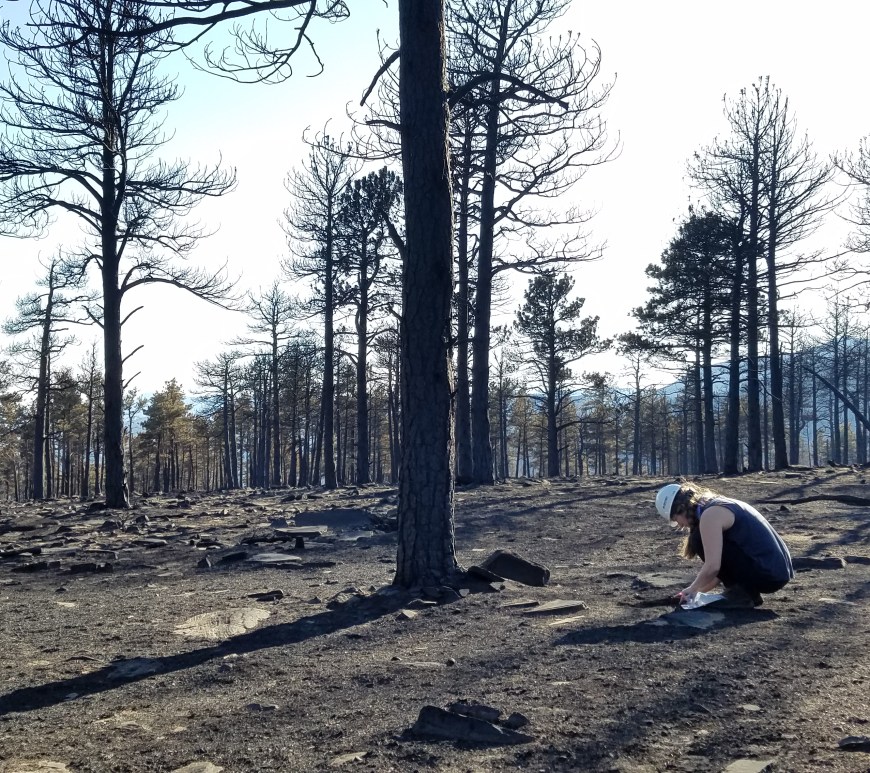
In this post, Brian Buma discusses a unifying framework for studying disturbance ecology, from largescale wildfires to bacterial colonies, as proposed in the new paper “Disturbance ecology and the problem of n = 1: A proposed framework for unifying disturbance ecology studies to address theory across multiple ecological systems” recently published in Methods in Ecology and Evolution.

Continue reading “A framework for unifying disturbance ecology”

The worldwide use of wildlife detection dogs – and how they became part of our life

Post provided by Annegret Grimm-Seyfarth

Border Collie Zammy is trained to search for Eurasian otter scat and pond, alpine and great crested newts. Photo: André Künzelmann.

For those not directly working with them, using wildlife detection dogs always sound like a new fancy idea that should be tested somehow. However, this method is neither new nor rare, and people working with wildlife detection dogs often call them their best method in finding their target species. In this post, Annegret Grimm-Seyfarth discusses her paper ‘Detection dogs in nature conservation: A database on their worldwide deployment with a review on breeds used and their performance compared to other methods’, which shows the broad and worldwide applications of wildlife detection dogs.

Continue reading “The worldwide use of wildlife detection dogs – and how they became part of our life”

10th Anniversary Volume 7: eDNA Editor’s Choice

To celebrate our 10th Anniversary, we are highlighting a key article from each of our volumes. For Volume 7 we selected The ecologist’s field guide to sequence‐based identification of biodiversity’ by Creer et al. (2016).

In this post, two of our Associate Editors with expertise in eDNA, Lynsey Harper and Chloe Robinson, select their favourite MEE papers in this field.

Continue reading “10th Anniversary Volume 7: eDNA Editor’s Choice”

2019 Robert May Early Career Researcher Prize Shortlist

Each year Methods in Ecology and Evolution awards the Robert May Prize to the best paper in the journal by an author at the start of their career. Today we present the shortlisted papers for 2019’s award, based on articles published in volume 10 of the journal. The winner will be chosen by the journal’s Senior Editors in a few weeks. Keep an eye on the blog … Continue reading 2019 Robert May Early Career Researcher Prize Shortlist

Methods behind the Madness: Ecology at the Poles

Post provided by Chloe Robinson, Crystal Sobel and Valerie Levesque-Beaudin

Aurora Borealis in the polar north. Photo: Noel Bauza, Pixabay

For those of us in the Northern Hemisphere, the coldest months of the year are upon us. A combination of post-holiday ‘blues’ and the cold, dark mornings make the daily trudge to work all that less inspiring. Recent snow storms in locations such as Newfoundland (Canada), have made it nearly impossible for many people to leave their homes, let alone commute to work. Now cast your mind to a little over 2,000 km north of Newfoundland and imagine the challenges faced with carrying out a job during the coldest, darkest months of the year.

As with every other biome on the planet, polar biomes contain a variety of different species, from bugs to baleen whales. To better understand the different species at our poles, scientists need to collect ecological data, but this is far from a walk in the park.

Iceberg in the Gerlache Strait, Antarctica. Photo: Liam Quinn, flikr.

With the year 2020 marking 200 years since the discovery of Antarctica and the Centenary of ‘vital’ Scott Polar Research Institute (Cambridge, UK), we wanted to highlight some of the polar research published in the journal, featuring challenges faced and current research being undertaken at the poles.

Continue reading “Methods behind the Madness: Ecology at the Poles”

Ten Years of Methods in Ecology and Evolution

Methods in Ecology and Evolution is turning 10 years old! Back in 2010, we launched the journal because of feedback from the community that there was a need for a journal that promoted the publication of new methods. Founding Editor Rob Freckleton and Graziella Iossa (now a member of the Editorial Board) summarised the aims and ambitions for the journal in the first issue. They … Continue reading Ten Years of Methods in Ecology and Evolution

Thank You to All of Our Reviewers: Peer Review Week 2019

As many of you will already know, this week is Peer Review Week (16-20 September). Peer Review Week is a global event celebrating the vital work that is done by reviewers in all disciplines. Throughout the week, we’ve been looking back at some of the peer review advice and guidance that we’ve published on the blog. The theme for this year’s Peer Review Week is … Continue reading Thank You to All of Our Reviewers: Peer Review Week 2019

The Self-Preserving eDNA Filter: How It Works and Why You Should Use It

Researchers at Washington State University and Smith-Root recently invented an environmental DNA (eDNA) filter housing that automatically preserves captured eDNA by desiccation. This eliminates the need for filter handling in the field and/or liquid DNA preservatives. The new material is also biodegradable, helping to reduce long-lasting plastic waste associated with eDNA sampling. This video explains their new innovation in the field of eDNA sampling technology: … Continue reading The Self-Preserving eDNA Filter: How It Works and Why You Should Use It

R-Ladies: For More Balance in the R Community!

The theme for this year’s International Women’s Day is #BalanceForBetter. So, we decided that we’d like to take this opportunity to promote an organisation that supports and empowers women and gender minorities in STEM fields that still suffer from underrepresentation. As a journal, we publish a lot of articles on software and code that are used in the study of different fields in ecology and evolutionary biology. We have a wide audience of R coders and R users who follow us on social media and read our blog. With that in mind, R-Ladies seemed like a fairly obvious group for us to promote…

Post provided by MAËLLE SALMON and HANNAH FRICK, two members of the R-LADIES GLOBAL TEAM.

What is R-Ladies?

R-Ladies is a global grassroots organisation whose aim is to promote gender diversity in the R community. The R community suffers from an underrepresentation of gender minorities (including but not limited to cis/trans women, trans men, non-binary, genderqueer, agender). This can be seen in every role and area of participation: leaders, package developers, conference speakers, conference participants, educators, users (see recent stats). What a waste of talent!

As a diversity initiative, the mission of R-Ladies is to achieve proportionate representation by encouraging, inspiring, and empowering people of genders currently underrepresented in the R community. So our primary focus is on supporting minority gender R enthusiasts to achieve their programming potential. We’re doing this by building a collaborative global network of R leaders, mentors, learners, and developers to help and encourage individual and collective progress worldwide. Continue reading “R-Ladies: For More Balance in the R Community!”